

Aggressive, unsupervised "detox" cleanses are not recommended while you're on GLP-1 or peptide therapy, and they can raise your risk of dehydration, electrolyte imbalance, and kidney stress rather than lower it. There's no established evidence for a generalized "detox reaction" during GLP-1 treatment — the symptoms people blame on toxins are almost always medication effects, dehydration, constipation, nutrient gaps, or gallbladder trouble.
The safer path is metabolic support, not a cleanse:
- Hydrate deliberately and add electrolytes when intake drops
- Prioritize protein and fiber over restriction
- Clear any change with your prescribing clinician first
Daylahealth's clinical team pairs prescribers with dietitians so patients on semaglutide, tirzepatide, or compounded peptides like BPC-157 and GHK-Cu get that clearance before, not after, they try something new.
Table of Contents
- Is It Safe to Detox While on Peptides? What Clinicians Check First
- What Are Safe Detox Methods for Peptide Users?
- Detox Teas, Diuretics, and Fasting: What to Avoid on GLP-1
- Which Lab Tests Should You Ask For During a Metabolic Cleanse?
- When Should You Pause or Adjust GLP-1 or Peptide Dosing?
- How Daylahealth Structures Clinician-Led Safety
- Gradual Detox Protocols Built Around Your Peptide Cycle
- How to Monitor Peptide Efficacy and Side Effects Together
- Managing Mood Changes and Getting Psychological Support
- What Comes After Detox: Maintaining Results Long-Term
- Contraindications by Peptide Type: What Differs and Why
- Timing Your Detox Support Around Peptide Dosing Cycles
- What Most Detox Advice Gets Wrong for Peptide Users
- Get Clinician-Supervised Metabolic Support With Daylahealth
- Frequently Asked Questions
- Sources
Is It Safe to Detox While on Peptides? What Clinicians Check First
Before you touch your diet, your supplements, or your dose, your clinician needs a clear picture of what's actually happening in your body. Some patients simply shouldn't attempt any kind of metabolic-support push right now, and others need a modified plan.
Absolute and relative contraindications include:
- Advanced liver disease or cirrhosis, especially relevant given documented gallstone and liver risks tied to rapid weight loss on GLP-1 therapy
- Advanced or unstable kidney disease, where nephrotoxic exposures need to be avoided entirely
- Pregnancy or suspected pregnancy
- A recent episode of pancreatitis
- Uncontrolled diabetes on insulin or sulfonylureas, where fasting-style changes raise hypoglycemia risk
Your clinician should pull baseline vital signs and labs before clearing any metabolic-support attempt: a comprehensive metabolic panel (CMP), electrolytes, liver function tests (LFTs), lipase and amylase, and a pregnancy test when relevant. These aren't formalities. They're the difference between catching a problem early and finding out the hard way.
Pro Tip: Bring a symptom log to your next appointment. Note when nausea, fatigue, or bowel changes started relative to your last dose. Clinicians can act faster on a timeline than a vague "I've felt off."
Certain symptoms mean you stop and get evaluated immediately, not at your next scheduled visit: vomiting paired with noticeably reduced urination, severe abdominal pain, confusion, or lightheadedness on standing. Any of those warrants an urgent call, not a wait-and-see approach.
What Are Safe Detox Methods for Peptide Users?
The goal isn't purging your system. It's supporting the organs already doing the work, your liver, kidneys, and gut, while you lose weight on medication that changes how much you eat and drink.
Start with hydration and electrolytes. GLP-1 medications blunt appetite and, less obviously, they can dull thirst signals, so patients often under-drink without noticing. Track fluid intake actively rather than waiting to feel thirsty. If you're getting occasional GI upset, an electrolyte mix with sodium, potassium, and magnesium beats plain water alone. Persistent vomiting or diarrhea that doesn't resolve in a day may call for clinician-directed IV fluids rather than home remedies.
Protect lean mass with protein and resistance work. Rapid weight loss without adequate protein burns muscle along with fat. Aim for protein at most meals, spread across the day rather than loaded into one, and pair it with two to three resistance sessions weekly. Daylahealth's guide on preventing muscle loss during GLP-1 therapy walks through the specifics.

Manage constipation with fiber, not laxatives. Titrate fiber up slowly, since a sudden jump often makes bloating worse, and increase fluids alongside it. This is one of the most common complaints Daylahealth's care team addresses, and it's covered in more depth in the side effects management plan.
Ask before you supplement. Vitamin D, B12, and controlled electrolyte repletion can be reasonable additions once a dietitian reviews your intake, but supplements don't replace food, and routine supplementation shouldn't happen blind, without testing first.
Pro Tip: Think of this as a three-stage sequence: stabilize your diet and bowel habits first, check labs second, then add any targeted support your clinician recommends. Skipping straight to stage three is where people get into trouble.
Detox Teas, Diuretics, and Fasting: What to Avoid on GLP-1
Marketed detox products tend to work against the exact systems you're trying to protect. Detox teas and laxative-heavy cleanses push fluid and electrolytes out of the body fast, which is a problem when you're already prone to dehydration from reduced intake. Stimulant fat burners and diuretics compound that risk further, adding heart rate elevation on top of fluid loss, and unsupervised diuretics can stress kidneys that are already adjusting to your medication.
Avoid these without direct clinician approval:
- Detox teas and senna-based laxative blends
- Stimulant-based "fat burner" supplements
- Diuretic pills or teas marketed for water weight
- Extended fasting beyond what your clinician has specifically cleared
- Aggressive sauna or heat protocols stacked on top of GI symptoms
Each of these can mask a real underlying problem. Severe dehydration from a "cleanse" can look like fatigue and low mood on the surface, while your kidneys quietly take the hit. Worsened nausea or constipation from stimulant products or over-restriction often gets blamed on the peptide itself, delaying the real fix.
Safer swaps exist for every one of these. Trade laxatives for fiber plus fluids. Trade stimulant supplements for supervised nutrient repletion once labs identify an actual gap. Trade extreme fasting for the protein-forward, fiber-conscious eating pattern your dietitian helps you build.
Which Lab Tests Should You Ask For During a Metabolic Cleanse?
A short, targeted panel tells your clinician far more than a broad "detox" test ever will. Nonspecific detox panels and heavy-metal screens rarely change acute management for someone on GLP-1 therapy, so they're not routinely recommended.
Prioritize these instead:
- Comprehensive metabolic panel (CMP), covering electrolytes, glucose, and kidney and liver markers together
- BUN and creatinine specifically, tracked over time rather than as a single snapshot
- Liver function tests (LFTs)
- Lipase and amylase, especially if you have any abdominal pain
- Complete blood count (CBC)
- Vitamin D, B12, or iron studies when your history or diet suggests a gap
When to test: get a baseline before any major change to intake or before a dose escalation. Recheck early if you develop persistent vomiting or diarrhea, suspected dehydration, or unusually rapid weight loss.
Trends matter more than any single number. A creatinine that's climbing across two or three checks, sodium levels drifting toward hyponatremia or hypernatremia, or a lipase elevation paired with abdominal pain, these are the patterns that require action, not just a note in the chart. GLP-1 medications can offer kidney-protective benefits for many patients, but that protective effect depends on catching problems early and avoiding nephrotoxic substances in the meantime.
One data point worth remembering: routine testing can't measure the release of stored toxins or diagnose a generalized "detox" state, because that framework doesn't map to how your kidneys and liver actually clear substances. Lab work is far better used to evaluate hydration status, electrolyte balance, and organ function directly.
When Should You Pause or Adjust GLP-1 or Peptide Dosing?
Any dose change belongs to your prescriber, never to a self-directed plan. If you're also taking insulin or a sulfonylurea, adjusting your GLP-1 or peptide dose without medical input carries real hypoglycemia risk, since these medications interact with your blood sugar control in ways that aren't always intuitive.
Situations where a temporary hold or dose reduction may be appropriate:
- Persistent vomiting that isn't resolving with standard measures
- Signs of acute kidney injury (AKI) on labs
- Dehydration significant enough to need IV fluids
Coordination matters as much as the decision itself. Your prescriber typically loops in your primary care physician, and nephrology if kidney markers are trending the wrong way. Most Daylahealth patients handle this through telehealth, with medication resupply and shipping adjusted around the pause rather than left in limbo.
Resuming therapy follows its own criteria: stable intake, resolved GI symptoms, and labs trending back toward baseline. Your dietitian typically shifts focus back to protein and fiber at that point, with a follow-up lab check scheduled to confirm the trend holds.
How Daylahealth Structures Clinician-Led Safety
Every recommendation in this article, hydration protocols, lab sequencing, protein targets, mirrors how Daylahealth's care model actually runs.
- Prescribing clinicians review baseline labs and contraindications before approving therapy
- Dietitians build protein and fiber plans specific to each patient's GI tolerance
- Care coaching flags red-flag symptoms early, before they become urgent
The safest version of "detoxing" while on GLP-1 or peptide therapy isn't a product. It's a clinician who reviews your labs, a dietitian who adjusts your protein and fiber intake, and a plan that treats your liver and kidneys as the actual detox system already at work.
This structure is exactly why muscle-preservation strategies and diet guidance from Daylahealth read less like generic wellness advice and more like a checklist a prescriber would actually use.
Gradual Detox Protocols Built Around Your Peptide Cycle
A gradual approach beats an abrupt one for a simple reason: your body is already adjusting to appetite suppression, slower gastric emptying, and shifting fluid needs. Layering a sudden restrictive change on top of that adjustment period is where most problems start.
The staged model that clinicians favor looks like this: stabilize your intake and bowel function first, run targeted labs second, and only then introduce specific supports like electrolyte repletion or a fiber increase. This sequencing minimizes downstream risk compared with jumping straight into an aggressive cleanse without any oversight.
Practically, that means spacing out changes rather than stacking them. If you're increasing fiber, give it one to two weeks before also changing your protein sources or adding a new supplement, so you and your clinician can tell which change caused which effect. If you're on a compounded peptide like BPC-157 alongside a GLP-1 medication, that staging matters even more, since you're tracking two sets of side effects simultaneously.
Some functional medicine practitioners describe GLP-1 therapy as scaffolding rather than a permanent fixture, useful support while your metabolism recalibrates, not a lifelong crutch. Under that framing, the safer clinical goal is metabolic support that preserves muscle and keeps elimination pathways functioning, not an aggressive push to "clean out" your system faster than your body can handle. Gradual wins over dramatic almost every time here.
How to Monitor Peptide Efficacy and Side Effects Together
Tracking whether your peptide therapy is working and whether it's causing problems are related tasks, and separating them completely is a mistake. A dose that's technically working (steady weight loss, appetite control) can still be causing a side effect that needs attention, like escalating fatigue from under-hydration.
Keep two simple threads going. First, efficacy: weight trend, appetite level, and any changes in energy or hunger cues week to week. Daylahealth's guide on signs your GLP-1 medication is working covers what a normal response actually looks like, which helps you separate progress from a problem.
Second, side effects: GI symptoms, hydration status, and mood or energy shifts. Rate GI symptoms honestly rather than minimizing them. "Occasional nausea" and "vomiting most mornings" call for very different clinical responses, and your prescriber can only act on what you actually report.
If you're combining a GLP-1 medication with a compounded peptide like BPC-157, log symptoms separately where you can. It's not always possible to isolate which compound is causing what, but a rough timeline helps your clinician narrow it down faster than a vague "I've felt off since I started everything."
Bring this log to every check-in, even a quick telehealth call. A clinician working from real data adjusts faster and more accurately than one working from memory.
Managing Mood Changes and Getting Psychological Support
Mood shifts during a metabolic-support phase are common enough to plan for, not a sign you're doing something wrong. Appetite suppression changes your relationship with food fast, and for many patients, food has been tied to comfort or routine for years. Losing that quickly can trigger irritability, low mood, or anxiety that has nothing to do with willpower.
Dehydration and inadequate protein intake can independently cause fatigue and brain fog that mimics depression, which is one more reason the hydration and nutrition steps covered earlier aren't optional extras. Rule out the physical causes before assuming the mood shift is purely emotional.
That said, the emotional adjustment is real on its own. If you notice persistent low mood, appetite changes beyond what the medication explains, or anxiety that's interfering with daily function, that's worth raising with your prescriber directly, not something to push through alone. Some patients benefit from a brief referral to a therapist familiar with medical weight management, particularly if body image or eating patterns were already complicated before starting therapy.
Practical steps help too: keep a consistent sleep schedule, since poor sleep amplifies mood symptoms on top of appetite changes, and stay connected to whatever support system, friends, family, or a structured coaching program, you had before starting treatment. Isolation makes every side effect feel bigger than it is.
What Comes After Detox: Maintaining Results Long-Term
The work doesn't stop once labs look stable and symptoms resolve. What you do in the months after a metabolic-support phase determines whether the results hold.
Protein intake and resistance training stay non-negotiable long after any acute symptom clears, since lean mass lost early is hard to rebuild later. Keep the fiber and hydration habits you built during the support phase as your baseline, not as a temporary fix you drop once things feel normal.
Lab monitoring shifts to a maintenance cadence at this point, typically less frequent than during an active adjustment phase, but not eliminated. Your clinician will set that schedule based on your kidney and liver trends specifically. If you've been on a dose-reduction period, this is also when nutrition focus often shifts back toward supporting whatever medication dose you've settled into. Daylahealth's guide on overcoming a weight loss stall is useful here, since stalls often get misread as a sign to try a cleanse when the better move is a nutrition or activity adjustment instead.
Build in a periodic check-in with your dietitian even after things stabilize. Habits drift quietly, a few weeks of lower protein here, skipped resistance sessions there, and catching that drift early is far easier than correcting it after six months.
Contraindications by Peptide Type: What Differs and Why
Not every peptide carries the same risk profile, and treating them as interchangeable is a mistake worth avoiding. GLP-1 medications like semaglutide and tirzepatide carry the most established contraindication list: personal or family history of certain thyroid cancers, a history of pancreatitis, and caution in advanced kidney or liver disease.
BPC-157, a compounded peptide often used for tissue repair and gut support, has a much thinner body of formal safety data than GLP-1 medications, which makes clinician oversight more important, not less. Anyone with a history of cancer should discuss BPC-157 specifically with their prescriber, given ongoing questions about growth-signaling effects that haven't been fully resolved in long-term studies.
GHK-Cu, a copper-binding peptide often used for skin and tissue support, requires attention to copper levels in patients with any known copper-metabolism disorder, and generally isn't combined casually with other copper-containing supplements without a clinician reviewing the total load.
The common thread across all three categories: layering peptides on top of each other, or adding a peptide to an existing GLP-1 regimen, multiplies the number of variables your clinician has to track. That's exactly why a single prescriber coordinating your full peptide and GLP-1 picture matters more than piecing together compounds from different sources.
Timing Your Detox Support Around Peptide Dosing Cycles
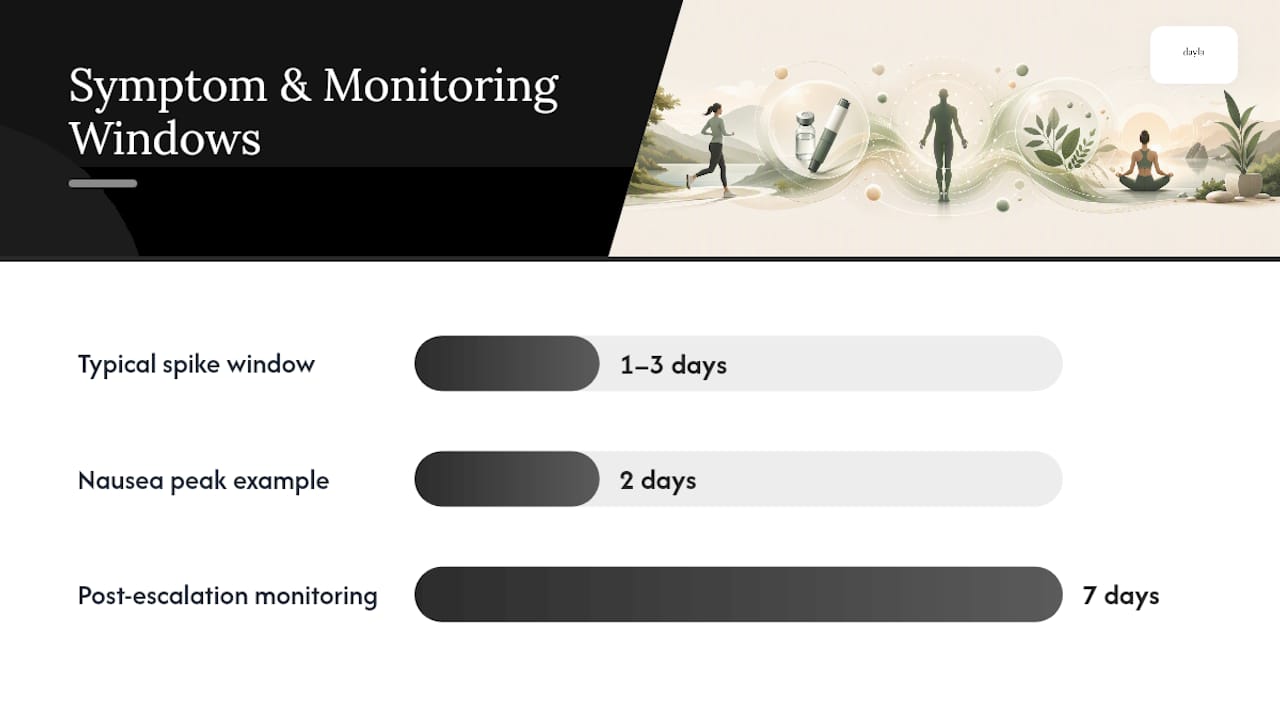
Weekly dosing schedules for GLP-1 medications create predictable windows where GI symptoms tend to spike, usually in the one to three days after an injection or dose increase. Planning your hydration and fiber strategy around that window, rather than applying the same approach every day regardless of timing, tends to work better in practice.
If nausea peaks in the two days after your dose, that's not the moment to introduce a new supplement or push fiber intake up sharply. Wait until you're past that window, then make one change at a time so you can actually tell what's helping.
Dose escalations deserve their own mini-protocol. Any time your clinician increases your dose, treat the following week as a monitoring window: extra attention to hydration, a lighter hand on fiber changes, and a lower threshold for reaching out if GI symptoms feel different from your usual pattern. This is also the point where a baseline lab recheck makes the most sense, since escalation is when kidney and electrolyte stress is most likely to show up first.
For patients cycling on and off compounded peptides like BPC-157, coordinate any planned break with your prescriber rather than stopping abruptly, particularly if you're also adjusting diet at the same time. Stacking two changes, a peptide pause and a nutrition shift, at once makes it harder to identify what caused any new symptom that shows up.
The most important claim in this article is simple: metabolic support through hydration, protein, fiber, and clinician-directed labs works better and more safely than any restrictive detox cleanse on GLP-1 or peptide therapy.
| Point | Details |
|---|---|
| Skip the cleanse | Restrictive detox products and extreme fasting raise dehydration and electrolyte risk on GLP-1 or peptide therapy. |
| Hydrate actively | Track fluids directly since these medications can blunt thirst signals, don't wait to feel thirsty. |
| Test smart, not broad | Ask for a CMP, electrolytes, LFTs, and lipase/amylase instead of a nonspecific "detox" panel. |
| Never self-adjust dosing | Pausing or reducing a GLP-1 or peptide dose requires prescriber coordination, especially with other glucose-lowering medications. |
| Get clinician-supervised support | Daylahealth pairs prescribers and dietitians so hydration, protein, and lab decisions are cleared before you make them. |
What Most Detox Advice Gets Wrong for Peptide Users
Most detox content online treats the body like it needs help removing something. That framing doesn't hold up against how GLP-1 and peptide therapy actually work, your liver and kidneys are already doing that job, and the real risk isn't toxin buildup, it's under-hydration and under-nutrition during a period of reduced intake.
The conventional advice, cleanse harder when you feel sluggish, gets the direction backward. Sluggishness on these medications is far more often a sign you need more protein, more fluid, and possibly a lab check, not less food and more stimulants. Restrictive cleanses solve a problem that usually isn't there while creating one that is.
What deserves priority isn't a supplement stack or a fasting window. It's the boring stuff: a hydration habit, a protein target you actually hit most days, and a clinician who sees your labs before you make any change. That combination doesn't sell detox teas, but it's what actually keeps people safe through a metabolic shift this significant.
Get Clinician-Supervised Metabolic Support With Daylahealth
If you've read this far, you already know a detox tea or stimulant cleanse isn't the safer route while you're on GLP-1 or peptide therapy. Daylahealth gives you the alternative: a prescriber and dietitian reviewing your labs and symptoms before any change, not after something goes wrong.

Daylahealth's compounded GLP-1 weight care program bundles clinician evaluation, dietitian consults, and ongoing care coaching into one subscription, so hydration plans, protein targets, and lab timing get decided by someone who can actually see your chart, not guessed at from a blog post. If you're also managing a compounded peptide like BPC-157, that same clinician coordinates both therapies together instead of treating them as separate problems.
If you're on GLP-1 or peptide therapy right now and considering any kind of metabolic cleanse, start an intake with Daylahealth and get your labs and safety checklist reviewed before you make a single change.
Frequently Asked Questions
Is it safe to detox while on peptides or GLP-1 medication?
A restrictive, unsupervised detox is not recommended. Safer metabolic support, hydration, protein, fiber, and clinician-directed labs, addresses the same concerns without the added risk of dehydration or electrolyte imbalance.
What are the best safe detox methods for someone on peptide therapy?
Active hydration tracking, protein-forward meals, gradual fiber increases, and clinician-approved electrolyte or vitamin repletion cover most needs. Skip detox teas, stimulant supplements, and unsupervised diuretics entirely.
How do I know if I need to pause my peptide or GLP-1 dose during a cleanse attempt?
Persistent vomiting, signs of dehydration, or abnormal kidney labs are reasons to contact your prescriber about a temporary hold. Never pause or adjust dosing on your own, particularly if you also take insulin or a sulfonylurea.
Which lab tests should I ask for before trying a metabolic cleanse on peptides?
Request a comprehensive metabolic panel, electrolytes, liver function tests, and lipase or amylase. Skip broad "detox" or heavy-metal panels, which rarely change how your clinician manages your care.
Can detox strategies affect how well my peptide therapy works?
Poor hydration or inadequate protein intake can worsen fatigue and GI symptoms that get mistaken for medication problems. Proper metabolic support, timed around your dosing cycle, tends to improve tolerance rather than interfere with efficacy.
This article is general information, not a substitute for advice from a qualified doctor. Consult a qualified healthcare professional about your own circumstances before acting on anything here.
Sources
- Ulta Lab Tests — rapid weight loss, GLP‑1, and lab testing guidance
- Michigan Medicine — GLP‑1 effects on the liver and gallstone risk