

GLP-1 receptor agonists are medications that reduce appetite, slow gastric emptying, and promote significant weight loss in clinically meaningful amounts. When you start a GLP-1 weight loss journey, you are beginning a medically supervised process involving drugs like semaglutide (Wegovy) or tirzepatide (Zepbound), both of which work by mimicking a natural gut hormone to regulate hunger and blood sugar. This is not a crash diet or a supplement. It is a long-term metabolic treatment that, when paired with the right lifestyle habits, produces results that diet alone rarely achieves.
What you need before starting your GLP-1 weight loss journey
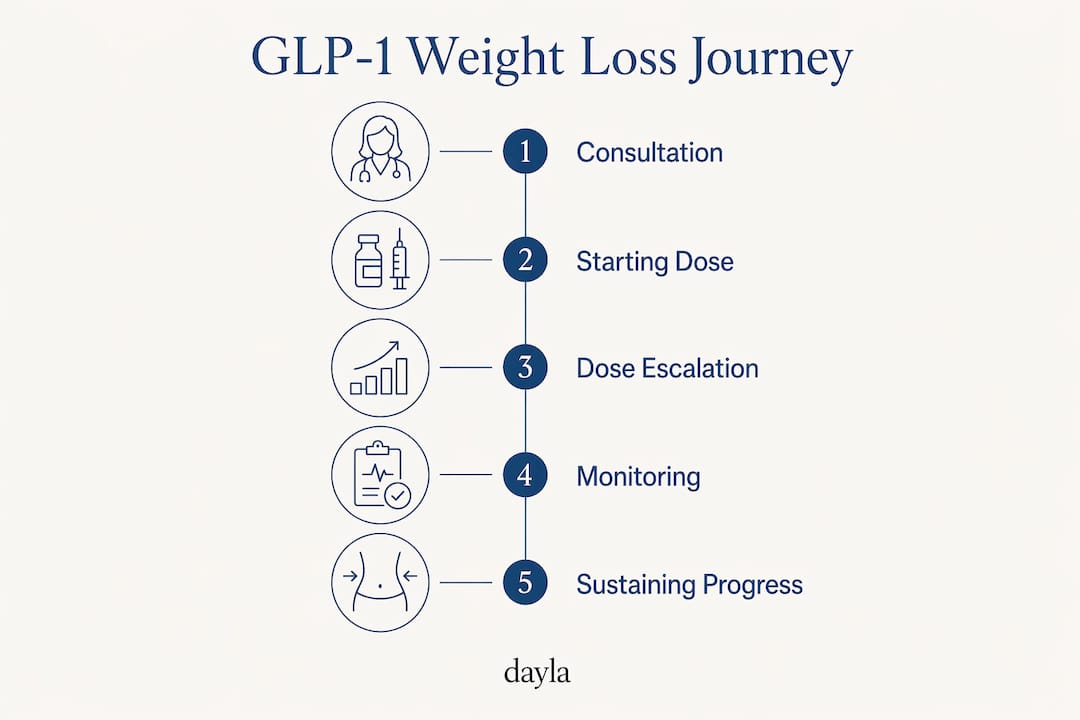
Preparation is the single factor that separates patients who stay the course from those who drop out in the first six weeks. Before your first injection, three things need to be in place: a qualified prescriber, a clear health picture, and a practical setup at home.
Medical consultation and health assessment
Your prescriber needs a complete picture before writing a GLP-1 prescription. That means a review of your current medications (some interact with GLP-1s), your weight history, any history of pancreatitis or thyroid cancer, and baseline lab work including fasting glucose and kidney function. This is not bureaucratic box-checking. It directly determines your starting dose and escalation schedule.

Equipment and supplies to have ready
Experienced patients prepare before day one by stocking nausea-friendly foods like crackers, broth, and ginger tea, along with a sharps container for used injection pens. Having these items ready before your first dose means you are not scrambling when mild nausea hits on day three.
Here is what to have on hand before you begin:
- Injection pen (semaglutide or tirzepatide, as prescribed)
- Sharps disposal container
- Nausea-friendly snacks: plain crackers, ginger chews, broth
- A water bottle you will actually use throughout the day
- A meal prep plan for the first two weeks
- A notebook or app to log symptoms and weight
Setting realistic expectations
GLP-1 treatment is a chronic disease management tool, not a short-term fix. Patients who stop treatment typically return to their prior weight within about 1.7 years. Framing this as a long-term metabolic commitment from the start protects you from disappointment and keeps you consistent.
Pro Tip: Ask your prescriber specifically about dose escalation timing before you start. Knowing the schedule in advance removes uncertainty and helps you plan around potential side effects.
How to start dosing and what to expect in the first 4 weeks
The first month on GLP-1 medication is about tolerability, not transformation. Your body is adjusting to a new hormonal signal, and the goal is to establish that signal without overwhelming your digestive system.
Starting doses and why they are low
Semaglutide starts at 0.25 mg weekly. Tirzepatide starts at 2.5 mg weekly. These doses are below the therapeutic threshold intentionally. The slow dose escalation every four weeks is the clinical standard because it improves tolerability and long-term adherence. Jumping ahead on the schedule is one of the most common mistakes new patients make.
What the first four weeks feel like
Here is a realistic week-by-week breakdown of what most patients experience:
- Week 1: Mild appetite reduction, possibly no side effects at all. Some patients feel slightly nauseous after the injection, which typically passes within 24 hours.
- Week 2: Appetite suppression becomes more noticeable. Portion sizes feel naturally smaller. Energy may dip slightly as caloric intake drops.
- Week 3: GI side effects like bloating or loose stools can appear. Small, frequent meals and consistent hydration are the most effective tools here.
- Week 4: Most patients see 2 to 5 pounds lost by the end of the first month, with mostly mild to moderate GI side effects that peak around this point.
That 2 to 5 pound figure sounds modest, but it reflects a body learning to respond to a new hormonal environment. The real acceleration comes later.
Pro Tip: Inject on the same day each week, ideally in the evening before a light meal. Evening dosing means any nausea peaks while you sleep rather than during your workday.
Dose escalation schedule and managing side effects through 12 weeks
Weeks 4 through 12 are where the treatment starts to show its full potential. Doses increase on a monthly schedule, appetite suppression deepens, and weight loss accelerates. This phase also brings the most pronounced side effects for many patients.
Typical escalation schedule
The fastest clinically recommended dose increase is once per month. For semaglutide, the schedule moves from 0.25 mg to 0.5 mg at week 4, then to 1 mg at week 8 if tolerated. Tirzepatide follows a similar pattern, moving from 2.5 mg to 5 mg at week 4. Most patients reach a therapeutic maintenance dose around weeks 16 to 20.
What to expect by week 12
By weeks 8 to 12, patients typically experience 5 to 8% body weight loss alongside stronger appetite suppression. For a 220-pound person, that is 11 to 18 pounds. The peak therapeutic effect, which can reach 15 to 21% body weight loss, occurs between weeks 68 and 72 in clinical trials like STEP and SURMOUNT-1.
Side effect comparison by phase
| Phase | Common side effects | Management strategy |
|---|---|---|
| Weeks 1 to 4 | Mild nausea, reduced appetite | Small meals, ginger tea, evening injection |
| Weeks 4 to 8 | Bloating, fatigue, constipation | Increase fiber and water, reduce greasy foods |
| Weeks 8 to 12 | Nausea may ease, energy stabilizes | Maintain protein intake, add light exercise |
Managing side effects through this phase comes down to four consistent habits:
- Avoid rich, greasy, or sugary foods, especially in the 24 hours after injection
- Drink at least 64 ounces of water daily to support digestion and reduce constipation
- Eat smaller portions more frequently rather than two or three large meals
- Contact your prescriber before skipping a dose due to side effects. A dose hold is safer than stopping and restarting
A gut health improvement plan that emphasizes fermented foods, fiber, and reduced processed sugar can meaningfully reduce GI discomfort during this phase.
Tips for sustaining progress and avoiding plateaus long term
The first 12 weeks establish your foundation. The following months determine how much of that progress you keep and build on. Weight loss plateaus are common and do not signal treatment failure. They signal that your body has adapted and needs a new stimulus.
Protect your muscle mass
Resistance training and adequate protein are the two most critical factors for preventing muscle loss during GLP-1 treatment. The CDC recommends 150 minutes of cardio plus two strength training sessions weekly. Dietitians specializing in GLP-1 care recommend protein intake of 1.2 to 1.6 grams per kilogram of body weight daily. At that level, your body has the raw material to preserve lean mass even as fat stores decrease.
Eat by the clock, not by hunger
GLP-1 medications suppress appetite so effectively that many patients forget to eat. Eating on a schedule rather than waiting for hunger cues prevents dizziness, fatigue, and muscle wasting. Set three meal times and stick to them regardless of whether you feel hungry. This is one of the most counterintuitive but important behavioral shifts in a GLP-1 diet approach.
When to contact your provider
- Weight loss has stalled for more than four weeks despite consistent adherence
- Side effects are severe enough to affect daily function
- You are losing weight but feel weak or fatigued, which may indicate muscle loss
- You want to discuss switching from semaglutide to tirzepatide, which generally shows greater average weight loss in head-to-head comparisons
Pro Tip: Log your food intake for the first 60 days using an app like MyFitnessPal or Cronometer. Not to count calories obsessively, but to confirm you are hitting your protein target. Most patients on GLP-1s undereat protein without realizing it.
For a deeper look at lifestyle habits that support results, Daylahealth has published specific guidance on diet, hydration, and exercise timing that complements your medication schedule.
My honest assessment of what makes GLP-1 treatment work
Having followed the clinical evidence and patient experiences closely, the pattern is clear: the patients who succeed long term are not the ones who lose weight fastest in month one. They are the ones who treat the slow escalation schedule as a feature, not a flaw.
The medication does the heavy lifting on appetite regulation. But the lifestyle structure, the protein targets, the scheduled meals, the hydration, that is what determines whether you lose fat or fat and muscle together. Most people who struggle on GLP-1s are not failing the medication. They are under-eating protein and skipping the resistance training because the appetite suppression makes both feel unnecessary.
The other thing worth saying plainly: GLP-1 success depends heavily on clinician expertise for dose adjustments and ongoing support. A prescriber who simply writes the prescription and disappears is not giving you what this treatment requires. You need someone who will review your progress at weeks 4, 8, and 12, adjust your dose based on your response, and troubleshoot side effects before they become reasons to quit.
GLP-1 medications are among the most effective obesity management tools available in 2026. But they work best when you approach them as a long-term metabolic partnership, not a shortcut.
— Flexible
Start your GLP-1 treatment with Daylahealth
Daylahealth connects you with licensed, doctor-led providers who specialize in personalized GLP-1 care. From your initial consultation through ongoing dose management, the clinical team monitors your progress and adjusts your treatment based on real results, not a one-size-fits-all protocol.

Daylahealth offers access to compounded semaglutide at accessible price points, with telehealth appointments that fit your schedule. You get a prescriber who understands the escalation schedule, the side effect curve, and the lifestyle factors that determine your outcome. If you are ready to begin with a provider who treats this as the long-term commitment it is, explore GLP-1 treatment options at Daylahealth today.
FAQ
What is a GLP-1 medication?
A GLP-1 receptor agonist is a prescription medication that mimics the glucagon-like peptide-1 hormone to reduce appetite and slow digestion. Common examples include semaglutide (Wegovy) and tirzepatide (Zepbound).
How much weight can I expect to lose in the first month?
Most patients lose 2 to 5 pounds in the first four weeks, with modest appetite suppression and mild GI side effects. Significant acceleration typically begins after the first dose escalation at week four.
How do I manage nausea when starting GLP-1 injections?
Eat small, frequent meals, avoid greasy or sugary foods, stay well hydrated, and consider injecting in the evening so peak nausea occurs overnight. Most nausea resolves as your body adjusts through the first few weeks.
Will I regain weight if I stop taking GLP-1 medication?
Yes. Patients who stop GLP-1 treatment typically return to their prior weight within approximately 1.7 years. These medications are designed for long-term use as part of ongoing obesity management.
What is the difference between semaglutide and tirzepatide?
Both are GLP-1 receptor agonists, but tirzepatide also activates GIP receptors, which gives it a dual mechanism. Clinical data shows tirzepatide generally produces greater average weight loss compared to semaglutide, though individual responses vary.