

GLP-1 receptor agonists are medications that mimic the body's naturally occurring glucagon-like peptide-1 hormone to regulate blood sugar, suppress appetite, and drive meaningful weight loss. Drugs in this class, including semaglutide (Ozempic, Wegovy), liraglutide (Victoza, Saxenda), and tirzepatide (Mounjaro, Zepbound), have reshaped how clinicians approach both type 2 diabetes and obesity treatment. Understanding the GLP-1 receptor agonist mechanism, its clinical benefits, and its side effect profile gives you the foundation to have a genuinely informed conversation with your doctor about whether this therapy fits your goals.
What is the GLP-1 mechanism of action?
GLP-1 receptor agonists work by binding to GLP-1 receptors distributed across the pancreas, brain, stomach, and cardiovascular system. The natural GLP-1 hormone has a half-life of only one to two minutes in the body, which is why pharmaceutical versions are engineered to last hours or days. When an agonist activates these receptors, it triggers a coordinated set of metabolic responses that no single drug class had previously achieved together.
The core biological effects include:
- Glucose-dependent insulin release: The pancreas secretes insulin only when blood sugar is elevated, which sharply reduces hypoglycemia risk compared to insulin therapy.
- Glucagon suppression: The liver releases less stored glucose, lowering fasting blood sugar without requiring insulin to do the heavy lifting.
- Delayed gastric emptying: Food moves more slowly from the stomach to the small intestine, blunting post-meal glucose spikes and extending the feeling of fullness.
- Central appetite suppression: GLP-1 receptors in the hypothalamus and brainstem reduce hunger signaling, so you eat less without fighting constant cravings.
These multiple metabolic pathways explain why GLP-1 agonists produce weight loss beyond what glycemic control alone would predict. The appetite suppression effect is not a side effect. It is a primary mechanism.
Pro Tip: If you are researching GLP-1 therapy for weight loss rather than diabetes, the appetite and gastric emptying effects are the mechanisms doing most of the work. The insulin-stimulating effect matters less unless you have impaired glucose tolerance.
What are the benefits of GLP-1 agonists for weight loss?
The weight loss outcomes from GLP-1 receptor agonists are clinically significant, not marginal. A Johns Hopkins analysis of 64 clinical trials found that women lost about 11% of starting body weight on average, while men lost about 7%. That sex difference is meaningful for setting realistic expectations, and it likely reflects hormonal and metabolic processing differences rather than differences in adherence or effort.
The benefits extend well beyond the scale. A meta-analysis of eight cardiovascular outcome trials covering 60,080 participants found that GLP-1 receptor agonists produced a 13% reduction in cardiovascular mortality and a 17% reduction in composite renal outcomes. These are not incidental findings. They represent a genuine shift in how cardiologists and nephrologists now view these medications.
| Medication | Average weight loss | Additional benefits |
|---|---|---|
| Semaglutide (Wegovy) | Up to 15% body weight | Cardiovascular risk reduction, blood pressure improvement |
| Tirzepatide (Zepbound) | Up to 20% body weight | Dual GIP/GLP-1 action, superior glycemic control |
| Liraglutide (Saxenda) | Up to 8% body weight | Established long-term safety data, daily dosing |
| Dulaglutide (Trulicity) | Moderate weight loss | Weekly dosing, renal protection evidence |
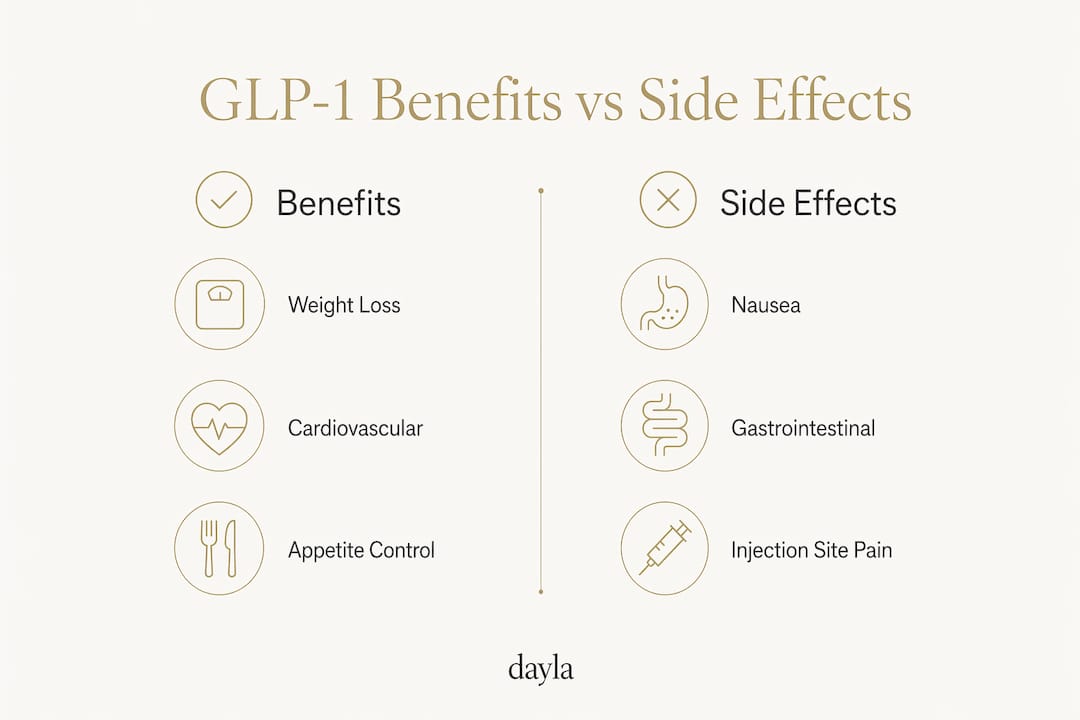
Tirzepatide deserves specific mention because it activates both GLP-1 and GIP receptors, making it a dual agonist rather than a pure GLP-1 agent. Its weight loss outcomes currently exceed those of semaglutide in head-to-head data, which is why it has attracted significant clinical attention since its approval.
Pro Tip: Weight loss percentages in trials reflect averages. Your individual result depends on starting weight, sex, genetics, and how well you tolerate dose escalation. Ask your provider about the specific trial data for the medication you are considering.
What are common side effects and how to manage them?
GLP-1 therapy side effects are real, predictable, and manageable. An umbrella review covering 1,751 randomized controlled trials and 3.58 million participants confirmed that GLP-1 receptor agonists are consistently associated with nausea (odds ratio 2.47), vomiting (odds ratio 2.78), and diarrhea (odds ratio 1.94). These numbers sound alarming in isolation, but they reflect the full dose range and do not mean most patients experience severe symptoms throughout treatment.
The gastrointestinal effects follow a predictable pattern:
- Onset during dose escalation: Nausea and vomiting peak when the dose increases, then typically subside as the body adapts over one to four weeks.
- Biological cause: Slowed gastric emptying and central satiety signaling create the sensation of nausea. The stomach is not emptying at its normal rate, and the brain is receiving stronger fullness signals than it is used to.
- Diarrhea pattern: Less common than nausea, diarrhea tends to appear early and resolve faster than nausea in most patients.
- Gallbladder effects: Rapid weight loss from any cause increases gallstone risk. GLP-1 therapy is no exception, and biliary disease is a less common but documented adverse effect.
Counseling patients to expect and adapt to these side effects significantly improves adherence and long-term outcomes. Providers who frame nausea as a sign the medication is working, rather than a reason to stop, see better results. Gradual dose titration, eating smaller meals, avoiding high-fat foods during escalation, and staying hydrated are the practical tools that make the difference between patients who push through and those who discontinue early.
Why do individual responses to GLP-1 therapy vary so much?
Not everyone loses the same amount of weight on the same dose of the same drug, and the reason is not willpower or lifestyle compliance alone. A Johns Hopkins study confirmed that efficacy is broadly similar across age groups, racial backgrounds, BMI categories, and HbA1c levels, with the notable exception of sex differences described above. This finding is reassuring because it means GLP-1 therapy is not selectively effective for a narrow demographic.
Genetics, however, tell a more complex story. A 2026 genome-wide association study published in Nature analyzed 27,885 people and identified missense variants in GLP1R and GIPR that significantly predict both the magnitude of weight loss and susceptibility to nausea and vomiting. This means two people on identical doses of semaglutide may experience dramatically different outcomes because of inherited differences in receptor structure and function.
"Pharmacogenetic testing for GLP1R and GIPR variants could soon guide initial drug choice, dose adjustments, and side effect monitoring for patients on GLP-1 receptor agonists." — Nature, 2026
The practical implication is that genetic variation influences drug response in ways that current prescribing protocols do not yet account for. If you respond poorly to one GLP-1 agent or experience disproportionate side effects, switching agents or adjusting the dose is a clinically sound strategy, not a failure. The field is moving toward pharmacogenetic testing as a standard part of obesity medicine, and that shift will make personalized GLP-1 care far more precise within the next few years.
The key factors that currently explain individual variability include:
- Sex: Women tend to lose more weight on average, likely due to hormonal differences in metabolic processing.
- Genetic receptor variants: GLP1R and GIPR gene variants affect both efficacy and side effect susceptibility.
- Baseline metabolic health: Insulin resistance severity and starting HbA1c influence glycemic response.
- Dose tolerance: Patients who can reach and sustain higher doses consistently achieve greater weight loss.
How do GLP-1 receptor agonists compare with insulin?
The GLP-1 vs insulin comparison is one of the most common questions in metabolic medicine, and the distinction matters for treatment planning. GLP-1 receptor agonists and insulin both lower blood glucose, but they do so through fundamentally different mechanisms with opposite effects on body weight.
| Feature | GLP-1 receptor agonists | Insulin |
|---|---|---|
| Primary mechanism | Appetite suppression, gastric slowing, glucose-dependent insulin release | Direct glucose uptake into cells |
| Effect on body weight | Weight loss (average 7 to 20%) | Weight gain in most patients |
| Hypoglycemia risk | Low (glucose-dependent action) | Higher, especially with basal/bolus regimens |
| Onset of metabolic effect | Weeks to months | Hours to days |
| Route of administration | Subcutaneous injection or oral (semaglutide) | Subcutaneous injection or pump |
The multi-mechanism action of GLP-1 agonists explains their lower hypoglycemia risk. Because they only stimulate insulin release when blood glucose is elevated, the risk of driving blood sugar too low is substantially reduced compared to exogenous insulin. Insulin, by contrast, lowers glucose regardless of current blood sugar levels, which is why timing and dosing precision matter so much.
For patients with type 2 diabetes who are also managing obesity, GLP-1 receptor agonists often represent a better first-line injectable option than insulin. They address both conditions simultaneously rather than treating one while worsening the other. Insulin remains the standard of care for type 1 diabetes and for type 2 patients with severely impaired beta-cell function, where GLP-1 agonists alone cannot provide adequate glucose control.
Pro Tip: If your provider is considering adding an injectable medication to your diabetes regimen, ask specifically whether a GLP-1 receptor agonist is appropriate before defaulting to insulin. The weight and cardiovascular benefits make it the preferred starting point for most eligible patients.
Key takeaways
GLP-1 receptor agonists work through multiple simultaneous mechanisms, including appetite suppression, gastric slowing, and glucose-dependent insulin release, making them more effective for weight loss and metabolic health than any single-pathway drug.
| Point | Details |
|---|---|
| Core mechanism | GLP-1 agonists suppress appetite, slow gastric emptying, and stimulate insulin only when blood sugar is elevated. |
| Weight loss outcomes | Women average 11% body weight loss; men average 7%, per Johns Hopkins analysis of 64 trials. |
| Side effect pattern | Nausea and vomiting peak during dose escalation and typically resolve with gradual titration. |
| Genetic variability | GLP1R and GIPR gene variants predict both weight loss magnitude and side effect susceptibility. |
| GLP-1 vs insulin | GLP-1 agonists promote weight loss and carry lower hypoglycemia risk; insulin tends to cause weight gain. |
The case for taking individual variability seriously
Most coverage of GLP-1 receptor agonists focuses on the headline weight loss numbers, and those numbers are genuinely impressive. But the detail that deserves more attention is the genetic variability finding from the 2026 Nature study. The fact that variants in GLP1R and GIPR predict both how much weight you lose and how sick you feel on the medication is not a footnote. It is the future of how this class of drugs will be prescribed.
What I find most compelling about GLP-1 therapy is the multi-mechanism profile. No other approved weight loss medication simultaneously reduces appetite, slows gastric emptying, lowers blood sugar in a glucose-dependent way, and reduces cardiovascular mortality. That combination is not coincidental. It reflects how deeply GLP-1 receptors are embedded in metabolic regulation across multiple organ systems.
The side effect picture deserves honest framing. Nausea is real, and for some patients it is genuinely disruptive during the first weeks of dose escalation. But framing it as a sign of treatment failure leads patients to stop a medication that would have worked well if they had stayed the course. The gradual dose titration approach exists precisely because the clinical community recognized that tolerability, not efficacy, was the primary barrier to long-term success.
My honest view is that anyone researching GLP-1 therapy should go into it with calibrated expectations. The average outcomes are strong. Your individual outcome depends on your genetics, your sex, your starting metabolic health, and how well you and your provider manage the escalation phase. That is not a reason for pessimism. It is a reason to work with a provider who personalizes your care rather than applying a one-size protocol.
— Flexible
Start your personalized GLP-1 program with Daylahealth
Daylahealth offers doctor-led, personalized GLP-1 care through its Vitalia GLP program, designed for people who want more than a generic prescription. You get access to licensed providers, medication options including semaglutide and tirzepatide, and ongoing support to manage dose escalation and side effects from day one.

The program is built around the clinical reality that your response to GLP-1 therapy is individual. Dosing, monitoring, and meal planning guidance are tailored to your starting point, not a population average. If you are ready to move from researching to acting, explore the Vitalia GLP-1 program and find out which medication and dose structure fits your health profile. Personalized care produces better outcomes than a one-size approach, and Daylahealth is built on that principle.
FAQ
What are GLP-1 receptor agonists used for?
GLP-1 receptor agonists are approved for treating type 2 diabetes and obesity. Medications like semaglutide and tirzepatide are also used off-label for metabolic health improvement and cardiovascular risk reduction in high-risk patients.
How long does it take to see weight loss results?
Most patients begin noticing appetite suppression within the first one to two weeks, but meaningful weight loss typically becomes visible after four to twelve weeks. Maximum weight loss is usually achieved after twelve to eighteen months of consistent treatment.
Are GLP-1 agonists safe for long-term use?
Large randomized controlled trials covering tens of thousands of patients confirm that GLP-1 receptor agonists are safe for long-term use, with cardiovascular and renal benefits accumulating over time. Ongoing monitoring for gallbladder health and gastrointestinal tolerance is standard practice.
Why do some people lose more weight than others on GLP-1 therapy?
Genetic variants in GLP1R and GIPR, sex differences in metabolic processing, and the ability to tolerate dose escalation all influence individual outcomes. A Johns Hopkins analysis confirmed that age, race, and starting BMI do not significantly affect efficacy, but sex does.
Can GLP-1 receptor agonists replace insulin?
GLP-1 agonists are not a replacement for insulin in type 1 diabetes or in type 2 patients with severely reduced beta-cell function. For most people with type 2 diabetes who are also managing excess weight, however, GLP-1 therapy is often the preferred injectable option before insulin is considered.