

GLP-1 appetite suppression meal planning is the practice of structuring nutrient-dense, protein-forward meals to work with the satiety and gastric-slowing effects of GLP-1 receptor agonists like semaglutide and tirzepatide. These medications, clinically known as glucagon-like peptide-1 receptor agonists, reduce hunger signals and slow gastric emptying, which means what you eat matters as much as how little you feel like eating. Without a deliberate food strategy, reduced appetite can lead to protein deficiency, muscle loss, and worsening gastrointestinal side effects. The right meal structure turns GLP-1 therapy into a sustainable weight loss tool rather than a short-term fix.
What are the best foods to eat and avoid on GLP-1?
The Cleveland Clinic recommends lean proteins and fiber-rich foods as the foundation of any GLP-1 diet, specifically fish, chicken, tofu, fruits, vegetables, and whole grains. This matters because GLP-1 medications already reduce your total food intake. Every bite needs to deliver maximum nutritional value. Prioritizing nutrient density over calorie volume protects your health when your appetite is working against you.
Foods to include:
- Lean proteins: Chicken breast, salmon, canned tuna, Greek yogurt, eggs, tofu, and legumes like lentils and black beans
- High-fiber vegetables: Broccoli, spinach, zucchini, cauliflower, and carrots support fullness and prevent constipation, a common GLP-1 side effect
- Whole grains: Oats, quinoa, brown rice, and farro provide sustained energy without spiking blood sugar
- Healthy fats: Avocado, olive oil, and a small handful of nuts support satiety without triggering nausea
- Hydrating foods: Cucumber, watermelon, and broth-based soups help maintain fluid intake when drinking feels difficult
Foods to avoid:
- Fried or greasy foods, which slow digestion further and worsen nausea
- Spicy dishes, which irritate an already sensitive GI tract
- Sugary drinks and processed snacks, which deliver empty calories in a window where every calorie counts
- Large portions of red meat or full-fat dairy, which are harder to digest under slowed gastric emptying
Pro Tip: If nausea hits hardest in the morning, keep a small container of plain crackers or dry oats on your nightstand. Eating something bland before getting up can reduce early-day GI discomfort without requiring a full meal.
How to structure meal timing and portions for GLP-1 appetite suppression
Smaller, more frequent meals reduce nausea and digestive discomfort, especially during the dose escalation phase of GLP-1 therapy. Three large meals overwhelm a stomach that is already emptying slowly. Shifting to four or five smaller eating windows distributes the digestive load and keeps blood sugar stable throughout the day.
Here is a practical structure for daily meal timing:
- Breakfast (7:00 to 8:00 a.m.): A small, protein-rich meal. Two scrambled eggs with spinach, or Greek yogurt with berries and a tablespoon of chia seeds. Keep portions to roughly one cup of total food volume.
- Mid-morning snack (10:00 to 10:30 a.m.): A protein-forward snack like a hard-boiled egg, a small portion of cottage cheese, or a handful of edamame. This prevents a long gap before lunch.
- Lunch (12:30 to 1:00 p.m.): A balanced plate of lean protein, a fiber-rich vegetable, and a small serving of whole grains. A salmon and quinoa bowl with roasted broccoli is a strong example.
- Afternoon snack (3:30 to 4:00 p.m.): A small protein shake or a few slices of turkey with cucumber. This is where protein distribution across meals becomes critical. Spacing protein evenly prevents muscle loss when total intake is low.
- Dinner (6:30 to 7:00 p.m.): The lightest meal of the day. Soup, a small portion of baked chicken with steamed vegetables, or a lentil stew work well. Avoid eating within two hours of bedtime to reduce reflux risk.
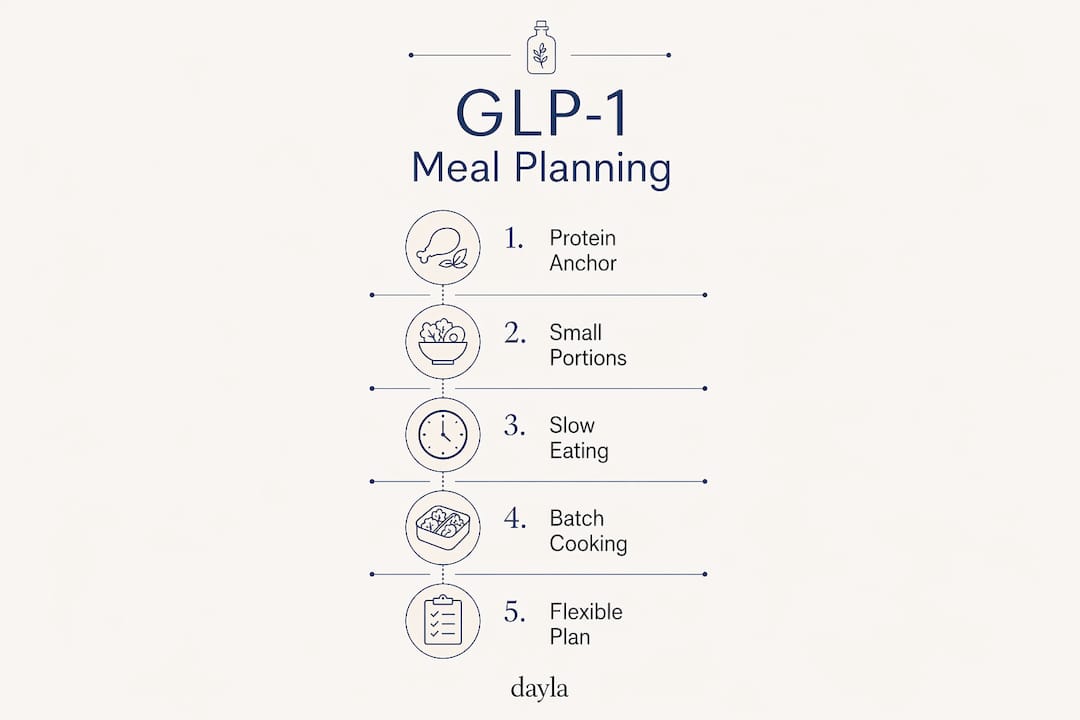
Eating pace matters as much as timing. Slow eating gives your brain time to register fullness signals, which are already amplified by GLP-1 medication. Rushing a meal often ends in nausea or discomfort that could have been avoided entirely.
Pro Tip: Batch-cook proteins on Sunday. Grilled chicken, hard-boiled eggs, and cooked lentils stored in separate containers mean your mid-week meals require assembly, not cooking. This removes the decision fatigue that leads to skipping meals.
How to adapt meal planning when appetite is very low
Some days on GLP-1 therapy, eating feels genuinely difficult. Nausea peaks, food smells are overwhelming, and even a small meal feels like too much. This is most common during dose increases and typically settles within one to two weeks. The goal on these days is not a perfect meal. The goal is meeting your protein minimum and staying hydrated.
Practical strategies for low-appetite days include:
- Protein shakes as a primary tool. Protein shakes substitute effectively for solid meals when appetite suppression is severe. A shake with 25 to 30 grams of protein, made with water or low-fat milk, delivers critical nutrition without requiring you to eat a full meal.
- Bland, easy-to-digest foods. Plain rice, banana, applesauce, and plain crackers are gentle on the stomach and easy to consume in small amounts.
- Hydration as a priority. Staying upright after meals and sipping water, electrolyte drinks, or broth throughout the day reduces nausea and prevents dehydration, which worsens GI symptoms.
- Reduce cooking complexity. On difficult days, pre-portioned snacks, rotisserie chicken, or store-bought Greek yogurt are legitimate meal planning tools. Reducing the effort required to eat increases the chance you actually will.
"The most important nutrition rule on a hard GLP-1 day is this: eat something with protein, drink something with electrolytes, and do not skip the next meal. Recovery from a rough day is faster when you stay consistent."
Flexible meal planning is not a compromise. It is a clinical strategy. Gradual dose escalation combined with dietary adjustments improves GI tolerability and long-term medication adherence. Treating your meal plan as a rigid prescription on hard days is the fastest route to abandoning it.
Sample GLP-1-friendly weekly meal plan template
A structured weekly template reduces decision fatigue and promotes consistency, two factors that directly support weight loss outcomes on GLP-1 therapy. EatingWell's 7-day GLP-1 meal plan demonstrates that effective meal prep for weight loss requires no more than 30 minutes of active cooking per day when planned correctly.
The table below outlines a practical framework. Rotate proteins and vegetables to prevent flavor fatigue while keeping macros consistent.
| Day | Breakfast | Lunch | Dinner | Snack |
|---|---|---|---|---|
| Monday | Greek yogurt, berries, chia seeds | Grilled chicken, quinoa, roasted broccoli | Lentil soup, whole grain bread | Hard-boiled egg |
| Tuesday | Scrambled eggs, spinach, whole grain toast | Canned tuna salad, cucumber, brown rice | Baked salmon, steamed zucchini | Cottage cheese, sliced apple |
| Wednesday | Oatmeal, almond butter, banana | Turkey and avocado wrap, side salad | Chicken stir-fry, brown rice | Edamame |
| Thursday | Protein shake, handful of almonds | Lentil and vegetable soup | Baked cod, roasted carrots, quinoa | Greek yogurt |
| Friday | Eggs and avocado on whole grain toast | Grilled shrimp, mixed greens, olive oil | Turkey meatballs, zucchini noodles | String cheese, apple |
| Saturday | Smoothie with protein powder, spinach, frozen berries | Chicken and vegetable grain bowl | Salmon, sweet potato, steamed broccoli | Hummus, sliced vegetables |
| Sunday | Overnight oats with protein powder | Turkey and black bean bowl | Chicken soup, whole grain crackers | Hard-boiled egg, cucumber |
For those who prefer not to cook, meal delivery services designed specifically for GLP-1 users offer protein-forward, portion-controlled options averaging 25 to 30 grams of protein and 5 grams of fiber per meal. These services remove the planning burden entirely on weeks when energy or motivation is low.
Pro Tip: Prepare two or three proteins in bulk on Sunday and mix them across different meals throughout the week. Grilled chicken works in a grain bowl on Monday, a wrap on Wednesday, and a soup on Sunday. One cooking session, seven days of variety.
How to monitor progress and adjust your meal plan over time
GLP-1 therapy changes your body's relationship with food over weeks and months. Your meal plan should change with it. The adjustment phases most people experience follow a predictable pattern: early GI side effects during dose escalation, a stabilization period at maintenance dose, and a gradual normalization of appetite that requires recalibrating portion sizes upward.
Watch for these signs that your meal plan needs adjustment:
- Fatigue or weakness: Often signals insufficient protein or total calorie intake. Structured nutrition programs that include protein-enriched meal replacements help preserve lean mass during caloric restriction.
- Hair thinning: A known indicator of protein deficiency. Increase protein intake to at least 1.2 grams per kilogram of body weight daily.
- Persistent nausea beyond two weeks at a stable dose: May indicate a food intolerance or a need to further reduce meal size. Consult your prescribing provider before adjusting medication.
- Plateau in weight loss: Often means total intake has dropped too low, slowing metabolism. A registered dietitian can recalibrate your targets.
- Loss of muscle tone: Lean mass preservation requires deliberate protein intake. Resistance training combined with adequate protein intake is the most effective counter-strategy.
Working with a registered dietitian who understands GLP-1 therapy is the most direct path to a personalized plan. Daylahealth connects patients with doctor-led GLP-1 care that includes nutritional guidance tailored to your dose, goals, and tolerance.
Key takeaways
GLP-1 appetite suppression meal planning works best when protein and fiber anchor every meal, portions stay small and frequent, and the plan adapts to your body's changing tolerance across dose phases.
| Point | Details |
|---|---|
| Protein is non-negotiable | Aim for 1.2g per kg of body weight daily to prevent muscle loss during caloric restriction. |
| Smaller meals reduce side effects | Four to five small meals outperform three large ones for managing nausea and GI discomfort. |
| Adapt on hard days | Use protein shakes and bland foods on low-appetite days rather than skipping meals entirely. |
| Meal prep reduces failure | Batch-cooking proteins and using a weekly template removes decision fatigue and supports consistency. |
| Monitor and adjust | Watch for fatigue, hair thinning, and muscle loss as signals to recalibrate your nutrition plan. |
What I've learned about GLP-1 meal planning after seeing it work and fail
The most common mistake I see is treating GLP-1 therapy as a passive process. People assume the medication does the work and food choices become secondary. That thinking leads to muscle loss, nutrient deficiencies, and a rebound the moment the prescription ends.
The second mistake is perfectionism. Patients who design elaborate meal plans they cannot sustain drop them entirely after one hard week. A flexible plan built around five or six reliable meals you actually enjoy is worth more than a nutritionally perfect plan you abandon by day ten.
What actually works is simpler than most people expect. Protein at every meal, fiber at most meals, small portions eaten slowly, and a backup plan for bad days. The GLP-1 guide from Daylahealth covers the clinical side of this well, but the practical side comes down to preparation. People who batch-cook on weekends, keep protein shakes on hand, and have a list of five go-to meals they can make in under 15 minutes consistently outperform those who plan more and prepare less.
Patience matters too. The first four to six weeks on GLP-1 therapy are the hardest nutritionally. Side effects are most intense, appetite is most unpredictable, and the temptation to under-eat is strongest. Push through that window with a solid protein strategy and the rest of the journey becomes significantly more manageable.
— Flexible
Start your GLP-1 journey with personalized support from Daylahealth

Daylahealth provides doctor-led, personalized GLP-1 care designed to support your weight loss goals from prescription through nutrition. If you are ready to move beyond generic advice and get a plan built around your dose, your body, and your lifestyle, Daylahealth is the place to start. The platform connects you with licensed providers who understand GLP-1 therapy, including guidance on protein targets, meal timing, and managing side effects at every phase of treatment. Explore GLP-1 weight loss options at Daylahealth and take the first step toward a plan that actually fits your life.
FAQ
What foods should I eat on GLP-1 medication?
Lean proteins like chicken, fish, and tofu, combined with high-fiber vegetables and whole grains, form the foundation of a GLP-1-friendly diet. The Cleveland Clinic identifies these food groups as the most effective for maintaining fullness and supporting gut health during GLP-1 therapy.
How many meals a day should I eat on GLP-1?
Four to five small meals spaced evenly throughout the day reduces nausea and digestive discomfort better than three large meals. Smaller portions are easier for a stomach with slowed gastric emptying to process comfortably.
How do I get enough protein when I have no appetite on GLP-1?
Protein shakes are the most practical solution on low-appetite days, delivering 25 to 30 grams of protein without requiring a full meal. Spacing protein intake across all meals and snacks, even in small amounts, prevents the muscle loss that accompanies significant caloric restriction.
Can meal delivery services work for GLP-1 users?
Yes. Services that offer protein-forward, portion-controlled meals averaging 25 to 30 grams of protein and 5 grams of fiber per serving align well with GLP-1 nutritional targets and reduce the planning burden significantly.
When should I adjust my GLP-1 meal plan?
Adjust your plan when you notice fatigue, hair thinning, muscle weakness, or a weight loss plateau, as these signal nutritional gaps. A registered dietitian or your prescribing provider can help recalibrate protein targets and portion sizes as your dose and tolerance evolve.