

A weight loss stall on GLP-1 therapy is defined as a period of four or more weeks with no measurable downward trend in body weight despite continued medication use. This is not a sign of treatment failure. Clinical data from the STEP-1 trial shows semaglutide 2.4 mg produces approximately 14.9% body weight reduction at 68 weeks, with progress naturally slowing in later stages. The good news: you can overcome weight loss stall on GLP-1 medications with targeted changes to nutrition, exercise, and clinical management. This guide covers exactly how.
What causes weight loss plateaus during glp-1 therapy?
A GLP-1 weight loss plateau has two main drivers: physiological adaptation and behavioral drift. Understanding which one you are dealing with determines the right response.
Your body adapts to a calorie deficit over time. Metabolic rate slows, lean muscle mass decreases, and hunger hormones shift. These changes reduce the size of your daily energy deficit even when your medication dose stays the same. A 2026 Bayesian meta-analysis confirmed that weight loss on semaglutide and similar agents typically plateaus around week 52. That timing is expected, not exceptional.

Behavioral factors also play a larger role than most people realize. Reduced appetite from GLP-1 medications can unintentionally lower protein intake. Less hunger often means less intentional eating, which sounds positive but can accelerate lean mass loss and slow metabolism further.
Before concluding you have hit a true plateau, verify the data. Daily scale readings are unreliable. Hydration levels, sodium intake, digestion, and the menstrual cycle all create fluctuations of 1–3 pounds that have nothing to do with fat loss. Weekly weighted averages give a far more accurate picture of your actual trend.
Common causes of a perceived or real plateau include:
- Metabolic slowdown from sustained calorie deficit
- Lean mass loss reducing resting energy expenditure
- Reduced protein intake due to GLP-1 appetite suppression
- Decreased physical activity or step count over time
- Pharmacologic plateau at the maximum tolerated dose
- Natural biological weight fluctuations masking real progress
Pro Tip: Track your weight every morning under the same conditions, then calculate a 7-day average each Sunday. Compare weekly averages, not daily numbers, to confirm whether a true stall exists.
How can you adjust diet and nutrition to break a glp-1 plateau?
Nutrition is the highest-leverage variable you control during a GLP-1 weight loss stall. The right adjustments protect lean mass, support metabolism, and help you continue losing fat without triggering further metabolic adaptation.
Follow these steps to reset your nutritional approach:
-
Prioritize protein above everything else. Aim for 1.2–1.6 grams of protein per kilogram of body weight daily. Resistance training and sufficient protein during GLP-1 treatment are the most effective tools for preserving lean mass and supporting continued weight loss. Lean mass is your metabolic engine. Losing it slows your progress and makes regain more likely later.
-
Increase fiber intake strategically. Aim for 25–35 grams of dietary fiber per day from sources like legumes, vegetables, and whole grains. Fiber slows digestion, supports gut health, and extends satiety between meals. A solid gut health improvement plan can also reduce GI side effects common with GLP-1 medications, making it easier to eat consistently.
-
Reassess your total calorie intake. GLP-1 medications suppress appetite significantly, and many users unknowingly drop below 1,000 calories per day. Excessive calorie restriction during a plateau worsens metabolic adaptation by accelerating lean mass loss. A modest deficit of 300–500 calories below your maintenance level is more effective long-term than aggressive restriction.
-
Adjust meal timing and frequency. Eating two to three structured meals per day, rather than grazing, helps regulate hunger hormones and supports consistent energy intake. GLP-1 appetite suppression makes it easy to skip meals entirely, which compounds the lean mass problem.
-
Stay consistently hydrated. Dehydration mimics hunger signals and slows digestion. Aim for at least 2–3 liters of water daily. Proper hydration also supports kidney function as your body processes increased protein intake.
-
Use structured meal planning. Planning meals in advance prevents under-eating on low-appetite days. The Daylahealth guide on GLP-1 meal planning offers practical frameworks built specifically for the appetite patterns GLP-1 users experience.
Pro Tip: If you struggle to hit protein targets with suppressed appetite, prioritize protein-dense foods like Greek yogurt, cottage cheese, eggs, and lean poultry at the start of each meal before eating anything else.
What exercise routines effectively overcome weight loss stalls?
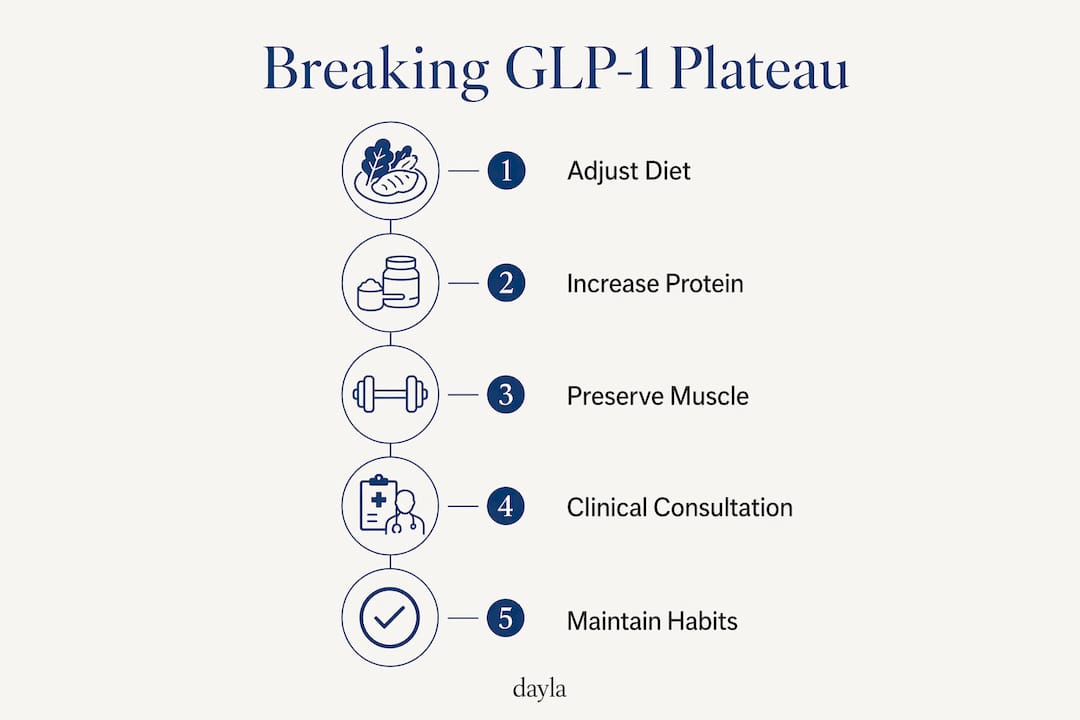
Exercise strategy during a GLP-1 plateau is not about burning more calories through cardio. It is about preserving the lean mass that keeps your metabolism working in your favor.
The most important shift you can make is prioritizing resistance training. Lifting weights two to four times per week signals your body to retain muscle even in a calorie deficit. Combining GLP-1 therapy with resistance training and adequate protein is the best practice for minimizing lean mass loss and optimizing weight loss outcomes. This is not optional advice. It is the clinical standard.
Key exercise principles for breaking through a plateau:
- Lead with resistance training. Compound movements like squats, deadlifts, rows, and presses recruit the most muscle and produce the strongest metabolic signal. Two to four sessions per week is sufficient.
- Add non-exercise activity thermogenesis (NEAT). NEAT refers to all movement outside formal workouts: walking, taking stairs, standing at a desk. Increasing daily steps from 5,000 to 8,000 can add meaningful calorie expenditure without the recovery demands of intense cardio.
- Avoid excessive steady-state cardio. Long cardio sessions in a significant calorie deficit accelerate muscle breakdown. If you enjoy cardio, keep sessions under 45 minutes and pair them with adequate protein intake.
- Apply progressive overload. Gradually increasing the weight, reps, or sets in your resistance training sessions over time prevents adaptation. Your body should face a slightly greater challenge each week.
- Match intensity to your side effect profile. GLP-1 medications can cause nausea and fatigue, especially during dose escalation. On difficult days, a 20-minute walk is a better choice than forcing a hard workout that leaves you depleted.
The Daylahealth resource on lifestyle changes for GLP-1 results covers how to structure physical activity alongside your medication schedule for consistent progress.
When should you consult your provider about medication adjustments?
If nutritional and exercise changes do not move the scale after four to six weeks, a clinical conversation is the right next step. Your provider can assess whether a dose adjustment, medication switch, or additional support is appropriate.
The comparison below shows why medication choice matters when you have genuinely plateaued:
| Factor | Semaglutide | Tirzepatide |
|---|---|---|
| Mechanism | GLP-1 receptor agonist | Dual GIP and GLP-1 agonist |
| Weight loss at 72 weeks | ~13.7% body weight | ~20.2% body weight |
| Trial reference | STEP program | SURMOUNT-5 |
| Best use case | First-line GLP-1 therapy | Plateau on semaglutide |
The SURMOUNT-5 head-to-head trial showed tirzepatide produced 20.2% weight loss versus 13.7% for semaglutide at 72 weeks. For patients who have genuinely plateaued on semaglutide, switching to tirzepatide is a clinically validated option that can restart meaningful progress.
Do not stop your medication without a structured plan. Weight regain averages about 0.4 kg per month after stopping weight management medications, and a systematic review of 37 trials with 9,341 adults showed weight returns to baseline within approximately 1.5–2 years after cessation. Stopping abruptly without a maintenance strategy eliminates the progress you have worked to achieve.
How do you maintain weight loss and avoid regain after stopping glp-1?
Avoiding weight regain after stopping GLP-1 medications requires habits built during treatment, not after it. The medication window is your best opportunity to establish the behaviors that sustain results long-term.
Oxford University research found that stopping weight loss drugs leads to faster regain than ending diet or behavioral programs, by approximately 0.3 kg per month. That gap exists because medications suppress appetite and support compliance. Without them, only established habits fill the gap.
Strategies that protect your results after cessation:
- Build protein and resistance training habits now. These two behaviors have the strongest evidence for preventing regain. They need to be automatic before you stop medication, not something you start afterward.
- Maintain a consistent meal structure. Regular meal timing supports hunger regulation even without pharmaceutical appetite suppression. Skipping this structure is one of the fastest paths to regain.
- Monitor your weight weekly. Catching a 3–5 pound upward trend early is far easier to address than a 20-pound regain. Weekly averages remain the most reliable tracking method.
- Plan your cessation with your provider. A structured taper and maintenance protocol reduces the speed of regain. Generic lifestyle advice alone is insufficient per current research.
- Use the treatment period to address root behaviors. Emotional eating patterns, stress-driven food choices, and sleep disruption all contribute to regain. Addressing them during treatment, when appetite suppression provides a buffer, is more effective than waiting.
The real role of protein in preserving lean mass and supporting metabolism is especially relevant here. Protein intake is the single most modifiable dietary factor for long-term weight maintenance.
Key takeaways
Overcoming a weight loss stall on GLP-1 requires addressing nutrition, exercise, and clinical management together rather than relying on any single change.
| Point | Details |
|---|---|
| Plateaus are expected | GLP-1 weight loss typically plateaus around week 52; this is normal, not failure. |
| Protein is non-negotiable | Aim for 1.2–1.6 g per kg of body weight daily to preserve lean mass and metabolism. |
| Resistance training is the priority | Two to four sessions per week protects muscle and prevents metabolic slowdown. |
| Medication switches are an option | Tirzepatide produced 20.2% weight loss vs 13.7% for semaglutide at 72 weeks in SURMOUNT-5. |
| Habits prevent regain | Building consistent behaviors during treatment is the most effective protection against regain after stopping. |
What i have learned about glp-1 plateaus after working with hundreds of patients
The most common mistake I see is treating a plateau as a crisis. It is not. It is a signal that your body has adapted and your approach needs to evolve.
The patients who break through stalls most consistently are the ones who treat the plateau as a systems problem, not a motivation problem. They audit their protein intake, add two resistance sessions per week, and track weekly averages instead of panicking at daily fluctuations. Those three changes alone resolve the majority of plateaus I see.
What most articles do not tell you is that the plateau phase is actually the most important window of your entire treatment. Your appetite is suppressed, your habits are forming, and you have clinical support. This is the time to lock in resistance training, nail your protein targets, and build the meal structure that will carry you after medication ends. Patients who use this window well rarely struggle with regain. Patients who wait until after they stop medication almost always do.
My honest view on medication switches: do not rush to tirzepatide the moment progress slows. Give nutritional and exercise adjustments four to six weeks first. If you have genuinely optimized both and the scale still does not move, then a clinical conversation about switching is absolutely warranted. The SURMOUNT-5 data is compelling. But medication is not a substitute for the habits that make results permanent.
— Flexible
Doctor-led glp-1 support that moves with you
If you are stuck at a plateau and need more than general advice, Daylahealth offers personalized GLP-1 care with clinical oversight built in. Every program includes access to licensed providers who can review your current medication, assess dose adjustments, and guide your nutritional and exercise approach based on your actual results.

Daylahealth's personalized GLP-1 programs cover semaglutide and tirzepatide prescriptions, ongoing clinical monitoring, and support for the habit formation that makes weight loss last. If you are ready to stop guessing and start progressing, the intake process takes minutes and connects you with a provider who specializes in exactly this.
FAQ
What is a true weight loss stall on glp-1?
A true stall is four or more consecutive weeks with no downward trend in weekly averaged body weight despite continued medication use and consistent behavior. Daily fluctuations from hydration and digestion do not qualify as a plateau.
How long does it take to plateau on semaglutide?
The STEP-1 trial shows semaglutide 2.4 mg produces approximately 14.9% body weight reduction at 68 weeks, with the plateau typically occurring around week 52. This timing is an expected feature of the drug's pharmacology, not a treatment failure.
Does switching to tirzepatide help after a semaglutide plateau?
Yes. The SURMOUNT-5 trial showed tirzepatide produced 20.2% weight loss versus 13.7% for semaglutide at 72 weeks. Patients who have genuinely plateaued on semaglutide may see renewed progress by switching to this dual GIP and GLP-1 agonist.
How fast does weight return after stopping glp-1 medications?
Weight regain averages approximately 0.4 kg per month after stopping weight management medications. A systematic review of 37 trials found weight returns to baseline within roughly 1.5–2 years without a structured maintenance plan.
What is the single most effective strategy to break a glp-1 plateau?
Combining increased protein intake with resistance training is the most evidence-backed approach. These two changes preserve lean mass, protect metabolic rate, and address the most common physiological driver of weight loss stalls during GLP-1 therapy.