

Preventing muscle loss during GLP-1 therapy requires deliberate resistance training and sufficient protein intake to protect lean mass while you lose weight. GLP-1 receptor agonists, the clinical term for medications like semaglutide and tirzepatide, drive weight loss primarily through fat reduction, but lean body mass reduction accounts for 25–40% of total weight lost. That figure sounds alarming, but the right combination of exercise and nutrition keeps your muscle largely intact. The strategies below are grounded in 2026 clinical research and give you a clear, practical path forward.
How does GLP-1 therapy affect muscle mass and body composition?
GLP-1 receptor agonists do not directly destroy muscle tissue. Research shows the medication actively suppresses atrophy-related factors, meaning the drug itself is not inherently catabolic. Muscle loss during treatment is a response to rapid caloric deficit and lower protein intake, not a direct side effect of the medication.
A 2026 systematic review of 821 patients found a 1.74 kg absolute decrease in lean mass alongside a 1.81% increase in lean mass as a proportion of total body weight. That distinction matters. Your overall body composition improves even when the scale shows slightly less muscle.
Muscle quality also tends to improve during GLP-1 treatment. The medication reduces intramuscular fat, a condition called myosteatosis, which enhances insulin sensitivity and metabolic function. Better muscle quality often translates to stronger performance even at a lower absolute mass.
Here is what the research tells us about the key drivers of lean mass changes on GLP-1 therapy:
- Caloric deficit: Rapid weight loss from reduced appetite is the primary cause of any lean mass reduction.
- Protein intake: Low protein consumption during a deficit accelerates muscle breakdown.
- Exercise habits: Patients who do not resistance train lose more lean mass than those who do.
- Muscle quality gains: Reduced intramuscular fat improves metabolic health despite modest absolute mass loss.
- Functional strength: Better muscle-to-bodyweight ratios often lead to improved strength performance even with lower total mass.
Understanding these drivers gives you control. The medication creates the conditions for fat loss. Your lifestyle choices determine how much muscle you keep.
What protein intake prevents muscle loss on GLP-1 medications?
Protein is the single most important nutritional lever for muscle preservation during GLP-1 therapy. Clinical guidance recommends 1.2 to 1.6 grams of protein per kilogram of body weight daily. For a 180-pound (82 kg) person, that means roughly 98–131 grams of protein per day.

GLP-1 medications suppress appetite significantly, which makes hitting those targets harder than it sounds. Many patients eat far less than they used to, and protein is often the first macronutrient to fall short. Planning protein intake deliberately, rather than relying on hunger cues, is the only reliable solution.
Pro Tip: Eat your protein first at every meal. When appetite is suppressed, you have a limited window before fullness sets in. Prioritizing protein before vegetables or carbohydrates ensures you hit your target even on low-appetite days.
The best protein sources for people on GLP-1 therapy combine high protein density with easy digestibility:
- Eggs: 6–7 grams of protein each, easy to prepare in small portions
- Greek yogurt: 15–20 grams per cup, works as a meal or snack
- Lean meats: Chicken breast, turkey, and fish deliver 25–30 grams per serving
- Cottage cheese: High protein, soft texture, and easy to eat in small amounts
- Protein-dense snacks: Edamame, string cheese, and hard-boiled eggs fill gaps between meals
Patients who resistance train regularly often need protein at the higher end of the range or beyond it. Protein targets are minimum baselines, not ceilings. If you train three times per week, aim for 1.6 grams per kilogram or more.
The table below shows daily protein targets by body weight at both the minimum and active ends of the recommended range:
| Body weight | Minimum (1.2 g/kg) | Active (1.6 g/kg) |
|---|---|---|
| 60 kg (132 lbs) | 72 g | 96 g |
| 75 kg (165 lbs) | 90 g | 120 g |
| 90 kg (198 lbs) | 108 g | 144 g |
| 110 kg (242 lbs) | 132 g | 176 g |
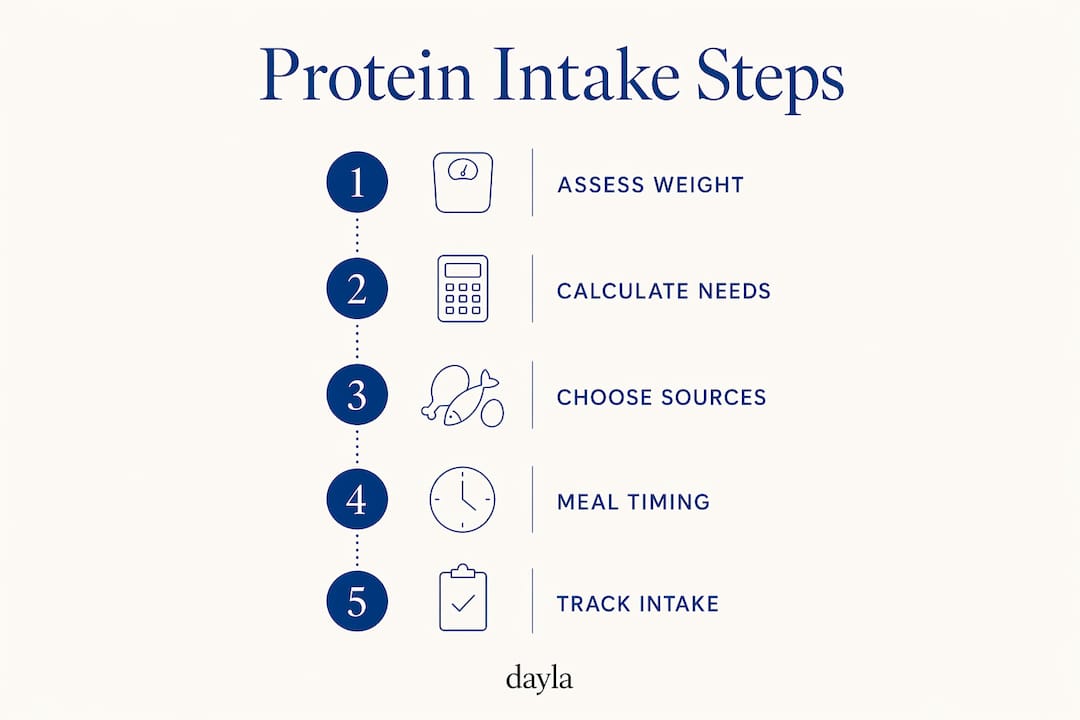
Pairing a protein-focused meal plan with your GLP-1 regimen removes the guesswork and keeps muscle protein synthesis running even during a caloric deficit.
Which resistance training approaches best support muscle preservation?
Resistance training is the most effective tool for safeguarding muscle mass during GLP-1 treatment. When combined with adequate protein intake, resistance training preserves 50–95% of expected lean mass loss. That range is wide because outcomes depend on training consistency, protein intake, and individual response. The upper end is achievable with a structured program.
Clinical guidance recommends 2–3 resistance training sessions per week. Each session should target major muscle groups: legs, back, chest, shoulders, and arms. You do not need a gym membership to start. Bodyweight exercises, resistance bands, and free weights all produce results when applied consistently.
A practical weekly structure looks like this:
- Session 1 (Monday or Tuesday): Lower body focus. Squats, lunges, glute bridges, and calf raises. Three sets of 10–15 repetitions each.
- Session 2 (Wednesday or Thursday): Upper body push and pull. Push-ups, rows, shoulder presses, and bicep curls. Three sets of 10–12 repetitions each.
- Session 3 (Friday or Saturday): Full body or weak-point focus. Deadlifts, planks, step-ups, and lateral raises. Three sets of 12 repetitions each.
Progressive overload is the key principle. Add one more repetition, a slightly heavier weight, or an extra set every one to two weeks. Your muscles adapt to stress. Without increasing that stress gradually, adaptation stops and muscle maintenance stalls.
Pro Tip: Track your lifts in a simple notebook or phone app. Seeing your numbers go up week over week is one of the strongest motivators to stay consistent, especially on days when appetite suppression leaves you feeling low-energy.
GLP-1 therapy combined with moderate-to-vigorous exercise improves both weight loss maintenance and lean body mass compared to medication alone. Aerobic exercise like walking, cycling, or swimming supports cardiovascular health and is worth including. However, excessive endurance training without resistance work increases lean mass loss risk during rapid weight loss. Strength training must anchor your routine. Cardio complements it.
For a detailed exercise protocol built specifically for GLP-1 patients, the resistance training guide at Daylahealth covers progressive programming from beginner to advanced levels.
Additional lifestyle strategies to maintain muscle during GLP-1 treatment
Protein and resistance training are the foundation. These complementary habits reinforce your results and protect muscle health over the long term.
- Stay hydrated. Muscle tissue is roughly 75% water. Dehydration impairs muscle contraction, recovery, and protein synthesis. Aim for at least 2–3 liters of water daily, more on training days.
- Practice mindful eating. GLP-1 medications reduce hunger signals significantly. Eating on a schedule rather than waiting for hunger prevents you from falling short on calories and protein without realizing it.
- Monitor body composition, not just weight. The scale does not distinguish fat from muscle. A body composition scan, bioelectrical impedance scale, or DEXA scan gives you accurate data to guide adjustments.
- Limit excessive cardio. Long-duration endurance sessions without resistance training accelerate lean mass loss during rapid weight loss. Keep cardio sessions moderate in length and intensity.
- Work with your healthcare provider. Personalized exercise prescriptions and nutritional monitoring are especially important for older patients, who face a higher risk of sarcopenic trends during GLP-1 therapy.
Consistency across all these habits compounds over time. No single strategy works in isolation. The patients who preserve the most muscle are those who treat exercise and nutrition as non-negotiable parts of their GLP-1 treatment, not optional add-ons.
Key Takeaways
Preventing muscle loss during GLP-1 therapy requires protein intake of 1.2–1.6 grams per kilogram of body weight daily, combined with resistance training 2–3 times per week, to preserve lean mass and improve body composition.
| Point | Details |
|---|---|
| GLP-1 does not cause direct muscle wasting | Muscle loss is driven by caloric deficit and low protein, not the medication itself. |
| Protein targets are minimums | Aim for 1.2–1.6 g/kg daily; active individuals need the higher end or beyond. |
| Resistance training is the primary tool | Two to three sessions per week preserves 50–95% of expected lean mass loss. |
| Muscle quality improves on GLP-1 | Reduced intramuscular fat enhances insulin sensitivity and functional strength. |
| Monitoring body composition matters | Track lean mass, not just weight, to guide nutrition and exercise adjustments. |
What I have learned from working with GLP-1 patients on muscle preservation
The most common mistake I see is treating GLP-1 therapy as a passive process. Patients take the medication, eat less, and watch the scale drop. They feel good about the weight loss but do not realize they are losing muscle alongside fat until months later when they feel weaker or their metabolism slows.
The research is clear: exercise must be a core component of GLP-1 treatment, not an afterthought. Medication alone does not protect muscle. The patients who come out of treatment with the best body composition are the ones who started resistance training in week one, not week twelve.
Appetite suppression is real and it catches people off guard. You genuinely may not feel hungry, and that makes it easy to under-eat protein for days at a time without noticing. Scheduling protein intake like a medication dose, at set times regardless of hunger, is the most practical fix I have found.
One more thing worth saying: the absolute lean mass number is not the whole story. Improved muscle quality, better insulin sensitivity, and a higher muscle-to-bodyweight ratio are meaningful gains. Patients often feel stronger and move better at the end of treatment even when the scale shows slightly less lean mass. Focus on how you function, not just what the numbers say.
— Flexible
Daylahealth supports your muscle preservation and GLP-1 goals
Daylahealth offers doctor-led, personalized GLP-1 care designed to support both effective weight loss and muscle health. Every treatment plan is built around your specific goals, with access to GLP-1 medications and peptide therapies that complement your nutrition and exercise efforts.

Daylahealth also provides guidance on diet and GLP-1 treatment to help you meet protein targets and stay on track. Whether you are just starting therapy or looking to refine your approach, explore your options with personalized GLP-1 plans and peptide therapies that support muscle recovery and long-term results.
FAQ
Does GLP-1 therapy cause muscle loss?
GLP-1 therapy causes a modest absolute lean mass reduction, averaging about 1.74 kg, but this is driven by caloric deficit and lower protein intake, not the medication directly. The drug itself suppresses atrophy-related factors and does not cause direct muscle wasting.
How much protein do I need on GLP-1 medications?
Clinical guidance recommends 1.2 to 1.6 grams of protein per kilogram of body weight daily. Patients who resistance train regularly often need the higher end of that range or more.
What type of exercise best preserves muscle on GLP-1?
Resistance training 2–3 times per week targeting major muscle groups is the most effective exercise for muscle preservation during GLP-1 therapy. Aerobic exercise supports cardiovascular health but should not replace strength training.
Can I improve muscle quality even if I lose some lean mass?
Yes. GLP-1 therapy reduces intramuscular fat, which improves muscle quality, insulin sensitivity, and functional strength even when absolute lean mass decreases slightly. Many patients report feeling stronger and moving better after treatment.
How do I track muscle loss during GLP-1 treatment?
Body composition tools such as DEXA scans, bioelectrical impedance scales, or regular fitness assessments give accurate data on lean mass versus fat mass. Tracking these numbers, rather than scale weight alone, lets you adjust your protein intake and training before muscle loss becomes significant.