

The role of resistance training with GLP-1 therapy is to preserve lean muscle mass, protect bone density, and sustain metabolic health during medically supervised weight loss. GLP-1 receptor agonists, the clinical term for drugs like semaglutide, drive meaningful fat loss, but research shows 15% to 60% of total weight lost can come from lean tissue. That figure changes the entire conversation about exercise during treatment. Resistance training is not optional. It is the most direct tool you have to protect the body composition gains that make weight loss worth keeping.
What is the role of resistance training with GLP-1 therapy?
GLP-1 receptor agonists reduce appetite and slow gastric emptying, creating the calorie deficit that drives weight loss. The problem is that a sustained calorie deficit, combined with reduced protein intake, signals the body to break down muscle alongside fat. Semaglutide reduces lean mass by up to 9.9% in some patients. That is not a minor side effect. Losing that much muscle lowers your basal metabolic rate, weakens physical function, and makes long-term weight maintenance harder.
Resistance training counters this directly. It sends a mechanical signal to muscle fibers that they are needed, which overrides the body's tendency to cannibalize them during a deficit. Muscle loss is driven primarily by energy deficit and reduced protein intake, not by the drug itself. That means the solution is within your control: lift weights, eat enough protein, and the medication can do its job without costing you muscle.

The distinction between fat loss and muscle loss matters metabolically. Fat tissue is largely passive. Muscle tissue burns calories at rest, supports insulin sensitivity, and protects joints and bones. Losing muscle while losing weight creates a body that is lighter but metabolically weaker. Resistance training preserves the tissue that keeps your metabolism running after the medication ends.
How does GLP-1 therapy affect muscle and lean body mass?
The physiological mechanism behind muscle loss on GLP-1 therapy is straightforward. Appetite suppression reduces total calorie intake. When protein intake drops alongside total calories, the body lacks the amino acids needed to maintain muscle protein synthesis. The result is net muscle protein breakdown, even in people who were previously active.
| Factor | Effect on lean mass |
|---|---|
| Calorie deficit | Triggers muscle protein breakdown as an energy source |
| Reduced protein intake | Limits amino acid availability for muscle repair |
| Decreased activity | Removes the mechanical stimulus that preserves muscle |
| GLP-1 drug mechanism | Does not directly cause catabolism; amplifies deficit effects |
The data on lean mass loss is striking. A meta-analysis found that up to 60% of weight lost on GLP-1 medications can be lean tissue in some patients. That range is wide because individual factors like baseline activity, protein intake, and training status all influence outcomes. People who resistance train and eat adequate protein consistently land at the lower end of that range.
GLP-1 medications also cannot replicate the systemic benefits of exercise. Exercise activates gene expressions linked to cellular repair and maintenance processes that no drug currently mimics. This is not a criticism of GLP-1 therapy. It is a clear statement that medication and movement serve different biological functions, and both are needed for optimal outcomes.
What are the benefits of resistance training during GLP-1 treatment?
Resistance training during GLP-1 treatment delivers benefits that go well beyond muscle preservation. The research on longevity alone makes a strong case for adding it to your weekly routine.
- Muscle preservation: Resistance training maintains muscle protein synthesis during a calorie deficit, directly countering the lean mass loss associated with GLP-1 therapy.
- Bone density protection: Weight-bearing resistance exercises stimulate bone remodeling, which is especially important during rapid weight loss when bone density can decline.
- Improved insulin sensitivity: Muscle contractions increase glucose uptake independent of insulin, which supports metabolic health and complements the blood sugar effects of GLP-1 medications. The role of strength training in diabetes management is well established for this reason.
- Longevity and mortality reduction: 90–120 minutes of resistance training weekly lowers premature death risk by 13%. Combining it with aerobic activity reduces mortality risk by up to 45%. That is a measurable return on roughly 15 minutes of lifting per day.
- Sustained metabolic rate: Muscle tissue burns more calories at rest than fat tissue. Preserving it during weight loss keeps your basal metabolic rate higher, which matters enormously once you taper off medication.
Post-menopausal women get particular attention in the research. Resistance training counters the metabolic slowdown common in this group, making it especially valuable for sustained weight management after GLP-1 therapy ends. The principle applies broadly, but the effect is most pronounced in populations where hormonal changes already suppress metabolic rate.
Pro Tip: Aim for at least 25–30 grams of protein per meal to support muscle protein synthesis while on GLP-1 therapy. Appetite suppression makes it easy to undereat protein, which accelerates lean mass loss even when you are training consistently.
What resistance training protocols are recommended with GLP-1?
The American College of Sports Medicine (ACSM) provides the clearest evidence-based framework for resistance training during weight loss. Following these guidelines while on GLP-1 therapy gives you the best chance of preserving lean mass and physical function.
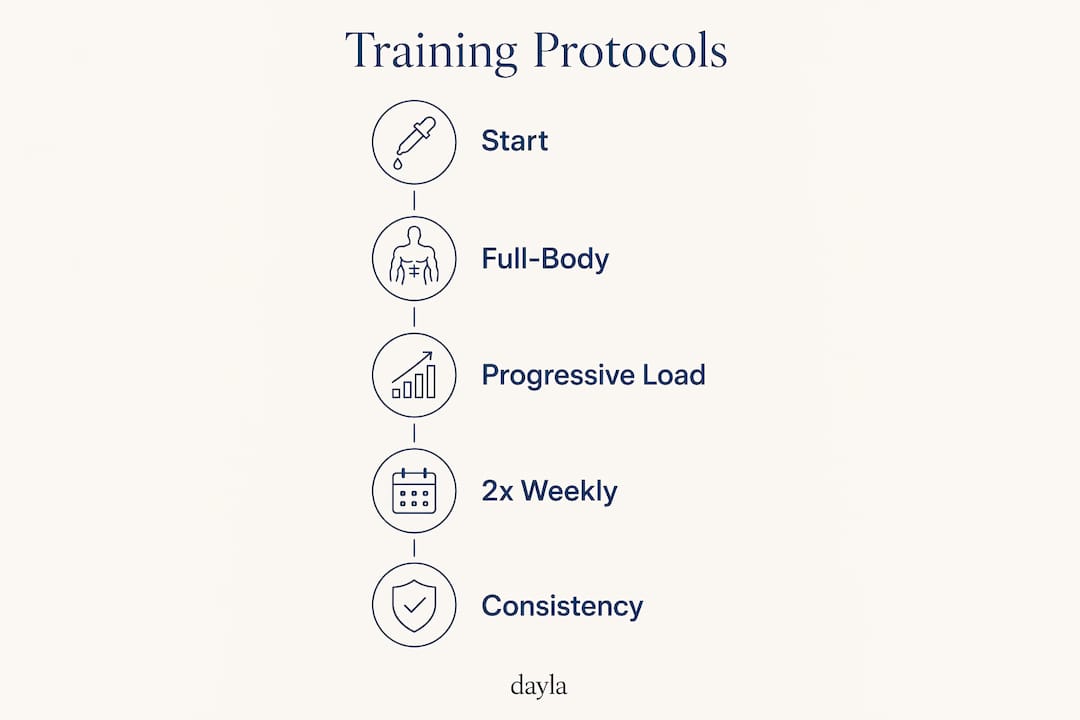
- Train at least twice per week. The ACSM recommends progressive resistance training at minimum twice weekly, targeting all major muscle groups. Two sessions per week is the floor, not the ceiling.
- Use 2–3 sets per exercise. Two to three sets per movement is sufficient to stimulate muscle retention. You do not need high volume to preserve muscle. You need consistency and progressive load.
- Apply progressive overload. Gradually increase resistance, reps, or difficulty over time. This is the signal that tells your muscles to maintain themselves. Without progression, adaptation stalls.
- Train all major muscle groups. Cover the legs, back, chest, shoulders, and arms across your weekly sessions. Neglecting lower body training is the most common mistake, and the legs contain the largest muscle groups in the body.
- Choose exercises that fit your situation. Push-ups, deadlifts, bent-over rows, jumping squats, and overhead presses all preserve muscle effectively. Many require no gym membership. Body weight and resistance bands work for beginners.
- Prioritize protein and sleep. Resistance training combined with adequate protein intake is the most effective approach to minimizing lean mass loss. Sleep is when muscle repair happens. Cutting either one undermines your training.
Pro Tip: You do not need to train to complete muscle failure. Progressive load and consistency are what preserve muscle, not exhaustion. Stopping two to three reps before failure reduces injury risk and makes it easier to stay consistent.
For people new to resistance training, starting with two full-body sessions per week using body weight movements is entirely sufficient. Squats, push-ups, rows with a resistance band, and a hip hinge pattern cover all major muscle groups without requiring equipment or a gym. The goal in the first month is building the habit, not maximizing load.
What challenges come with combining GLP-1 therapy and resistance training?
Starting GLP-1 therapy changes your daily activity patterns in ways most people do not anticipate. The medication suppresses appetite, but it also tends to reduce overall energy and spontaneous movement. Average daily steps dropped from 5,047 to 4,487 after patients began GLP-1 treatment, and moderate-to-vigorous physical activity fell from 28 to 22 minutes per day. That decline is significant. It means you need to schedule resistance training deliberately rather than relying on feeling motivated.
Common barriers and practical solutions:
- Low energy in the first weeks: GLP-1 side effects like nausea and fatigue are most pronounced early in treatment. Schedule shorter, lower-intensity sessions during this period rather than skipping training entirely. Two 20-minute sessions per week still deliver meaningful muscle preservation signals.
- Reduced appetite making protein intake difficult: Use protein shakes or high-protein snacks to hit daily targets when whole food feels unappealing. Whey protein, Greek yogurt, and cottage cheese are dense, easy options.
- Inconsistent scheduling: Patients should plan resistance training deliberately after starting GLP-1s because spontaneous daily activity often declines. Treat your training sessions like medical appointments. Put them in your calendar and protect them.
- Overcomplicating the routine: Beginners often stall because they try to follow programs designed for experienced lifters. A simple two-day full-body routine with five to six exercises is more sustainable and nearly as effective for muscle preservation.
- Plateaus in weight loss: If weight loss stalls, resistance training is one of the most reliable ways to restart progress. More muscle mass raises your resting metabolic rate, which increases the calorie deficit without requiring further food restriction. For more on managing plateaus, breaking a weight loss stall often comes down to training consistency and protein intake.
The mental shift required is real. GLP-1 therapy reduces hunger so effectively that many people feel like the medication is doing all the work. It is. But the medication cannot protect your muscle, strengthen your bones, or activate the gene-level repair processes that exercise triggers. Those outcomes require you to show up and lift.
Key takeaways
Resistance training is the single most effective tool for preserving lean muscle mass, protecting metabolic health, and sustaining long-term weight loss results during GLP-1 therapy.
| Point | Details |
|---|---|
| Lean mass loss is real | 15%–60% of weight lost on GLP-1 medications can be lean tissue, not fat. |
| Train at least twice weekly | ACSM guidelines call for progressive resistance training targeting all major muscle groups. |
| Protein intake is non-negotiable | Muscle loss is driven by energy deficit and low protein, both of which resistance training and diet directly address. |
| Activity declines after starting GLP-1s | Daily steps and exercise minutes drop after treatment begins, so deliberate scheduling is required. |
| Longevity benefits are measurable | 90–120 minutes of weekly resistance training lowers premature death risk by 13%. |
Why I think most GLP-1 patients are leaving results on the table
Most people starting GLP-1 therapy focus entirely on the scale. That is understandable. The medication works, the weight moves, and the feedback feels immediate. What does not show up on the scale is the composition of what you are losing.
The research is unambiguous: a meaningful portion of the weight lost on GLP-1 medications can be muscle. That matters not just for how you look, but for how your body functions five years from now. Muscle is metabolically active tissue. Losing it during treatment and then stopping the medication is a setup for weight regain, because your resting metabolic rate is now lower than it was before you started.
The fix is not complicated. Two resistance training sessions per week, enough protein, and consistent sleep are the three levers that change this outcome. None of them require a personal trainer or a gym membership. What they require is treating exercise as part of the treatment protocol, not an optional add-on.
The lifestyle changes that boost GLP-1 results are not secrets. They are the basics done consistently. Resistance training is at the top of that list because it is the only intervention that directly preserves the tissue GLP-1 therapy puts at risk. Patients who combine medication with structured strength training consistently outperform those who rely on the drug alone, both during treatment and after it ends.
— Flexible
Daylahealth supports your GLP-1 weight loss plan
Daylahealth provides doctor-led, personalized GLP-1 care designed for people who want results that last. Access to medical-grade GLP-1 weight loss medications is paired with clinical guidance on nutrition and exercise so you are not navigating muscle preservation alone.

Daylahealth also offers peptide therapies that support metabolic and muscle recovery alongside your GLP-1 protocol. Every plan is built around your goals, your health history, and the science of sustainable weight management. If you are ready to protect your lean mass and get the most from your medication, Daylahealth gives you the clinical support to do it right.
FAQ
How much lean mass do you lose on GLP-1 medications?
Research shows 15% to 60% of total weight lost on GLP-1 receptor agonists can be lean tissue. Resistance training and adequate protein intake are the most effective ways to reduce that percentage.
How often should you do resistance training on GLP-1?
The ACSM recommends at least twice weekly, using 2–3 sets per exercise targeting all major muscle groups. Progressive overload over time is more important than session length.
Can GLP-1 medications replace exercise?
GLP-1 medications cannot replicate the gene-level repair and metabolic benefits that exercise produces. Medication and resistance training serve different biological functions and work best together.
Does resistance training affect GLP-1 levels naturally?
Regular exercise supports insulin sensitivity and metabolic health, which complements the effects of GLP-1 receptor agonists. The combination produces better body composition outcomes than either approach alone.
What exercises are best for preserving muscle on GLP-1?
Push-ups, deadlifts, bent-over rows, squats, and overhead presses are all effective. Many can be done at home with body weight or resistance bands, making them accessible regardless of gym access.