

Body composition tracking on GLP-1 medications means measuring fat loss and muscle preservation, not just watching the number on a scale. This distinction matters because 25–45% of weight lost on GLP-1 therapy can come from lean mass when resistance training and adequate protein intake are absent. That statistic should change how you approach every weigh-in. To track body composition changes on GLP-1 effectively, you need DEXA scans, waist circumference measurements, metabolic blood panels, and strength metrics working together. Relying on BMI or scale weight alone gives you an incomplete and often misleading picture of your actual progress.
What metrics and tools reliably track body composition changes on GLP-1?
The gold standard for body composition analysis is a DEXA scan. DEXA measures fat mass, lean mass, and bone density in separate compartments, giving you a precise baseline before treatment starts and a reliable benchmark every 3–6 months as your body changes. No home device matches its accuracy for absolute values.
Weekly waist circumference is the best home proxy for visceral fat loss. Measuring around the navel consistently each week costs nothing and tracks the fat most linked to metabolic disease. A shrinking waist tells you something meaningful even when the scale holds still.

Bioelectrical impedance analysis (BIA) devices, including clinical InBody machines and consumer-grade smart scales, fill the gap between DEXA appointments. BIA scales provide useful trend data but are not accurate for absolute fat or muscle values. Use them monthly for directional information, not as your primary source of truth.
Metabolic blood panels complete the picture. Routine monitoring should include a comprehensive metabolic panel (CMP), HbA1c, fasting glucose, lipid panel, and lipase at baseline, then again at 8–12 weeks. These labs confirm that GLP-1 therapy is improving metabolic health and flag any safety concerns early.
| Method | Best use | Frequency | Limitation |
|---|---|---|---|
| DEXA scan | Baseline and progress benchmarking | Every 3–6 months | Cost, requires clinic visit |
| Waist circumference | Visceral fat tracking at home | Weekly | Does not separate fat from muscle |
| BIA scale | Directional trend monitoring | Monthly | Inaccurate for absolute values |
| Metabolic blood panel | Safety and metabolic health | Baseline, then 8–12 weeks | Requires lab order |
| Progress photos and clothing fit | Subjective visual confirmation | Monthly | Highly subjective |
How can you track progress to preserve muscle and maximize fat loss on GLP-1?
Protecting lean mass while losing fat is the central challenge of GLP-1 therapy. Resistance training and adequate protein can reduce the proportion of lean mass lost to as low as 18% of total weight lost. Without those two interventions, lean mass loss climbs to 34–45%. The difference is not minor. It affects your metabolism, strength, and long-term weight maintenance.
Here is a practical measurement routine to follow:
- Take waist circumference weekly. Measure at the navel, standing relaxed, under the same conditions each time.
- Weigh yourself no more than once per week. Use the same scale, same time of day, same clothing (or none).
- Use a BIA scale monthly to check directional trends in fat percentage and muscle mass.
- Schedule a DEXA scan at baseline and every 3–6 months to anchor your data with clinical accuracy.
- Get blood panels at baseline and at 8–12 weeks, then as your clinician recommends.
- Track strength performance. Log the weights you lift and the reps you complete. Strength gains confirm muscle preservation even when the scale does not move.
Pro Tip: Take a monthly progress photo under consistent lighting and clothing. The visual record often shows fat loss that neither the scale nor BIA captures clearly.
Protein intake is non-negotiable for muscle preservation. The recommended target is 0.7–1.0 grams per pound of body weight daily. For a 180-pound person, that means 126–180 grams of protein every day. GLP-1 medications suppress appetite significantly, so hitting that target requires deliberate meal planning, not intuitive eating.
Resistance training should happen 2–3 times per week. Compound movements like squats, deadlifts, rows, and presses recruit the most muscle and generate the strongest signal for your body to preserve lean tissue. For a full exercise framework built around GLP-1 therapy, the GLP-1 resistance training guide at Daylahealth covers programming in detail.
Interpreting plateaus correctly matters as much as the measurements themselves. When scale weight stalls but waist circumference decreases, visceral fat loss is still occurring. That is a positive outcome, not a failure. Reframing what "progress" means prevents unnecessary frustration and protocol changes that are not warranted.
What are common mistakes when monitoring body composition changes on GLP-1?
The most common mistake is treating scale weight as the primary success metric. Visceral fat loss often continues even when scale weight plateaus. Patients who only track weight may abandon effective protocols prematurely because they misread a plateau as failure.
Measurement inconsistency creates false signals. Weighing yourself after a large meal one day and fasted the next produces data that looks like a two-pound swing but reflects nothing real. Measurements should be taken fasted, post-bathroom, and before drinking fluids to minimize daily noise. Inconsistent conditions make trend lines meaningless.
Ignoring muscle loss is the most medically significant error. Practitioners warn that equating weight loss with overall health while ignoring muscle preservation risks long-term metabolic and functional decline. Muscle tissue drives resting metabolism. Losing it during GLP-1 treatment makes future weight maintenance harder and increases injury risk.
Experts emphasize shifting focus away from scale weight to measures of visceral fat and muscle preservation. This approach reduces anxiety and better captures real health improvements during GLP-1 therapy.
Skipping metabolic labs is another gap that creates risk. Blood panels catch issues like elevated lipase or worsening lipid profiles before they become clinical problems. They also confirm that HbA1c and fasting glucose are improving, which validates the therapy's metabolic effect beyond weight.
The psychological dimension of tracking deserves attention. Checking data too frequently, especially BIA readings that fluctuate with hydration, generates anxiety without adding useful information. Set a fixed schedule and stick to it. Work with your clinician to interpret trends over weeks and months, not day-to-day readings. For strategies on managing plateaus without losing momentum, the weight loss stall guide at Daylahealth offers clinician-backed approaches.
What step-by-step routine effectively tracks body composition while using GLP-1?
A structured protocol removes guesswork and produces data you can act on. A holistic approach that combines lab monitoring, body composition tracking, strength assessments, and subjective markers like clothing fit provides the highest quality feedback for optimizing GLP-1 therapy.
Follow this sequence:
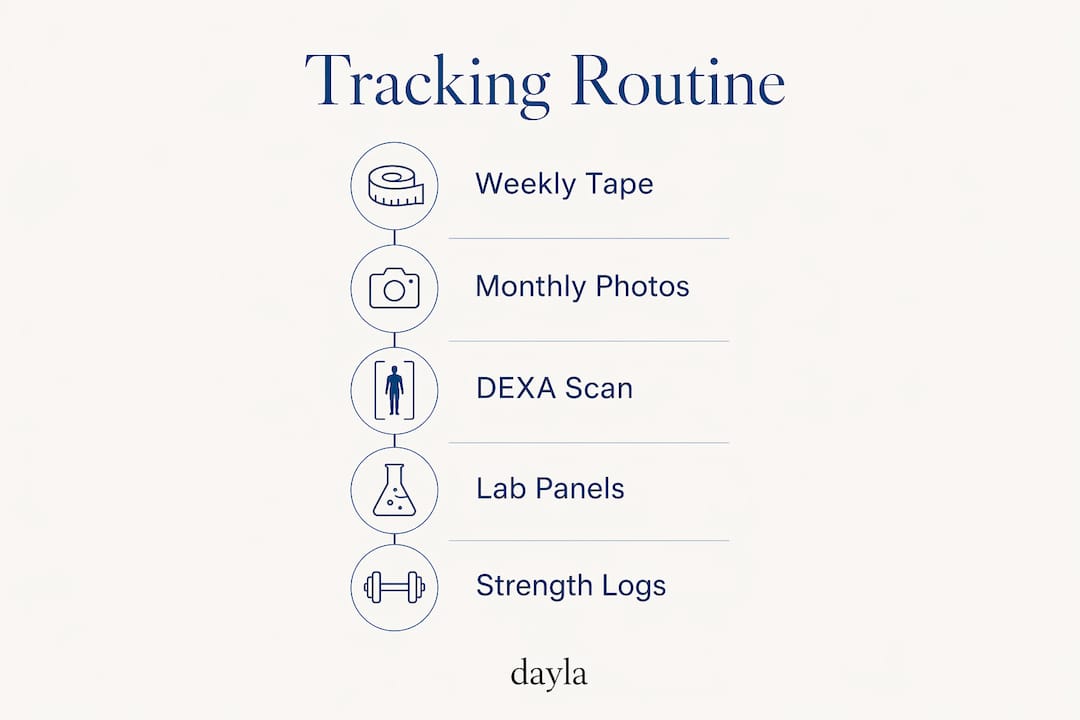
- Before or at treatment start: Get a DEXA scan and a full metabolic blood panel (CMP, HbA1c, fasting glucose, lipid panel, lipase). Record your waist circumference and take baseline photos.
- Weekly: Measure waist circumference at the navel under consistent conditions. Log your scale weight once. Record your strength performance in the gym.
- Monthly: Use a BIA scale for a directional fat and muscle trend check. Review your progress photos. Assess how your clothes fit.
- At 8–12 weeks: Repeat your blood panel to check metabolic markers and safety labs. Share results with your prescribing clinician.
- Every 3–6 months: Schedule a follow-up DEXA scan to compare against your baseline. Adjust protein targets, training volume, or medication dosage based on results.
- Ongoing: Maintain open communication with your healthcare provider. Body composition changes on GLP-1 are dynamic, and protocols should adapt as your body responds.
Pro Tip: Log everything in a single spreadsheet or health app. Tracking waist, weight, strength, and labs in one place makes trends visible across months, not just weeks.
| Tracking domain | Tool | Frequency |
|---|---|---|
| Visceral fat | Waist circumference tape | Weekly |
| Scale weight | Consistent home scale | Weekly |
| Muscle and fat trends | BIA scale | Monthly |
| Clinical body composition | DEXA scan | Every 3–6 months |
| Metabolic health | Blood panel (CMP, HbA1c, lipids, lipase) | Baseline, 8–12 weeks, then as directed |
| Strength and muscle function | Gym performance log | Every session |
Nutrition tracking runs parallel to all of this. The role of diet in GLP-1 treatment is substantial. GLP-1 medications reduce hunger, which is helpful for calorie control but creates a real risk of under-eating protein. Logging meals, at least during the first 12 weeks, helps confirm you are hitting your protein target consistently.
Key Takeaways
Tracking body composition changes on GLP-1 requires combining DEXA scans, waist circumference, metabolic labs, and strength data because scale weight alone cannot distinguish fat loss from muscle loss.
| Point | Details |
|---|---|
| Scale weight misleads | Waist circumference and DEXA reveal fat loss that a plateau on the scale hides. |
| Lean mass loss is preventable | Resistance training 2–3 times weekly and 0.7–1.0g protein per pound of body weight protect muscle. |
| DEXA anchors your data | Schedule a baseline scan and repeat every 3–6 months to benchmark all other measurements. |
| Labs confirm metabolic progress | CMP, HbA1c, lipid panel, and lipase at baseline and 8–12 weeks catch issues early and validate results. |
| Consistency beats frequency | Standardized measurement conditions matter more than how often you measure. |
Why I stopped trusting the scale after week six
Six weeks into tracking GLP-1 progress, my scale showed a two-week plateau. No movement. I nearly concluded the medication had stopped working. Then I measured my waist. It had dropped nearly two inches in those same two weeks. My blood panel showed HbA1c improving and fasting glucose down. My squat weight had gone up. By every meaningful measure, the therapy was working well.
That experience taught me something the scale cannot: body composition changes are multidimensional. The people I see struggle most with GLP-1 therapy are those who anchor their entire sense of progress to one number. They miss real wins and make unnecessary changes to protocols that are actually working.
The data I trust now is a combination of waist circumference, quarterly DEXA results, blood panels, and gym performance. I track scale weight once a week, but I give it the least interpretive weight of anything I measure. That shift in focus is what separates people who sustain their results from those who cycle through frustration and protocol changes without ever understanding what their body is actually doing.
If you work with a clinician who reviews your full data set, not just your weight, you get a fundamentally different quality of guidance. That partnership is worth more than any single tracking tool.
— Flexible
Daylahealth's doctor-led GLP-1 program supports your full tracking plan
Tracking body composition changes requires the right medication, the right support, and a clinical team that looks at the full picture. Daylahealth offers personalized GLP-1 medications through a doctor-led program designed for people who want real results, not just a lower number on the scale.

Daylahealth's compounded GLP-1 prescriptions are tailored to your needs and delivered directly to your door. The program pairs medication with nutritional guidance and access to recovery-focused peptides that support muscle preservation and metabolic health alongside your GLP-1 regimen. Whether you are starting treatment or refining an existing protocol, Daylahealth gives you the clinical structure to track and optimize every dimension of your progress.
FAQ
What is the best way to track body fat on GLP-1?
DEXA scans are the most accurate method for tracking body fat on GLP-1, used at baseline and every 3–6 months. Weekly waist circumference measurements and monthly BIA scale readings provide useful interim data between scans.
How much muscle loss is normal on GLP-1 medications?
Without resistance training and adequate protein, lean mass can represent 25–45% of total weight lost on GLP-1 therapy. With consistent resistance training and 0.7–1.0g of protein per pound of body weight daily, that figure drops to around 18%.
Why does my weight stall on GLP-1 even when I'm losing fat?
A scale plateau during GLP-1 therapy often means visceral fat loss is continuing while muscle mass is being preserved or gained. Waist circumference measurements and DEXA scans will confirm ongoing fat loss that the scale does not reflect.
What blood tests should I get while on GLP-1?
The recommended panel includes a CMP, HbA1c, fasting glucose, lipid panel, and lipase at baseline, then repeated at 8–12 weeks. These labs monitor both the metabolic benefits and safety of GLP-1 therapy.
How often should I measure waist circumference on GLP-1?
Measure waist circumference weekly, at the navel, fasted, and post-bathroom under consistent conditions. Weekly measurements reduce daily noise and reveal visceral fat trends more reliably than less frequent checks.