

Diet is the single most important behavioral factor in GLP-1 treatment outcomes. GLP-1 receptor agonists like semaglutide and tirzepatide reduce caloric intake by up to 40% and produce 10–15% body weight loss in clinical populations. That number is significant. But without the right nutritional strategy, a meaningful portion of that weight comes from muscle, not fat. What you eat directly shapes how well GLP-1 therapy works, how your body handles side effects, and whether your results last.
How does diet enhance the effects of GLP-1 medications?
GLP-1, or glucagon-like peptide-1, is a gut hormone that signals fullness, slows digestion, and regulates blood sugar. Medications like semaglutide mimic this hormone at pharmacological levels. Diet, however, also triggers your body's own GLP-1 release. Eating protein, fat, and fermentable fiber can increase natural GLP-1 secretion by 15–25%. That increase is modest compared to what medication delivers, but it reinforces the same satiety pathways.
The practical implication is clear. When your meals consistently stimulate endogenous GLP-1 release, you amplify the hormone's signaling environment rather than working against it. Refined carbohydrates and ultra-processed foods do the opposite. They produce weak satiety signals and drive blood sugar swings that undermine appetite control.
Meals high in protein and fat stimulate stronger satiety signals via GLP-1 release compared to refined carbs. This explains why two people on the same medication dose can have very different appetite control outcomes based on food choices alone.
Foods that naturally support GLP-1 activity include:
- Lean proteins: chicken breast, eggs, Greek yogurt, cottage cheese, fish
- Healthy fats: avocado, olive oil, nuts, fatty fish like salmon
- Fermentable fiber: oats, legumes, garlic, onions, asparagus, bananas
- Non-starchy vegetables: broccoli, spinach, zucchini, bell peppers
- Whole grains: quinoa, barley, brown rice
Each of these food categories works through a different mechanism. Protein slows gastric emptying and triggers satiety hormones. Fermentable fiber feeds gut bacteria that produce short-chain fatty acids, which in turn stimulate GLP-1 secretion from intestinal L-cells. Fat activates cholecystokinin release, which works alongside GLP-1 to extend fullness.
What are the nutritional priorities while on GLP-1 treatment?
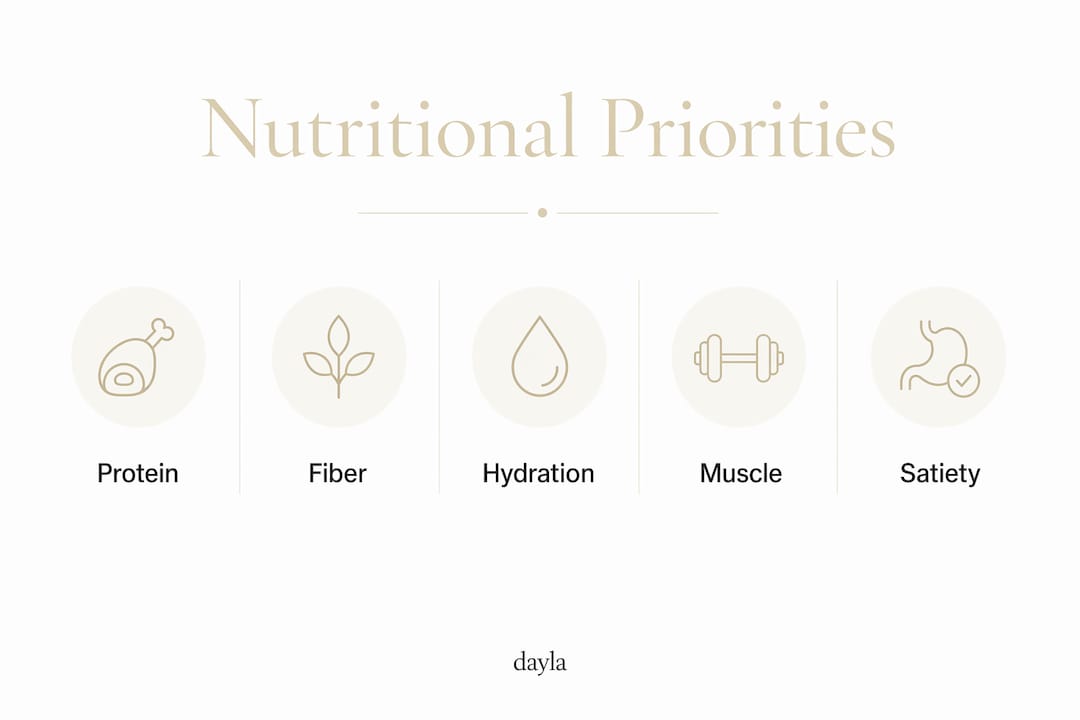
Nutritional therapy for GLP-1 patients centers on three non-negotiable priorities: protein, fiber, and hydration. Each addresses a specific risk that comes with rapid, medication-assisted weight loss.
Protein: the muscle preservation priority
Guidelines recommend 80–100 grams of protein daily for patients on GLP-1 therapy. That target exists because without adequate protein, up to 25% of weight lost on GLP-1 can come from lean muscle mass. Losing muscle slows your metabolism and increases the risk of weight regain after treatment ends. Hitting 80–100 grams daily requires deliberate planning, especially when appetite is suppressed and total food volume is low. Prioritize protein at every meal before eating anything else.
Fiber: timing matters more than total amount
Fiber supports satiety, feeds beneficial gut bacteria, and prevents constipation, which is a common complaint on GLP-1 therapy. The critical detail most patients miss is distribution. Fiber intake must be spaced throughout the day because large doses combined with GLP-1's slowing of gastric emptying cause significant bloating, gas, and discomfort. Aim for 5–8 grams per meal rather than one large serving. Good sources include chia seeds, lentils, oats, and cooked vegetables.
Hydration: a hidden risk
GLP-1 medications suppress thirst sensation alongside appetite. Patients should not rely on thirst alone to guide fluid intake. Chronic dehydration on GLP-1 therapy shows up as fatigue, headaches, and constipation, symptoms that are often mistaken for medication side effects. Set a schedule: aim for at least 64 ounces of water daily, spread across the day, regardless of whether you feel thirsty.
Pro Tip: Start each meal with a protein source before eating carbohydrates or fats. This simple sequence maximizes satiety signaling and helps you reach your daily protein target even when appetite is low.
Additional dietary guidelines for GLP-1 therapy include:
- Avoid high-fat, fried, and spicy foods that worsen nausea
- Eat smaller meals, 4–5 times per day, rather than 2–3 large ones
- Choose soft or semi-liquid textures when nausea is active
- Limit alcohol, which compounds dehydration and disrupts blood sugar
- Avoid carbonated beverages that increase bloating
What common side effects can dietary choices help manage?
GLP-1 therapy produces predictable side effects. Nausea, constipation, bloating, fatigue, and muscle loss are the most reported. Each one responds directly to specific dietary adjustments.
-
Nausea: Eat small portions every 3–4 hours instead of large meals. Choose bland, soft foods like oatmeal, scrambled eggs, bananas, and broth-based soups. Avoid greasy or heavily spiced dishes during the first weeks of treatment or after a dose increase.
-
Constipation: Increase fiber gradually, not all at once. Pair fiber increases with a corresponding increase in water intake. Prunes, kiwi, and cooked leafy greens are particularly effective. Walking 20–30 minutes after meals also supports gut motility.
-
Dehydration and fatigue: Schedule water intake at set times, such as one glass upon waking, one before each meal, and one before bed. Electrolyte-rich foods like cucumber, watermelon, and low-sodium broth help maintain fluid balance without added sugar.
-
Muscle loss: Distribute protein across all meals rather than concentrating it at dinner. Structured nutritional programs including protein-enriched meal replacements show promise in managing catabolic risks during rapid GLP-1 weight loss. Pair protein intake with resistance exercise at least twice per week.
-
Bloating and gas: Reduce raw vegetables and replace them with cooked versions. Space legume consumption across the week rather than eating large portions daily. Peppermint tea and ginger are practical, evidence-supported options for reducing GI discomfort.
Pro Tip: Keep a simple food and symptom log for the first 4–6 weeks of GLP-1 treatment. Patterns become visible quickly, and you can adjust specific foods rather than eliminating entire food groups.
Understanding how GLP-1 changes eating behavior helps you anticipate these side effects rather than react to them in frustration.
How can meal planning support GLP-1 weight loss efforts?
Effective meal planning on GLP-1 therapy is not about eating less. It is about eating right within a reduced calorie window. The goal is nutrient density: maximum protein, fiber, vitamins, and minerals from a smaller food volume.
A practical GLP-1-friendly meal structure looks like this:
| Meal | Focus | Example |
|---|---|---|
| Breakfast | Protein + fiber | Greek yogurt with berries and chia seeds |
| Lunch | Lean protein + vegetables | Grilled chicken with roasted broccoli and quinoa |
| Snack | Protein + healthy fat | Hard-boiled eggs with avocado slices |
| Dinner | Protein + cooked vegetables | Baked salmon with spinach and sweet potato |
| Optional snack | Light protein | Cottage cheese with cucumber slices |
This structure delivers 80–100 grams of protein, adequate fiber spread across five eating occasions, and consistent hydration opportunities at each meal. It also prevents the long gaps between eating that trigger nausea on GLP-1 medications.
Resistance training is a non-negotiable companion to this meal plan. Muscle preservation requires both adequate protein and a mechanical stimulus. Two to three sessions per week of bodyweight exercises, resistance bands, or free weights protect lean mass during rapid weight loss.
Additional meal planning principles that support GLP-1 results:
- Batch-cook proteins like chicken, eggs, and legumes at the start of the week
- Keep ready-to-eat protein options visible in the refrigerator
- Plan meals before grocery shopping to avoid impulse purchases of processed foods
- Adjust textures and portion sizes based on weekly side effect patterns
- Build in social flexibility by identifying high-protein options at restaurants in advance
Lifestyle changes that reinforce GLP-1 results extend well beyond food choices, but nutrition remains the foundation every other strategy builds on.
Key takeaways
Diet and GLP-1 medication work as a unit: nutrition activates the hormone's satiety pathways, preserves muscle, prevents side effects, and determines whether weight loss is fat or lean mass.
| Point | Details |
|---|---|
| Protein is non-negotiable | Aim for 80–100 grams daily to prevent muscle loss during rapid weight loss. |
| Space fiber throughout the day | Large fiber doses worsen GI side effects due to slowed gastric emptying on GLP-1. |
| Hydrate on a schedule | GLP-1 suppresses thirst, so proactive hydration prevents fatigue and constipation. |
| Food quality amplifies medication | Protein, fat, and fermentable fiber increase natural GLP-1 secretion by 15–25%. |
| Meal structure matters | Five small, protein-first meals daily reduce nausea and support consistent nutrient intake. |
Diet is the variable most patients underestimate
Most people starting GLP-1 therapy focus entirely on the medication. That is understandable. The appetite suppression feels dramatic, and the early weight loss is real. But the medication creates a hormonal environment where diet and lifestyle changes can finally succeed after years of biological resistance. The drug opens the door. What you eat determines whether you walk through it.
The patients I see struggle most are the ones who treat reduced appetite as permission to eat poorly. They hit their calorie deficit but miss protein targets, skip fiber, and forget to drink water. Six months in, they have lost weight but feel weak, constipated, and fatigued. Those symptoms are not medication failures. They are nutritional gaps.
Nutrition is a therapeutic partner to GLP-1 therapy, not an optional add-on. The research from the Obesity Medicine Association makes this explicit. Coordinating your food choices with your medication protocol is what separates short-term weight loss from lasting metabolic recovery. Structured support, whether from a registered dietitian, a nutrition-focused care team, or a detailed meal plan, is not a luxury. It is part of the treatment.
The uncomfortable truth is that GLP-1 medications are powerful enough to produce results even with poor nutrition. But those results are fragile. Muscle loss, metabolic slowdown, and weight regain after stopping medication are the predictable outcomes of ignoring diet's role. The patients who maintain their results treat food as medicine with the same discipline they apply to their injections.
— Flexible
Personalized GLP-1 care with Daylahealth
Daylahealth offers doctor-led, personalized GLP-1 weight loss treatment designed to support every stage of your therapy, from medication access to ongoing guidance.

Getting the medication right is one part of the equation. Knowing how to eat, hydrate, and structure your days around it is the other. Daylahealth's approach connects you with clinical expertise and the resources to make both work together. If you are ready to start or refine your GLP-1 protocol, explore GLP-1 weight loss treatment options through Daylahealth and take the next step with a care team that treats nutrition as part of the plan, not an afterthought.
FAQ
What is the role of diet in GLP-1 treatment?
Diet directly affects how well GLP-1 therapy works by preserving muscle mass, managing side effects, and amplifying the medication's satiety signals through nutrient-driven GLP-1 secretion.
How much protein do I need on GLP-1 medication?
Guidelines from the University of Rochester Medicine recommend 80–100 grams of protein daily to protect lean muscle during GLP-1-assisted weight loss.
What foods should I avoid while on GLP-1 therapy?
Avoid high-fat fried foods, spicy dishes, large fiber doses in one sitting, carbonated beverages, and alcohol. These worsen nausea, bloating, and GI discomfort common on GLP-1 medications.
Why does hydration matter more on GLP-1 medications?
GLP-1 drugs suppress thirst alongside appetite, creating a hidden dehydration risk. Patients need a proactive hydration schedule rather than relying on thirst cues to guide fluid intake.
Can diet alone produce the same results as GLP-1 medication?
Diet alone does not replicate the pharmacological GLP-1 effect. Dietary triggers increase natural GLP-1 secretion by 15–25%, while medications produce effects many times stronger, making the combination far more effective than either approach alone.