
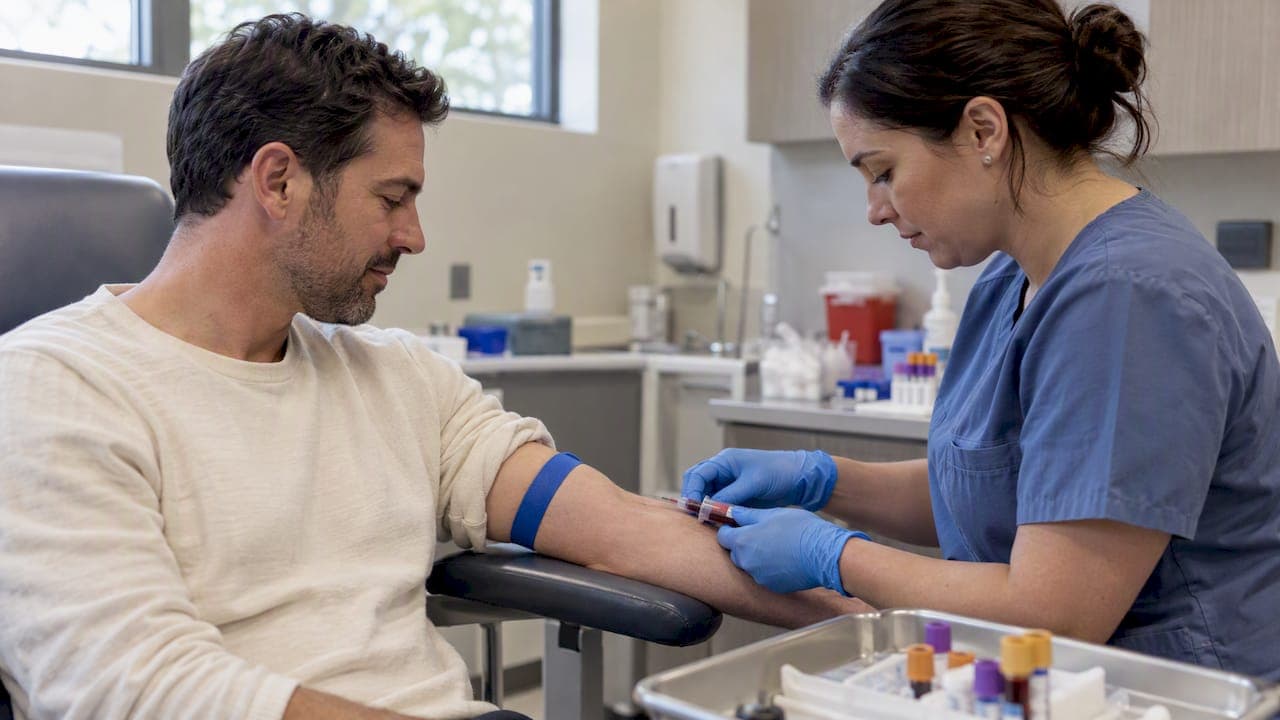
Most clinicians want recent baseline labs before you start a GLP-1 medication, but the FDA labels for these drugs do not require any specific blood test. Baseline labs are standard clinical practice. They give your clinician a reference point for your liver, kidney, blood sugar and cholesterol, and they help rule out problems before treatment begins. This guide explains which tests are common, what each one tells you, which test is not recommended, and what to do if you have no recent results.
TL;DR
- The FDA labels for GLP-1 medications such as semaglutide do not mandate pre-treatment blood tests. Baseline labs are a clinical best practice, not a regulatory rule.
- Prescribers typically want results from the past six months. A common starting set covers a metabolic panel, A1C and a lipid panel.
- Thyroid cancer history matters far more than a thyroid blood test. Routine calcitonin screening is not recommended.
- After you start, your symptoms guide extra testing. Vomiting, diarrhea and dehydration are the main reasons to recheck kidney function.
- Your clinician decides which labs you need based on your history, so bring any recent results to your intake.
Table of Contents
- Are lab tests required before a GLP-1?
- How recent should your labs be?
- The baseline panel: what clinicians commonly look at
- The thyroid test you do not need: calcitonin
- Who may need more than the basics
- Labs after you start: what to monitor
- Labs and progress tracking
- How to prepare for your blood draw
- Do you need a lab order to get started with us?
- Our perspective on GLP-1 labs
- Questions to bring to your clinician
- FAQ
- Sources
Are lab tests required before a GLP-1?
Not by the label. The prescribing information for semaglutide lists contraindications, warnings and monitoring points, but it does not set a mandatory blood panel before the first dose. You can read the current Ozempic prescribing information on the FDA site.
That does not make labs optional in good care. Clinicians use them to find contraindications, spot existing organ problems and record a benchmark. Without a baseline, it is hard to tell whether a later abnormal result was already there or was caused by the medication. Clinical commentary on baseline testing before GLP-1 therapy makes the same point: a baseline protects both the patient and the clinician.
The practical answer to "are GLP-1 labs required?" is this: the drug label does not demand them, but a responsible prescriber will usually ask for them or for recent results you already have.
How recent should your labs be?
Prescribers typically request lab work completed within the past six months before starting GLP-1 therapy. If your last panel is older, or you have never had a full metabolic workup, current results give a safer starting point.
If you had bloodwork at an annual physical in the last few months, that may be enough. Ask your primary care office for a copy through its patient portal. Keep the PDF, because you can upload it during an online intake.
The baseline panel: what clinicians commonly look at
There is no single national checklist. Panels differ by clinician and by your health history. The table below shows the tests most often discussed before a GLP-1 start and what each one is used for.
| Test | What it shows | Why it matters for GLP-1 care |
|---|---|---|
| Comprehensive metabolic panel (CMP) | Glucose, kidney markers, liver enzymes, electrolytes | Flags existing kidney or liver issues and sets a reference for later checks |
| Hemoglobin A1C | Average blood sugar over about three months | Identifies prediabetes or diabetes and gives a starting point to compare against |
| Fasting lipid panel | Total cholesterol, LDL, HDL, triglycerides | Tracks cardiometabolic change as weight comes down |
| Thyroid panel (TSH) | Thyroid function | Useful for fatigue, weight changes or if you take thyroid medication |
| Complete blood count (CBC) | Red cells, white cells, platelets | General health check, sometimes included in broader panels |
The first three form the core set many clinicians use. Others are added when your history suggests a reason.
Comprehensive metabolic panel
This one blood draw covers a lot. It reports kidney function, liver enzymes, electrolytes and fasting glucose. Kidney and liver results matter because GLP-1 treatment can cause stomach side effects, and dehydration from those side effects is the main route to kidney strain. A baseline tells your clinician what is normal for you.
Hemoglobin A1C
A1C reflects your average blood sugar over roughly the last three months. Many people who seek weight loss care have elevated blood sugar without knowing it. A starting value lets you and your clinician see glycemic change over time. If you are interested in how GLP-1 treatment relates to blood sugar before diabetes, read our overview of what trials show about GLP-1 for adults with prediabetes.
Fasting lipid panel
Cholesterol and triglycerides often improve as weight falls. A baseline lets you see that change on paper. It also helps your clinician spot a lipid problem that needs separate attention.
Thyroid function
A TSH test checks how your thyroid is working. It is a sensible add-on if you have symptoms such as persistent fatigue, cold intolerance or unexplained weight gain, or if you already take thyroid medication. This is different from thyroid cancer screening, covered next.
The thyroid test you do not need: calcitonin
GLP-1 medications of the semaglutide type carry a boxed warning about thyroid C-cell tumors. They are contraindicated if you or a family member has had medullary thyroid carcinoma (MTC), or if you have Multiple Endocrine Neoplasia syndrome type 2 (MEN 2). That is a history question, not a lab question.
The FDA label addresses blood screening directly. It says that serum calcitonin monitoring has uncertain value for early detection of MTC in treated patients, and that it may lead to unnecessary procedures because of low test specificity and a high background rate of thyroid disease. The same applies to routine thyroid ultrasounds as a screening step.
What this means for you:
- Tell your clinician honestly about any personal or family history of MTC or MEN 2.
- If you have a neck lump, trouble swallowing, hoarseness or shortness of breath, report it. Those are symptoms to evaluate, not to wait out.
- Do not pay for a calcitonin test as a routine "readiness" check unless a clinician has a specific reason to order it.
Some consumer lab bundles include extras like this. More tests are not always better care, and an unnecessary abnormal result can lead to further invasive workups.
Who may need more than the basics
Your clinician may widen the panel if any of these apply:
- Type 2 diabetes or prediabetes. More detailed glucose monitoring and kidney checks are common, especially if you take other glucose-lowering drugs.
- Known kidney or liver disease. Tighter baselines and follow-up are reasonable.
- A history of pancreatitis or gallbladder disease. The label lists both as warnings. Your clinician will weigh them in the decision to prescribe and in what symptoms to watch for.
- Thyroid medication use. GLP-1 treatment can change how oral medicines are absorbed, so your clinician may want to recheck levels.
- Heart disease risk factors. A fuller lipid and cardiometabolic picture helps.
Be specific about every medication and supplement you take. Your clinician needs the full list to decide which labs make sense.
Labs after you start: what to monitor
The label does not set a fixed lab schedule for most people. Monitoring is guided by your symptoms, your dose changes and your baseline results. That is more useful than testing on a calendar.
Kidney function and dehydration
Nausea, vomiting and diarrhea are the common side effects of GLP-1 medications, especially during dose increases. They can cause fluid loss. The Ozempic label warns about acute kidney injury linked to volume depletion, so kidney function should be watched during initiation and escalation if you have these symptoms.
If you cannot keep fluids down, or you feel dizzy, are urinating much less than usual or are getting worse, contact your clinician. Severe symptoms need urgent care, not a lab order.
Absorption of other oral medicines
GLP-1 medications can delay gastric emptying, which may affect how other pills are absorbed. This matters most for drugs with a narrow therapeutic index. The label notes that clinicians may adjust timing or increase monitoring in these cases. If you take thyroid medication, blood thinners or similar drugs, ask your clinician whether a recheck makes sense after you start.
Repeat A1C, lipids and liver enzymes
A repeat A1C and lipid panel a few months in shows whether your numbers are moving. Your clinician may repeat a CMP after dose changes or if symptoms appear. Treat the schedule as individual, not universal.

Pancreatitis and gallbladder symptoms
Severe, persistent abdominal pain, sometimes spreading to the back, with or without vomiting, is a reason to seek care right away. Do not wait for a lab appointment. Blood tests can support a diagnosis, but symptoms drive the response.
Labs and progress tracking
Bloodwork is one piece of progress. Weight, waist measurement, appetite, energy and how your clothes fit also count. Our guides on how to track GLP-1 progress and the signs your GLP-1 medication is working show what to record between visits. If you also use peptide therapy and receive lab reports, see how to read peptide therapy lab results safely.
How to prepare for your blood draw
Small steps make results cleaner and easier to compare.
- Ask about fasting. Lipid panels and glucose are often drawn fasting. Follow the instructions you are given, and drink water unless told otherwise.
- Take a medication list with you. Include doses, supplements and anything you use only occasionally.
- Request a copy of results. You are entitled to your records. Store them where you can upload them.
- Draw at a consistent time. Using similar conditions for each test makes changes easier to interpret.
- Do not start or stop medicines because of a result without talking to your clinician first.
Do you need a lab order to get started with us?
Here is how it works at Dayla Health. You complete an online intake, and a clinician reviews your history and decides whether GLP-1 treatment is appropriate for you. That clinician is the right person to tell you whether your situation calls for recent labs. If you already have results from the past six months, have them ready.
Our plans are paid in cash, with no insurance required and shipping across the United States. Published pricing is:
- GLP-1 Injection: from $179 per month
- GLP-1 Microdose: from $159 per month
- Oral GLP · Liposomal: from $149 per month
- dayla GLP-1 program: $299 per month
Each plan sits within a doctor-led model that includes clinical oversight, free dietitian visits and care coaching. You can compare the injection and needle-free oral options on our GLP-1 weight loss page, or see the full range on the Dayla Health home page. For your first steps, read how to start your GLP-1 weight loss journey.
Our perspective on GLP-1 labs
We think labs should serve the patient, not the sales funnel. That is why we are careful about two opposite mistakes.
The first is skipping baseline information entirely. A GLP-1 medication works on appetite, digestion and metabolism. You deserve a clinician who knows your kidney, liver and blood sugar starting points, and who reviews your medical history before prescribing. Personalized GLP-1 care begins with that review.
The second is over-testing. A long list of panels can feel reassuring, but a test with low specificity can produce false alarms and unnecessary procedures. The FDA label itself says this about routine calcitonin screening. We would rather you have the right tests, interpreted by a clinician who knows your history, than a large bundle.
Three principles guide how we think about it:
- Transparent cost. Our pricing is published, and you pay cash with no membership fees. You should know what care costs before you commit.
- Ongoing oversight. A prescription is the start. Dose changes, side effects and questions are part of care, and our dietitian visits and coaching help you handle them.
- Symptoms first. Lab results matter, but how you feel and what you report tell your clinician what to do next.
If you are unsure whether your recent bloodwork is enough, say so at intake. It is a normal question, and the answer depends on your history.
— Flexible
Questions to bring to your clinician
- Are my most recent labs recent enough, or should I repeat them?
- Do my other medications call for extra monitoring?
- What symptoms should make me call you right away?
- When should I repeat A1C, lipids and kidney function?
- How should I handle dehydration if I have side effects after a dose increase?
Pair these with sound habits. Nutrition and activity shape your numbers as much as the medication does, so see lifestyle changes that boost GLP-1 results and the role of diet in GLP-1 treatment.
FAQ
Do I need blood work before starting a GLP-1?
The FDA label does not require a specific blood test. Most clinicians still want recent baseline labs, typically from the past six months, to check kidney, liver and blood sugar status. Your clinician decides what is right for your history.
Which labs are most common before a GLP-1 for weight loss?
A comprehensive metabolic panel, hemoglobin A1C and a fasting lipid panel are the core set. A thyroid function test or complete blood count may be added based on your symptoms and medications.
Should I get a calcitonin or thyroid cancer blood test?
Not routinely. The FDA label describes calcitonin monitoring as having uncertain value and a risk of unnecessary procedures. What matters is telling your clinician about any personal or family history of medullary thyroid carcinoma or MEN 2, because either one rules out these medications.
Will I need regular lab tests while taking a GLP-1?
There is no universal fixed schedule. Monitoring depends on your baseline results, dose changes and symptoms. Kidney function deserves attention if you have vomiting or diarrhea, and repeat A1C and lipids are often checked after a few months.
Can a GLP-1 affect my other medications?
It can. GLP-1 medications delay gastric emptying, which may change how some oral medicines are absorbed. Tell your clinician about everything you take so timing or monitoring can be adjusted.
Sources
- FDA prescribing information for Ozempic (semaglutide), revised 05/2026
- Lab tests before starting GLP-1 therapy, Personalabs, 24 February 2026