
High-quality trials show GLP-1 receptor agonists can return a large share of people with prediabetes to normal blood sugar, in some study arms more than 80%. No GLP-1 medication is FDA-approved specifically for prediabetes, and the gains from weight loss and better insulin sensitivity often fade after stopping treatment. This is a decision to make with a clinician, weighing real benefits against cost and side effects.
TL;DR:
- GLP-1 medications can return over 80% of prediabetes patients to normal blood sugar in some trial groups, but long-term durability varies after stopping treatment.
- Tirzepatide shows the highest efficacy, with up to 93% achieving normoglycemia, and also has the strongest evidence for preventing progression to type 2 diabetes.
- Side effects like nausea are common, but slow titration helps improve tolerance, and certain pre-existing conditions like thyroid cancer history exclude use.
- Effectiveness depends heavily on combining medication with lifestyle changes, especially resistance training and weight management, to sustain insulin sensitivity gains.
- Insurance coverage for GLP-1 in prediabetes is limited, making out-of-pocket or subscription-based options more accessible for most patients.
Table of Contents
- What Does the Evidence Say About GLP-1 for Prediabetes?
- How Do GLP-1 Receptor Agonists Improve Insulin Sensitivity?
- Who Is a Good Candidate for GLP-1 Therapy in Prediabetes?
- What Are the Realistic Benefits and Limitations?
- What Side Effects and Safety Issues Should You Know About?
- How Is GLP-1 Therapy Actually Used and Monitored?
- Why Lifestyle Changes Still Matter With GLP-1 Treatment
- Our Take on Supervised GLP-1 Care for Prediabetes
- Getting Started With Daylahealth's GLP-1 Program
- Sources
- FAQ
What Does the Evidence Say About GLP-1 for Prediabetes?
The numbers here are striking enough that they deserve context before they get quoted out of it. Across randomized trials, liraglutide, semaglutide, and tirzepatide have each shown substantial rates of normoglycemia (a return to normal blood sugar) in some study arms, according to trial data cataloged in a PubMed review of efficacy across GLP-1 agents. Tirzepatide, which acts on both the GIP and GLP-1 receptors, also showed the strongest effect on preventing outright progression to type 2 diabetes.
Those figures come from clinical trials, not from casual before-and-after observations, and that distinction matters for how you read them. A systematic review and meta-analysis of GLP-1 receptor agonists in prediabetes found that regression to normal glucose levels often showed up within 14 to 24 weeks of starting treatment, sometimes faster. That is a matter of months, not years, which is part of why these drugs generate so much attention among people who have spent a long time hearing "watch your diet and exercise more" without much traction.
Here's the catch that gets buried in most headlines: durability after stopping the drug is inconsistent. Some trial participants held onto meaningful glycemic improvement after treatment ended. Others regressed toward their pre-treatment numbers within months, according to follow-up data reviewed in Diabetes Therapy's analysis of GLP-1 receptor agonists in prediabetes. That single fact should reframe how you think about GLP-1 for prediabetes: less as a cure to complete and more as a metabolic intervention you may need to sustain, similar to how blood pressure medication controls hypertension rather than eliminating it.
A few caveats deserve equal billing with the headline numbers:
- Many of the trials generating these percentages enrolled participants with obesity alongside prediabetes, not a general prediabetes population with normal body weight.
- Long-term, population-wide data on whether GLP-1 therapy prevents type 2 diabetes over five or ten years remains limited.
- Trial designs vary in how they define normoglycemia, which makes cross-study comparisons imperfect even when the headline percentages look similar.
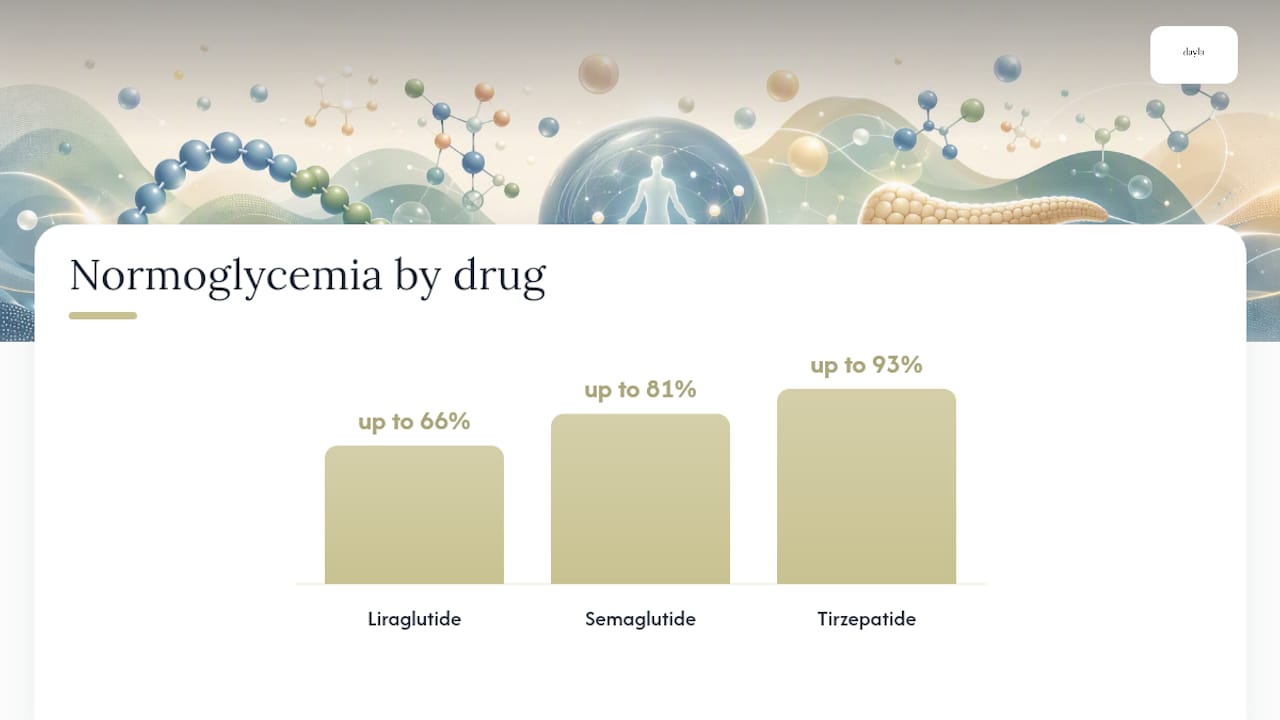
The efficacy spread by drug class: liraglutide (up to 66% normoglycemia), semaglutide (up to 81%), tirzepatide (up to 93%) — with tirzepatide also showing the largest effect on blocking progression to type 2 diabetes, per trial data compiled on PubMed.
None of this means GLP-1 receptor agonists work identically to how they work in full-blown type 2 diabetes. Prediabetes sits earlier on the metabolic curve, and the physiology helps explain why intervening at that stage produces such pronounced results.
How Do GLP-1 Receptor Agonists Improve Insulin Sensitivity?
GLP-1 (glucagon-like peptide-1) is a hormone your gut releases after eating. It tells your pancreas to release insulin, but only when blood glucose is already elevated, which is called glucose-dependent insulin secretion. That built-in safety valve is part of why these medications carry a lower risk of dangerous low blood sugar compared with older diabetes drugs that force insulin release regardless of glucose levels.
GLP-1 receptor agonists mimic that hormone at pharmacologic doses, and the downstream effects touch several systems at once, according to a PMC review of GLP-1 mechanisms and insulin resistance. They suppress glucagon, the hormone that raises blood sugar, again only when glucose is high. They slow gastric emptying, which blunts the glucose spike after meals and extends the feeling of fullness. They also act on appetite centers in the brain, reducing hunger signals in a way that produces meaningful weight loss for most people who tolerate the medication.
Weight loss itself is doing a lot of the metabolic work here. Excess fat, particularly around the abdomen and liver, drives insulin resistance by interfering with how muscle and liver cells respond to insulin's signal. Shed that fat and insulin sensitivity typically improves independent of any direct drug effect on the pancreas.
There is a second mechanism that gets less attention: inflammation. Prediabetes is partly an inflammatory condition, with excess fat tissue releasing inflammatory signals that worsen insulin resistance over time. GLP-1 receptor agonists appear to have anti-inflammatory effects that may help correct some of that underlying dysfunction, not just mask the symptoms of it, per findings summarized in a mechanistic review on GLP-1's anti-inflammatory effects. That combination, glucose-dependent insulin support, appetite and weight effects, and reduced inflammatory signaling, is what makes these drugs mechanistically interesting for prediabetes specifically, not just for full diabetes.
Who Is a Good Candidate for GLP-1 Therapy in Prediabetes?
Trial populations offer the clearest picture of who these medications were actually tested on, and it is worth knowing that profile before assuming you fit it. Most participants in the major prediabetes trials had overweight or obesity alongside an A1C in the prediabetes range, generally between 5.7% and 6.4%. Clinicians running these trials typically also tracked fasting glucose, waist circumference, and markers of insulin resistance to build a fuller metabolic picture.
Certain groups tend to be prioritized for a GLP-1 conversation over others:
- People with prediabetes who also carry obesity, since weight loss compounds the glycemic benefit.
- People with fatty liver disease, where GLP-1-driven weight loss can meaningfully improve liver fat.
- People with high cardiometabolic risk markers, including elevated blood pressure or unfavorable cholesterol patterns alongside prediabetes.
- People who have already tried structured lifestyle changes without reaching their glucose targets.
That last point matters because lifestyle-first remains the standard starting approach for most people newly diagnosed with prediabetes. A clinician is more likely to favor diet and exercise changes alone when A1C sits at the lower end of the prediabetes range, when there is no obesity or additional cardiometabolic risk, and when the person has not yet had a real trial of structured lifestyle intervention.
Contraindications and caution points also shape candidacy. A personal or family history of medullary thyroid carcinoma or Multiple Endocrine Neoplasia syndrome type 2 rules out GLP-1 therapy entirely. Pregnancy is another firm no. A history of pancreatitis, significant gastroparesis, or severe gastrointestinal disease warrants a careful conversation with a prescriber before starting, since these conditions can overlap with the drug's known side effect profile. None of these criteria are things to self-diagnose from a checklist. They are exactly what a clinician evaluation exists to sort through.
What Are the Realistic Benefits and Limitations?
Trial data give a fairly consistent picture of what GLP-1 therapy delivers in prediabetes: meaningful A1C reduction, weight loss typically in the range of 10% to 15% of body weight depending on the agent and dose, and measurable improvement in waist circumference, a proxy for the visceral fat most tied to insulin resistance. These are not marginal numbers. They represent the kind of shift that often moves someone out of the prediabetes range entirely within the trial window.
The benefits extend past glucose control. Large cardiovascular and renal outcome trials in people with diabetes and obesity, reviewed in a New England Journal of Medicine overview of GLP-1 receptor agonists, found reduced cardiovascular risk in higher-risk populations. That evidence base was not built specifically on prediabetes, but the underlying cardiometabolic mechanisms, less visceral fat, better blood pressure, improved lipid patterns, plausibly carry over to people at an earlier stage of glucose dysfunction.
The limitations are just as real as the benefits, and downplaying them would be dishonest. The same NEJM review raises open questions about long-term adherence and weight regain once people stop the medication. That pattern shows up specifically in prediabetes too: some trial participants sometimes maintained partial glycemic improvement after discontinuation, though others drifted back toward their starting numbers within months. Evidence on multi-year prevention of type 2 diabetes at a population level, rather than within a single trial's follow-up window, is still thin. GLP-1 therapy for prediabetes is a genuinely powerful tool with an evidence base that is still catching up to the enthusiasm around it.
What Side Effects and Safety Issues Should You Know About?
Gastrointestinal symptoms are the most common reason people stop GLP-1 therapy before they see the full benefit. Nausea, mild constipation or diarrhea, and occasional vomiting show up most often during dose increases, according to a clinical overview of GLP-1 receptor agonists. The single biggest lever for reducing these symptoms is titration speed. Going slower than the minimum recommended schedule, even when a faster path is technically allowed, tends to improve tolerance and persistence with treatment considerably.
Rarer but more serious concerns deserve equal weight in this conversation, not a footnote:
- Pancreatitis has been flagged as a possible risk signal in some safety monitoring, though causation is not firmly established, and any history of pancreatitis warrants extra caution before starting.
- A contraindication exists for anyone with a personal or family history of medullary thyroid carcinoma or Multiple Endocrine Neoplasia type 2, based on findings in rodent studies that have not been definitively resolved in humans.
- Pregnancy is a clear stop sign. These medications are not recommended during pregnancy or while trying to conceive.
- Rapid weight loss on any GLP-1 medication can come with a loss of lean muscle mass and, in some cases, bone density, which is a legitimate concern flagged by a UC Davis Health review of the systemic impacts of GLP-1 therapies.
That last point is one people underestimate. Losing weight fast is not automatically a win if a meaningful share of what comes off is muscle rather than fat. Clinicians increasingly recommend resistance training and adequate protein intake specifically to protect lean mass during GLP-1-driven weight loss, alongside periodic monitoring for anyone with existing bone health concerns.
Pro Tip: Track your side effects on a simple 1 to 10 scale during the first four weeks of any dose increase. If nausea consistently scores above a 5, that is a signal to ask your clinician about slowing the titration schedule rather than pushing through it, and our GLP-1 dosing schedule guide walks through what a gradual titration actually looks like week by week.
Monitoring typically includes A1C checks, weight and waist circumference tracking, and periodic kidney function testing, since renal clearance affects dosing considerations for some patients.
How Is GLP-1 Therapy Actually Used and Monitored?
Dosing follows a start-low, go-slow pattern across every approved GLP-1 agent, regardless of whether it is dosed daily or weekly. The specific escalation schedule differs by formulation and by which condition it is prescribed for, but the underlying principle is universal: begin at the lowest dose, hold there for several weeks, then step up gradually based on tolerance rather than jumping straight to a target dose. Formulation options now include daily injectables, weekly injectables, and even an oral semaglutide tablet, which gives clinicians flexibility depending on a patient's preference for injection frequency and needle aversion.
Trial durations in the prediabetes literature commonly ran from several months up to roughly a year, with some extension studies following participants longer. Off-treatment follow-up periods are where the durability question gets tested directly, and as covered above, the results are mixed rather than uniformly reassuring. That is the honest state of the evidence right now.
A reasonable monitoring checklist for anyone starting GLP-1 therapy for prediabetes looks something like this:
- Baseline A1C, fasting glucose, weight, and kidney function before starting treatment.
- Follow-up A1C at roughly 12-week intervals during active dose titration.
- Ongoing weight and waist circumference tracking at each clinical visit.
- Periodic kidney function recheck, particularly for anyone with pre-existing renal risk factors.
- A conversation about bone and muscle health if weight loss is rapid or if resistance training is not already part of the routine.
Cost is where the conversation often gets complicated fastest. Because no GLP-1 medication carries FDA approval specifically for prediabetes, many insurers decline coverage for this indication even when a clinician judges it appropriate, a pattern flagged directly in Mayo Clinic Press's coverage of GLP-1 use for prediabetes. That leaves people facing three realistic paths forward: paying out of pocket at retail prices, which can run into the hundreds of dollars monthly, appealing the insurance denial with clinical documentation, or working with a cash-pay subscription care model that bundles medication access with clinician oversight at a predictable monthly cost. Once you and your prescriber settle on a starting dose, our guide on transitioning safely to a maintenance dose covers what that shift typically involves. Readers looking for a broader professional perspective on diabetes care standards can also consult the Société Luxembourgeoise de Diabétologie, a professional medical society resource on diabetes management.
Why Lifestyle Changes Still Matter With GLP-1 Treatment
Medication is not a replacement for the fundamentals, and every serious clinical voice in this space says so. The best outcomes in prediabetes trials paired GLP-1 therapy with sustained changes to diet and physical activity, not medication alone coasting on autopilot. That combination approach is where the real durability of results tends to come from.
Protecting lean muscle mass deserves specific attention here, since it connects directly to the weight loss side effects covered earlier. Resistance training two to three times weekly, paired with adequate protein intake, helps preserve muscle during a calorie deficit driven by appetite suppression. This is not a cosmetic concern. Muscle tissue is metabolically active and plays a direct role in glucose uptake, so losing too much of it while on GLP-1 therapy can partially undercut the insulin sensitivity gains the medication was supposed to deliver.
Planning ahead for the possibility of stopping treatment is also worth doing before you start it, not after. Given the mixed durability data on glycemic improvement post-discontinuation, building a maintenance plan, sustainable eating patterns, a consistent exercise routine, ongoing weight monitoring, before you ever taper off the medication puts you in a far stronger position than treating discontinuation as an afterthought. Our breakdown of lifestyle changes that boost GLP-1 results covers specific, practical steps for building that foundation alongside medication.
Our Take on Supervised GLP-1 Care for Prediabetes
Daylahealth's model centers on clinician oversight paired with free dietitian consults and ongoing care coaching, delivered with medication shipped directly to patients. We think that pairing is the part of this conversation that gets skipped too often. A prescription alone, without dietitian input or someone checking in on titration tolerance, misses exactly the support structure the trial evidence says matters most for durable results.
The data on GLP-1 for prediabetes is genuinely encouraging, and also genuinely incomplete. Regression to normoglycemia in a controlled trial setting is not the same claim as lifelong diabetes prevention, and anyone telling you otherwise is overselling the evidence. What we can say with confidence is that clinician-guided titration, consistent monitoring, and a real lifestyle plan alongside medication give people the best shot at holding onto the gains these drugs can produce.
If you are weighing whether this fits your situation, that conversation belongs with a clinician who can review your labs, your history, and your goals directly, not with a headline percentage from a trial you were never enrolled in.
— Flexible
Getting Started With Daylahealth's GLP-1 Program
The service removes common friction points that keep people with prediabetes from having this conversation: insurance gatekeeping and the isolation of managing a new medication alone. There are no membership fees and pricing stays transparent and cash based, so users know their monthly cost upfront instead of waiting on an insurance appeal that frequently gets denied for prediabetes.
The intake process starts with an online evaluation that a clinician reviews before approving a plan suited to your health profile. From there, Daylahealth offers both injectable and needle-free oral GLP-1 options, plus a free dietitian consult and ongoing care coaching bundled into your subscription, all shipped nationwide. Plans include the GLP-1 Injection option starting at $179 per month, a GLP-1 Microdose plan from $159 per month, and an Oral GLP-1 Liposomal option from $149 per month for anyone who prefers to skip needles entirely. If you are ready to see whether you qualify, you can start your intake evaluation now and get a clinician's read on your specific numbers rather than guessing from a trial average.
Sources
The core evidence behind this article comes from a small set of sources worth bookmarking if you want to dig deeper: the PubMed dataset comparing liraglutide, semaglutide, and tirzepatide outcomes, the PMC systematic review and meta-analysis on GLP-1 receptor agonists in prediabetes, the NEJM review of GLP-1 receptor agonists, and Mayo Clinic Press's practical coverage of GLP-1 and prediabetes. Each pulls from randomized trial data or peer-reviewed synthesis rather than marketing claims, which is exactly the standard this topic deserves.
This article is general information, not a substitute for advice from a qualified doctor. Consult a qualified healthcare professional about your own circumstances before acting on anything here.
- Trial and efficacy data for liraglutide, semaglutide, tirzepatide in prediabetes — PubMed entry
- Efficacy and safety of glucagon-like peptide-1 receptor agonists on prediabetes: a systematic review and meta-analysis
- Does Ozempic help with prediabetes? — Mayo Clinic Press
FAQ
What A1C Level Qualifies Someone for GLP-1 Treatment?
There is no single universal A1C cutoff for prediabetes treatment, but most trials enrolled participants with A1C between 5.7% and 6.4%, the standard prediabetes range. Whether GLP-1 therapy makes sense at your specific number depends on additional factors like weight, cardiometabolic risk, and prior response to lifestyle changes, which is why this needs a clinician's evaluation rather than a number alone.
Are GLP-1 Drugs FDA-Approved for Prediabetes?
No. GLP-1 receptor agonists are FDA-approved for type 2 diabetes and, in certain formulations, for chronic weight management, but not specifically for prediabetes, according to Mayo Clinic Press. Clinicians can still prescribe them off-label for prediabetes based on individual risk factors and clinical judgment.
Which GLP-1 Medication Works Best for Prediabetes?
Trial data suggest tirzepatide produced the highest normoglycemia rates, up to 93% in some study arms, compared with up to 81% for semaglutide and up to 66% for liraglutide, according to research indexed on PubMed. "Best" still depends on your tolerance, cost considerations, and whether your clinician prefers a particular delivery method, since Daylahealth offers both injectable and oral GLP-1 formats to fit different preferences.
Do the Benefits of GLP-1 Therapy Last After You Stop Taking It?
Durability is inconsistent. Some people maintain part of their glycemic improvement after stopping, while others see their numbers drift back toward baseline within months, based on off-treatment follow-up data reviewed in Diabetes Therapy. That is why pairing medication with lasting lifestyle changes matters so much for anyone planning to eventually taper off.
Will Insurance Cover GLP-1 Medication for Prediabetes?
Usually not. Because prediabetes is not an FDA-approved indication for these drugs, many insurers deny coverage even when a clinician recommends treatment, per Mayo Clinic Press. Cash-pay subscription models offer a transparent alternative when insurance falls through, with pricing details available on the provider's website.