
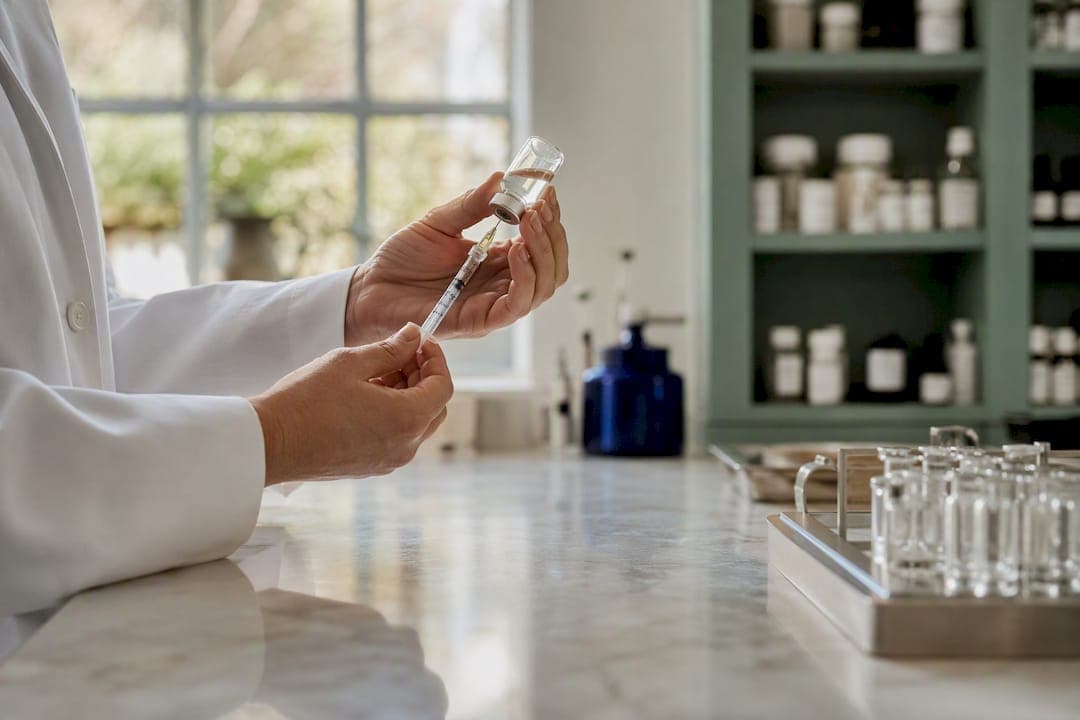
The mistakes that undo progress on GLP-1 medications almost always fall into six categories: too little protein, oversized or high-fat meals, ultra-processed foods, dehydration, skipped meals, and ignored GI symptoms. Each has a fast fix.
- Insufficient protein → aim for a sufficient amount of protein at each meal, starting with breakfast.
- Large, high-fat meals → cut portions in half and choose grilled over fried.
- Ultra-processed or sugary foods → swap for whole foods with fiber and protein.
- Dehydration → drink water before meals, not just when thirsty.
- Skipped meals → eat something small every 3 to 4 hours, even without hunger cues.
- Ignoring persistent nausea or vomiting → call your prescriber rather than waiting it out.
A Journal of Translational Medicine study found adults on GLP-1 therapy averaged just 33.4 grams of protein daily, well under what's needed to protect muscle during rapid weight loss.
Key Takeaways
Protein intake, meal pacing, food quality, and hydration determine whether GLP-1 therapy preserves muscle or quietly erodes it alongside fat.
| Point | Details |
|---|---|
| Hit protein targets daily | Aim for 25 to 30 grams per meal to protect lean mass during rapid weight loss. |
| Slow down and downsize meals | Smaller, slower meals reduce nausea from delayed gastric emptying. |
| Choose whole foods over processed | Nutrient-dense choices matter more when appetite and calorie intake are both lower. |
| Stay ahead of dehydration | Sip water consistently rather than waiting for thirst, especially during GI flare-ups. |
| Report persistent symptoms early | Contact your prescriber for severe nausea, vomiting, or extreme appetite loss. |
| Consider supervised care | Daylahealth combines GLP-1 prescriptions with dietitian consults and clinician oversight for personalized adjustments. |
Table of Contents
- Eating Patterns That Backfire on GLP-1
- Food Quality Mistakes That Worsen Side Effects
- Protecting Muscle: Protein Targets and Micronutrient Gaps
- Hydration and Managing GI Side Effects
- Timing Habits That Trigger Nighttime Symptoms
- Medication and Dosing Mistakes That Compound Diet Problems
- A Simple Day of Eating on GLP-1
- What the Research Actually Shows
- Why "Just Push Through It" Is Bad Advice
- Get Clinician-Supervised Support for Your GLP-1 Diet
- Frequently Asked Questions
- Sources
Eating Patterns That Backfire on GLP-1
GLP-1 medications slow gastric emptying, which is exactly why oversized meals feel like a mistake almost immediately. Food sits in the stomach longer, and a large or fast-eaten meal stretches it further, triggering nausea, bloating, and that uncomfortable "overfull" sensation many patients describe within the first 20 minutes. Skipping meals creates a quieter problem: reduced appetite already makes it easy to under-eat, and skipping compounds it, leaving you short on nutrients and running on fumes by afternoon.
Three fixes address most of this:
- Cut portions to roughly half of a pre-medication meal and reassess after 15 minutes.
- Eat slowly, setting utensils down between bites to give fullness signals time to register.
- Schedule small, protein-rich meals or snacks every few hours instead of relying on three large sittings.
Pro Tip: Keep a simple food and symptom log for one week. Patterns between what you eat and when nausea hits usually show up within days, and that's the fastest way to identify your personal triggers.
Food Quality Mistakes That Worsen Side Effects
When appetite drops, every bite needs to count. Choosing ultra-processed snacks or sugary drinks instead of nutrient-dense food means you're spending a shrunken calorie budget on very little protein, fiber, or vitamins. That's a losing trade when your stomach can only hold so much.
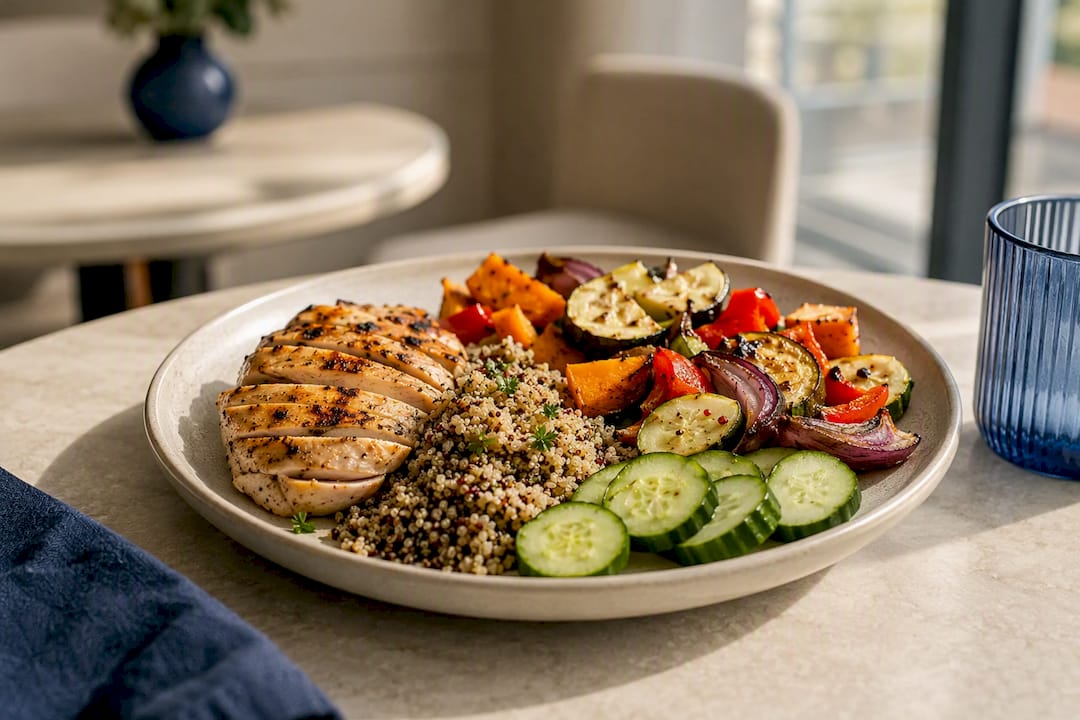
High-fat meals cause a second problem. Because GLP-1 drugs already slow digestion, a fried or heavy meal sits even longer, worsening nausea, reflux, and bloating. Cleveland Clinic guidance specifically recommends limiting fried foods, spicy dishes, and refined carbohydrates for this reason.
Practical swaps that make a real difference:
- Replace soda and juice with water or unsweetened sparkling water.
- Swap fried chicken or fast food for grilled protein and roasted vegetables.
- Choose whole-grain bread or oats over white bread and sugary cereal.
- Limit alcohol, which irritates the stomach lining and adds empty calories.
- Add a fiber source, like berries or beans, to slow-digesting meals gradually.
Protecting Muscle: Protein Targets and Micronutrient Gaps
Rapid weight loss on GLP-1 medications isn't automatically fat loss. Without enough protein and resistance training, a meaningful share of that weight can come from muscle, and the Journal of Translational Medicine research found widespread shortfalls in protein, fiber, vitamin D, calcium, and potassium among the 387 adults studied. Reduced appetite makes this easy to miss since the scale keeps moving in the right direction, even as body composition shifts the wrong way.
The fix starts with a number: target an adequate amount of protein per meal, or an individualized goal per target body weight, a benchmark the same study's authors recommend for many patients. That looks like:
- Eggs, Greek yogurt, or cottage cheese at breakfast.
- Chicken, fish, or tofu at lunch and dinner.
- A protein shake or shake as backup when appetite is especially low.
Pair that intake with resistance training two to three times weekly, since muscle responds to both fuel and mechanical demand. If you're consistently missing protein targets or experiencing fatigue and hair thinning, a dietitian consult can catch deficiencies before they affect lean mass long term.
Hydration and Managing GI Side Effects
Dehydration sneaks up fast on GLP-1 therapy, as explained in detail in this article on how diet affects supply usage. Lower food intake means less fluid from meals, and any nausea or vomiting accelerates fluid loss further. Sip water throughout the day rather than chugging large amounts at once, since a full stomach on top of slowed digestion invites discomfort.
For constipation, increase fiber gradually alongside fluids and short walks. For nausea, small bland meals, ginger tea, and electrolyte drinks tend to help more than skipping food entirely.
- Drink water consistently between meals, not just when thirsty.
- Add fiber slowly to avoid worsening bloating.
- Use an electrolyte drink if vomiting or diarrhea persists more than a day.
- Contact your prescriber if you can't keep fluids down for 24 hours.
Pro Tip: Room-temperature or cold beverages are often easier to tolerate than hot drinks when nausea is active. Small sips over 10 minutes beat one large glass.
Timing Habits That Trigger Nighttime Symptoms
Eating a heavy meal within two to three hours of bedtime, then lying down, is one of the fastest ways to trigger reflux and nausea on GLP-1 medications. Delayed gastric emptying means that food is still sitting in your stomach when you recline, and gravity stops helping.
- Finish larger meals at least three hours before bed.
- Take a short walk after dinner instead of sitting or lying down immediately.
- Choose a light, low-fat evening meal if dinner runs late.
- If hunger strikes at night, reach for a small protein snack like cottage cheese rather than a heavy plate.
Medication and Dosing Mistakes That Compound Diet Problems
Rushing dose increases before your body adjusts is one of the more avoidable mistakes on GLP-1 therapy, and treating ongoing side effects as "just part of it" is another. Both delay the moment you actually get help.
- Don't push through severe or worsening nausea, assuming it will pass on its own.
- Contact your prescriber if you can't keep food or fluids down for more than a day.
- Report a persistent, extreme loss of appetite that's preventing adequate intake.
- Ask about dose adjustment or a slower titration schedule if side effects are consistently disruptive.
The FDA has warned against unapproved GLP-1 products specifically because clinician oversight matters for both dosing safety and side-effect management. A dietitian consult can often solve what feels like a medication problem but is really a nutrition timing issue.
A Simple Day of Eating on GLP-1
Building a day around protein first makes hitting your targets far less complicated than tracking every calorie.
- Breakfast: Two eggs with a slice of whole-grain toast, or Greek yogurt with berries.
- Lunch: Grilled chicken or salmon with a small portion of rice and vegetables.
- Snack: Cottage cheese, a protein shake, or a hard-boiled egg.
- Dinner: Baked fish or tofu with roasted vegetables, kept light if eaten later.
For low-appetite days, texture-friendly options work better than solid food:
- Smoothies blended with whey protein or Greek yogurt.
- Soft scrambled eggs.
- Canned tuna or salmon mixed with a little mayo.
- Fortified yogurt with added protein powder.
If you're consistently missing meals or protein targets despite these swaps, ask your care team about a multivitamin or targeted supplement, and consider a structured meal-planning approach built for appetite suppression specifically. Persistent gaps are a signal for dietitian involvement, not something to push through alone.
What the Research Actually Shows
The nutritional risks described here aren't speculation. Adults on GLP-1 or dual GIP/GLP-1 therapy in the Springer study averaged just 33.4 grams of daily protein against widespread shortfalls in fiber, vitamin D, calcium, and potassium.
Experts note that the rapid adoption of GLP-1 medications has outpaced standard nutritional support systems, and recommend individualized dietitian counseling as a core part of therapy, not an optional add-on.
Cleveland Clinic reinforces this with practical guidance on foods to favor and avoid, while the FDA's warnings about unapproved products underscore why clinical supervision matters throughout treatment.
Why "Just Push Through It" Is Bad Advice
Too many patients treat GLP-1 side effects as a toll they have to pay for weight loss. That framing gets it backward. Nausea, constipation, and extreme appetite suppression aren't proof the medication is "working harder." They're often signs that diet, pacing, or dose need adjusting.
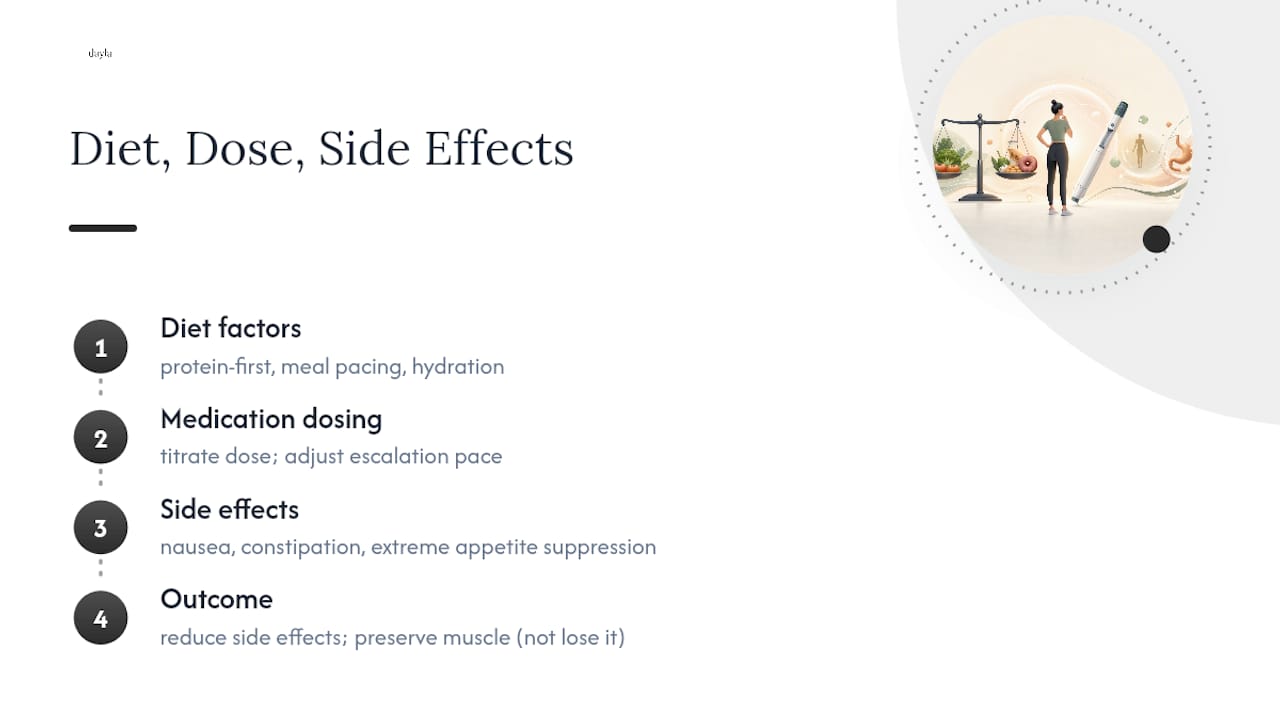
The protein-first approach outlined throughout this piece isn't a nice-to-have layered on top of medication. It's the difference between losing fat and losing muscle, between finishing a dose escalation comfortably and calling your prescriber in week three because you can't keep food down. Diet and medication aren't separate tracks. They're the same treatment plan, and treating them separately is where most of these mistakes start.
Get Clinician-Supervised Support for Your GLP-1 Diet
Reading about protein targets and food triggers only gets you so far without someone checking whether your plan actually fits your body, your dose, and your labs. Daylahealth pairs GLP-1 prescriptions with ongoing clinician oversight and dietitian consults, so the nutrition adjustments in this article get personalized instead of guessed at.
That means real-time troubleshooting when a side effect flares up, protein and micronutrient guidance specific to your numbers, and a care team that can adjust your dose instead of leaving you to push through discomfort alone. Everything ships nationwide with no insurance requirement, so supervised care doesn't mean waiting on a referral. If you're ready to pair your weight loss program with structured nutrition support, start an intake with Daylahealth and see what a clinician-guided plan looks like for your situation.
Frequently Asked Questions
What is the biggest diet mistake people make on GLP-1? Insufficient protein intake tops the list. Many patients unintentionally eat well under the amount of protein needed per meal to protect muscle during rapid weight loss.
Can diet mistakes on GLP-1 cause muscle loss? Yes. Low protein intake combined with reduced calorie intake and no resistance training can result in a meaningful share of weight loss coming from muscle rather than fat.
How much water should I drink while on GLP-1 medication? There's no universal number, but sipping water consistently throughout the day, rather than only when thirsty, helps offset the dehydration risk from reduced food intake and potential GI side effects.
When should I contact my prescriber about diet-related side effects on GLP-1? Reach out if you can't keep fluids or food down for 24 hours, experience severe or worsening nausea, or notice extreme appetite loss that's preventing adequate nutrition.
Are ultra-processed foods worse on GLP-1 than normal? They're a poorer trade-off. With appetite and calorie intake both reduced, every meal needs to deliver more protein, fiber, and nutrients, something ultra-processed foods rarely provide.
This article is general information, not a substitute for advice from a qualified doctor. Consult a qualified healthcare professional about your own circumstances before acting on anything here.
Sources
- Dietary intake patterns and nutritional adequacy among adults with overweight or obesity treated with GLP-1 or dual GIP/GLP-1 receptor agonists - Journal of Translational Medicine
- GLP-1 Diet Guidance — Cleveland Clinic
- Expert commentary: need for integrated nutritional care with GLP-1 therapy (DOI 10.1016/j.tjnut.2026.101684)
- FDA: FDAs concerns: unapproved GLP-1 drugs used for weight loss