

A protein-first eating plan with small, frequent meals and consistent hydration is the single most effective way to reduce side effects and preserve muscle when you start GLP-1 therapy. Eat 25–35 g of protein per meal, space meals every 3–4 hours, and drink 2–3 liters of fluids daily. That combination, backed by clinical guidance, is your foundation from day one.
Your GLP-1 beginner checklist:
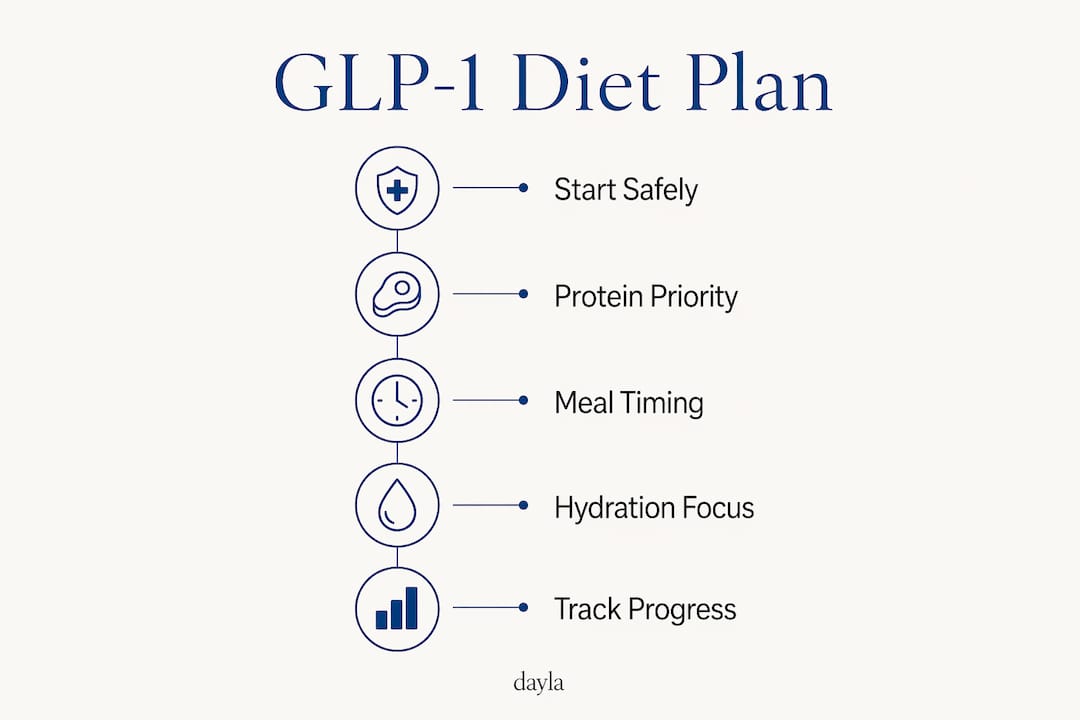
- Eat protein first at every meal, targeting 25–35 g per sitting
- Space meals every 3–4 hours rather than waiting for hunger signals
- Prioritize non-starchy vegetables and introduce fiber gradually
- Avoid fried, high-fat, and very spicy foods during the first 2–4 weeks
- Drink 2–3 liters of water or fluids daily to prevent dehydration
- Eat small portions and stop before you feel full
TLDR: Protein first, small meals on a schedule, and drink more water than you think you need.
Table of Contents
- How do GLP-1 medications change the way you eat?
- What GI side effects should you expect, and when?
- What should you eat on GLP-1 medications?
- Which foods and habits make GLP-1 side effects worse?
- How do you plan meals and avoid under-eating on GLP-1s?
- A beginner sample meal plan you can start this week
- When should you contact your prescriber or a dietitian?
- Key Takeaways
- What most beginners get wrong about GLP-1 nutrition
- Daylahealth supports your GLP-1 nutrition plan from day one
- Useful sources and further reading
How do GLP-1 medications change the way you eat?
GLP-1 medications blunt hunger and slow gastric emptying, which means your stomach holds food longer and your appetite signals become unreliable. You may feel full after just a few bites, or forget to eat for hours. Neither is safe when your body still needs protein, micronutrients, and fluids to function.
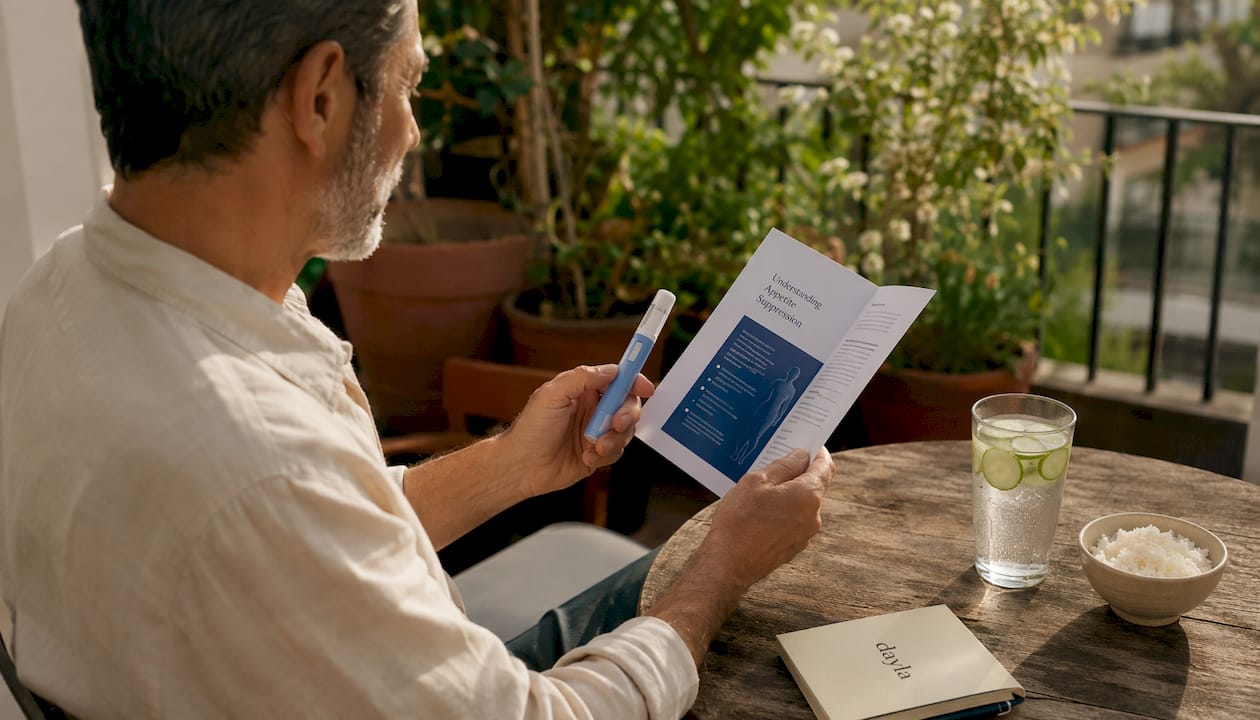
The physiology matters here. Delayed gastric emptying reduces how much you can comfortably eat at one sitting. Combined with suppressed appetite, this creates a real risk of under-eating, which can lead to fatigue, dehydration, and muscle loss during GLP-1 therapy. Studies on semaglutide have reported that lean mass can account for a meaningful portion of total weight lost; this is why nutrition planning is not optional.
The goal of eating on GLP-1s is not severe restriction. According to JAMA Internal Medicine, extreme calorie restriction can worsen fatigue and GI symptoms. Planned, nutrient-dense small meals are what protect your energy and your muscle while the medication does its work on appetite and blood sugar.
What GI side effects should you expect, and when?
Most digestive side effects begin within the first few days of your first injection. Nausea typically peaks 3–5 days after that initial dose, and the main adjustment phase runs 2–4 weeks. Knowing this timeline helps you prepare rather than panic.
Side effect timeline:
- Days 1–3: Mild nausea, reduced appetite, possible bloating
- Days 3–5: Peak nausea window; constipation may begin
- Weeks 2–4: Symptoms gradually ease for most people; appetite starts to stabilize
- Beyond week 4: If nausea or GI distress persists at the same intensity, contact your prescriber
For more on why nausea happens and how to manage it, Daylahealth's GLP-1 nausea guide covers the mechanism in plain language.
Managing symptoms by phase:
- During peak nausea (days 3–5), stick to bland staples: plain rice, crackers, applesauce, bananas, and ginger tea
- Eat smaller portions more frequently rather than forcing full meals
- For constipation, introduce fiber gradually and pair it with increased water and light movement
- Avoid lying down within two hours of eating, which worsens reflux
Stock a nausea-friendly pantry before your first injection. Having plain rice, crackers, applesauce, and ginger tea on hand removes decision-making during the hardest days.
What should you eat on GLP-1 medications?
Prioritize protein at every meal, aiming for a sufficient amount per sitting and an appropriate protein intake daily based on your body weight. That range is what clinical guidance recommends to preserve lean mass while losing weight on GLP-1 therapy. The Cleveland Clinic reinforces this with a lean-protein-first approach alongside non-starchy vegetables.
Meal composition order:
- Protein first (chicken breast, salmon, eggs, Greek yogurt, cottage cheese, tofu, canned tuna)
- Non-starchy vegetables second (spinach, broccoli, zucchini, cucumber, bell peppers)
- Whole grains or starches if still hungry (brown rice, quinoa, sweet potato, oats)
- Fruit last (berries, apple slices, banana)
This order matters because appetite suppression means you may only get through the first two categories. Protein and vegetables covered first means your nutritional priorities are met even on low-appetite days.
Pro Tip: On days when appetite is very low, lean on easy, high-protein options: a Greek yogurt (15–20 g protein), a protein shake (20–30 g), or a small can of tuna with crackers. These require almost no preparation and deliver protein without volume.
Resistance training two to three times per week alongside this protein-first approach delivers better lean-mass preservation than either strategy alone, according to Cleveland Clinic guidance. If you're desk-bound during the day, understanding what a sedentary job does to your metabolism can help you prioritize even short movement breaks.
Which foods and habits make GLP-1 side effects worse?
Avoid high-fat fried foods, very spicy items, large heavy meals, and excessive alcohol during the first weeks of treatment and after every dose increase. These are the most consistent triggers for worsening nausea, reflux, and delayed gastric emptying.
Foods and habits to limit:
- Fried chicken, greasy pizza, fast food burgers, and heavy cream sauces
- Very spicy condiments (hot sauce, chili oil, jalapeños in large amounts)
- Large restaurant-sized portions eaten in one sitting
- Alcohol, which irritates the GI tract and adds empty calories
- Lying down immediately after eating
- Skipping water throughout the day
Simple swaps that help:
- Baked or grilled chicken instead of fried
- Tomato-based sauces instead of cream-based
- Sparkling water with lemon instead of alcohol at social events
- Half portions plated in advance so you stop before overeating
The Obesity Action Coalition notes that the shift from intuitive eating to intentional, planned eating is the most important behavioral change for people on GLP-1 medications. Removing high-fat triggers from your environment during the first month makes that shift considerably easier.
How do you plan meals and avoid under-eating on GLP-1s?
Eat by the clock, not by hunger. Set alarms for small meals or snacks every 3–4 hours because GLP-1 medications suppress the hunger cues you normally rely on. Waiting until you feel hungry often means you have already gone too long without fuel, which can cause blood sugar dips, fatigue, and nausea.

The Obesity Action Coalition describes this shift from intuitive to intentional eating as the single biggest behavioral change for GLP-1 success. Planning is the strategy, not willpower.
Practical workflows:
- Prep two to three protein-rich items on Sunday (hard-boiled eggs, cooked chicken, portioned Greek yogurt cups)
- Keep portable snacks in your bag: protein bars with at least 15 g protein, single-serve nut butter packets, or string cheese
- When taste aversions hit, switch textures: if solid food feels unappealing, a protein smoothie with milk, banana, and protein powder is easier to get down
- Use a simple notes app or a nutrition tracker like MyFitnessPal to log protein grams, not calories, during the first month
Pro Tip: Track only protein for the first four weeks. Hitting your daily protein target (1.0–1.5 g/kg) is the single most protective habit during early GLP-1 therapy. Calorie counting can come later once eating feels more stable.
Fitting resistance training into a busy schedule is easier than most people expect. Even two sessions per week of bodyweight or light dumbbell work makes a measurable difference in lean-mass retention. For practical ideas on balancing fitness with daily life, the approach translates directly to GLP-1 users managing a full schedule.
A beginner sample meal plan you can start this week
Daily targets: moderate protein per meal, adequate fluids, and meals spaced every few hours.
Day 1 detailed menu
| Meal | Food | Approx. protein |
|---|---|---|
| Breakfast (7 AM) | 1 cup Greek yogurt + ½ cup berries + 1 tbsp chia seeds | 15–20 g |
| Mid-morning snack | 1 hard-boiled egg + 1 string cheese | 15 g |
| Lunch (1 PM) | 4 oz grilled chicken breast + 1 cup steamed broccoli + ½ cup brown rice | 35 g |
| Afternoon snack (4 PM) | Protein shake (1 scoop whey or pea protein in water or milk) | 20–25 g |
| Dinner (7 PM) | 4 oz baked salmon + 1 cup zucchini + ½ cup quinoa | 35 g |
Total approximate protein: 120–127 g across five eating occasions.
7-day pattern overview:
- Days 1–2: Introduce the meal structure above; keep portions small and stop when comfortable
- Days 3–5 (peak nausea window): Shift to softer options: smoothies, soups, scrambled eggs, oatmeal, crackers with tuna
- Days 6–7: Reintroduce slightly larger portions and add one serving of cooked vegetables to each meal
- Vegetarian swaps: Replace chicken or salmon with tofu, tempeh, cottage cheese, or lentils
- Low-appetite days: A protein smoothie (Greek yogurt + protein powder + banana + milk) counts as a full meal
For a more detailed GLP-1 appetite suppression meal plan, Daylahealth's resource covers additional swap options and weekly templates.
When should you contact your prescriber or a dietitian?
Contact your prescriber or seek urgent care if you experience severe vomiting, inability to keep fluids down for more than 24 hours, fainting, chest pain, or visible signs of dehydration (dark urine, dizziness, rapid heart rate). These are not normal adjustment symptoms.
Red flags that need prompt medical attention:
- Rapid, unintentional weight loss beyond what your prescriber projected
- Progressive weakness, dizziness, or fainting
- Marked muscle loss or inability to perform daily tasks
- Prolonged inability to eat solid food for several consecutive days
What to tell your clinician:
- How many days since your last dose change
- Your daily fluid intake and urine color
- Which foods you can and cannot tolerate
- Whether symptoms are improving, stable, or worsening
Use tracking tools to log these details before your appointment. A brief written summary helps your prescriber make faster, more accurate decisions about dose adjustments or additional support.
Key Takeaways
A protein-first eating plan with meals every 3–4 hours and 2–3 liters of fluids daily is the clinical foundation for safe, effective GLP-1 therapy from week one.
| Point | Details |
|---|---|
| Protein targets matter | Aim for 25–35 g per meal and 1.0–1.5 g/kg/day to preserve lean mass during weight loss. |
| Eat by the clock | Set meal alarms every 3–4 hours; GLP-1s suppress hunger cues you normally rely on. |
| Side effects peak early | Nausea typically peaks at days 3–5 and the adjustment phase lasts 2–4 weeks for most people. |
| Resistance training amplifies results | Two to three sessions per week of resistance exercise alongside protein-first eating preserves muscle better than diet alone. |
| Daylahealth supports your plan | Daylahealth provides prescription support and nutrition guidance to help you start GLP-1 therapy safely and confidently. |
What most beginners get wrong about GLP-1 nutrition
The most common mistake is treating GLP-1 medication as permission to eat as little as possible. The logic seems intuitive: the medication reduces appetite, so eating less must accelerate results. In practice, the opposite often happens. Severe restriction on top of appetite suppression leads to fatigue, muscle loss, and worsening GI symptoms, which makes the medication harder to tolerate, not easier.
The adjustment period is real, and it deserves patience. The first two to four weeks are about building a sustainable structure, not achieving maximum weight loss. Protein targets, meal timing, and hydration are the three levers that actually determine how well you feel and how much muscle you keep. Weight loss follows from those habits, not from eating as little as you can manage.
One more thing worth saying plainly: resistance training is not optional if you care about body composition. Two sessions per week of bodyweight exercises, resistance bands, or light weights make a measurable difference in how much of your weight loss comes from fat versus muscle. Pair that with the protein-first framework in this guide and you have a plan that works with the medication, not just alongside it.
Daylahealth supports your GLP-1 nutrition plan from day one
Starting GLP-1 therapy is straightforward when you have the right support behind you. Daylahealth provides doctor-led prescription access, personalized GLP-1 care, and nutrition guidance designed for people at exactly this stage: newly prescribed, ready to start, and looking for a plan that actually works.
The GLP-1 weight loss program at Daylahealth connects you with clinical oversight and practical resources so you are not navigating the first weeks alone. Whether you need prescription support, guidance on managing side effects, or a structured starting point for your nutrition plan, Daylahealth is built to provide it.
Visit Daylahealth's GLP-1 page to review your options and get started. For medication changes or red-flag symptoms, always consult your prescriber directly or seek urgent care.
This article is general educational information, not medical advice. Confirm your specific plan with your prescriber or a registered dietitian.
Useful sources and further reading
- JAMA Internal Medicine — GLP-1 patient guidance: Clinical guidance on protein targets, calorie adequacy, and muscle preservation during GLP-1 therapy. Primary source for per-meal protein recommendations.
- Cleveland Clinic — GLP-1 diet guidance: Patient-facing clinical resource covering foods to choose and avoid, lean protein priorities, and the role of resistance training. Practical and accessible.
- Obesity Action Coalition — GLP-1 patient PDF: Covers the shift from intuitive to intentional eating and the planning model that prevents under-eating. Useful for behavioral guidance.
- Obesity Action Coalition — eating well on GLP-1s: Practical patient resource on meal planning, scheduled eating, and managing appetite suppression day to day.
- Drugs.com — how long does GLP-1 nausea last?: Clinical Q&A on nausea onset, peak timing (days 3–5), and the 2–4 week adjustment window. Useful for setting realistic expectations.
- WeightLossProviderGuide — GLP-1 diet plan: Covers numeric protein targets (1.0–1.5 g/kg/day) and fiber introduction guidance. Practical clinical summary for beginners.
- Daylahealth — lifestyle changes that boost GLP-1 results: Covers how meal planning, movement, and sleep combine with medication for better outcomes.
- Daylahealth — role of diet in GLP-1 treatment: Overview of clinical nutrition principles for people starting GLP-1 therapy.