

GLP-1 receptor agonists cause nausea by activating specific brainstem centers and slowing gastric emptying simultaneously, triggering the body's nausea response through both central and peripheral pathways. This dual mechanism explains why nausea is the most common GI side effect of GLP-1 therapy, affecting 25%–44% in clinical trials and up to 50% of patients in real-world settings. The good news is that symptoms typically peak within the first few weeks and improve substantially as the brainstem adapts to the medication. Understanding why GLP-1 causes nausea is not just reassuring. It is the foundation for managing it effectively and staying on track with your weight loss goals.
Why does GLP-1 cause nausea? The dual-pathway mechanism
GLP-1 medications cause nausea through two simultaneous biological pathways, not one. This distinction matters because it explains why nausea can occur even when you have eaten very little or nothing at all.
Central pathway: brainstem activation
The first pathway is central. GLP-1 receptors are densely concentrated in the area postrema, a small region at the base of the brainstem sometimes called the "chemoreceptor trigger zone." This area sits outside the blood-brain barrier, which means circulating GLP-1 medication reaches it directly. When the drug activates these receptors, the area postrema signals the adjacent dorsal vagal complex, which coordinates the nausea and vomiting response. GLP-1 receptor activation in the brainstem triggers nausea independently of what is happening in your stomach. This is a critical point that most patients do not realize.

Peripheral pathway: slowed gastric emptying
The second pathway is peripheral. GLP-1 medications slow the rate at which your stomach empties food into the small intestine, a process called delayed gastric emptying. This causes the stomach to distend, which fires vagal afferent nerve signals upward toward the brainstem. Those signals reinforce the central nausea signal already being generated by the area postrema. The result is a compounding effect: central and peripheral signals combine to sensitize nausea pathways more intensely than either would alone.
- Area postrema activation: Direct drug stimulation of brainstem nausea centers, bypassing the blood-brain barrier.
- Delayed gastric emptying: Stomach distension fires vagal nerve signals that amplify central nausea.
- Dose dependency: Higher doses produce stronger receptor activation and more pronounced gastric slowing.
- Adaptation over time: Brainstem vomiting centers gradually recalibrate, reducing nausea intensity with continued use.
Pro Tip: Eating small amounts may not fully relieve GLP-1 nausea because the central brainstem pathway fires regardless of food intake. Timing your meals and keeping portions small reduces the peripheral gastric component, which is the part you can actually control.
How long does GLP-1 nausea typically last?
Nausea onset usually appears within the first few days of starting therapy or immediately after a dose increase. Symptoms peak within 2–4 weeks of initiation or escalation, then improve substantially for most patients within 1–3 months as brainstem vomiting centers adapt to the medication. That timeline is not a guarantee, but it reflects what clinical data consistently shows.
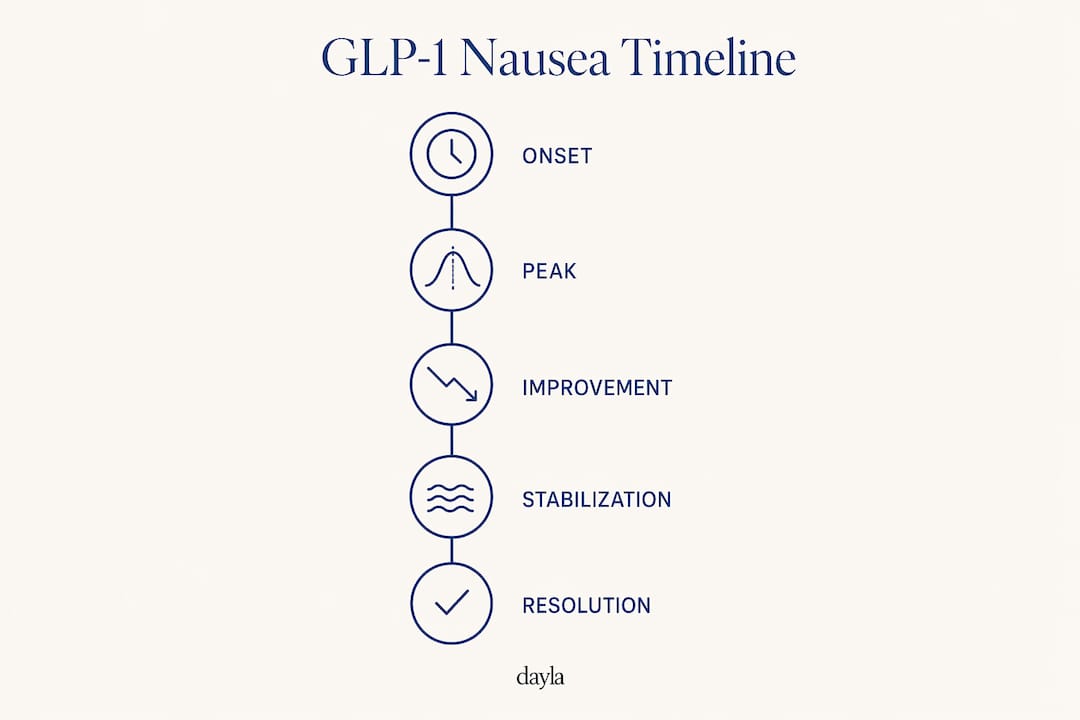
Several factors influence how long nausea persists and how severe it feels. Titration speed is the biggest variable. Patients who escalate doses faster than their body can adapt experience more intense and prolonged nausea. Individual sensitivity to GLP-1 receptor stimulation also varies, meaning two patients on identical doses can have very different experiences. Dose size matters too: higher doses produce stronger brainstem activation and more gastric slowing.
| Phase | Typical Timing | What Happens |
|---|---|---|
| Onset | Days 1–7 of start or dose increase | Nausea begins as receptors activate |
| Peak | Weeks 2–4 | Symptoms most intense; gastric slowing maximal |
| Improvement | Months 1–3 | Brainstem adapts; nausea frequency and severity decline |
| Resolution | Month 3 onward | Most patients report minimal or no nausea |
Discontinuation rates from GLP-1 side effects remain below 10% in many trials. That figure tells you that the vast majority of patients who stay the course get through the nausea window successfully.
What practical strategies reduce nausea during GLP-1 therapy?
Managing GLP-1 medication nausea is about reducing the intensity of both pathways, not eliminating the drug's effect. The following strategies are grounded in clinical evidence and practical patient experience.
-
Use flexible titration. Standard titration produced nausea in 64.2% of patients versus 45.1% with flexible titration, with shorter symptom duration in the flexible group. Working with your provider to slow or pause dose increases when nausea is significant is the single most effective intervention available.
-
Modify your diet immediately. Avoiding high-fat, greasy, or spicy foods and eating smaller, more frequent meals directly reduces the peripheral gastric component of nausea. Fat slows gastric emptying further, compounding the drug's effect. Bland, low-fat foods like crackers, toast, and plain rice are your best allies in the first few weeks.
-
Stay hydrated and maintain fiber intake. Hydration supports overall GI motility and reduces the risk of constipation, which can worsen abdominal discomfort. Fiber helps regulate bowel function without adding gastric burden.
-
Time your injections strategically. Many patients find that taking their weekly injection before bed reduces the peak nausea window to overnight hours when they are asleep. This does not change the biology, but it changes the experience significantly.
-
Discuss antiemetics or prokinetics with your provider. When nausea is severe, short-term use of physician-guided antiemetic medications can bridge the adaptation period without requiring dose reduction. Never self-prescribe; the right choice depends on your full medical picture.
-
Pause escalation, do not quit. GLP-1 nausea signals dose intolerance, not treatment failure. Slowing the titration schedule preserves your progress while giving your brainstem time to adapt.
Pro Tip: Keep a simple symptom log for the first 8 weeks. Note nausea severity on a 1–10 scale, what you ate, and the time of your injection. Patterns emerge quickly, and your provider can use that data to make precise adjustments to your GLP-1 side effects management plan rather than guessing.
What does GLP-1 nausea mean for your weight loss results?
Nausea is not a side effect that exists separately from GLP-1's weight loss mechanism. The two are biologically linked. The same brainstem pathways that generate nausea also suppress appetite and reduce caloric intake. Early satiety, reduced food cravings, and lower meal volume all contribute to the weight loss GLP-1 medications produce. Understanding GLP-1 weight loss mechanisms helps you see nausea not as a problem separate from your goal, but as a signal that the medication is working.
That said, severe or prolonged nausea carries real risks that require attention.
- Dehydration: Persistent nausea reduces fluid intake and can cause vomiting, both of which deplete hydration rapidly. Dehydration worsens fatigue, impairs cognition, and can require medical intervention.
- Malnutrition: Prolonged severe nausea risks dehydration and malnutrition if caloric and nutrient intake drops too low for too long. Weight loss from inadequate nutrition is not the same as weight loss from metabolic improvement.
- Premature discontinuation: Many patients stop GLP-1 medications prematurely due to nausea misunderstanding. Proper education reduces anxiety and improves treatment persistence, which is the single biggest predictor of long-term weight loss success.
- Surgical risk: Patients on GLP-1 therapy should disclose their medication to any surgical team. Retained gastric contents occur in 56% of GLP-1 users versus 19% in non-users, creating aspiration risk under anesthesia.
The management goal is symptom mitigation, not elimination. Reducing nausea to a tolerable level while keeping the medication active preserves both weight loss progress and patient safety.
Key Takeaways
GLP-1 medications cause nausea through direct brainstem receptor activation and peripheral gastric slowing, and flexible titration combined with dietary modification is the most effective way to manage it.
| Point | Details |
|---|---|
| Dual nausea mechanism | GLP-1 activates brainstem area postrema and slows gastric emptying simultaneously. |
| Nausea timeline | Symptoms peak at weeks 2–4 and improve substantially by months 1–3 for most patients. |
| Flexible titration works | Slowing dose escalation reduced nausea incidence from 64.2% to 45.1% in clinical data. |
| Diet changes reduce symptoms | Avoiding fatty, spicy foods and eating small frequent meals lowers the gastric component of nausea. |
| Nausea signals drug action | Persistent nausea means the medication is active; pausing escalation beats stopping therapy entirely. |
What I have learned from watching patients navigate GLP-1 nausea
The most common mistake I see is patients treating nausea as evidence that something has gone wrong. They feel sick, they panic, and they stop the medication before the brainstem has had any real chance to adapt. The biology is clear: nausea is a sign the drug is doing exactly what it is supposed to do. The area postrema does not distinguish between "too much drug" and "the right amount of drug activating correctly." It fires, and you feel it.
What actually separates patients who succeed from those who quit is not a higher pain tolerance. It is education delivered before the nausea starts. When patients know that weeks 2–4 are the hardest, that the curve bends downward after that, and that slowing the dose schedule is a legitimate clinical tool rather than a failure, they stay the course. The discontinuation rate below 10% in trials is not because those patients had less nausea. It is because they had better information.
The dietary piece is also underestimated. A high-fat meal on week two of GLP-1 therapy is genuinely a bad idea, not because of some vague "listen to your body" advice, but because fat independently slows gastric emptying and you are stacking that effect on top of a drug that is already doing the same thing. The result is predictable and avoidable. Small, bland, frequent meals are not just comfort food. They are a clinical strategy.
My honest recommendation: treat the first three months as a calibration period. Communicate every symptom to your provider. Push back on dose escalation if nausea is severe. And recognize that the discomfort you feel is temporary while the metabolic benefit, if you stay with it, is not.
— Flexible
Personalized GLP-1 care with Daylahealth
Nausea is manageable when you have the right clinical support from the start. Daylahealth provides doctor-led, personalized GLP-1 care that includes tailored dosing schedules designed to minimize side effects without sacrificing results.

Every Daylahealth patient receives ongoing clinical guidance, including support for GI side effects like nausea, so you are never left managing symptoms alone. If you are ready to start or optimize your GLP-1 therapy with a team that understands the full picture, explore GLP-1 weight loss options at Daylahealth. Personalized dosing, physician oversight, and real support make the difference between quitting at week three and reaching your goal.
FAQ
Why does GLP-1 cause nausea even when I haven't eaten?
GLP-1 medications activate the area postrema in the brainstem directly, bypassing the blood-brain barrier, so nausea occurs independently of food intake. The peripheral gastric slowing adds to this effect but is not required to trigger it.
How long does GLP-1 nausea last?
Nausea typically peaks within 2–4 weeks of starting therapy or after a dose increase and improves substantially within 1–3 months as the brainstem adapts to the medication.
Does nausea mean my GLP-1 medication is working?
Yes. Nausea is a direct result of GLP-1 receptor activation in the brainstem, the same mechanism that suppresses appetite and supports weight loss. It signals drug activity, not a problem with the medication.
What is the fastest way to reduce GLP-1 nausea?
Slowing dose escalation through flexible titration is the most clinically supported approach, reducing nausea incidence from 64.2% to 45.1% in trial data. Avoiding fatty and spicy foods and eating small, frequent meals also reduces symptoms quickly.
Should I stop my GLP-1 medication if nausea is severe?
Pausing or slowing dose escalation is the recommended first step, not stopping therapy entirely. Discuss severe nausea with your provider, who can adjust your titration schedule or recommend short-term antiemetic support to help you through the adaptation period.