

Metabolic syndrome is a cluster of five interconnected conditions — elevated blood sugar, high triglycerides, low HDL cholesterol, high blood pressure, and excess abdominal fat — that together significantly raise your risk of heart disease, stroke, and type 2 diabetes. The American Heart Association defines the diagnosis as having three or more of these five components simultaneously. If you suspect you may have several of these risk factors, the most useful immediate steps are straightforward: measure your waist circumference, check your most recent blood pressure reading, and ask your clinician for a fasting glucose and lipid panel. Three or more criteria appearing together warrants a clinical conversation without delay.
Key Takeaways
Metabolic syndrome is diagnosed when three or more of five measurable risk factors are present, and lifestyle modification is the first and most effective treatment for most adults.
| Point | Details |
|---|---|
| The "3 of 5" diagnostic rule | A clinician diagnoses metabolic syndrome when three or more of five components exceed defined thresholds. |
| Insulin resistance is central | Visceral fat and insulin resistance drive most complications; waist circumference is a key practical screening measure. |
| Lifestyle modification is first-line | Even 5–10% body weight loss produces clinically meaningful improvements across blood pressure, glucose, and lipids. |
| See a clinician early | Two or more components, a large waist, or a family history of diabetes or heart disease warrants a clinical evaluation. |
| Daylahealth for supervised care | Daylahealth provides doctor-led GLP-1 prescriptions and coaching for eligible adults seeking clinician-supervised weight-loss therapy. |
Table of Contents
- What is metabolic syndrome? The five diagnostic criteria explained
- Why metabolic syndrome develops: insulin resistance and key risk factors
- Health risks and complications linked to metabolic syndrome
- How common is metabolic syndrome?
- How metabolic syndrome is diagnosed: tests and what the numbers mean
- Lifestyle changes are the first-line treatment for metabolic syndrome
- Medications and medical treatments: how clinicians treat the components
- When supervised programs and prescription weight-loss therapies are considered
- Can metabolic syndrome be reversed?
- Prevention: practical steps you can start today
- When to see a clinician and what to expect at the visit
- Why early action on metabolic syndrome matters more than most people realize
- Daylahealth offers clinician-supervised GLP-1 care for eligible adults
- Sources
What is metabolic syndrome? The five diagnostic criteria explained
The American Heart Association and the NHLBI use the same "3 of 5" rule: a clinician diagnoses metabolic syndrome when a patient meets at least three of the five component thresholds below.
| Component | Threshold (General U.S. Guidelines) |
|---|---|
| Waist circumference | ≥40 in for men; ≥35 in for women |
| Fasting triglycerides | ≥150 mg/dL (or on triglyceride-lowering medication) |
| HDL cholesterol | <40 mg/dL for men; <40 mg/dL for women (or on HDL-raising medication) |
| Blood pressure | ≥130/85 mmHg (or on antihypertensive medication) |
| Fasting blood glucose | ≥100 mg/dL (or on glucose-lowering medication) |
Waist-circumference thresholds are not universal. Some guidelines set lower cutoffs for people of Asian descent — roughly 35 inches (90 cm) for men and 31 inches (80 cm) for women — because visceral fat accumulates at lower overall body weights in these populations. Your clinician can confirm which threshold applies to you.
Pro Tip: Measure your waist at the level of your navel, not your belt line, while standing and after a normal exhale. A tape pulled too tight or measured at the wrong point can underestimate your true circumference by an inch or more.
Most people with metabolic syndrome have no obvious symptoms. The Cleveland Clinic notes that the diagnosis is often identified only after a clinician detects one component — elevated blood pressure or fasting glucose — during a routine visit.
Why metabolic syndrome develops: insulin resistance and key risk factors
Insulin resistance sits at the center of metabolic syndrome. When cells in your muscles, liver, and fat tissue stop responding normally to insulin, the pancreas compensates by producing more of it. Over time, blood glucose rises, fat metabolism shifts, and the liver begins accumulating fat. The Cleveland Clinic identifies insulin resistance, sedentary lifestyle, excess abdominal adipose tissue, genetic predispositions, and advancing age as the primary contributing factors.
Visceral fat — the fat stored deep in the abdomen around internal organs — is the most metabolically disruptive type. According to the Merck Manual, excess abdominal adiposity increases circulating free fatty acids, which drive fat accumulation in the liver and muscle, worsen insulin resistance, raise triglycerides, and create a proinflammatory, prothrombotic state. This chain of events explains why so many complications cluster together.

The Mayo Clinic draws a clinically important distinction between body-fat distributions: "apple-shaped" individuals, who carry fat centrally around the abdomen, face substantially higher metabolic risk than "pear-shaped" individuals, who carry fat in the hips and thighs. Visceral fat is metabolically active in a way subcutaneous fat is not, making waist circumference a more useful screening measure than body weight alone.
Chronic stress adds another layer. Elevated cortisol from sustained psychological stress promotes abdominal fat deposition and worsens insulin sensitivity, according to the Merck Manual Home Edition. For some patients, stress management is as clinically relevant as dietary change.
Additional risk factors include:
- Sedentary lifestyle — physical inactivity reduces insulin sensitivity directly
- Age — prevalence rises steadily after 40
- Family history and genetics — first-degree relatives with type 2 diabetes or early heart disease raise personal risk
- Certain ethnic backgrounds — South Asian, Hispanic, and Black populations show higher prevalence at lower BMI thresholds
- Sleep disturbances — poor sleep quality and sleep apnea are independently associated with insulin resistance
- Hormonal changes — polycystic ovary syndrome (PCOS) in women is strongly linked to insulin resistance and metabolic syndrome
A visible skin sign worth knowing: acanthosis nigricans, a darkened, velvety patch of skin in body folds such as the neck or armpits, can signal underlying insulin resistance and is a prompt for metabolic screening, according to Johns Hopkins Medicine.
Health risks and complications linked to metabolic syndrome
Having one component of metabolic syndrome raises risk. Having three or more multiplies it. The MedlinePlus Medical Encyclopedia confirms that the presence of three or more components significantly intensifies cardiovascular risk beyond what any single factor would produce alone.
The main complications include:
- Coronary artery disease and heart attack — the most common serious outcome
- Stroke — driven by hypertension, dyslipidemia, and prothrombotic changes
- Type 2 diabetes — insulin resistance progresses to frank hyperglycemia without intervention
- Nonalcoholic fatty liver disease (NAFLD) — directly caused by hepatic fat accumulation from excess free fatty acids
- Chronic kidney disease — hypertension and glucose dysregulation damage the renal vasculature over time
- Gout — elevated uric acid often accompanies the dyslipidemia and glucose dysregulation of the syndrome
- Obstructive sleep apnea — worsened by central obesity and itself a driver of further insulin resistance
Metabolic syndrome affects a significant portion of adults in the United States, according to the NHLBI — making it one of the most prevalent preventable risk clusters in American medicine.
The cluster effect is the key clinical point. A person with mildly elevated blood pressure alone faces modest additional risk. That same person with elevated blood pressure, a large waist circumference, and low HDL faces a substantially different risk profile, even if each individual value sits just above the threshold.
How common is metabolic syndrome?
Metabolic syndrome affects roughly one in three adults in the United States. Prevalence climbs with age and varies meaningfully across ethnic groups, with higher rates observed in Hispanic and South Asian populations compared with non-Hispanic white adults at equivalent BMI levels.
About 1 in 3 U.S. adults meets the criteria for metabolic syndrome — a figure that has grown alongside rising rates of obesity and sedentary behavior over the past two decades.
The condition is largely preventable. Most cases are driven by modifiable factors: diet quality, physical activity, sleep, and stress. That prevalence figure is not a fixed ceiling — it reflects current lifestyle patterns, not biological inevitability.
How metabolic syndrome is diagnosed: tests and what the numbers mean
Diagnosis requires no single definitive test. A clinician assembles a picture from several standard measurements, most of which are part of a routine physical exam and basic lab panel.
Ask for testing if you are over 40, carry excess abdominal weight, have a first-degree relative with type 2 diabetes or early heart disease, or have been told any single component is borderline. You do not need to feel unwell to have metabolic syndrome — most people do not.
Lifestyle changes are the first-line treatment for metabolic syndrome
Lifestyle modification is the primary, evidence-based treatment for metabolic syndrome. The Cleveland Clinic is explicit: management centers on lifestyle changes, with medical treatment of individual components added when lifestyle changes alone are insufficient.
Weight loss is the highest-leverage intervention. Losing 5–10% of body weight produces clinically meaningful improvements in blood pressure, fasting glucose, triglycerides, and HDL — often enough to move one or two components below diagnostic thresholds.
Dietary patterns that consistently show benefit include:
- The DASH diet (Dietary Approaches to Stop Hypertension) — reduces blood pressure and improves lipids
- The Mediterranean diet — lowers triglycerides, raises HDL, and reduces cardiovascular events in clinical trials
- Both patterns emphasize whole grains, vegetables, legumes, lean protein, and healthy fats while limiting refined carbohydrates, added sugars, and sodium
Carbohydrate quality matters more than carbohydrate quantity for most people. Swapping refined grains and sugary beverages for fiber-rich whole foods reduces postprandial glucose spikes and supports insulin sensitivity.
Physical activity targets from major health organizations: at least 150 minutes of moderate-intensity aerobic exercise per week, plus two resistance training sessions. Aerobic exercise improves insulin sensitivity within days of starting. Resistance training builds muscle mass, which increases glucose uptake independent of body weight. Both types together produce better metabolic outcomes than either alone.
Behavioral factors that are often underweighted:
- Sleep — seven to nine hours per night; treating obstructive sleep apnea if present
- Stress reduction — structured practices such as mindfulness, cognitive behavioral therapy, or even consistent daily walks reduce cortisol and support weight management
- Alcohol — limiting intake reduces triglycerides and blood pressure
- Structured follow-up — scheduling lab rechecks every three to six months keeps progress measurable and sustains motivation
The lifestyle changes that support GLP-1 results also apply broadly to metabolic syndrome management, whether or not medication is involved.
Medications and medical treatments: how clinicians treat the components
Medications do not treat metabolic syndrome as a unified condition. They treat its individual components when lifestyle modification alone does not bring values to safe levels. Clinician judgment determines which components need pharmacological support and in what combination.
Common drug classes used:
- Antihypertensives (ACE inhibitors, ARBs, calcium channel blockers, thiazide diuretics) — for blood pressure ≥130/85 mmHg that does not respond adequately to lifestyle change
- Statins and other lipid-lowering agents (fibrates, niacin, omega-3 fatty acids) — statins primarily lower LDL and cardiovascular risk; fibrates are more effective for high triglycerides specifically
- Metformin and other glucose-lowering medications — metformin is often the first pharmacological choice for elevated fasting glucose or prediabetes, particularly in patients with insulin resistance
- Triglyceride-specific agents — prescription omega-3 fatty acids (icosapentaenoic acid) and fibrates are used when triglycerides remain significantly elevated despite dietary change
Monitoring matters. Most of these medications require periodic lab checks — liver enzymes for statins, renal function for metformin, and lipid panels to confirm response. Side effects vary by drug class and individual patient profile. No medication combination should be started or adjusted without clinician oversight.
When supervised programs and prescription weight-loss therapies are considered
For patients who have not achieved sufficient metabolic improvement through lifestyle modification alone, clinician-supervised weight-loss programs and prescription therapies are a recognized next step. GLP-1 receptor agonists — a class of medications that reduce appetite, slow gastric emptying, and improve insulin sensitivity — have demonstrated meaningful reductions in body weight, blood pressure, and triglycerides in clinical use.
Clinical candidacy typically includes:
- BMI ≥30, or BMI ≥27 with at least one obesity-related comorbidity such as hypertension, prediabetes, or dyslipidemia
- Prior documented attempts at lifestyle modification without sufficient response
- Absence of contraindications (clinician evaluation required)
- Willingness to participate in ongoing monitoring and follow-up
What to expect in a supervised program: a baseline medical evaluation, regular lab monitoring, dietitian or health coaching support, and a structured follow-up schedule. The benefits of medically supervised weight loss go beyond the medication itself — the clinical structure and accountability are independently associated with better long-term outcomes.
If you are considering this pathway, bring your most recent lab results, blood pressure readings, and a list of current medications to your clinician. A visceral fat reduction guide can help you understand what targeted strategies look like under clinical supervision.
Can metabolic syndrome be reversed?
Yes — with an important clarification. "Reversal" in clinical terms means that individual components normalize to below diagnostic thresholds, not that the underlying predisposition disappears. Sustained lifestyle change, and when appropriate medical therapy, can move all five components below threshold for many patients.
Achievable goals with consistent effort:
- 5–10% body weight loss produces measurable improvements in blood pressure, fasting glucose, and triglycerides
- HDL cholesterol rises with regular aerobic exercise and reduced refined carbohydrate intake
- Blood pressure often responds within weeks to sodium reduction, weight loss, and increased activity
- Fasting glucose can return to normal range with dietary changes and weight loss, particularly in early-stage insulin resistance
Realistic expectations matter. Relapse is common when the lifestyle changes that produced improvement are not maintained. Metabolic syndrome is a chronic condition in most people, not a one-time problem to solve. Long-term monitoring — annual labs, regular blood pressure checks, and periodic waist measurements — is part of sustained management, not a sign of failure. Strategies for maintaining weight loss results are as important as the initial intervention.
Prevention: practical steps you can start today
Prevention follows the same logic as treatment, applied earlier. These steps reduce the likelihood of developing metabolic syndrome and slow progression if one or two components are already present.
Daily and weekly habits:
- Set a modest weight goal — a 5% reduction in body weight meaningfully lowers risk across all five components
- Swap refined carbohydrates for whole foods — replace white bread, sugary drinks, and processed snacks with vegetables, legumes, and whole grains
- Add 10 minutes of walking after meals — postprandial walking reduces blood glucose spikes more effectively than the same walking done at other times
- Reach 150 minutes of aerobic activity per week — broken into 30-minute sessions five days a week, or shorter bouts that add up
- Add two resistance sessions weekly — bodyweight exercises count; no gym membership required
- Prioritize seven to nine hours of sleep — chronic short sleep raises cortisol and impairs glucose regulation
- Build a stress practice — even ten minutes of structured breathing or mindfulness daily reduces cortisol over time
- Limit alcohol to one drink per day or fewer — alcohol raises triglycerides and adds caloric load without nutritional benefit
Pro Tip: Habit stacking works well here — attach a new behavior to an existing one. Walk after dinner instead of sitting down immediately. Swap your morning juice for water with your existing breakfast routine. Small anchors prevent the "I'll start Monday" delay.
If a first-degree relative has type 2 diabetes or experienced early heart disease, ask your clinician about earlier metabolic screening — starting in your 30s rather than waiting for a routine middle-age workup.
When to see a clinician and what to expect at the visit
See a clinician if you have two or more of the five components, if your waist circumference exceeds the threshold for your sex and ethnicity, or if you have a family history of early cardiovascular disease or type 2 diabetes. You do not need to wait for symptoms — metabolic syndrome rarely produces them.
Bring to your appointment:
- A current medication list, including supplements
- Your most recent lab results (lipid panel, fasting glucose, HbA1c if available)
- A blood pressure reading taken at home, if you have a cuff
- Your waist circumference, measured correctly
Your clinician will likely order or review: fasting glucose or HbA1c, a fasting lipid panel, blood pressure, waist circumference, and possibly liver enzymes (ALT/AST) to assess for fatty liver disease. Depending on findings, referrals to endocrinology, cardiology, or a structured weight-management program may follow.
Ask targeted questions: "Which of my five components are currently above threshold?" "What is my cardiovascular risk score?" "Would I benefit from a referral to a dietitian or weight-management program?" Specific questions get specific answers and lead to a more productive visit.
Why early action on metabolic syndrome matters more than most people realize
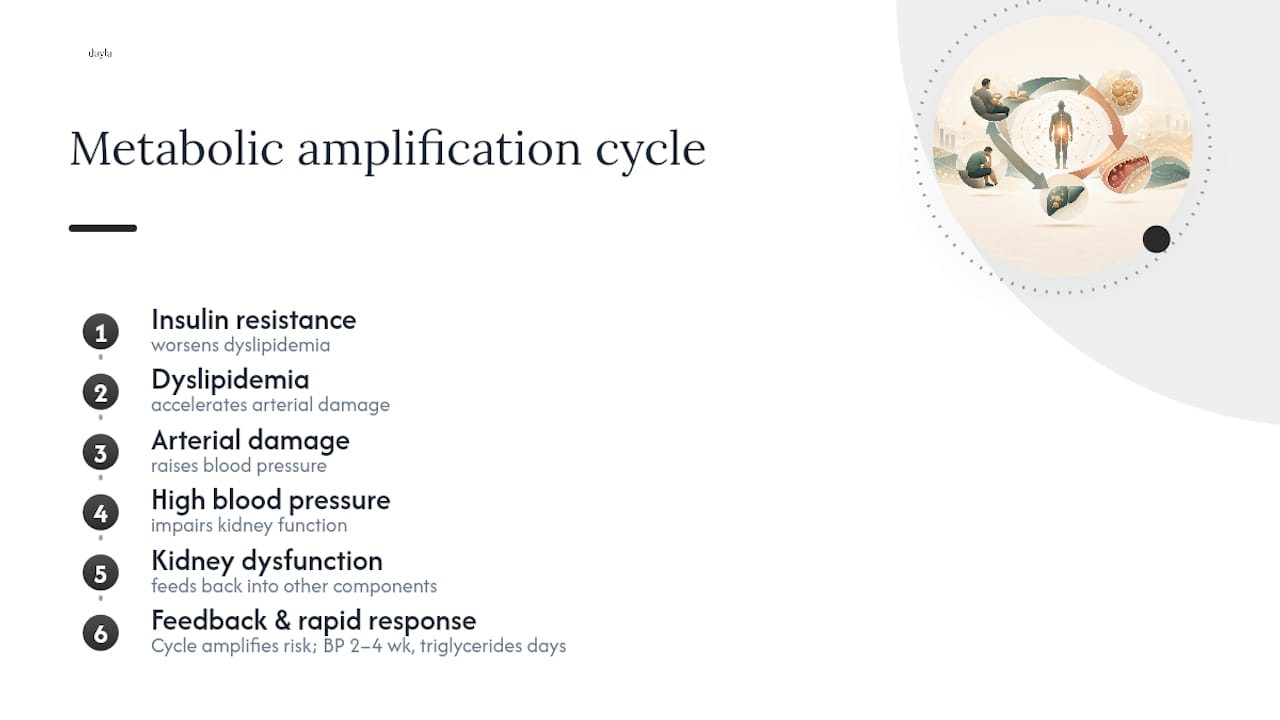
The conventional framing of metabolic syndrome as a "warning sign" is accurate but undersells the urgency. The American Heart Association is clear that even one component raises risk — and three or more produce a cardiovascular risk profile that is substantially higher than the sum of its parts. That cluster effect is not a statistical abstraction. It reflects real biological amplification: insulin resistance worsens dyslipidemia, dyslipidemia accelerates arterial damage, and arterial damage raises blood pressure, which in turn worsens kidney function. Each component feeds the others.
What most articles miss is how quickly the biology responds to the right intervention. Blood pressure often drops within two to four weeks of consistent sodium reduction and increased activity. Triglycerides can fall sharply within days of cutting refined carbohydrates and alcohol. These are not slow, years-long processes — the metabolic system is responsive, and early action produces early results.
The other underappreciated point: self-directed management has real limits. Chronic stress, sleep apnea, hormonal conditions like PCOS, and genetic predispositions do not respond to willpower alone. Partnering with a clinician — rather than treating this as a personal discipline problem — is the most reliable path to sustained improvement. Medication is not a shortcut or a sign of failure; for many patients, it is the tool that makes lifestyle change possible by reducing the physiological burden enough to act.
Daylahealth offers clinician-supervised GLP-1 care for eligible adults
If lifestyle changes alone have not moved your metabolic numbers, and your clinician has discussed prescription weight-loss therapy as an option, Daylahealth provides doctor-led GLP-1 weight-loss care shipped directly to you — no insurance required, no in-person visits needed.

The Daylahealth pathway includes a clinician evaluation, personalized medication management, dietitian access, and ongoing care coaching, all structured around your individual health profile. Not everyone is a candidate — GLP-1 therapy requires a clinical evaluation, baseline labs, and ongoing monitoring to be used safely. Eligibility is determined by a licensed clinician based on your BMI, comorbidities, and health history.
For adults who qualify, this is a medically supervised option that addresses the weight and insulin-resistance components of metabolic syndrome directly. Learn more about Daylahealth's GLP-1 weight-loss program and complete an intake to find out whether you are a candidate.
Sources
These organizations publish the most current, evidence-based guidance on metabolic syndrome. Each covers a distinct aspect of the condition in depth.
- Metabolic Syndrome - What Is Metabolic Syndrome? | NHLBI, NIH
- Metabolic Syndrome - American Heart Association
- Metabolic Syndrome - Endocrinology - Merck Manual Professional Edition
- Metabolic syndrome: MedlinePlus Medical Encyclopedia
Bring specific questions from these sources to your clinician. A printed summary of your most recent lab values alongside the diagnostic thresholds above gives your clinician a clear starting point for a productive conversation.
This article provides general health information and is not a substitute for professional medical advice. Consult a qualified clinician to evaluate your individual risk and determine appropriate next steps.