

Maintaining weight loss results is defined by the daily habits you build after the scale stops moving. Reaching your goal weight is a milestone, but the real work is sustaining it. Healthy weight maintenance depends on physical activity, calorie mindfulness, and nutrition variety, with sleep and genetics also shaping outcomes. The combination of consistent exercise, mindful eating, and behavioral support is what separates people who keep weight off from those who regain it. This article gives you the evidence-based framework to stay there.
How to maintain weight loss results with physical activity
Physical activity is the single most reliable predictor of long-term weight maintenance. It is not about occasional intense workouts. It is about consistent weekly volume that keeps your metabolism working and your muscle mass intact.
The National Institute of Diabetes and Digestive and Kidney Diseases recommends at least 300 minutes of moderate-intensity exercise per week to prevent weight regain. That translates to roughly 45 minutes of brisk walking, cycling, or swimming on most days. This threshold is higher than the general fitness recommendation of 150 minutes, which tells you that maintenance demands more sustained effort than most people expect.
Data from the National Weight Control Registry makes this concrete. Among long-term maintainers, 91% reported consistent exercise with women expending approximately 2,545 calories per week and men approximately 3,293 calories per week through activity. These are not elite athletes. They are people who made movement a non-negotiable part of their week. Tracking weekly energy expenditure rather than daily bursts better reflects the sustainable activity habits that actually drive maintenance outcomes.
Strength training belongs in your routine at least two days per week. It preserves lean muscle mass, which directly supports your resting metabolic rate. This matters especially if you have used GLP-1 medications, since those can accelerate muscle loss risk alongside fat loss.
Practical ways to hit your weekly activity target:
- Walk after meals for 15 to 20 minutes to improve blood sugar regulation and add low-effort volume
- Schedule two resistance training sessions using compound movements like squats, deadlifts, and rows
- Use a fitness tracker such as a Garmin, Fitbit, or Apple Watch to monitor weekly calorie expenditure, not just daily steps
- Replace sedentary commutes with active alternatives like cycling or walking when possible
- Join a group fitness class at a gym like Planet Fitness or a local YMCA to add social accountability
Pro Tip: Log your total weekly activity minutes every Sunday. If you fall below 250 minutes, add a 30-minute walk on Monday. Catching the deficit early prevents it from becoming a pattern.
What nutrition habits actually support long-term weight maintenance?
Strict diets fail at maintenance because they are not designed to last. The goal shifts from restriction to balance, and that requires a different mindset entirely.
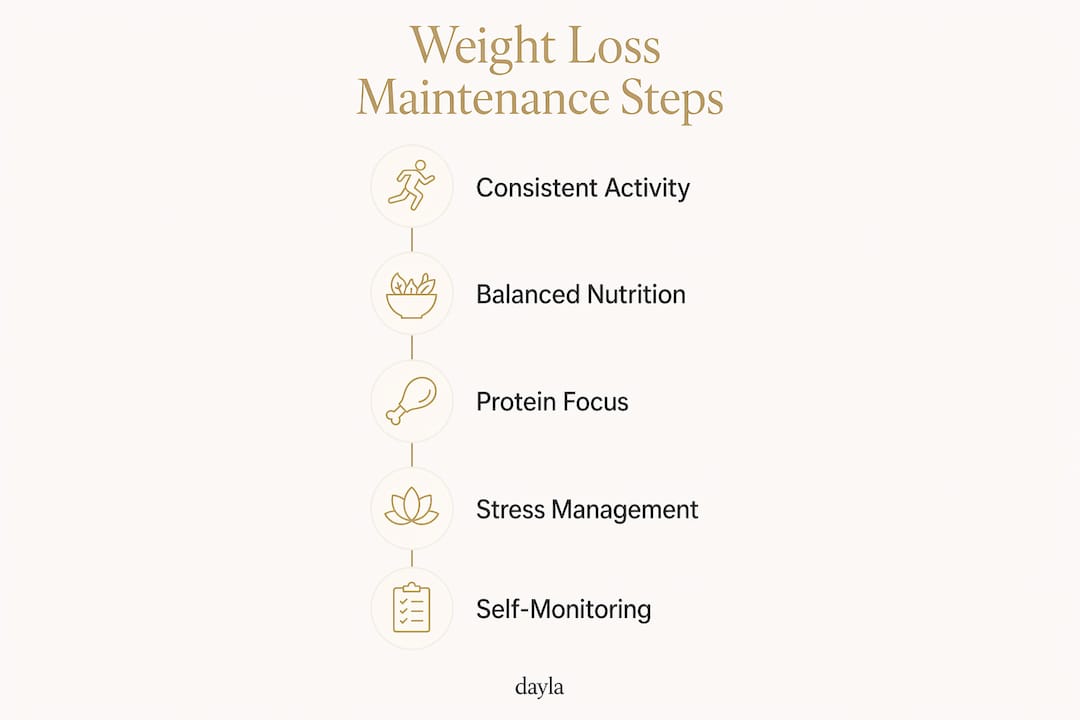
Protein is the most important macronutrient for keeping weight off. It preserves muscle mass, increases satiety, and has a higher thermic effect than carbohydrates or fat, meaning your body burns more calories digesting it. The role of protein in weight management is well-documented, and most maintenance-phase adults benefit from targeting 0.7 to 1 gram of protein per pound of body weight daily. Lean sources like chicken breast, Greek yogurt, eggs, cottage cheese, and legumes make this achievable without excess calories.
For those who used GLP-1 medications during their weight loss phase, the Cleveland Clinic advises protein-rich, smaller meals and careful management of meal timing to stay consistent with medication effects. Eating four to five smaller meals rather than two or three large ones helps manage appetite changes and reduces the risk of nausea or overeating in a single sitting. Avoid high-fat fried foods and oversized portions, which can trigger GI discomfort and make it harder to stay on track.
Food journaling remains one of the most effective tools for staying aware of intake without obsessing over every calorie. Apps like MyFitnessPal, Cronometer, or Lose It allow you to log meals quickly and spot patterns, such as late-night snacking or low-protein breakfasts, before they derail your progress. You do not need to track forever. Many maintainers use journaling intermittently, returning to it when they notice weight creep.
Sleep and stress directly affect hunger hormones. Poor sleep raises ghrelin, the hormone that signals hunger, and lowers leptin, the hormone that signals fullness. Chronic stress elevates cortisol, which promotes fat storage and drives cravings for high-calorie foods. Prioritizing seven to nine hours of sleep and using stress management tools like meditation apps such as Headspace or Calm, regular outdoor walks, or therapy are not optional extras. They are maintenance strategies.

Pro Tip: Prep your protein sources on Sunday. Pre-cooked chicken, hard-boiled eggs, and portioned Greek yogurt containers remove the decision fatigue that leads to poor food choices on busy weekdays.
What behavioral strategies help prevent weight regain after loss?
Behavioral tools are what separate short-term success from permanent change. The American Heart Association is clear that maintenance requires as much effort as the original weight loss phase, and that managing lapses versus relapses is central to long-term outcomes.
Follow these steps to build a behavioral maintenance system:
- Weigh yourself weekly on the same day and time. Ohio State University recommends weekly self-weighing and returning quickly to proven behaviors when weight creeps up by two to three pounds. This feedback loop prevents small gains from compounding into full regain.
- Set SMART goals for both activity and nutrition. A goal like "walk 45 minutes five days this week" is specific, measurable, and achievable. A goal like "eat better" is not. Specificity is what makes goals actionable.
- Schedule regular check-ins with a health professional. Research published in Endotext shows that frequent interventionist contact, monthly or twice monthly, reduces weight regain over 18 months compared to less frequent contact. Accountability is not a sign of weakness. It is a proven mechanism.
- Distinguish lapses from relapses. A lapse is one bad day or one skipped week. A relapse is returning to old patterns for months. Planning for lapses as a normal part of the process, rather than treating them as failures, improves motivation and speeds recovery. The American Heart Association frames this as a skill, not a character trait.
- Build a support network. Tell people in your life about your maintenance goals. Join online communities, work with a registered dietitian, or use a program like Weight Watchers or Noom that provides structured peer support and coaching.
Pro Tip: Create a "maintenance trigger" rule. If your weight rises by three pounds for two consecutive weeks, immediately return to your food journal and add one extra workout. Act on the data, not on feelings.
How do physiological factors and medication affect weight maintenance?
Your body actively resists weight loss maintenance. After losing weight, your metabolism slows because it now needs fewer calories to run a smaller body. Hormones that regulate hunger shift in ways that increase appetite. This is not a willpower problem. It is a documented physiological response that requires a proactive strategy.
GLP-1 medications like semaglutide (Ozempic, Wegovy) and tirzepatide (Mounjaro, Zepbound) are highly effective for weight loss, but they introduce specific maintenance challenges. The Cleveland Clinic highlights that GLP-1s can cause muscle loss alongside fat loss, which reduces your resting metabolic rate and makes regain more likely if the medication is stopped without a transition plan. Strength training and adequate protein intake are the direct countermeasures. Regular body composition scans using DEXA or InBody technology give you a precise picture of muscle versus fat, which is more useful than scale weight alone.
| Factor | Challenge | Maintenance strategy |
|---|---|---|
| Metabolic adaptation | Fewer calories needed post-loss | Adjust intake gradually, increase activity |
| GLP-1 muscle loss | Reduced resting metabolic rate | Strength training twice weekly, high protein |
| Hormonal hunger signals | Increased appetite after weight loss | Consistent meal timing, sleep optimization |
| Age and genetics | Slower metabolism, reduced muscle mass | Resistance training, body composition monitoring |
| Medication consistency | Appetite returns if doses are missed | Structured medication schedule with clinical support |
Age and genetics also play a real role. Older adults lose muscle mass faster and have lower baseline metabolic rates, which means the same calorie intake that maintained weight at 35 may cause gradual gain at 50. Adjusting your approach based on body composition data rather than just scale weight is the most accurate way to stay ahead of these changes. Daylahealth's lifestyle changes that boost GLP-1 results covers how to adapt your physical activity and nutrition routine specifically around medication use.
Key takeaways
Sustaining weight loss requires consistent physical activity, protein-focused nutrition, weekly self-monitoring, and behavioral support, especially for those managing physiological changes from GLP-1 medications.
| Point | Details |
|---|---|
| Weekly activity volume | Target 300 minutes of moderate exercise weekly to prevent weight regain. |
| Protein and meal structure | Prioritize protein at every meal and eat smaller, more frequent portions to manage hunger. |
| Self-monitoring feedback loop | Weigh yourself weekly and return to proven habits immediately when weight creeps up. |
| Behavioral accountability | Monthly contact with a health professional or coach reduces long-term regain significantly. |
| GLP-1 muscle preservation | Strength training and body composition tracking are non-negotiable for medication users. |
What I've learned about keeping weight off long-term
Most people treat weight maintenance as a passive state, as if reaching goal weight means the work is done. That framing is what causes regain. Maintenance is an active practice, and the people who succeed at it are the ones who treat it like a permanent lifestyle rather than a temporary phase they are managing.
The biggest mistake I see is abandoning the habits that created the loss. People stop tracking, reduce exercise, and loosen nutrition standards all at once, usually within the first three months after hitting their goal. The scale does not move immediately, so the feedback loop breaks. By the time weight creep is obvious, it has been building for weeks.
What actually works is building a maintenance identity rather than a maintenance plan. A plan can be abandoned. An identity is harder to walk away from. When you define yourself as someone who exercises consistently, tracks their food periodically, and checks in with a professional regularly, those behaviors become defaults rather than decisions. The weight loss timeline matters here too. Understanding that the first six to twelve months post-loss are the highest-risk period for regain helps you stay vigilant during the window that matters most.
Flexibility is also underrated. Rigid rules create fragility. If your plan cannot survive a vacation, a stressful work month, or a holiday season, it will not survive long-term. Build in planned flexibility, know your minimum viable habits, and return to full effort without guilt when life settles.
— Flexible
How Daylahealth supports your maintenance journey
You have done the hard work of losing weight. Keeping it off deserves the same level of clinical support that helped you lose it. Daylahealth provides doctor-led, personalized GLP-1 care designed to support both your weight loss and long-term maintenance goals, with medication plans tailored to your body composition, lifestyle, and health history.

Whether you are transitioning off GLP-1 medication or looking to optimize your current protocol, Daylahealth's clinical team can help you build a maintenance plan that accounts for metabolic changes, muscle preservation, and nutrition. Explore GLP-1 prescription options and peptide therapies that support metabolic health and longevity. Your results are worth protecting with the right professional guidance behind you.
FAQ
How much exercise is needed to keep weight off?
At least 300 minutes of moderate-intensity exercise per week is the evidence-based recommendation for preventing weight regain. Consistency across the week matters more than intensity on any single day.
Why do people regain weight after losing it?
Metabolic adaptation slows calorie burn after weight loss, and hunger hormones increase appetite, making regain biologically likely without sustained behavioral and dietary effort. GLP-1 medications can also cause muscle loss that further reduces resting metabolism if not countered with strength training.
How often should I weigh myself during maintenance?
Weekly weigh-ins on the same day and time are recommended by Ohio State University as the most effective frequency for catching early weight creep. Daily weighing can create unnecessary anxiety from normal fluid fluctuations.
Does stopping GLP-1 medication cause weight regain?
Stopping GLP-1 medications without a transition plan significantly increases regain risk because appetite suppression is removed and metabolic rate may already be reduced from muscle loss. A structured taper with clinical supervision and a maintained exercise and nutrition routine reduces this risk.
What is the most effective behavioral tool for long-term maintenance?
Frequent contact with an interventionist, monthly or twice monthly, is among the most evidence-backed tools for reducing weight regain over 18 months. Self-monitoring through weekly weigh-ins and periodic food journaling reinforces this accountability between appointments.