

Losing ten percent of your body weight is defined by the American Heart Association and federal health guidelines as the first clinically meaningful weight loss target, one that produces measurable improvements in blood pressure, cholesterol, blood sugar, and cardiovascular risk. This is not a cosmetic milestone. It is a medical one. For a 200-pound person, that means losing just 20 pounds to unlock benefits that reduce the risk of type 2 diabetes, heart disease, and sleep apnea. Understanding why losing ten percent weight matters gives you a clear, evidence-based reason to pursue a goal that is both realistic and transformative.
What specific health improvements happen at 10% weight loss?
Ten percent weight loss triggers a cascade of physiological changes that affect nearly every major organ system. These are not subtle shifts. They are measurable improvements that physicians track and use to guide treatment decisions.
Blood pressure and heart health respond first. 5 to 10% weight loss reduces blood pressure by 2 to 3 mm Hg, which meaningfully lowers the strain on your heart and arteries. That reduction translates directly to a lower risk of stroke and coronary artery disease over time.
Cholesterol and lipid profiles shift in your favor as well. The American Heart Association confirms that weight loss lowers total cholesterol and triglycerides while raising HDL, the protective form of cholesterol. Lower LDL combined with higher HDL is one of the most favorable cardiovascular outcomes a physician can observe from a lifestyle change alone.

Blood sugar regulation improves significantly. A 5 to 10% reduction in body weight reduces A1C by 0.6 to 1.0%, a clinically significant drop for anyone managing prediabetes or early type 2 diabetes. For context, many glucose-lowering medications target a similar range of A1C reduction.
Sleep apnea and energy levels also respond to modest weight loss. Excess fat around the neck and airway contributes directly to obstructive sleep apnea. Losing ten percent of body weight reduces airway obstruction, improves sleep quality, and often reduces daytime fatigue without any device or medication change.
How does 10% weight loss compare to losing less or more?
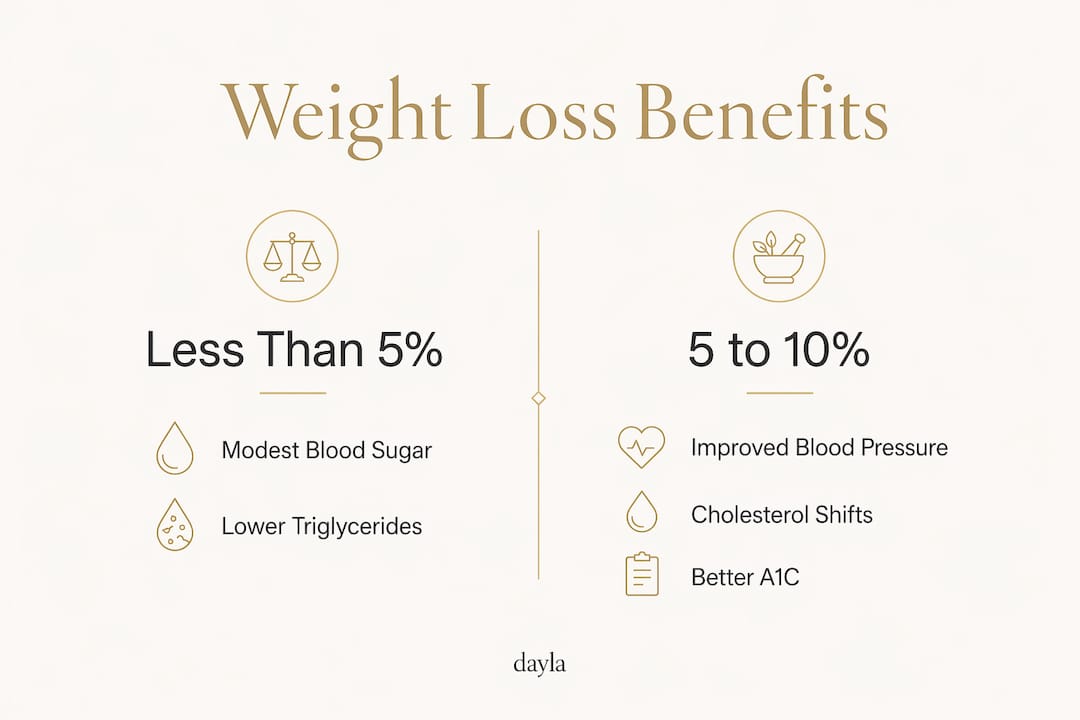
Not all weight loss produces equal benefits. The relationship between weight reduction and health improvement follows a graded pattern, and understanding where 10% sits on that curve helps you set goals that are both realistic and motivating.
| Weight loss range | Key health effects |
|---|---|
| 2 to 5% | Modest improvements in blood sugar and triglycerides; limited cardiovascular impact |
| 5 to 10% | Clinically significant reductions in blood pressure, A1C, LDL, and diabetes risk |
| 10 to 15% | Stronger cardiometabolic improvements; potential remission of type 2 diabetes in some patients |
| Above 15% | Sustained remission of metabolic conditions; significant reduction in cardiovascular events |
The 5 to 10% range is where the evidence becomes compelling. Expert panels from WHO and NIH affirm that achieving 5 to 10% loss reduces diabetes risk and improves lipid profiles in ways that smaller losses do not reliably produce. Losing more than 10% amplifies these benefits, but the incremental gains require substantially more effort and are harder to sustain.
The practical implication is clear. Chasing an "ideal weight" that requires losing 30 or 40% of your body weight often leads to frustration and abandonment. The American Heart Association specifically recommends the 5 to 10% target as a first achievable milestone precisely because it avoids the psychological trap of unrealistic goals. Ten percent sits at the intersection of achievable and medically meaningful.
Pro Tip: Use concrete numbers to stay motivated. If you weigh 180 pounds, your 10% target is 18 pounds. Break that into three six-pound milestones and track each one. Research shows that concrete interim milestones improve patient motivation and long-term engagement.
Why do clinical guidelines recommend the 10% target?
The 10% threshold is not arbitrary. It exists because physicians need a practical, measurable marker to guide treatment decisions, and because the biology of weight loss makes this range uniquely important.
Physicians use the 10% weight loss threshold to decide when to escalate treatment beyond lifestyle interventions to medications or structured programs. If a patient achieves 10% loss through diet and exercise alone, that outcome validates the current approach. If they plateau well below 10% despite consistent effort, it signals that additional medical support, such as GLP-1 receptor agonist therapy, may be warranted.
The clinical rationale also reflects the biology of obesity itself. Obesity is recognized as a chronic disease by major medical organizations, not a failure of willpower. The body actively resists weight loss through hormonal and metabolic adaptations. Leptin drops, ghrelin rises, and resting energy expenditure decreases as you lose weight. These adaptations make sustaining any loss challenging, which is why 10% is treated as a treatment milestone rather than a final destination.
Here is what reaching 10% loss signals clinically:
- Blood pressure, glucose, and lipid improvements are now measurable and documentable
- The patient has demonstrated capacity for sustained behavior change
- The physician can assess whether further intervention is needed or whether maintenance is the priority
- Comorbidities like prediabetes, hypertension, and dyslipidemia may now be managed with reduced medication
The 10% target also reflects pragmatic goal-setting science. Goals that feel achievable produce better adherence than goals that feel distant. For most people with obesity, losing 10% of body weight within six to twelve months is realistic with structured support.
What practical steps help you reach and maintain 10% weight loss?
Reaching 10% weight loss requires a structured approach that combines dietary change, physical activity, behavior modification, and, when appropriate, medical support. Comprehensive lifestyle interventions typically produce 5 to 10% weight loss over six months, which means the right program gets most people to their target within one year.
Here is a practical framework for reaching and sustaining the 10% milestone:
-
Set a SMART goal. Define your target weight, your timeline, and your weekly calorie deficit. "I will lose 18 pounds in 24 weeks by reducing my daily intake by 500 calories" is a SMART goal. "I want to lose weight" is not. Explore realistic weight loss goal examples to build a plan that fits your life.
-
Prioritize dietary quality over restriction alone. A Mediterranean-style diet, a low-glycemic diet, or a protein-forward eating pattern all produce meaningful weight loss when followed consistently. The best diet is the one you can maintain for twelve months, not the one that promises the fastest results.
-
Add structured physical activity. The CDC recommends 150 minutes of moderate-intensity aerobic activity per week for weight management. Resistance training preserves lean muscle mass during weight loss, which protects your resting metabolic rate and makes maintenance easier.
-
Use self-monitoring tools. Daily weigh-ins, food logging apps like MyFitnessPal or Cronometer, and wearable devices like Fitbit or Apple Watch all improve adherence. Self-monitoring is one of the most consistently supported behavioral strategies in obesity research.
-
Address sleep and stress. Poor sleep raises ghrelin and impairs glucose regulation, making weight loss harder. The science on sleep and weight loss is clear: seven to nine hours of quality sleep per night supports both fat loss and metabolic health.
-
Consider medical support when lifestyle alone is insufficient. GLP-1 receptor agonists like semaglutide and tirzepatide produce significantly greater weight loss than lifestyle changes alone. For patients who plateau below 10% despite consistent effort, these medications represent a clinically validated next step. Review a weight loss program comparison to understand which approach fits your situation.
One critical point on maintenance: biological adaptations reduce resting energy expenditure as you lose weight, which is why so many people regain weight after initial success. Sustained weight loss requires ongoing behavioral support, not just a one-time intervention. Programs that include regular check-ins, continued self-monitoring, and medical oversight produce far better long-term outcomes than those that end at the goal weight.
Pro Tip: Modest weight loss of 5 to 7% reduces progression to type 2 diabetes by nearly 60% in people with prediabetes. If you have prediabetes, reaching even half of your 10% target produces a dramatic reduction in disease risk.
Key takeaways
Ten percent weight loss is the most evidence-supported, clinically meaningful target for improving cardiovascular health, metabolic function, and long-term disease risk in people with excess weight.
| Point | Details |
|---|---|
| 10% loss triggers measurable change | Blood pressure, A1C, LDL, and HDL all improve at this threshold, not just at "ideal weight." |
| Graded benefits favor realistic goals | The 5 to 10% range produces the strongest ratio of health benefit to effort required. |
| Clinical guidelines use 10% as a marker | Physicians escalate treatment when patients cannot reach 10% through lifestyle alone. |
| Maintenance requires ongoing support | Metabolic adaptations reduce energy expenditure after weight loss, making sustained behavior support non-negotiable. |
| Medical options exist for those who plateau | GLP-1 receptor agonists and structured programs help patients who cannot reach 10% through diet and exercise alone. |
The number that changed how I think about weight loss
Most people I speak with set their weight loss goal based on how they want to look, not how they want their body to function. That framing almost always leads to frustration, because appearance goals are subjective and slow to materialize, while health markers are objective and respond quickly.
What I have found, both in reviewing the clinical literature and in conversations with people managing their weight, is that the 10% milestone reframes the entire effort. You are not trying to look different. You are trying to lower your blood pressure, protect your pancreas, and reduce your risk of a cardiac event. Those outcomes are measurable within weeks of reaching your target.
The plateau is real and it is biological, not motivational. When someone tells me they are "stuck," I take that seriously. The body's metabolic adaptation to weight loss is well-documented, and it is not something you can simply push through with more willpower. That is precisely why medical support, whether through structured programs, behavioral coaching, or GLP-1 therapy, exists. Using it is not a shortcut. It is an appropriate response to a physiological challenge.
The most important shift you can make is to treat 10% as a beginning, not a destination. The health benefits you gain at that milestone are worth protecting, and the habits that got you there are worth keeping.
— Flexible
Start your 10% weight loss journey with Daylahealth
If you have read this far, you understand that reaching 10% weight loss is a medical goal, not just a personal one. Daylahealth offers doctor-led, personalized GLP-1 care designed to help you reach and sustain that milestone with clinical support behind you.

Daylahealth's GLP-1 weight loss program connects you with licensed physicians who assess your metabolic health, prescribe medications like semaglutide when appropriate, and monitor your progress over time. For those interested in complementary approaches, Daylahealth also offers peptide therapies targeting metabolic health and longevity. You can also explore the latest peptide fat loss research to understand what the science currently supports. Your 10% target is achievable. Daylahealth is built to help you get there.
FAQ
What does losing 10% of body weight actually do for your health?
Losing 10% of body weight produces clinically measurable improvements in blood pressure, LDL cholesterol, HDL cholesterol, triglycerides, and blood sugar regulation. These changes reduce the risk of cardiovascular disease, type 2 diabetes, and sleep apnea.
How long does it take to lose 10% of body weight safely?
Most structured lifestyle programs produce 5 to 10% weight loss over six months. A safe and sustainable rate is 0.5 to 1 pound per week, meaning a 10% loss typically takes six to twelve months depending on starting weight and program intensity.
Is 10% weight loss enough to reverse prediabetes?
Modest weight loss of 5 to 7% reduces progression to type 2 diabetes by nearly 60% in people with prediabetes, according to current research. Reaching 10% loss strengthens that protection further and may normalize blood sugar in some individuals.
Why do doctors use 10% as a treatment milestone?
Physicians use the 10% threshold to decide whether to escalate treatment beyond lifestyle interventions to medications or structured programs. It serves as a clinical marker that guides the intensity of obesity management.
What if I cannot reach 10% through diet and exercise alone?
Biological adaptations including reduced resting energy expenditure make sustained weight loss difficult for many people. GLP-1 receptor agonists like semaglutide are clinically validated options for patients who plateau below 10% despite consistent lifestyle effort.