

Your gut microbiome is one of the most powerful regulators of body weight, and most people have no idea it exists. The trillions of bacteria living in your digestive tract directly influence how many calories you absorb, how efficiently you store fat, and whether your appetite hormones work the way they should. Two people can eat the same meal and experience completely different metabolic outcomes, and the role of gut microbiome in weight regulation is a central reason why. Research now shows that individuals with a high Prevotella-to-Bacteroides (P/B) ratio lose significantly more weight on fiber-rich diets than those with a low ratio, with a 5.1 kg differential linked to fiber intake above 30g per 10MJ. That single finding reframes weight management entirely.
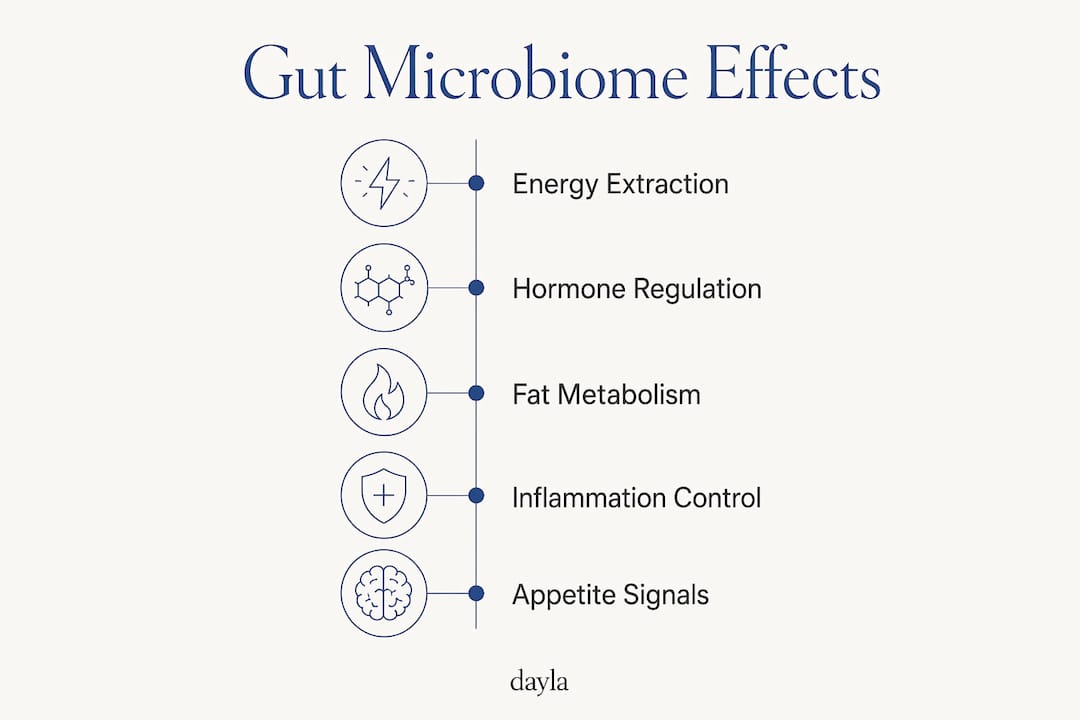
Here is what your gut microbiota actually does for your weight:
- Extracts energy from dietary fiber through fermentation, producing short-chain fatty acids (SCFAs) like acetate, propionate, and butyrate
- Regulates appetite and satiety by influencing GLP-1, leptin, and peptide YY (PYY) secretion
- Controls low-grade systemic inflammation that drives fat storage and insulin resistance
- Determines how efficiently calories from food are absorbed and stored
- Shapes your individual response to specific diets, including high-fiber and high-protein plans
- Influences fat metabolism and lipogenesis through microbial metabolite signaling
- Maintains gut barrier integrity, preventing metabolic endotoxemia
How the gut microbiome drives obesity and weight gain
The microbial communities in your gut are not passive bystanders. They actively determine how much energy your body extracts from food, and gut microbes affect energy harvest efficiency in ways that explain why identical diets produce different weight outcomes across individuals. People with obesity consistently show lower bacterial diversity and altered functional gene profiles compared to lean individuals, a pattern confirmed across multiple large-scale metagenomic studies.
One of the clearest demonstrations of this comes from controlled feeding research. A Microbiome Enhancer Diet increases energy loss via feces by approximately 116 ± 56 kcal daily compared to a Western Diet. That gap compounds over weeks and months into meaningful differences in fat storage. The mechanism is not mysterious: certain bacterial communities are simply more efficient at breaking food into absorbable fragments, pulling more calories into circulation rather than passing them through as waste.
The Firmicutes-to-Bacteroidetes ratio has received considerable attention in obesity research. People with obesity often show enrichment of taxa that are highly efficient at harvesting energy from non-digestible carbohydrates, contributing to greater caloric yield and fat accumulation. Separately, 31 baseline stool metagenomic features are associated with weight loss responses independent of age, sex, and BMI, including genes for polysaccharide degradation and bacterial replication rates. These functional signatures, not just species counts, predict how your body will respond to a dietary intervention.
"Gut bacteria from an obese twin made germ-free mice become fat, but bacteria from the lean twin did not. We are just beginning to understand the role of gut bacteria in obesity, and the science hasn't led yet to treatments that will make it easier to lose weight. However, I believe that day is coming." — Harvard Health
Metabolic endotoxemia is another pathway worth understanding. When the gut barrier becomes compromised, bacterial lipopolysaccharides (LPS) leak into circulation, triggering chronic low-grade inflammation. That inflammatory state promotes insulin resistance and fat deposition, particularly visceral fat. The concept of enterotypes, where microbial communities cluster into distinct compositional patterns driven by long-term diet, helps explain why a Bacteroides-dominant gut (common in Western diets high in animal protein and fat) behaves so differently from a Prevotella-dominant gut shaped by high-fiber, plant-forward eating.
| Microbial Feature | Association with Obesity/Weight |
|---|---|
| Reduced bacterial diversity | Consistently observed in individuals with obesity |
| High Firmicutes-to-Bacteroidetes ratio | Linked to greater energy harvest from non-digestible carbs |
| Low P/B ratio | Associated with reduced weight loss on fiber-rich diets |
| Enriched polysaccharide-degrading genes | Predicts higher caloric absorption efficiency |
| Compromised gut barrier (LPS leakage) | Drives chronic inflammation and insulin resistance |
| Low SCFA-producing bacteria | Linked to impaired satiety signaling and hyperphagia |
What biological mechanisms connect gut bacteria to your weight?
The gut microbiome does not influence weight through a single pathway. It operates through several interconnected biological systems simultaneously, which is part of why microbiome-targeted interventions are so complex to design.
Short-chain fatty acids and energy balance
SCFAs, primarily acetate, propionate, and butyrate, are produced when gut bacteria ferment dietary fiber and resistant starch. These molecules are not just metabolic byproducts. They act as signaling molecules bridging diet and host fat storage pathways, influencing insulin sensitivity, glucose homeostasis, and lipid metabolism. Butyrate, in particular, serves as the primary fuel for colonocytes (the cells lining your colon) and has been shown to reduce insulin resistance and protect against obesity driven by high-calorie diets. SCFAs also stimulate PYY secretion by acting on free fatty acid receptor 2, which suppresses appetite and slows gastric motility.
Appetite hormones and leptin sensitivity
The gut microbiome functions as a control center for appetite and energy expenditure. Alterations in microbial composition are directly associated with leptin resistance, meaning the brain stops receiving the "I'm full" signal even when fat stores are adequate. Targeted enrichment of SCFA-producing bacteria through prebiotic fibers and specific probiotic strains has been shown to improve leptin sensitivity and reduce hyperphagia in both experimental and clinical settings. GLP-1 secretion from intestinal L-cells is also modulated by microbial metabolites, creating a direct link between your gut bacteria and the hormonal system that governs how hungry you feel after a meal.

Fat metabolism and lipogenesis
Microbial metabolites including secondary bile acids and branched-chain amino acids modulate host fat metabolism at the liver and adipose tissue level. Bile acid profiles, shaped substantially by anaerobic intestinal bacteria such as Bacteroides, Eubacterium, and Clostridium, regulate lipid handling and inflammatory tone. When microbial communities shift toward dysbiosis, these bile acid signals become distorted, promoting fat accumulation rather than fat oxidation.
Gut barrier integrity and systemic inflammation
A healthy gut lining acts as a selective barrier. When microbial imbalance weakens tight junction proteins, LPS from gram-negative bacteria enters the bloodstream, activating immune pathways that promote fat storage and impair insulin signaling. This low-grade inflammatory state is a recognized driver of metabolic syndrome and visceral obesity.
Key mechanisms at a glance:
- SCFAs from fiber fermentation improve insulin sensitivity and trigger satiety hormones
- Leptin resistance driven by dysbiosis promotes overeating independent of caloric intake
- Bile acid signaling, shaped by gut bacteria, regulates fat oxidation and storage
- Gut barrier dysfunction allows LPS into circulation, triggering metabolic inflammation
- Microbial modulation of GLP-1 secretion links bacteria directly to appetite control
- Prevotella-dominant microbiomes produce different SCFA profiles from the same carbohydrate substrates compared to Bacteroides-dominant ones
Statistic callout: A Microbiome Enhancer Diet produces approximately 116 ± 56 kcal more daily energy loss via feces than a Western Diet, demonstrating a measurable, quantitative impact of microbial community composition on caloric balance.
Do probiotics, prebiotics, and synbiotics actually help with weight?
The short answer is: sometimes, and it depends heavily on which strains, which doses, and whose gut you are working with. Probiotics are live microorganisms that confer a health benefit when consumed in adequate amounts. Prebiotics are non-digestible dietary fibers that selectively feed beneficial bacteria already present in the gut. Synbiotics combine both, pairing a probiotic strain with its preferred prebiotic substrate to maximize colonization and activity.
What the clinical evidence shows
A meta-analysis of overweight and obese individuals confirmed that probiotic supplementation produces meaningful reductions in body weight, BMI, waist circumference, and fat mass percentage compared to placebo. Notably, higher probiotic concentrations, single-strain formulations, and food-based delivery were associated with larger fat mass reductions. Probiotic groups also showed lower fasting insulin levels than controls. These are real metabolic improvements, not just scale changes.
Dietary fibers acting as prebiotics, particularly inulin, fructooligosaccharides (FOS), and resistant starch, enhance the abundance of Bifidobacterium and Lactobacillus species, which in turn produce more SCFAs and improve satiety signaling. The role of fiber in weight management is inseparable from its prebiotic function: fiber does not just add bulk, it actively reshapes your microbial community.
Why one-size-fits-all probiotics fall short
Current science finds no single "magic bullet" bacterium. Successful weight loss associates with specific microbial ratios and community patterns rather than isolated strains. A probiotic that works well for someone with a Prevotella-dominant microbiome may have no effect, or even a counterproductive one, in someone with a Bacteroides-dominant profile. Without knowing your baseline microbial composition, supplementing with a generic probiotic is largely guesswork.
| Intervention Type | Key Strains or Sources | Demonstrated Weight Effects | Limitations |
|---|---|---|---|
| Probiotics | Lactobacillus gasseri, L. rhamnosus, Bifidobacterium lactis | Reduced BMI, waist circumference, visceral fat | Strain-specific; effects vary by individual microbiome |
| Prebiotics | Inulin, FOS, resistant starch, beta-glucan | Increased SCFA production, improved satiety | Requires adequate baseline beneficial bacteria |
| Synbiotics | Paired probiotic + prebiotic (e.g., L. acidophilus + inulin) | Improved glycemic control, modest weight reduction | Limited long-term human trial data |
| Dietary fiber (food-based) | Legumes, oats, vegetables, whole grains | Enhanced Bifidobacterium, improved leptin sensitivity | Adherence challenges; individual microbiome variability |
Safety considerations are worth stating plainly. Probiotics are generally well-tolerated in healthy adults, but people who are immunocompromised, critically ill, or have compromised gut barriers should consult a physician before supplementing. The evidence base for long-term weight management through probiotics alone remains limited. Most trials run 8–12 weeks, which is insufficient to assess sustained outcomes. Synbiotics show promise but need larger, longer randomized controlled trials before firm clinical recommendations can be made.
Pro Tip: If you are considering probiotic supplementation for weight management, prioritize food-based sources first: fermented foods like kefir, kimchi, and plain yogurt deliver live cultures alongside prebiotic fibers and nutrients that capsule supplements cannot replicate.
Practical strategies that target your gut microbiome for weight loss
Diet is the most powerful lever you have for reshaping your microbial community, supported by expert nutrición profesional online that provides personalized dietary plans for effective weight management. The gut microbiome responds to dietary changes within days, though establishing a stable new composition takes weeks to months of consistent eating patterns.
Fiber and resistant starch as the foundation
High-fiber diets do more than slow digestion. They selectively feed SCFA-producing bacteria, which then improve insulin sensitivity, reduce appetite, and lower systemic inflammation. The P/B ratio research is particularly instructive here: individuals with a high Prevotella-to-Bacteroides ratio who consumed above 30g of fiber per 10MJ lost 8.3 kg over 24 weeks, compared to 3.2 kg in the low-ratio group eating the same diet. That 5.1 kg differential was driven entirely by the interaction between microbial profile and fiber intake, not by the diet alone.

Resistant starch, found in cooked-and-cooled potatoes, green bananas, and legumes, is especially valuable because it reaches the colon largely intact, where it feeds Bifidobacterium and Faecalibacterium prausnitzii, two of the most metabolically beneficial species in the human gut.
Minimally processed foods and dietary diversity
A high-fat, high-refined-carbohydrate diet consistently decreases beneficial bacteria and increases pathogenic species, weakening the gut barrier and promoting the inflammatory cascade that drives fat storage. Shifting toward minimally processed whole foods, particularly a diverse range of plant foods, increases microbial diversity, which is independently associated with healthier weight outcomes. Aim for 30 or more distinct plant foods per week, a target supported by large microbiome studies as a driver of diversity.
Practical steps to support your gut microbiome for weight control:
- Increase dietary fiber to at least 25–30g daily from whole food sources, not supplements
- Include fermented foods (kefir, kimchi, sauerkraut, plain yogurt) at least 3–4 times per week
- Prioritize resistant starch sources: legumes, oats, cooked-and-cooled grains
- Reduce ultra-processed foods, which consistently reduce microbial diversity
- Maintain consistent meal timing to support circadian alignment of gut bacteria
- Consider microbiome testing before investing in probiotic supplements, to identify your baseline P/B ratio and dominant taxa
- Work with a clinician to interpret metagenomic data and tailor dietary recommendations
"Precision nutrition approaches that tailor diet to an individual's microbial profile represent the future of effective weight management. Obesity mechanisms are individualized; broad dietary changes are less effective than personalized approaches." — Frontiers in Nutrition
Where the research still has gaps
Microbiome-targeted weight loss therapies are promising but not yet ready to replace established interventions. Most human trials are short, use heterogeneous populations, and lack standardized microbiome assessment methods. Fecal microbiota transplantation (FMT) has shown proof-of-concept results in animal models and some human metabolic studies, but it is not approved as a weight loss treatment in the United States. The field also lacks consensus on which microbial signatures are causal versus merely correlational with obesity. Precision nutrition tailored to individual microbial profiles is the direction the science is heading, but the clinical infrastructure to deliver it at scale does not yet exist.
How GLP-1 therapies and peptides work alongside gut microbiome strategies
GLP-1 receptor agonists have transformed the clinical management of obesity, but their mechanism of action is deeply connected to the same hormonal pathways that your gut microbiome regulates. GLP-1 (glucagon-like peptide-1) is a gut hormone secreted by intestinal L-cells in response to food. It suppresses appetite, slows gastric emptying, improves insulin sensitivity, and reduces caloric intake. Your gut bacteria directly influence how much GLP-1 your intestinal cells produce, which means that a healthier microbiome amplifies the natural GLP-1 signal before any medication enters the picture.
GLP-1 receptor agonists work by mimicking and extending this signal pharmacologically. When combined with dietary strategies that also support SCFA production and microbial diversity, the effects on appetite suppression and metabolic regulation are complementary rather than redundant. A high-fiber diet that enriches Prevotella and Bifidobacterium species increases endogenous GLP-1 secretion, while a prescribed GLP-1 medication provides a sustained pharmacological dose of the same signal. The two approaches reinforce each other through the same receptor pathway.
"The gut microbiome influences endocrine regulators of appetite and energy expenditure. Alterations in microbial composition have been associated with leptin resistance and disrupted satiety signaling, promoting hyperphagia. SCFAs and other microbial metabolites can modulate gut hormone secretion and hypothalamic circuits that govern feeding behavior." — PMC, Gut Microbiome and Metabolic Health
Peptide therapies add another layer. Peptides like BPC-157 support gut barrier integrity and reduce intestinal inflammation, directly addressing one of the core mechanisms through which dysbiosis drives weight gain. Growth hormone peptides influence fat metabolism and lean mass preservation, which matters significantly during active weight loss when muscle loss is a real risk. These are not standalone weight loss tools, but they complement both GLP-1 therapy and microbiome-targeted nutrition by addressing the physiological environment in which weight regulation occurs.
The practical integration looks like this: a person working on weight management with doctor-supervised GLP-1 therapy also follows a high-fiber, diverse-plant diet that supports their specific microbial profile, and may incorporate targeted peptide support for gut integrity and metabolic function. Each element addresses a different node in the same interconnected system. GLP-1 therapy and weight loss outcomes improve when the dietary and microbial environment supports the hormonal signaling that the medication is designed to amplify.
Pro Tip: If you are on a GLP-1 protocol, pairing it with a high-fiber, plant-forward diet is not just good general advice. It actively supports the endogenous GLP-1 secretion pathway and may enhance your medication's effectiveness by improving the gut hormonal environment it works within.
Daylahealth offers doctor-led, personalized GLP-1 care and peptide therapies designed to work within this integrated framework. The goal is not to replace lifestyle and dietary work but to provide the pharmacological support that makes those efforts more effective, particularly for people whose gut microbiome and metabolic history have made weight loss resistant to diet and exercise alone.
Ready to take a personalized approach to weight management?

Your gut microbiome, your hormonal profile, and your metabolic history are unique. Generic programs that ignore these variables produce generic results. Daylahealth's doctor-led GLP-1 weight loss program pairs prescription medication with personalized guidance, so your treatment plan reflects your biology, not a one-size-fits-all template. For those interested in complementary metabolic support, Daylahealth's peptide therapy options address gut integrity, fat metabolism, and lean mass preservation alongside your primary weight loss protocol.
Personalized care, grounded in current science. That is what Daylahealth is built to deliver.
Key Takeaways
The gut microbiome shapes body weight through energy extraction, appetite hormone regulation, fat metabolism, and systemic inflammation, making microbial composition one of the most clinically relevant factors in personalized weight management.
| Point | Details |
|---|---|
| Microbiome drives energy harvest | Gut bacteria determine how many calories are absorbed from food, explaining why identical diets produce different weight outcomes. |
| P/B ratio predicts diet response | Individuals with a high Prevotella-to-Bacteroides ratio lost significantly more weight on fiber-rich diets than those with a low ratio, with a 5.1 kg differential. |
| SCFAs link fiber to weight control | Short-chain fatty acids from fiber fermentation improve insulin sensitivity, trigger satiety hormones, and reduce fat storage signals. |
| Probiotics require personalization | No single bacterial strain drives weight loss; effective supplementation depends on your baseline microbial profile and community patterns. |
| GLP-1 and microbiome are connected | Gut bacteria modulate endogenous GLP-1 secretion, meaning microbiome-supportive diets complement GLP-1 therapy through the same hormonal pathway. |