

Dietary fiber is defined as the indigestible portion of plant foods that resists breakdown in the small intestine, and its role in weight management is one of the most well-supported findings in nutrition science. Fiber controls appetite, slows digestion, stabilizes blood sugar, and shapes the gut microbiome — four pathways that directly influence body weight. The 2026 clinical landscape confirms what registered dietitians and gastroenterologists have long observed: fiber works, but its effects depend on type, dose, and what it is paired with. This guide covers the mechanisms, the evidence, and the practical steps you need to use dietary fiber effectively for weight control.
How does fiber in weight management promote satiety?
Fiber increases fullness through two distinct mechanisms, and understanding both helps you choose the right foods. Soluble fiber dissolves in water to form a gel in the stomach, which slows gastric emptying and keeps you feeling full longer on fewer calories. Insoluble fiber adds bulk to the digestive tract, accelerates transit time, and reduces the physical space available for additional food intake.

Both fiber types also stabilize blood sugar by slowing glucose absorption after meals. Stable blood sugar means fewer energy crashes, and fewer energy crashes mean less snacking between meals. This is the mechanism behind fiber's well-documented effect on reducing overall calorie intake without requiring deliberate calorie restriction.
Fiber also modulates appetite hormones. Fermentation of soluble fiber in the colon produces short-chain fatty acids, which trigger the release of peptide YY and GLP-1, two hormones that signal fullness to the brain. This gut-to-brain signaling is a key reason why fiber promotes satiety beyond simple stomach volume.
Key satiety benefits of dietary fiber include:
- Slows gastric emptying, extending the time between meals
- Stabilizes post-meal blood glucose, reducing hunger spikes
- Stimulates fullness hormones including peptide YY and GLP-1
- Lowers the caloric density of meals without reducing food volume
- Reduces the frequency and size of between-meal snacks
Pro Tip: Add fiber to the first course of each meal, such as a vegetable soup or a salad with legumes, rather than at the end. This front-loads satiety signals before you reach higher-calorie dishes.
What are the different types of dietary fiber?
Dietary fiber types differ in structure, fermentability, and metabolic effect. Soluble fiber dissolves in water and is fermented by gut bacteria. Insoluble fiber does not dissolve and passes through largely intact. A third category, functional fiber, includes isolated or synthetic fibers added to foods or supplements, such as psyllium husk and konjac glucomannan.
Psyllium husk is one of the most studied functional fibers. It forms a thick gel in the gut, slows digestion, and has a measurable effect on LDL cholesterol and blood glucose. Konjac glucomannan, derived from the konjac root, absorbs water at a rate that produces exceptional stomach volume with minimal calories. Both are used in clinical weight management protocols precisely because their gel-forming properties extend satiety well beyond a typical meal window.
The gut microbiome responds differently to each fiber type. Soluble and fermentable fibers feed beneficial bacteria like Bifidobacterium and Lactobacillus, which produce short-chain fatty acids that reduce inflammation and improve insulin sensitivity. Insoluble fiber does not feed bacteria directly but supports the physical environment that allows a healthy microbiome to thrive.
| Fiber type | Common food sources | Primary metabolic benefit |
|---|---|---|
| Soluble | Oats, beans, apples, citrus | Slows digestion, lowers LDL, stabilizes blood sugar |
| Insoluble | Whole wheat, vegetables, nuts | Improves transit time, reduces constipation |
| Psyllium (functional) | Psyllium husk supplements | Gel formation, cholesterol reduction, satiety |
| Konjac glucomannan | Konjac noodles, supplements | High water absorption, extended fullness |
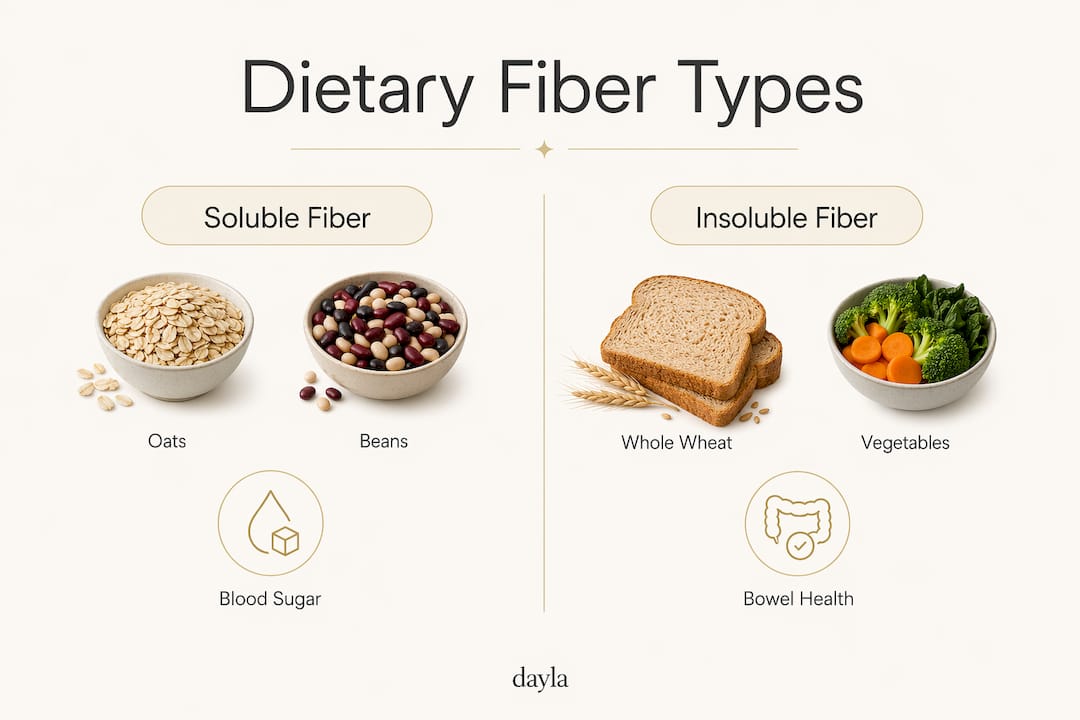
Whole plant foods deliver a complex matrix of fiber types, phytonutrients, and micronutrients that supplements cannot replicate. This is why food-first strategies consistently outperform fiber supplement protocols in long-term metabolic outcomes.
What does current research say about fiber and weight loss?
The clinical evidence for fiber's effect on weight is strong but nuanced. A randomized clinical trial published in the European Journal of Nutrition showed weight reductions of 4.8% to 5.1% in overweight adults over 8 weeks using a multifaceted lifestyle program that included fiber supplementation. The trial enrolled 50 participants with a BMI of 25–29.9, aged 19–65. That result is meaningful: a nearly 5% reduction in body weight within two months is clinically significant for metabolic health markers including blood pressure and insulin sensitivity.
The critical word in that finding is "multifaceted." Fiber alone produced modest results in the same research context. Its power compounds when combined with caloric awareness, physical activity, and behavioral change. This mirrors the broader meta-analytic literature, which consistently shows that fiber's effect on weight is real but moderate when isolated.
Research heterogeneity is a genuine limitation in this field. Studies vary widely in fiber type, daily dose, intervention duration, and participant baseline characteristics. A person with a low-fiber diet at baseline responds more dramatically to fiber supplementation than someone already consuming adequate amounts. Individual gut microbiome composition also shapes how effectively fiber is fermented and how strongly appetite hormones respond.
Key findings from current research:
- A 4.8%–5.1% weight reduction was observed in an 8-week fiber-inclusive lifestyle trial
- Fiber's effect is most pronounced when combined with caloric and behavioral interventions
- Soluble and insoluble fibers produce varied metabolic responses depending on type and source
- Baseline fiber intake and gut microbiome diversity influence individual outcomes
- No single fiber dose or type has been established as universally optimal
How does fiber interact with GLP-1 therapies for weight management?
GLP-1 receptor agonists produce significant weight loss, but they come with gastrointestinal side effects and substantial cost. Dietary fiber and GLP-1 receptor agonists share overlapping mechanisms: both slow gastric emptying, both stimulate satiety hormones, and both improve glucose metabolism. Understanding this overlap matters if you are using or considering GLP-1 treatment alongside dietary changes.
Fiber supports endogenous GLP-1 secretion. When gut bacteria ferment soluble fiber, the resulting short-chain fatty acids stimulate L-cells in the colon to release GLP-1 naturally. This means a high-fiber diet amplifies the body's own GLP-1 response, which partially explains why fiber-rich diets improve insulin sensitivity and appetite control even without medication.
GLP-1 receptor agonists induce significant weight loss but have side effects, and fiber can help mitigate gastrointestinal symptoms and maintain bowel regularity during treatment. This is a clinically relevant finding. Constipation is one of the most commonly reported side effects of GLP-1 medications, and adequate insoluble fiber intake directly addresses that issue.
Managing fiber carefully during GLP-1 therapy matters. Because GLP-1 medications already slow gastric emptying significantly, adding large amounts of gel-forming soluble fiber can compound that effect and cause discomfort. A gradual, monitored approach to fiber intake is the right strategy when combining diet and pharmacotherapy. Daylahealth's doctor-led GLP-1 programs account for these dietary interactions as part of personalized care.
Key considerations for fiber and GLP-1 combination use:
- Fiber stimulates natural GLP-1 secretion through short-chain fatty acid production
- Insoluble fiber reduces constipation, a common GLP-1 medication side effect
- Soluble fiber must be introduced gradually to avoid compounding gastric slowing
- Fiber stabilizes microbiota during and after GLP-1 therapy
- Combined use requires monitoring and ideally physician guidance
What are practical strategies for increasing fiber intake?
The recommended daily fiber intake for adult women is 25 grams and for adult men is 38 grams, yet most Americans consume roughly half that amount. Closing that gap is the single most impactful dietary change most people can make for appetite control and metabolic health.
Gradual increase is non-negotiable. Sudden large increases in fiber intake commonly cause bloating, gas, and cramping. Add 3–5 grams of fiber per week until you reach your target. This gives gut bacteria time to adapt and minimizes discomfort.
Top high-fiber foods to build into daily meals:
- Breakfast: Rolled oats (4g per cup), chia seeds (10g per ounce), or whole-grain toast with avocado
- Lunch: Lentil soup (15g per cup), a large mixed salad with chickpeas, or a whole-grain wrap with vegetables
- Dinner: Black beans (15g per cup), roasted Brussels sprouts, or quinoa as a grain base
- Snacks: An apple with skin (4.5g), a small handful of almonds, or raw carrots with hummus
Hydration is not optional when increasing fiber. Fiber absorbs water in the digestive tract, and without adequate fluid intake, it can cause constipation rather than relieve it. Aim for at least 8 cups of water daily, and increase that amount as fiber intake rises.
There is no optimal time of day to consume fiber for weight loss. Total daily intake drives appetite control and metabolic benefits, including improvements in cholesterol, blood pressure, and blood sugar. Distribute fiber across all three meals rather than loading it into one sitting.
Pro Tip: Pair fiber-rich foods with lean protein at each meal. Protein and fiber together produce a stronger and longer satiety response than either nutrient alone, which makes calorie control feel far less effortful.
Key Takeaways
Dietary fiber is a foundational tool for weight control, and its effectiveness multiplies when combined with adequate hydration, physical activity, and, where appropriate, doctor-led pharmacotherapy.
| Point | Details |
|---|---|
| Fiber promotes satiety | Soluble and insoluble fibers slow digestion and trigger fullness hormones to reduce calorie intake. |
| Fiber type matters | Psyllium and konjac glucomannan produce stronger satiety effects than standard insoluble fiber. |
| Clinical evidence is clear | An 8-week fiber-inclusive lifestyle trial showed 4.8%–5.1% weight reduction in overweight adults. |
| Fiber supports GLP-1 therapy | Adequate fiber intake reduces constipation and stabilizes gut microbiota during GLP-1 medication use. |
| Gradual increase is required | Add 3–5 grams of fiber per week and increase water intake to avoid gastrointestinal discomfort. |
Fiber works, but only if you use it correctly
Most people treat fiber as a passive background nutrient, something that shows up incidentally in a salad or a bowl of oatmeal. That framing undersells it and leads to inconsistent results. Fiber is an active metabolic tool, and like any tool, it produces results only when used with intention and consistency.
What I have observed repeatedly is that people increase fiber dramatically for two weeks, feel bloated, and conclude that fiber does not work for them. The problem is not fiber. The problem is pace. The gut microbiome needs weeks to adapt to a new fermentation load. Rushing that process produces discomfort, not results.
The other pattern worth naming is the supplement trap. Fiber supplements are convenient, but supplements lack the complex fiber matrix and nutrients of whole foods that promote beneficial microbiome diversity and metabolic outcomes. A psyllium capsule is not equivalent to a bowl of lentils. Whole foods bring fiber, protein, micronutrients, and phytonutrients together in a way that no supplement replicates.
Fiber is not a weight loss solution on its own. It is a foundational dietary habit that makes every other weight management strategy work better, whether that strategy is caloric awareness, physical activity, or a doctor-led GLP-1 program. Build the fiber habit first, build it slowly, and build it from food.
— Flexible
Daylahealth's medical weight loss programs, explained
Dietary fiber gives your body a strong metabolic foundation. For people who need more than diet alone, Daylahealth offers doctor-led GLP-1 weight loss prescriptions and peptide therapies that work alongside the dietary habits you are building.

Daylahealth's personalized GLP-1 care addresses appetite regulation, metabolic health, and physician oversight in one program. For those exploring additional options, Daylahealth's peptide therapies support recovery, longevity, and metabolic function as part of a broader wellness plan. Every program is designed around your specific health profile, not a one-size-fits-all protocol. If you are ready to move beyond diet alone, Daylahealth connects you with licensed clinicians who understand how nutrition and pharmacotherapy work together.
FAQ
Does fiber alone cause weight loss?
Fiber alone produces modest weight loss. Clinical evidence shows its strongest results come from combining fiber intake with caloric awareness, physical activity, and behavioral change.
How much fiber should I eat daily for weight control?
Adult women need 25 grams daily and adult men need 38 grams daily. Most Americans consume roughly half the recommended amount, making fiber intake a high-impact area for improvement.
What is the best high-fiber food for weight loss?
Lentils and black beans deliver 15 grams of fiber per cup and provide protein alongside fiber, which produces a stronger satiety response than fiber alone.
Can I take fiber supplements instead of eating high-fiber foods?
Fiber supplements are less effective than whole foods. Supplements lack the complex nutrient matrix of plant foods that supports gut microbiome diversity and long-term metabolic health.
Is fiber safe to use with GLP-1 medications?
Fiber is generally safe alongside GLP-1 medications and can reduce constipation, a common side effect. Introduce fiber gradually and consult your physician, since both fiber and GLP-1 drugs slow gastric emptying.