

Weight loss medication candidacy is defined as a patient's medical eligibility for prescription weight loss drugs, determined by BMI thresholds, weight-related health conditions, and a structured clinical evaluation. The two most commonly prescribed classes today are GLP-1 receptor agonists, including semaglutide and tirzepatide, which require formal candidacy screening before a clinician will prescribe them. Understanding what is weight loss medication candidacy matters because it separates patients who will benefit safely from those who face unnecessary risk. This guide breaks down every layer of that evaluation so you know exactly where you stand before your first appointment.
What is weight loss medication candidacy?
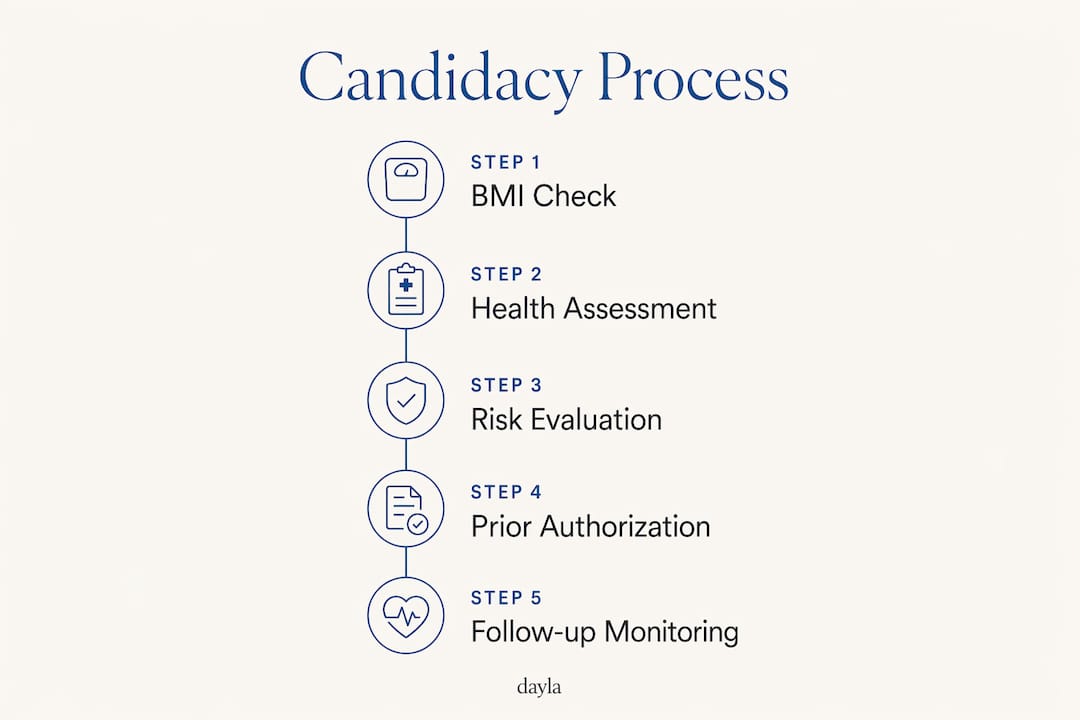
Weight loss medication candidacy, known clinically as obesity pharmacotherapy eligibility, is the formal process a clinician uses to decide whether prescription weight loss drugs are appropriate for a specific patient. The evaluation is not a single test. It combines BMI measurement, health history review, lifestyle assessment, and safety screening into one structured decision.
Prescription weight loss medications are typically prescribed for adults with a BMI of 30 or higher, or a BMI of 27 or higher when weight-related health problems are present. That threshold exists because the clinical benefit of medication outweighs its risks at those levels. Below those cutoffs, the risk-benefit calculation shifts.

The criteria for weight loss drugs also account for cardiometabolic risk. Conditions like type 2 diabetes, hypertension, obstructive sleep apnea, and high cholesterol all factor into the eligibility decision. A patient with a BMI of 28 and uncontrolled type 2 diabetes qualifies. A patient with a BMI of 28 and no related conditions generally does not.
What clinical criteria determine eligibility for weight loss medication?
BMI is the starting point for weight loss medication eligibility, but it is not the only factor. Clinicians use a combination of BMI and comorbidity status to build the initial eligibility picture.
| BMI Range | Weight-Related Condition Required | Typical Eligibility |
|---|---|---|
| 30 or higher | None required | Eligible |
| 27–29.9 | Yes (e.g., type 2 diabetes, hypertension) | Eligible with condition |
| 25–26.9 | Yes, multiple serious conditions | Case-by-case review |
| Below 25 | N/A | Generally not eligible |
The conditions that qualify alongside a BMI of 27 or higher include type 2 diabetes, hypertension, dyslipidemia, obstructive sleep apnea, and cardiovascular disease. Each of these conditions is worsened by excess weight and improved by clinically meaningful weight loss. That connection is what makes medication use medically justified.
Medication choice and candidacy are strongly influenced by cardiometabolic risk, including diabetes and cardiovascular disease. A clinician treating a patient with both obesity and established heart disease will prioritize medications with proven cardiovascular benefit, such as semaglutide. The condition does not just confirm eligibility. It shapes which medication gets prescribed.
Insurance prior authorization adds a practical layer to this process. Documented BMI and related health conditions are required as evidence of medical necessity before most insurers approve coverage. Without that documentation, access to medication is often blocked regardless of clinical need.
How do lifestyle factors and patient history influence candidacy?
Clinical eligibility for weight loss medication goes beyond BMI. Evidence-based candidacy evaluation includes a review of lifestyle history, prior weight loss attempts, contraindications, and realistic expectations for treatment. This means your history of trying and not succeeding with diet and exercise is not a failure. It is a clinical requirement.
Clinicians look for documented evidence that a patient has attempted weight loss through behavioral changes before prescribing medication. That prior effort demonstrates that lifestyle intervention alone is insufficient for that individual. It also signals that the patient understands what long-term treatment requires.
Key lifestyle and history factors that influence candidacy include:
- Prior weight loss attempts: Documented efforts with diet, exercise, or structured programs support the case for medication.
- Commitment to ongoing treatment: Medication works best alongside continued lifestyle changes, not as a replacement for them.
- Realistic expectations: Patients who expect rapid, dramatic results without behavioral change are less likely to succeed and may not be considered ready candidates.
- Psychosocial factors: Mental health conditions, eating disorders, and social support systems all affect whether a patient can sustain treatment safely.
- Support systems: Access to follow-up care, a stable living situation, and social support improve adherence and outcomes.
Pro Tip: Before your candidacy evaluation, write down every structured weight loss attempt you have made, including dates, methods, and results. Clinicians use this history to build your case for medication. A clear record speeds up the process and strengthens your eligibility documentation.
What medication-specific safety considerations affect candidacy?
Safety screening is a non-negotiable part of how to determine candidacy for weight loss meds. Even patients who meet BMI and lifestyle criteria can be disqualified by contraindications specific to the medication being considered.
GLP-1 receptor agonists like semaglutide and tirzepatide carry specific safety warnings that directly affect eligibility. GLP-1 medications should not be used by patients who are pregnant, breastfeeding, or actively trying to conceive. Clinicians are required to counsel patients on contraception before prescribing these medications.
Additional contraindications and safety factors that affect candidacy include:
- Personal or family history of medullary thyroid carcinoma: GLP-1 medications carry a boxed warning for this risk and are contraindicated in patients with this history.
- Multiple endocrine neoplasia syndrome type 2 (MEN 2): This genetic condition is a hard contraindication for GLP-1 receptor agonists.
- Pancreatitis history: Patients with a prior episode of pancreatitis require careful evaluation before GLP-1 therapy is considered.
- Medication interactions: Candidacy assessment includes screening for interactions with existing medications, particularly those affecting blood sugar or heart rhythm.
- Kidney and liver function: Impaired organ function can affect how medications are metabolized and may limit which options are appropriate.
The types of weight loss prescriptions available vary in their safety profiles, which is why medication choice and candidacy are evaluated together. A patient disqualified from one medication may still be eligible for another.
How is effectiveness monitored and how does it influence ongoing candidacy?
Weight loss medication candidacy is not a one-time decision. It is a dynamic assessment that continues throughout treatment. A patient who qualifies at the start may need a therapy change if the medication does not produce results within a defined window.
The standard monitoring timeline works as follows:
- Weeks 1–4: Initial dose is established. Clinicians monitor for side effects including nausea, vomiting, and gastrointestinal discomfort. Dose escalation begins based on tolerance.
- Week 12: The first major effectiveness checkpoint. Weight loss response is assessed at 12 weeks, and patients who have not lost at least 5% of their body weight are often considered inadequate responders.
- Months 1–3: Monthly clinical visits are recommended during this phase to manage side effects, adjust dosing, and evaluate adherence.
- Month 3 onward: Visits shift to quarterly once the patient is stable and responding well to treatment.
- Ongoing: A sustained weight loss goal of approximately 5% is the minimum threshold to justify continuing medication. Higher targets are set for patients with specific comorbidities like type 2 diabetes.
Patients who do not meet the 12-week threshold are not simply discontinued. Clinicians evaluate whether the dose was adequate, whether adherence was consistent, and whether a different medication might produce better results. Tracking GLP-1 progress with consistent measurements between visits gives both patient and clinician the data needed to make that call accurately.
Pro Tip: Log your weight at the same time each week, ideally in the morning before eating. Consistent measurement conditions remove variables and give your clinician a reliable trend line to evaluate at your 12-week checkpoint.
Key takeaways
Weight loss medication candidacy is a structured clinical process requiring BMI thresholds, documented health conditions, lifestyle history, safety screening, and ongoing effectiveness monitoring to determine and maintain eligibility.
| Point | Details |
|---|---|
| BMI thresholds define entry | A BMI of 30 or higher, or 27 or higher with a weight-related condition, is the standard starting point for eligibility. |
| Comorbidities strengthen candidacy | Conditions like type 2 diabetes and hypertension can qualify patients at lower BMI levels and shape medication choice. |
| Lifestyle history is required | Documented prior weight loss attempts through diet and exercise are a clinical requirement, not just background information. |
| Safety screening can disqualify | Pregnancy, thyroid cancer history, and certain medication interactions are hard contraindications for GLP-1 medications. |
| Candidacy is reassessed at 12 weeks | Patients who do not reach 5% weight loss by week 12 are evaluated for therapy modification or discontinuation. |
What I have learned about candidacy evaluations after years in this space
The most common misconception I see is that candidacy is a simple yes-or-no checkbox based on BMI alone. Patients come in expecting a number on the scale to be the whole answer. It is not. The clinical picture is far more layered than that, and patients who understand this going in have better outcomes.
The second thing I have noticed is that newer medications like tirzepatide are shifting the conversation. The weight loss results from dual GIP/GLP-1 agonism are meaningfully stronger than earlier options, and clinicians are increasingly factoring that efficacy data into their candidacy recommendations. A patient who might have been considered borderline for medication a few years ago may now be a clear candidate given the improved benefit-to-risk ratio.
What I tell anyone considering this path: go into your evaluation prepared. Know your health history, document your prior attempts, and be honest about your expectations. Clinicians are not gatekeepers trying to deny access. They are trying to match the right treatment to the right patient at the right time. The more clearly you can communicate your situation, the faster and more accurately that match gets made.
— Flexible
Personalized GLP-1 care through Daylahealth
Daylahealth connects you with doctor-led, personalized GLP-1 care designed around your specific eligibility profile. If you meet the BMI and health condition criteria, Daylahealth's clinical team guides you through candidacy evaluation, medication selection, and ongoing monitoring, all without the friction of a traditional clinic visit.

Daylahealth's GLP-1 weight loss program includes access to semaglutide and tirzepatide options, with structured follow-up built into the process from week one. Whether you are just starting to explore your weight loss medication eligibility or ready to move forward, Daylahealth gives you the clinical support and expert guidance to do it right.
FAQ
Who qualifies for weight loss medication?
Adults with a BMI of 30 or higher, or a BMI of 27 or higher with at least one weight-related health condition such as type 2 diabetes or hypertension, meet the standard eligibility criteria for prescription weight loss medication.
What disqualifies someone from GLP-1 medications?
Pregnancy, breastfeeding, a personal or family history of medullary thyroid carcinoma, and multiple endocrine neoplasia syndrome type 2 are all contraindications that disqualify patients from GLP-1 receptor agonists like semaglutide and tirzepatide.
How long does it take to know if weight loss medication is working?
Clinicians assess effectiveness at approximately 12 weeks. Patients who have not achieved at least 5% body weight reduction by that point are typically evaluated for a dose adjustment or a change in therapy.
Does insurance cover weight loss medication?
Coverage varies by plan, but most insurers require documented BMI and health conditions as proof of medical necessity before approving prior authorization for GLP-1 medications.
Can you be re-evaluated for candidacy after being denied?
Yes. Candidacy is a dynamic assessment. Changes in BMI, the development of new weight-related conditions, or new clinical evidence supporting a different medication can all prompt a fresh evaluation and a different outcome.