
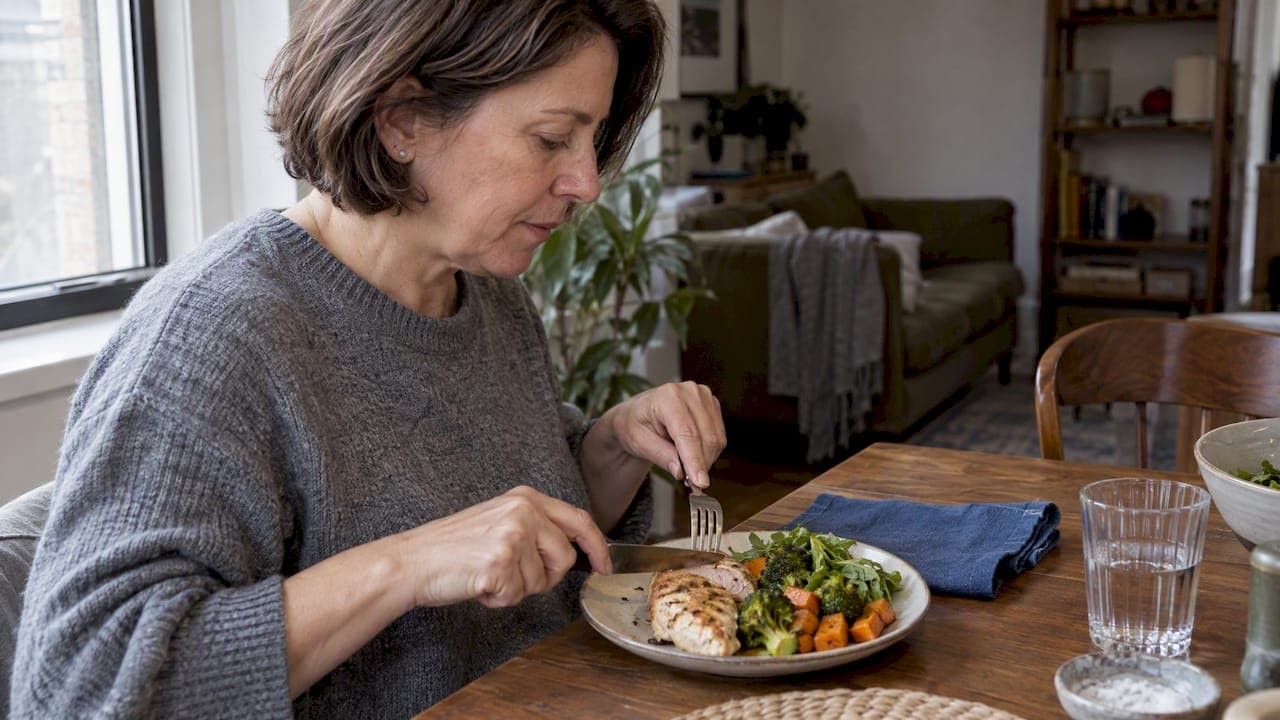
On semaglutide, build your meals around lean protein, cooked or non-starchy vegetables, high-fiber carbohydrates, and fluids. Eat small portions, start each meal with the protein, and avoid fried, greasy food, which is the most common trigger for nausea. No food is strictly off limits. The goal is to get enough nutrition from a smaller appetite.
This guide covers what to eat, how much protein to aim for, what to do during the first weeks and on bad days, which foods to limit, and what a full day can look like.
TL;DR
- Aim for more than 1.2 grams of protein per kilogram of body weight daily, with 20 to 30 grams at each meal, and eat the protein first.
- Choose lean protein, non-starchy vegetables, legumes, whole grains, yogurt, and fish. Raise fiber gradually and drink 2 to 3 liters of fluid daily unless your clinician advises otherwise.
- Limit fried, greasy, and very sugary foods. They slow digestion further and worsen nausea, bloating, and reflux.
- Do not skip meals because you feel full. On rough days, switch to soft foods, soups, and protein drinks.
Table of Contents
- Why what you eat matters more on semaglutide
- Start with protein
- Vegetables, fruit, and fiber
- Hydration counts as nutrition
- The first weeks: eat soft, eat small
- Do not skip meals on bad days
- Foods and habits to limit
- A sample day on semaglutide
- Our perspective
- Personalized GLP-1 care with dietitian support
- FAQ
- Sources
Why what you eat matters more on semaglutide
Semaglutide reduces cravings, increases fullness, and slows digestion, as JAMA Internal Medicine notes in its patient guidance on GLP-1 medications. That helps you eat less. It also means every meal has to carry more nutrition, because you have a smaller calorie budget to work with.
A 2025 joint advisory from the American College of Lifestyle Medicine, the American Society for Nutrition, the Obesity Medicine Association, and The Obesity Society frames it the same way. The priority is nutrient density: diverse, minimally processed whole foods that prevent micronutrient gaps during fast weight loss. It is not a restrictive "Ozempic diet."
Diet also adds to the medication's effect. Clinical working groups describe additive weight loss when medication is combined with a structured dietary intervention, compared with medication alone.
Start with protein
Protein is the most important nutrient to protect while your appetite is low. Without enough of it, a share of the weight you lose can come from muscle.
The 2025 clinical review Optimizing GLP-1 therapies for obesity and diabetes management recommends more than 1.2 grams of protein per kilogram of body weight per day, spread evenly across meals, with 20 to 30 grams at each one.
Here is the math for a 200 lb (about 91 kg) adult: 91 x 1.2 is roughly 109 grams per day. Over three meals, that is about 36 grams each, or you can spread it across three meals and a snack or shake. Your clinician or dietitian can adjust the target to your kidney health, age, and goals.

Foods that deliver 20 to 30 grams
These are typical amounts. Check labels, because brands vary.
| Food | Approximate serving for a protein-rich meal |
|---|---|
| Chicken or turkey breast | 3 to 4 oz cooked |
| White fish or salmon | 4 to 5 oz cooked |
| Eggs | 3 whole eggs, or 2 eggs plus egg whites |
| Greek yogurt, plain | 1 cup |
| Tofu or tempeh | 5 to 6 oz |
| Lentils or beans | 1 cup cooked, paired with another protein source |
| Cottage cheese | 1 cup |
| Protein shake | Per label, often 20 to 30 g |
The top-ranking guides agree on the same short list: chicken, turkey, fish, eggs, tofu, tempeh, lentils, and yogurt. If you want the full muscle-preservation picture, our guides on protein intake on semaglutide and preventing muscle loss during GLP-1 therapy go deeper. Pairing protein with resistance training matters just as much as the food itself.
If you are also thinking about bone health, protein and strength work are part of that picture too. This practical guide to foods to avoid with osteoporosis is a useful companion read.
Vegetables, fruit, and fiber

Non-starchy vegetables give you volume and micronutrients for few calories. Good choices include leafy greens, zucchini, cucumbers, broccoli, peppers, asparagus, and summer squash.
Fiber matters because semaglutide can cause constipation. The clinical review above suggests about 14 grams of fiber per 1,000 calories per day, increased gradually. On 1,400 calories, that is roughly 20 grams.
Good fiber sources:
- Lentils, beans, chickpeas, and peas
- Oats, barley, quinoa, and brown rice
- Berries, pears, apples with skin, and kiwi
- Chia and ground flaxseed
- Cooked vegetables, which are easier on a slow stomach than large raw salads
Increase fiber slowly. A sudden jump from 10 grams to 30 grams can cause the bloating you are trying to avoid. If constipation is already a problem, see our six-step plan for semaglutide constipation and our guide to relief within 24 to 48 hours. Gentle movement can help too, and this yoga for constipation relief routine is one low-effort option.
Hydration counts as nutrition
The same clinical review gives a fluid goal of 2 to 3 liters daily. This is more than comfort advice. The FDA prescribing information for Wegovy warns that acute kidney injury has been reported, mainly after volume depletion from nausea, vomiting, or diarrhea. It advises monitoring kidney function in people with kidney impairment who have these reactions, especially during dose initiation and escalation.
Practical ways to keep fluids up when you feel full:
- Sip steadily through the day instead of drinking large amounts with meals.
- Eat water-rich foods: cucumber, watermelon, soups, broth, and gelatin.
- Add electrolytes if you have had vomiting or diarrhea, and call your clinician if you cannot keep fluids down.
Contact your prescriber promptly if you have repeated vomiting, diarrhea, very dark urine, dizziness, or little urine output. These can signal dehydration.
The first weeks: eat soft, eat small
Most people underestimate how strong the stomach effects can be at the start or after a dose increase. The JAMA Internal Medicine guidance suggests eating smaller portions and being careful with foods that may aggravate nausea. A softer approach in the early weeks tends to work well:
- Soups, smoothies, and cooked vegetables instead of large raw salads
- Plain yogurt, eggs, oatmeal, and tender fish
- Small portions, eaten slowly, stopping at the first sign of fullness
For nausea specifically, Healthline reports that the manufacturer of Wegovy and Ozempic recommends bland, low-fat foods such as crackers, toast, and rice, plus water-rich foods like soup and gelatin. For a longer plan, see our guide on lowering semaglutide nausea over 4 to 8 weeks.
Do not skip meals on bad days
Extreme fullness leads many people to skip meals. That is the "skip and stall" pattern: less protein, more muscle loss, more fatigue. WebMD's coverage quotes physicians who advise "compact" nutrition on high-symptom days: softer foods, liquid protein, and soups, not no food at all.
A simple fallback ladder:
- Try a small portion of a soft protein, such as yogurt, eggs, or tofu.
- If solid food is too much, switch to a protein shake or clear protein drink.
- Add broth or soup for fluids and sodium.
- Return to normal meals as soon as you can, and tell your clinician if this lasts more than a day or two.
Foods and habits to limit
The joint advisory above says no food is strictly forbidden. Still, some foods make the side effects worse, and some use up a small calorie budget with little nutrition.
| Limit | Why |
|---|---|
| Fried and greasy foods (fried chicken, burgers, cream sauces, pizza) | High-fat meals slow gastric emptying further and can worsen nausea, bloating, and reflux, as Healthline notes for Wegovy users |
| Sugary drinks, pastries, candy | Many calories, little protein or fiber, and they crowd out nutrient-dense food |
| Large, heavy meals | A slowed stomach handles small portions better |
| Alcohol | Adds calories, can irritate the stomach, and adds to dehydration risk |
| Highly processed snacks as a main source of calories | Easy to eat, low in protein and micronutrients |
You do not need a "never" list. If you want a slice of pizza, a small portion eaten slowly after protein is a better plan than a rigid ban you abandon in week three. Carbonated drinks bother some people and not others. Track what triggers you.
A sample day on semaglutide
This example assumes about 100 to 110 grams of protein. Scale portions to your own target.
- Breakfast: Plain Greek yogurt with berries and chia seeds, plus a hard-boiled egg (about 25 to 30 g protein).
- Mid-morning: Water or herbal tea, and a small protein shake if you are behind on protein.
- Lunch: Grilled chicken or tofu over mixed greens, cucumber, and quinoa with olive oil and lemon.
- Afternoon: Cottage cheese with sliced pear.
- Dinner: Baked salmon, roasted zucchini, and a small portion of brown rice or lentils.
- Evening, if hungry: Warm broth or a small bowl of oatmeal.
Other meal ideas that fit the pattern:
- Egg and spinach scramble with whole-grain toast
- Turkey and bean chili, which freezes well in single portions
- Lentil soup with a side of yogurt
- Tofu stir-fry with broccoli and peppers, cooked with little oil
- Tuna or chickpea salad in lettuce cups
For a deeper look at structuring meals around a low appetite, read our guide on GLP-1 appetite suppression meal planning.
Our perspective
We see the same pattern in people starting GLP-1 care. The medication works on appetite, and then food quality decides how they feel and what they keep. People who eat protein first, drink enough, and keep moving tend to have an easier experience than people who eat almost nothing because they are not hungry.
That is why our doctor-led approach pairs prescribing with ongoing clinical oversight, dietitian consults, and care coaching. A food list helps, but your dose, your side effects, your kidney health, and your medical history decide what is right for you. Tell your clinician early if nausea, constipation, or low intake is getting in the way. Adjusting the plan is part of the care, and it often starts with food.
The habits that last are simple: protein at every meal, plenty of fluids, fiber that rises slowly, strength training, and regular meals. They also keep working if you later change or stop the medication. Our guide to lifestyle changes that boost GLP-1 results covers the rest.
— Flexible
Personalized GLP-1 care with dietitian support
If you want a doctor-led plan with the nutrition guidance built in, Dayla Health offers GLP-1 injection plans from $179 per month, microdose plans from $159 per month, and needle-free Oral GLP · Liposomal from $149 per month. Our dayla GLP-1 program is $299 per month. Plans are paid in cash, require no insurance, and ship nationwide after an online intake and clinician approval. Dietitian visits are free, and cancellation is flexible. You can also review the weight loss treatment options.
FAQ
What should I eat on semaglutide every day?
Build each meal around 20 to 30 grams of lean protein, add non-starchy vegetables or cooked produce, and include a high-fiber carbohydrate such as beans, oats, or quinoa. Drink 2 to 3 liters of fluids unless your clinician has set a different limit. Keep portions small and eat slowly.
What should I not eat on semaglutide?
Nothing is strictly banned, but fried, greasy, and very sugary foods are the most likely to cause nausea, bloating, and reflux. Alcohol and large heavy meals can also make you feel worse. Start with small portions of your favorites and see how you tolerate them.
What can I eat when I feel nauseous?
Try bland, low-fat foods such as crackers, toast, and rice, along with soup, broth, and gelatin. If solid food is too much, use a protein shake. Call your prescriber if you cannot keep fluids down or the nausea lasts beyond a day or two.
Do I need to take supplements while on semaglutide?
Not automatically. The joint advisory focuses on getting nutrients from varied whole foods, because eating less can leave gaps. Ask your clinician or dietitian whether bloodwork or a supplement makes sense for you.
Sources
- JAMA Internal Medicine: I Am Taking a GLP-1 Weight-Loss Medication, What Should I Know?
- Optimizing GLP-1 therapies for obesity and diabetes management (PMC)
- Nutritional Priorities to Support GLP-1 Therapy for Obesity: A Joint Advisory (PMC)
- Wegovy prescribing information, FDA (revised 11/2025)
- WebMD: Ozempic Diet: Foods to Eat and Avoid
- Healthline: Food List When Taking Semaglutide and What to Avoid
- Healthline: Foods to Avoid When Taking Wegovy