

Yes. Cellular hydration measurably influences the pathways that control fat storage and fat breakdown. Water is not a passive filler in your body. It participates directly in the chemical reactions that determine whether your cells store fat or release it for fuel, and even mild, chronic under hydration can nudge that balance toward storage.
The practical takeaway matters more than the biochemistry, so here it is upfront:
- Staying well hydrated supports the metabolic machinery involved in lipolysis, but it will not melt fat on its own.
- Drinking water before meals can modestly reduce how much you eat, particularly if you are middle-aged or older.
- Hydration works as a supporting factor for weight management, not a replacement for diet, activity, or medically supervised treatment.
Key Takeaways
Hydration supports the cellular and hormonal pathways that regulate fat metabolism, but it works as a supporting factor, not a standalone weight-loss solution.
| Point | Details |
|---|---|
| Cellular hydration drives mechanism | Cell volume, RAS/AngII signaling, and the NFAT5 pathway link water status to lipolysis and lipid storage. |
| Animal evidence is strong, human evidence is suggestive | Rodent and cell studies show clear mechanisms; human trials mostly measure indirect effects like beverage substitution. |
| Pre-meal water modestly reduces intake | About 500 mL before meals can lower calorie intake, especially in middle-aged and older adults. |
| Metabolic rate boost is real but brief | Water-induced thermogenesis lasts roughly 60 to 90 minutes and is too small to drive meaningful fat loss alone. |
| Hydration supports exercise capacity | Adequate fluid intake maintains blood volume and thermoregulation, helping sustain workout intensity and fat oxidation. |
Table of Contents
- The Role of Hydration in Fat Metabolism at the Cellular Level
- What Does the Research Actually Show About Water and Fat Loss?
- Can Drinking Water Before Meals Reduce How Much You Eat?
- Does Drinking Water Boost Your Metabolic Rate?
- Why Hydration Matters for Exercise Performance and Fat Burning
- How Much Water Should You Drink for Metabolic Health?
- Common Myths About Hydration and Fat Loss
- Where Hydration Fits Into Medically Supervised Weight Loss
- A Note on Interpreting the Evidence
- Frequently Asked Questions
- Sources
The Role of Hydration in Fat Metabolism at the Cellular Level
Cell volume affects insulin sensitivity and lipolysis, and that single mechanism explains more about hydration's metabolic role than most people realize. When a cell is well hydrated, it swells slightly. That swelling changes how enzymes fold, how insulin receptors respond, and how readily fat cells release stored triglycerides into the bloodstream for use as energy. When a cell is dehydrated, it shrinks, and that shrinkage sends a different signal entirely.
A 2026 mechanistic study published in Nature Communications found that hypertonic stress, the cellular equivalent of dehydration, increases intracellular lipid synthesis and accumulation. The researchers identified NFAT5, a transcription factor, as the switch that links low cellular water content to increased fat storage. In plain terms: when your cells sense a water shortage, they respond by making and holding onto more fat, not less. This is a genuine mechanistic finding, but it comes from cell and mouse models, so treat the magnitude of the human effect as unproven rather than established.
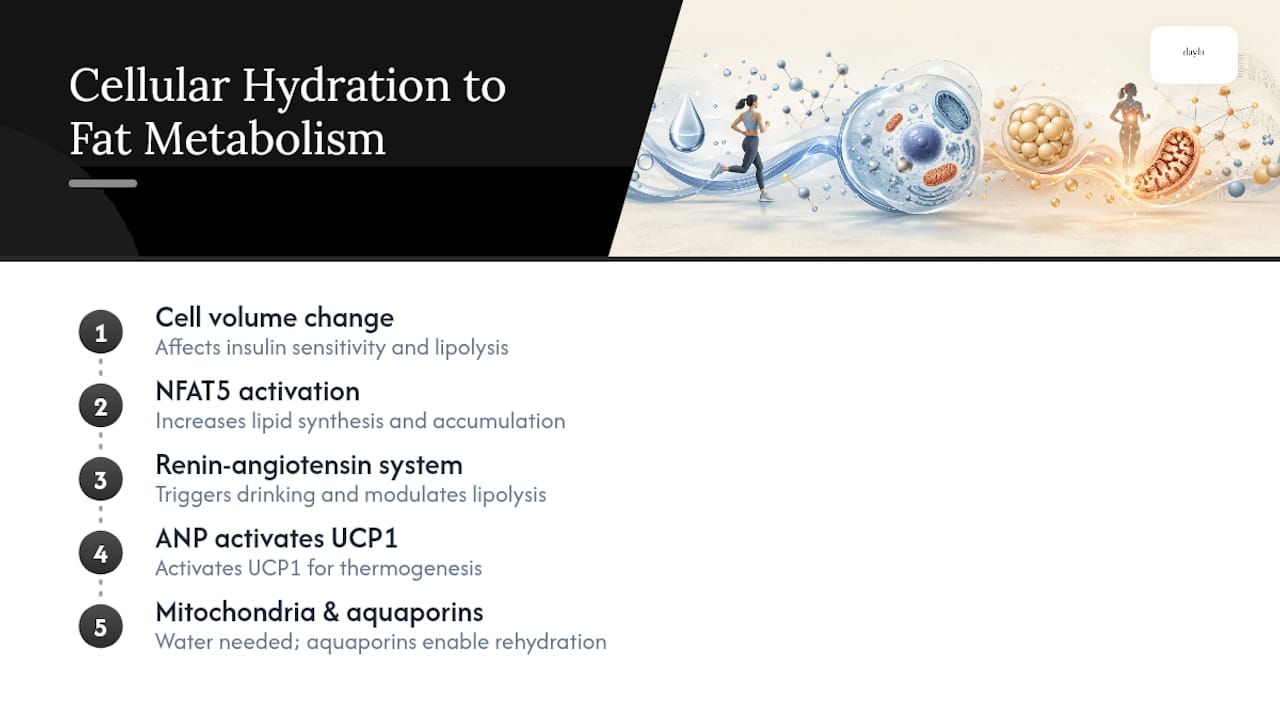
The renin-angiotensin system and appetite-lipolysis crosstalk. The renin-angiotensin system (RAS), best known for regulating blood pressure, also connects fluid balance to feeding behavior and fat breakdown. Rodent studies referenced in a 2016 mini-review show that angiotensin II, activated when the body senses fluid deficits, triggers drinking behavior and appears to modulate lipolysis alongside it. Animals given more water in these experiments ate less and burned more fat, a pattern the review's authors tie back to RAS signaling rather than water volume alone.
Atrial natriuretic peptide and UCP1: the fat-burning switch. Atrial natriuretic peptide (ANP) is released when blood volume expands, and in animal models it has been shown to activate UCP1, a protein inside brown fat mitochondria that converts stored energy directly into heat instead of ATP. This is the same pathway cold exposure uses to trigger fat burning. Adequate hydration supports healthy blood volume, which keeps this ANP-UCP1 signal available to fire when the body needs it.
Mitochondria and aquaporins: the water-handling infrastructure. Mitochondria, the organelles that actually oxidize fat for energy, need water both as a reaction medium and as a byproduct of the electron transport chain. A broad biochemical review notes that water functions as an active reactant across a large share of metabolic chemistry, not just as a solvent sitting in the background. Aquaporins, the channel proteins that move water rapidly across cell membranes, determine how quickly a cell can adjust its internal hydration state in response to metabolic demand. Without functional aquaporin channels, cells cannot rehydrate fast enough to keep enzymatic reactions running smoothly.
Picture the pathway as a chain: fluid intake raises blood volume, which triggers ANP release, which activates UCP1 in brown fat, while at the cellular level, aquaporins shuttle water in and out to keep enzymes properly folded and RAS signaling calibrated to actual hydration status. Break any link in that chain through chronic under hydration, the downstream fat-oxidation signal weakens.
Pro Tip: Cellular hydration status changes faster than most people assume. A single session of intense exercise or a salty meal can shift intracellular water content enough to measurably alter enzyme kinetics within an hour, which is one reason athletes often see appetite and energy shifts tied to fluid intake rather than food alone.
What Does the Research Actually Show About Water and Fat Loss?
The evidence linking hydration to fat metabolism splits cleanly into two tiers, and conflating them is where most popular advice goes wrong.
Strong, mechanism-level evidence comes almost entirely from animal models. The NFAT5 lipid-synthesis pathway, the RAS/AngII drinking-lipolysis link, and the ANP-UCP1 thermogenic switch are all well documented in rodents and cell cultures. These findings are consistent and mechanistically coherent. What they are not is proof that drinking an extra glass of water will produce a measurable fat-loss effect in a person.
Human evidence is suggestive, not conclusive. The clearest human data comes from behavioral substitution trials rather than direct hydration-lipolysis measurements. The CHOICE randomized clinical trial found that replacing caloric beverages with water or diet beverages produced modest but real weight and waist-circumference reductions along with improved fasting glucose at six months. That is a genuine, well-controlled human result, but it measures beverage substitution, not hydration status itself.
| Study Type | Species/Design | Main Finding | Evidence Grade | Key Limitation |
|---|---|---|---|---|
| Mechanistic cell/mouse study | Cell culture and mouse models | Cellular dehydration activates NFAT5, increasing lipid synthesis | Strong (animal/mechanistic) | Not yet confirmed at this magnitude in humans |
| RAS/AngII rodent research | Rodent feeding and drinking studies | Water intake linked to reduced feeding and increased lipolysis via RAS signaling | Strong (animal/mechanistic) | Translation to human appetite regulation still uncertain |
| CHOICE randomized trial | Adult human participants | Replacing caloric drinks with water produced modest weight loss and better fasting glucose | Suggestive to moderate (human RCT) | Measures beverage swap, not hydration status directly |
| Population/epidemiologic review | Human observational cohorts | Higher plain water intake associated with less long-term weight gain | Suggestive (observational) | Association, not causation; confounded by diet quality |
The Johns Hopkins Hub explainer captures the honest state of the science well: increasing water intake plausibly supports weight management through cell-volume effects, but direct human causation has not been fully established. A separate population-level review reinforces this pattern, finding that higher plain water intake correlates with lower long-term weight gain, though the mechanism could just as easily run through appetite suppression or beverage substitution as through direct metabolic effects. Until researchers run large trials that isolate hydration status from these confounders, treat the human data as suggestive rather than settled.
Can Drinking Water Before Meals Reduce How Much You Eat?
Pre-meal water tends to reduce meal energy intake in middle-aged and older adults, though the effect is less consistent in younger adults. This is one of the better-studied angles in the hydration-weight literature, largely because it is easy to test: give someone water before a meal, measure what they eat.
The typical study design uses roughly 500 mL of water consumed 20 to 30 minutes before a meal, and the reported effect is a modest reduction in calories consumed at that sitting, likely from mechanical stomach distension and mild satiety signaling. The effect size shrinks in younger adults, possibly because their satiety and thirst signaling systems are more efficient at distinguishing fluid volume from actual food need.
A simple protocol worth trying:
- Drink about 500 mL (roughly two cups) of water 20 to 30 minutes before your largest meal of the day.
- Eat normally and pay attention to whether you naturally stop eating sooner.
- Track this over one to two weeks rather than judging it after a single meal, since day-to-day appetite varies for unrelated reasons.
- If you notice no change after two weeks, treat pre-meal water as neutral for you rather than forcing a habit that offers no benefit.
Older adults and people who tend to under hydrate throughout the day are the most likely to notice this effect. Treat it as a small, low-risk habit to layer onto a broader plan, not a standalone weight-loss strategy.
Does Drinking Water Boost Your Metabolic Rate?
Yes, some studies report a transient increase in metabolic rate after drinking water, though the effect size and how long it lasts vary by volume, water temperature, and who is being tested. This phenomenon, sometimes called water-induced thermogenesis, shows up in the research literature as a real but modest and short-lived signal.
The typical pattern researchers report: metabolic rate rises within about 10 minutes of drinking water, peaks somewhere between 30 and 40 minutes, and returns to baseline by roughly 60 to 90 minutes. Colder water appears to produce a slightly larger and longer response in some studies, plausibly because the body expends a small amount of extra energy warming the fluid to core temperature, though this is a minor contributor compared to the thermogenic signaling itself.
The methodological caveats matter here. Most of these studies use small sample sizes, measure metabolic rate with indirect calorimetry that varies in precision between labs, and rarely control for body composition differences between participants. A person with more lean mass will show a different thermogenic response than someone with more fat mass, and few studies stratify their results this way.
The most commonly cited figure in this space describes a temporary metabolic uptick lasting under two hours. Even taken at face value, that window is too short and too small to produce meaningful fat loss on its own. Water-induced thermogenesis is real, but it is a footnote in the metabolism story, not a headline.
Why Hydration Matters for Exercise Performance and Fat Burning
Adequate hydration supports exercise performance and substrate use, which helps you maintain both the intensity and duration needed to burn calories and oxidize fat during a workout. This connection is more reliable and better documented than the direct cellular pathways discussed earlier, because it runs through basic cardiovascular physiology rather than subtle signaling cascades.
Dehydration reduces blood plasma volume, which forces your heart to work harder to deliver the same amount of oxygen and nutrients to working muscles. It also impairs thermoregulation, since sweat is your primary cooling mechanism and sweat production depends on adequate fluid reserves. Once core temperature climbs and cardiovascular strain increases, most people either slow down or stop earlier than they would if properly hydrated, and that shortened session directly reduces total calories burned and total fat oxidized during exercise.
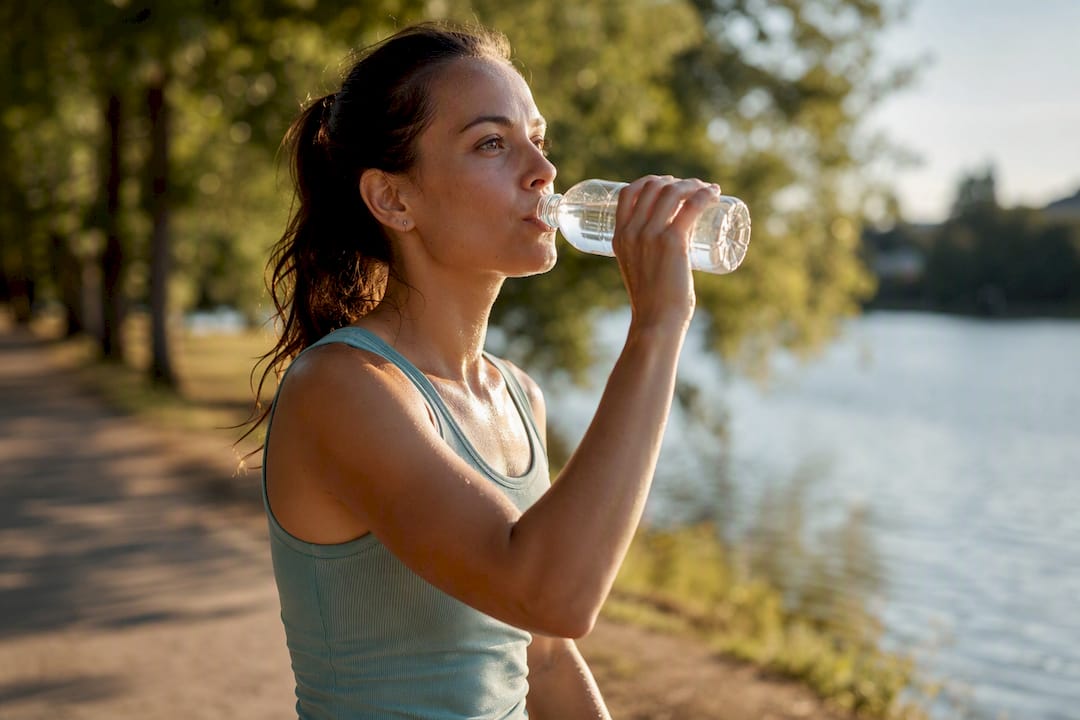
For most moderate-intensity sessions under an hour, plain water before and during exercise is sufficient. For sessions longer than 60 to 90 minutes, especially in heat, electrolyte replacement becomes relevant because sweat carries out sodium and other minerals that plain water alone will not replace.
Pro Tip: Weigh yourself before and after a long, hot training session. Each pound lost is roughly 16 ounces of fluid, and that number gives you a personalized rehydration target far more useful than a generic daily water recommendation.
How Much Water Should You Drink for Metabolic Health?
There is no single magic number that applies to everyone, because fluid needs shift with body size, activity level, climate, and diet. Rather than chasing a fixed ounce target, use physiologic signals alongside general ranges to guide your intake.
Urine color remains the simplest daily check. Pale yellow generally indicates adequate hydration, while dark yellow or amber suggests you need more fluid. Body weight change after exercise offers a second useful data point, as outlined above. Thirst itself is a reasonably reliable signal for most healthy adults, despite the popular myth that thirst means you are already dehydrated. Urine osmolality testing, available through some clinicians, gives the most precise readout when hydration status genuinely matters for a medical decision.
A practical daily protocol:
- Start the day with a glass of water before coffee, since overnight fluid losses through breathing and sweat leave most people mildly under hydrated by morning.
- Drink roughly 500 mL about 20 to 30 minutes before your largest meal if you are trying to manage appetite.
- Hydrate before, during, and after exercise, adjusting for session length and heat as described above.
- Rehydrate deliberately after any session where you sweat heavily, using the body-weight method to estimate the deficit.
Safety matters here too. People with congestive heart failure, advanced kidney disease, or certain medication regimens, including some diuretics, should not aggressively increase fluid intake without a clinician's guidance, since excess fluid can worsen these conditions rather than help them. If you take medications that affect fluid balance, or if you have a diagnosed cardiac or renal condition, talk to a doctor before changing your hydration habits significantly. Combining smart hydration with dietary changes and structured lifestyle adjustments tends to produce more durable results than any single habit in isolation.
Common Myths About Hydration and Fat Loss
Myth: More water always equals more fat loss. Fact: hydration supports metabolic pathways, but overwhelming evidence shows diet, activity, and medical treatment drive the majority of meaningful fat loss. Water alone will not get you there.
Myth: Thirst means you are already dangerously dehydrated. Fact: thirst is a normal, early regulatory signal in most healthy adults, not evidence of harm.
Myth: Ice-cold water burns significantly more calories. Fact: the extra energy spent warming cold water to body temperature is measurable but small, nowhere near enough to matter for weight loss.
Myth: Drinking water instead of eating will curb hunger long-term. Fact: pre-meal water offers a modest, short-term appetite effect, mainly in older adults, and does not substitute for adequate nutrition.
Myth: Weight lost after drinking more water is fat loss. Fact: much of that shift reflects water weight changes rather than actual fat metabolism, a distinction worth understanding before celebrating a number on the scale.
Where Hydration Fits Into Medically Supervised Weight Loss
Hydration is necessary but not sufficient. It supports the biochemical machinery behind fat metabolism, but it cannot substitute for diet quality, physical activity, or pharmacotherapy when significant weight loss is the goal.
Clinicians treating patients on weight-loss medications have specific reasons to track hydration status closely. Diuretics and some blood pressure medications alter fluid balance and can mask or amplify weight changes. GLP-1 medications commonly reduce appetite and fluid intake as a side effect, which makes hydration monitoring part of responsible GLP-1 care, not an afterthought. Red flags that warrant clinical attention include persistent dizziness, dark urine despite adequate intake, or rapid weight changes that suggest fluid shifts rather than fat loss.
As Harvard Health's clinical commentary puts it, hydration should never be presented as a standalone weight-loss cure. It belongs inside a broader, medically supervised plan, particularly for people managing metabolic syndrome or working with a clinician on prescription weight-loss therapy.
A Note on Interpreting the Evidence
Hydration is real biology with real mechanisms, but the honest answer is that it is one input among many, not a lever that outweighs diet, movement, or medication. The temptation to oversell a simple habit like drinking more water is understandable. It is free, it is easy, and the mechanistic story sounds compelling. But the cell-culture and rodent evidence for pathways like NFAT5 and RAS signaling has not yet been matched by large human trials that isolate hydration as the active variable. If you are managing a significant weight-loss goal or a condition like heart or kidney disease, talk to a clinician before making hydration or any other change your primary strategy.
Frequently Asked Questions
Does hydration directly cause fat loss? No single study shows that hydration alone causes meaningful fat loss in humans. It supports metabolic pathways involved in lipolysis, but diet, activity, and medical treatment remain the primary drivers of fat loss.
How much water should I drink to support fat metabolism? There is no universal number. Use urine color, thirst, and post-exercise body weight changes to guide intake rather than chasing a fixed daily target.
Does cold water burn more calories than room-temperature water? Slightly, due to the energy needed to warm it to body temperature, but the effect is too small to meaningfully affect weight.
Can drinking water replace exercise or diet changes for weight loss? No. Hydration is a supporting factor. It cannot substitute for structured dietary changes, physical activity, or medically supervised treatment when significant weight loss is the goal.
Is it safe to drink a lot of water if I have a health condition? Not always. People with heart failure, kidney disease, or certain medications should consult a clinician before increasing fluid intake, since excess water can worsen these conditions. If you are considering medically supervised weight-loss care, Daylahealth's clinician-led programs can help coordinate hydration, medication, and lifestyle guidance safely under ongoing clinical oversight.
This article is general information, not a substitute for advice from a qualified doctor. Consult a qualified healthcare professional about your own circumstances before acting on anything here.
Sources
- Increased Hydration Can Be Associated with Weight Loss - PMC
- Dehydration promotes intracellular lipid synthesis and accumulation | Nature Communications
- Yes, drinking more water may help you lose weight - JHU Hub
- Does drinking water before meals really help you lose weight? - Harvard Health Blog