

Water weight loss is the reduction of excess fluid stored in your body's tissues, cells, and spaces between organs. This is distinct from fat loss, and it explains why your scale can drop several pounds overnight after a salty meal or jump back up after a high-carb day. Water weight fluctuates daily due to diet, hormones, and hydration status. Houston Methodist and Verywell Health both recognize water retention as a real physiological process that affects how you read your scale. Understanding it is the first step toward realistic weight management.
What causes water retention and how does it build up?
Water retention, also called edema in clinical settings, happens when your body holds more fluid than it needs. Four main drivers cause this buildup.
Glycogen storage is the biggest surprise for most people. Your muscles and liver store carbohydrates as glycogen, and 1 gram of glycogen binds 3 to 4 grams of water. Eat a large pasta dinner and your body stores extra glycogen, pulling water into your tissues with it. This is why low-carb diets produce fast initial scale drops.

Excess sodium is the most common daily driver. Your kidneys regulate fluid balance partly by tracking sodium levels in your blood. When sodium rises, your body holds water to dilute it. Excess sodium is a primary driver of fluid retention, which is why a single restaurant meal can add two or more pounds by morning.
Hormonal fluctuations play a major role, especially for women. Progesterone rises before menstruation and causes the body to retain fluid. Progesterone causes retention before menstruation, making premenstrual bloating predictable rather than random. Estrogen also affects fluid balance, which is why water weight changes track closely with the menstrual cycle.
Dehydration creates a counterintuitive problem. When you do not drink enough water, your body interprets low fluid intake as a threat and hoards water in tissues. This is the hydration paradox: drinking less water can actually increase water retention.
- Glycogen: each gram stored pulls 3 to 4 grams of water
- Sodium: high intake signals kidneys to hold fluid
- Hormones: progesterone and estrogen shift fluid balance cyclically
- Dehydration: triggers the body to conserve water aggressively
- Inflammation or injury: localized swelling differs from systemic fluid retention
Pro Tip: Track your sodium intake for three days using an app like Cronometer or MyFitnessPal. Most people are surprised to find they exceed 3,000 mg daily without realizing it.
How does water weight loss differ from fat loss?
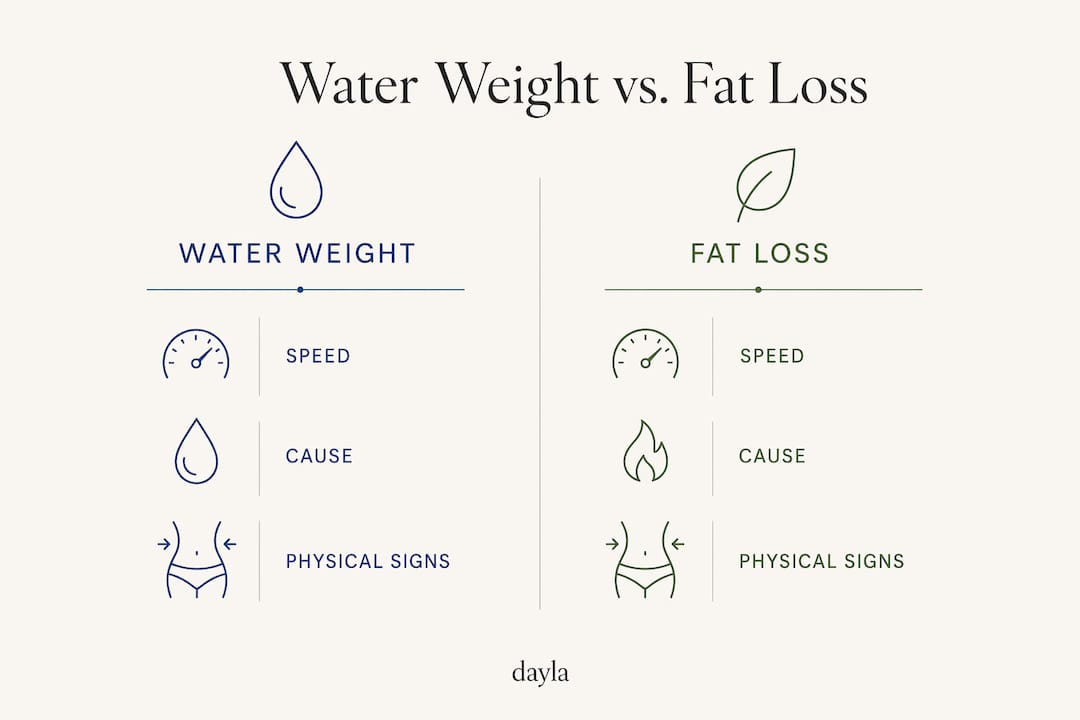
Water weight loss and fat loss are two separate biological processes. Confusing them leads to unrealistic expectations and poor decisions.
Rapid weight loss in the first days of dieting is mostly water weight, not fat. You can lose 3 to 4 pounds of water weight in just a few days by cutting carbs or sodium. Fat loss, by contrast, requires a sustained caloric deficit over weeks. Losing one pound of actual fat requires burning roughly 3,500 calories more than you consume.
There is also a phenomenon called the "woosh" effect that confuses many people tracking their progress. During active fat loss, fat cells release triglycerides through a process called lipolysis. Those emptied fat cells temporarily fill with water, masking scale changes until the body excretes that water. You may be losing fat steadily for two weeks with no scale movement, then drop two pounds overnight. The fat loss was real the whole time.
| Characteristic | Water weight loss | Fat loss |
|---|---|---|
| Speed | Days | Weeks to months |
| Cause | Glycogen, sodium, hormones | Caloric deficit |
| Permanence | Temporary, reversible | Permanent if habits hold |
| Scale impact | Large, sudden swings | Slow, gradual decline |
| Physical change | Reduced puffiness, bloating | Smaller body composition |
| Reversibility | Reverses with carbs or salt | Requires regain of fat mass |
The physical signs also differ. Water weight loss shows up as reduced puffiness in your face, hands, and ankles. Fat loss shows up as changes in clothing fit, body measurements, and body composition over time. If your ring fits looser after a low-sodium day, that is water. If your jeans fit differently after six weeks of consistent effort, that is fat.
What are safe and effective ways to lose water weight?
Reducing excess water weight does not require extreme measures. The most effective strategies work with your body's natural fluid regulation systems.
-
Reduce sodium intake. Healthy adults should limit sodium to 1,500 to 2,300 mg per day to manage fluid retention. Cut processed foods, canned soups, and restaurant meals first. These three categories account for the majority of excess sodium in the American diet.
-
Drink more water. This sounds backward, but drinking more water flushes excess sodium and supports kidney function. Your kidneys need adequate fluid to clear sodium efficiently. Aim for at least 8 cups daily, more if you exercise.
-
Reduce carbohydrate intake temporarily. Lowering carbs depletes glycogen stores, which releases the water bound to them. This is the mechanism behind the fast initial weight loss seen on ketogenic diets. It is not fat loss, but it does reduce bloating and scale weight quickly.
-
Exercise regularly. Physical activity improves circulation and encourages your lymphatic system to move fluid out of tissues. Sweating also eliminates water and sodium directly. Even a 30-minute walk improves fluid circulation noticeably.
-
Time efforts around your hormonal cycle. The early follicular phase after menstruation is the ideal window for shedding water weight. Progesterone drops after your period ends, and your body naturally releases retained fluid. Working with this cycle reduces frustration.
-
Avoid unsupervised diuretics. Using diuretics recklessly causes rebound water retention and potential kidney damage. Over-the-counter herbal diuretics carry the same risks. If a medical condition drives your fluid retention, work with a physician before using any diuretic.
Pro Tip: If you want to reduce water weight before an event, cut sodium and alcohol for 48 hours, increase water intake, and add light cardio. This combination produces the fastest and safest short-term results.
What are the signs of water weight gain and loss?
Recognizing water weight changes helps you interpret your scale accurately and avoid unnecessary panic or false confidence.
- Sudden scale jumps of 2 to 5 pounds overnight are almost always water, not fat. Fat gain of that magnitude requires consuming thousands of excess calories in one sitting.
- Puffiness in your face, fingers, or ankles signals fluid accumulation in the extremities. Your rings feeling tight in the morning is a classic sign.
- Bloating that appears and disappears within hours correlates with sodium or carbohydrate intake, not fat changes.
- Scale weight that drops sharply after starting a low-carb diet reflects glycogen and water depletion, not rapid fat loss.
- Predictable weight increases before menstruation reflect hormonal water retention, not dietary failure.
Tracking your weight at the same time each morning, after using the bathroom and before eating, gives you the most consistent data. Weekly averages tell a more accurate story than daily readings. If you see a pattern of gradual downward trend with daily fluctuations, your program is working even when individual days look discouraging.
How does understanding water weight improve your overall health?
Understanding fluid retention changes how you approach weight management entirely. Water weight is real but temporary and does not indicate fat gain or loss. This knowledge protects your motivation on hard days.
People who do not understand water weight often abandon effective programs after a discouraging weigh-in. A single high-sodium meal or a hormonal shift can add three pounds to the scale with zero fat gained. Without context, that reading feels like failure. With context, it is just biology.
"The scale measures everything: fat, muscle, water, food in transit, and bone. Fat loss is only one of those variables. Tracking water weight separately keeps your expectations grounded in reality."
Recognizing water weight also helps you avoid harmful quick fixes. Crash diets and aggressive diuretics produce dramatic short-term scale drops that are almost entirely water. The weight returns the moment normal eating resumes. Sustainable programs like realistic weight loss goals account for these fluctuations and focus on fat loss over time.
Understanding hormonal timing also lets you plan smarter. Women who track their cycle alongside their weight data can distinguish hormonal water retention from actual progress stalls. That distinction prevents unnecessary diet changes and supports long-term consistency.
Key takeaways
Water weight loss is a temporary, reversible process driven by glycogen, sodium, and hormones, and it is entirely separate from the permanent fat loss that changes your body composition.
| Point | Details |
|---|---|
| Water weight vs. fat loss | Water loss is rapid and reversible; fat loss is slow and requires a sustained caloric deficit. |
| Glycogen drives fast scale drops | Each gram of glycogen binds 3 to 4 grams of water, explaining quick losses on low-carb diets. |
| Sodium is the top daily driver | Limiting sodium to 1,500 to 2,300 mg per day reduces fluid retention effectively. |
| Hormones create predictable cycles | Progesterone before menstruation causes retention; the follicular phase is the best window for shedding it. |
| Diuretics carry real risks | Unsupervised diuretic use causes rebound retention and kidney stress; medical supervision is required. |
What I have learned about water weight after years of watching people chase the scale
Most people come to weight management focused entirely on the number on the scale. Water weight is the variable that breaks their confidence fastest. I have seen people abandon genuinely effective programs because a salty weekend added four pounds and they assumed they had failed.
The most important shift is learning to separate the signal from the noise. Daily scale weight is noisy data. Weekly averages are the signal. When you understand that glycogen, sodium, and hormones can swing your weight by several pounds with no fat change at all, the scale stops being a source of anxiety and starts being useful information.
I am also cautious about the trend toward aggressive water cutting. Herbal diuretics sold online are not harmless. They stress your kidneys, cause electrolyte imbalances, and produce rebound retention that leaves you worse off than before. Drinking more water, cutting sodium, and moving your body are the only strategies that work without a downside.
The "woosh" effect is real and worth knowing about. If you are losing fat consistently but the scale has not moved in two weeks, stay the course. Your fat cells may be holding water temporarily. The drop often comes suddenly, and it is satisfying when it does. Pair this understanding with a guide on maintaining weight loss results to keep the momentum going after the initial drop.
— Flexible
How Daylahealth supports safe, lasting weight management
Managing water weight is one piece of a larger picture. The harder work is losing fat sustainably and keeping it off.

Daylahealth offers doctor-led, personalized GLP-1 weight loss programs designed for people who want medical-grade support, not guesswork. GLP-1 medications work on appetite regulation and metabolic function, addressing the fat loss side of the equation while your body handles fluid balance naturally. Every program at Daylahealth is supervised by licensed clinicians and tailored to your health profile. If you are ready to move beyond water weight and focus on real, lasting change, explore your options at Daylahealth GLP-1 care today.
FAQ
What is water weight loss exactly?
Water weight loss is the reduction of excess fluid retained in your body's tissues, not a loss of fat. It causes rapid, temporary changes in scale weight driven by glycogen, sodium, and hormonal shifts.
Is water weight loss permanent?
Water weight loss is not permanent. The fluid returns when you eat carbohydrates, increase sodium, or experience hormonal changes. Only fat loss produces lasting changes in body composition.
How quickly can you lose water weight?
You can lose 2 to 4 pounds of water weight within a few days by reducing sodium, cutting carbohydrates, and increasing hydration. Fat loss takes weeks of sustained caloric deficit to produce the same scale change.
What causes sudden water weight gain overnight?
A high-sodium meal, a large carbohydrate intake, or a hormonal shift can add 2 to 5 pounds of water weight overnight. This is not fat gain and typically resolves within 24 to 48 hours with normal eating and adequate hydration.
Can drinking more water reduce water retention?
Drinking more water reduces fluid retention by helping your kidneys flush excess sodium. This is the hydration paradox: adequate water intake signals your body that hoarding fluid is unnecessary.