

Why men and women lose weight differently, explained
Biology, not willpower, is the primary reason men and women lose weight at different rates. Several interconnected factors drive this gap: lean muscle mass, resting metabolic rate, sex hormones, and fat storage patterns all work together to shape how each body responds to a calorie deficit.
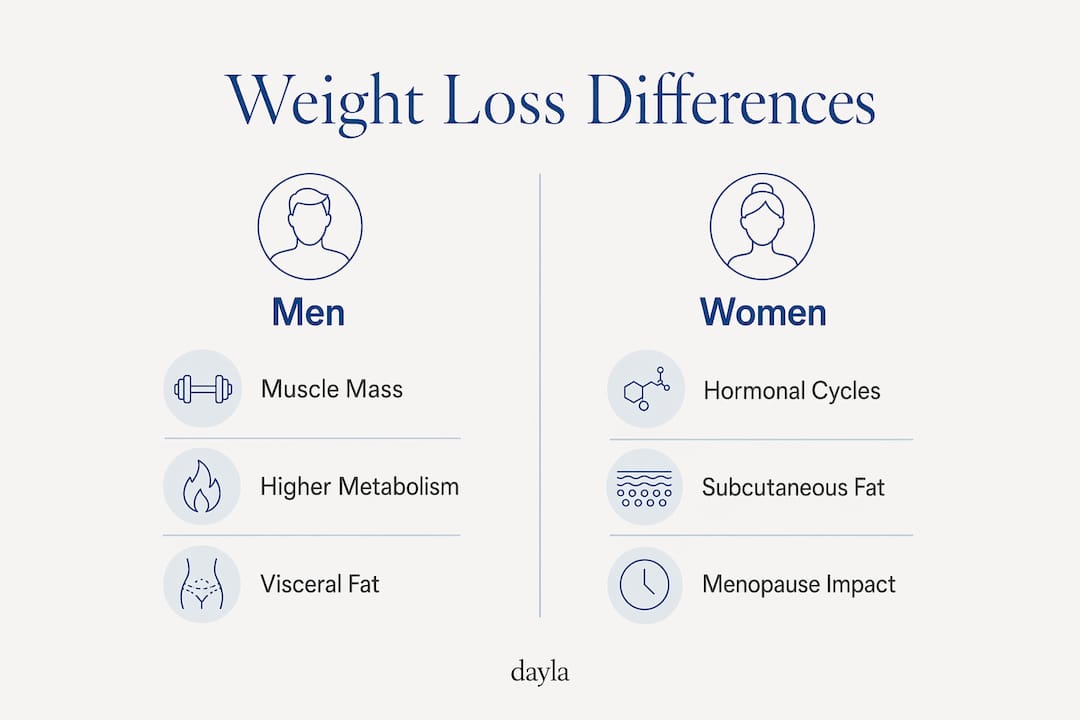
- Muscle mass advantage in men: Men carry more lean muscle, which burns more calories at rest than fat tissue does.
- Higher basal metabolic rate (BMR): Greater muscle mass directly raises BMR, so men expend more energy even without exercise.
- Hormonal regulation: Estrogen in women promotes fat storage, particularly in the hips and thighs, while testosterone in men supports fat burning and muscle retention.
- Fat distribution: Women store more subcutaneous fat; men store more visceral fat, which is metabolically active and tends to respond faster to caloric restriction.
- Percentage vs. absolute loss: Men often lose more total pounds early on, but percentage-based weight loss tends to equalize between sexes over time.
Understanding these factors is the first step toward building a plan that actually fits your biology.
How muscle mass and metabolic rate cause men to lose weight faster
Men's higher lean muscle mass is the single biggest driver of faster early weight loss. Muscle tissue demands more energy to maintain than fat tissue, so a man and a woman eating the same calorie deficit will often see different results on the scale within the first few weeks.
- Men's diet-induced thermogenesis is measurably higher after meals, meaning they burn more calories digesting the same food.
- Larger average body size means men have greater total caloric needs, so a standard deficit cuts a proportionally larger slice of their daily energy budget.
- Early weight loss in men also includes more fat-free mass, which accounts for some of the faster absolute drop on the scale.
The clinical data is clear on this. In the DiOGenes trial, men lost 12.8 kg vs. 10.1 kg for women over eight weeks on a low-calorie diet. That gap narrows considerably when results are expressed as a percentage of starting body weight.
How hormones shape fat storage and weight loss in women
Estrogen is the central player in female weight loss challenges. It actively promotes fat storage, particularly in the lower body, and its fluctuations across the menstrual cycle and into menopause create metabolic variability that men simply do not experience.
- Estrogen and fat retention: Higher estrogen levels favor subcutaneous fat accumulation in the hips and thighs, which is harder to mobilize than visceral fat.
- Testosterone's role in men: Testosterone supports lean muscle maintenance and fat oxidation, giving men a metabolic edge during caloric restriction.
- Leptin sensitivity: Women generally have higher leptin levels, but can develop leptin resistance more readily, which blunts hunger signals and complicates appetite regulation during a diet.
- Cycle-driven cravings: Premenstrual syndrome often drives increased intake of calorie-dense foods, adding variability to weekly calorie totals.
Obesity treatment works best when it accounts for sex-specific hormonal pathways rather than applying a single calorie model to everyone.
Pro Tip: If you notice your weight fluctuates by 2–4 pounds across your cycle, track a monthly average rather than a daily number. This removes hormonal water retention from the picture and gives you a cleaner read on actual fat loss progress.

Where fat is stored changes how quickly you lose it
Fat location matters as much as fat quantity when predicting how weight loss unfolds. Men and women store fat in fundamentally different depots, and those depots respond differently to a calorie deficit.
| Fat type | Primary location | Metabolic activity | Weight loss response |
|---|---|---|---|
| Visceral fat (men) | Abdomen, around organs | High | Responds quickly to caloric restriction |
| Subcutaneous fat (women) | Hips, thighs, lower body | Lower | Slower to mobilize, more stable long-term |
- Visceral fat releases fatty acids directly into the portal circulation, making it more metabolically active and faster to shrink during a diet.
- Women's subcutaneous fat reduction during weight loss is associated with better long-term metabolic health and weight maintenance, even if the scale moves more slowly.
- Men's higher visceral fat load also means they carry greater cardiometabolic risk at baseline, which is why early weight loss often produces dramatic improvements in their blood markers.
How exercise affects weight loss differently for men and women
Resistance training produces more lean mass gains in men, which compounds the metabolic advantage described above. Women respond well to both aerobic and resistance training, but the mechanisms differ.
- Men gain more muscle from the same resistance protocol, which raises their resting calorie burn over time.
- Women show strong fat loss responses to aerobic training, particularly when combined with moderate caloric restriction.
- Preserving lean mass during a diet is critical for both sexes, but women need to be especially deliberate about resistance work since they start with less muscle and lose it more readily with age.
- Practical tip for women: prioritize two to three resistance sessions per week alongside cardio, rather than cardio alone, to protect muscle and sustain metabolic rate.
- Practical tip for men: monitor fat-free mass alongside scale weight, since rapid early loss can include muscle if protein intake is too low.
Why stress and sleep hit women's weight loss harder
Cortisol, the primary stress hormone, promotes abdominal fat storage and suppresses the metabolic processes that support weight loss. Women tend to experience stronger cortisol responses to psychological stress, and sleep deprivation compounds this by disrupting appetite-regulating hormones like ghrelin and leptin.
- Chronic stress in women is more likely to trigger emotional eating, particularly of high-sugar, high-fat foods.
- Poor sleep raises ghrelin (the hunger hormone) and lowers leptin (the satiety hormone), making calorie control harder the morning after a bad night.
- Men are not immune to these effects, but the hormonal amplification in women makes sleep quality a higher-priority variable in their weight loss plans.
- Strategies that help: consistent sleep and wake times, limiting caffeine after noon, and short mindfulness or breathing practices to blunt cortisol spikes.
What recent research reveals about sex-specific metabolism in 2026
The science has moved well past "men lose weight faster." Current research shows a more nuanced picture where early male advantages give way to female strengths in the maintenance phase.
Men showed more pronounced improvements in HOMA-IR and cholesterol immediately after weight loss, reflecting their higher visceral fat burden at baseline. Women, by contrast, showed lower rebound in HDL cholesterol and triglycerides six months after the diet ended, pointing to greater metabolic stability during maintenance.
Key finding: In the DiOGenes maintenance phase, men regained 1.5 kg on average while women lost an additional 0.5 kg, suggesting women's metabolic adaptations favor long-term retention of results.
- Men lose more absolute weight early but carry a higher risk of regaining it during follow-up.
- Women show more stable cardiometabolic markers over time, which translates to sustained cardiovascular benefit.
- Behavioral adherence also differs: men tend to follow structured low-carbohydrate protocols more consistently, which inflates their early results beyond what biology alone would predict.
- Insulin sensitivity improves faster in men post-weight loss, but women's lipid profiles tend to remain more favorable during the maintenance window.
How dietary patterns affect weight loss by sex
Men and women tend to approach food differently, and those patterns interact with biology in ways that affect outcomes. Women who focused on portion control rather than eliminating food groups showed lower BMIs in research, and this approach appears more effective for women than for men. Men, on average, respond well to higher-protein, lower-carbohydrate frameworks that leverage their thermogenic advantage. Adult women generally need 1,600–2,400 calories per day, a range that narrows with age as muscle mass declines. Because men are larger on average and carry more muscle, they can sustain a larger absolute deficit without triggering the same degree of metabolic adaptation.

How age and menopause reshape women's weight loss
Menopause marks a significant metabolic shift. Declining estrogen reduces lean muscle mass, slows resting metabolism, and redirects fat storage from the hips and thighs toward the abdomen. Women gain an average of 5 pounds after menopause, and that weight tends to sit differently than pre-menopausal fat. Losing weight after menopause requires more deliberate effort: higher protein intake to counter muscle loss, consistent resistance training, and often a recalibrated calorie target that accounts for the lower BMR. Age affects men too, but the hormonal cliff of menopause creates a sharper, more sudden metabolic change than the gradual testosterone decline men experience.
Common myths about gender and weight loss, corrected
Several widely repeated beliefs about men vs. women weight loss do not hold up to scrutiny.
Myth: Men always lose weight faster than women. In absolute pounds, yes, early on. But percentage-based outcomes show no significant difference at 12 months. The gap is real but temporary.
Myth: Women's hormones make weight loss impossible. Hormones create variability, not a ceiling. The same diet and exercise strategies remain broadly effective for both sexes, even if the timeline differs.
Myth: Cardio is enough for women. Aerobic training supports fat loss, but without resistance work, women lose lean mass faster with age, which lowers their BMR and makes future weight management harder.
Myth: Men don't need to worry about weight regain. The DiOGenes data shows men regained more weight during the maintenance phase than women did. The faster start does not guarantee a better finish.
Your weight loss plan should fit your biology
If you're ready to move beyond generic advice and work with a protocol built around your physiology, Daylahealth offers doctor-led GLP-1 weight loss programs designed for exactly this kind of personalized care. Whether you're navigating hormonal shifts, a slower metabolism, or a plateau that standard diets haven't broken, Daylahealth's clinical team can match you with the right approach.

Explore GLP-1 treatment options at Daylahealth and take the first step toward a plan that accounts for how your body actually works.
Key Takeaways
Men and women lose weight differently because of measurable biological differences in muscle mass, hormones, fat distribution, and metabolic rate, though percentage-based outcomes tend to equalize over time.
| Point | Details |
|---|---|
| Men lose more absolute weight early | DiOGenes trial: men lost 12.8 kg vs. 10.1 kg for women |
| Percentage loss equalizes over time | DiOGenes trial and other studies: no significant difference in total weight loss percentage at 12 months between men and women. |
| Women have stronger maintenance results | Men regained 1.5 kg in the maintenance phase; women lost an additional 0.5 kg. |
| Menopause adds a metabolic shift | Women tend to gain weight after menopause due to hormonal shifts and muscle changes. |
| Fat location shapes the pace of loss | Visceral fat (more common in men) responds faster to restriction than subcutaneous fat. |