
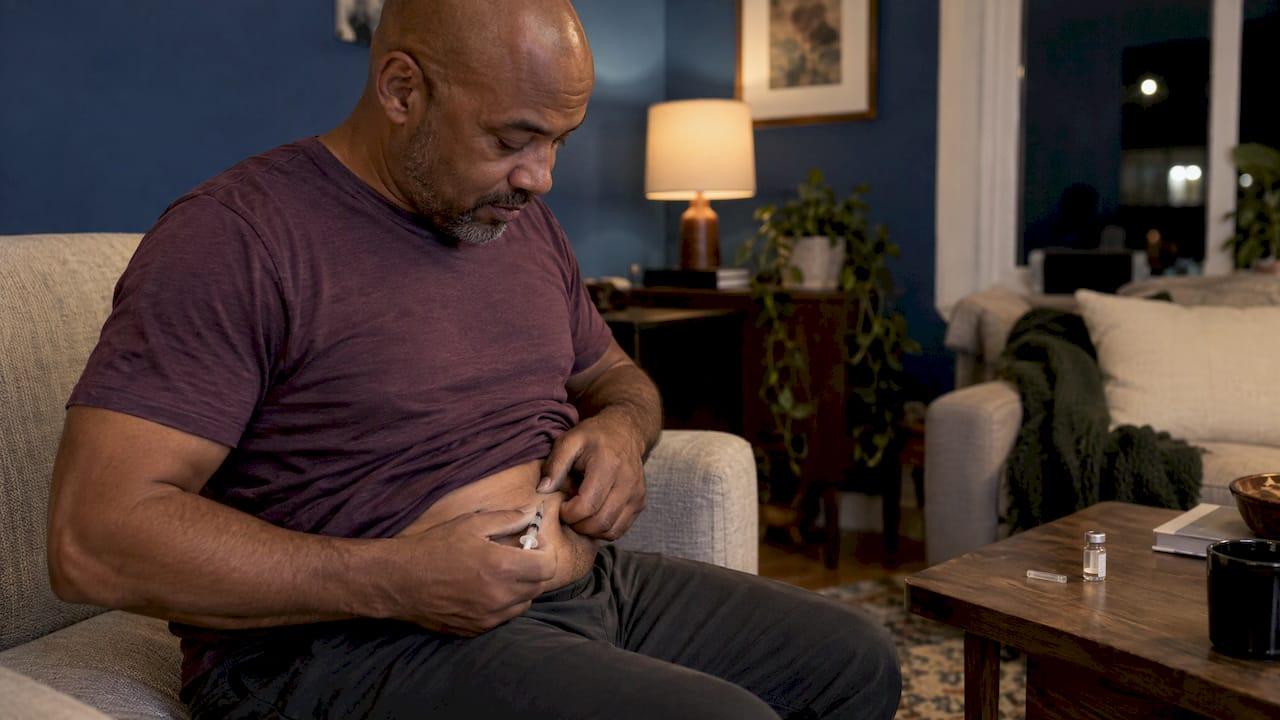
Sermorelin treatment uses a lab-made version of growth hormone-releasing hormone (GHRH) to prompt your pituitary gland to release more of its own growth hormone. It is given as a nightly injection under a clinician's direction. It was FDA-approved only for children with growth failure, and the evidence for adult weight loss or anti-aging is thin. If your main goal is losing weight, doctor-led GLP-1 care has a much stronger evidence base, and that is what we focus on at Dayla.
This guide explains how sermorelin works, what studies found, what side effects and safety limits apply, and how to approach a consultation.
TL;DR
- Sermorelin is a 29-amino-acid GHRH analogue. It stimulates your own pituitary rather than replacing growth hormone.
- The FDA approved it in 1997 for children with growth failure. It is no longer an FDA-approved product in the U.S. and is obtained through compounding pharmacies.
- In small trials of older adults, growth hormone and IGF-1 rose, but body weight and body fat did not change.
- Common side effects are mild, such as injection-site reactions and flushing. Pregnancy, allergy and untreated thyroid disease are reasons to avoid it.
- For weight loss, a clinician-supervised GLP-1 program is the better-supported route.
Table of Contents
- What sermorelin is and how GHRH therapy works
- Is sermorelin FDA-approved?
- What the evidence says about sermorelin benefits
- Who may be considered for sermorelin treatment
- What a sermorelin consultation should cover
- Sermorelin side effects and safety
- Sermorelin or GLP-1 for weight loss
- Perspective
- Doctor-led GLP-1 care from Dayla
- How to approach any compounded peptide safely
- FAQ
- Sources
What sermorelin is and how GHRH therapy works
Sermorelin is a 29-amino-acid analogue of human GHRH with fully functional GHRH activity. After a subcutaneous dose, it peaks in the blood within 5 to 20 minutes and has a half-life of only 11 to 12 minutes. That short life is why it is dosed at night, when your body's natural growth hormone pulses are strongest.
The key difference from injected growth hormone is where the signal comes from. Sermorelin binds receptors on your pituitary and increases your own growth hormone output. Release stays episodic, and negative feedback through somatostatin limits it. A pituitary-driven approach is the reason clinicians describe overdosing on endogenous growth hormone as difficult to achieve.

The same review found that sermorelin raised growth hormone without significant shifts in prolactin, LH, FSH, insulin, cortisol, glucose, glucagon or thyroid hormone levels. If you want the wider picture of how peptides compare with exogenous growth hormone, this peptide benefits and safety guide covers the basics.
Is sermorelin FDA-approved?
Sermorelin was approved in 1997 for growth retardation in children. It was discontinued in 2008 because of manufacturing difficulties, not safety issues.
Today, sermorelin is not available as an FDA-approved medication. It can be obtained from pharmacies that make individualized, compounded medications. A review of growth hormone secretagogues likewise describes sermorelin and tesamorelin as GHRH analogs that are not FDA approved and are supplied through compounding pharmacies and internet vendors.
Off-label prescribing by a licensed clinician is not prohibited by federal law. That means a prescription for adults is a clinical judgment call, which is why the evaluation matters.
Three practical points follow for any U.S. patient:
- Use a licensed prescriber who reviews your history and labs before prescribing.
- Know that the product is compounded, so the pharmacy's quality standards matter.
- Athletes should know that sermorelin is prohibited in sport.
What the evidence says about sermorelin benefits
The best-established use is in children. A 1999 review found that once-daily bedtime sermorelin was effective in treating some prepubertal children with idiopathic growth hormone deficiency. Adults with diagnosed growth hormone deficiency are also considered candidates.
For healthy adults, the data is smaller and less clear. Here is what the trials showed.
| Study | Participants | Result |
|---|---|---|
| Placebo-controlled trial, 4 weeks placebo then 16 weeks sermorelin | 10 women and 9 men, aged 55 to 71 | GH release and IGF-1 rose. Lean body mass rose 1.26 kg in men. Body weight and fat mass did not change. |
| Vittone et al., 1997, 6 weeks of 2 mg nightly | 11 healthy men, aged 64 to 76 | Mean 12-hour GH release almost doubled. No significant change in weight, BMI, waist-hip ratio, lean mass or fat mass. |
Both are summarized in a 2020 review. In the second study, IGF-1 did not rise significantly at 2 or 6 weeks.
Some people report better energy, sleep, lean mass and vitality. Robust clinical evidence for anti-aging effects is lacking. Alexander Pastuszak, a urologist and men's health researcher at the University of Utah, told Scientific American that there are no large randomized trials in healthy adults testing body composition, performance or longevity.
Does sermorelin burn belly fat?
In the trials above, body fat mass did not change. If you are looking for meaningful, measurable weight loss, sermorelin is not the tool the data points to. Our overview of FDA-approved weight loss medications lays out the options that have been tested for that outcome.
Who may be considered for sermorelin treatment
The primary candidates are children and youths with below-average growth from growth hormone deficiency. Adults with diagnosed deficiency may also benefit. Adults seeking general wellness are a different case. A prescriber decides whether treatment is appropriate, and the decision rests on your history and lab work.
Some conditions mean you should avoid sermorelin or get extra screening first. One safety overview lists allergy to sermorelin, untreated hypothyroidism, and pregnancy or breastfeeding. Tell the prescriber about any pituitary disease, active cancer, diabetes or prediabetes, and liver or kidney problems.
What a sermorelin consultation should cover
A proper consultation is a medical evaluation, not a sales call. Expect these elements:
- Goals and history. What you want to change, your medications, and any hormone-related conditions.
- Baseline labs. Clinicians typically review IGF-1, glucose, thyroid function and similar markers before starting, since baseline testing can reveal liver or kidney problems that need further evaluation.
- Dosing plan. The doctor sets the dose and treatment length based on individual factors. Sermorelin is given once daily, ideally at night, by subcutaneous injection.
- Follow-up. Repeat labs and symptom review so the plan can be adjusted or stopped.
Is three months enough?
There is no standard answer. The adult trials ran from 6 to 20 weeks, and none showed a change in body weight or fat in that window. The length of treatment is a decision for your prescriber, based on your labs and goals, not a fixed course.
Sermorelin side effects and safety
Reported short-term effects have generally been mild and self-limiting. They include redness, pain or swelling at the injection site, flushing, headache, nausea and dizziness. Rare allergic reactions can occur. Changes in fasting glucose or insulin sensitivity, and fluid retention, have also been reported.
A few points to keep in view:
- Long-term data is limited. Published studies are mostly short and small, and focus on pediatric deficiency or short-term adult tolerability.
- Cautions apply. These include pregnancy, breastfeeding, hypersensitivity, significant pituitary disease, uncontrolled thyroid disease, diabetes or prediabetes, and significant liver or kidney impairment.
- Seek urgent care for allergic symptoms. Hives, swelling of the face or throat, or trouble breathing after an injection need emergency attention.
Is sermorelin hard on your liver?
The available guidance does not describe sermorelin as a liver toxin. It does say that liver and kidney impairment may affect clearance and IGF-1 production, so caution is advised if you have significant impairment. Tell your prescriber about any liver condition and let baseline labs guide the decision.
Product quality matters
Quality is a safety issue with injectables. A recent analysis, not yet peer-reviewed, found that roughly 40 to 70 percent of gray-market peptide samples tested, including sermorelin, failed basic quality criteria. Injections go straight into the bloodstream, which raises the stakes. The practical lesson is to avoid gray-market vials and use medication dispensed through a licensed prescriber and pharmacy.
If you are comparing other growth-hormone-related peptides, our guides to ipamorelin and to CJC-1295/ipamorelin versus tesamorelin explain how they differ.
Sermorelin or GLP-1 for weight loss
The two do different jobs. Sermorelin acts on the growth hormone axis, and in the trials above it did not change body weight or fat. GLP-1 medications act on appetite and blood sugar pathways and are the class built around weight management. For readers whose goal is fat loss, we recommend starting with a GLP-1 evaluation. Our article on how GLP-1 affects longevity markers covers the wider health picture for readers interested in both topics.
Perspective
At Dayla, we see two kinds of readers searching for sermorelin. Some want better body composition. Others want to feel better as they age. Both deserve a doctor-led plan, not a vial from an unknown source.
Our approach to personalized GLP-1 care starts with a clinician evaluation, followed by medication, dietitian visits and care coaching. We built it that way because lasting results come from medical oversight and support, not from the medication alone.
For weight loss, we believe the most dependable path is a GLP-1 program with a clinician who adjusts your plan over time. We offer injection, microdose and needle-free oral options, so the delivery fits your life. Our pricing is transparent and cash-based, with no membership fees and flexible cancellation.
If you are also curious about compounded peptides, we can talk through your goals and history during your evaluation.
Flexible
Doctor-led GLP-1 care from Dayla
If your goal is weight loss, our programs combine clinician evaluation, prescription medication, care coaching and nationwide shipping, with no insurance required. Plans on our site are published as follows:
- GLP-1 Injection, from $179 per month
- GLP-1 Microdose, from $159 per month
- Oral GLP · Liposomal, from $149 per month
- dayla GLP-1 program, $299 per month
Dietitian visits are free, and you can cancel flexibly. Your clinician reviews your intake before approving a prescription.
If you want to see how pricing works for a specific medication, our guide to semaglutide cost in the USA breaks it down. You can also review our semaglutide injection maintenance dose page.
How to approach any compounded peptide safely
Whatever you are considering, these steps protect you:
- Get a real evaluation. A licensed clinician should review your history, medications and labs before prescribing.
- Confirm the source. Medication should come from a licensed pharmacy and be dispensed under a prescription.
- Understand the regulatory status. Compounded drugs are not FDA-approved products. Our checklists on verifying compounded semaglutide safety and compounded semaglutide ingredients show how to read labels and FDA warnings, and the same habits apply to any compounded product.
- Plan follow-up. Agree on when labs are repeated and what would prompt a change in dose or a stop.
- Report symptoms. Contact your prescriber about persistent headaches, swelling, joint pain, or changes in blood sugar.
FAQ
What are the downsides of taking sermorelin?
Most reported side effects are mild, such as injection-site redness, flushing, headache and nausea. Long-term data in healthy adults is limited, and it is compounded rather than FDA-approved. People who are pregnant or breastfeeding, allergic to it, or have untreated thyroid disease should avoid it.
Does sermorelin really burn belly fat?
Human trials in older adults found rising growth hormone but no change in body weight or fat mass. Lean mass rose in men in one trial. For fat loss, a clinician-supervised GLP-1 plan is the better-supported option.
Is sermorelin the same as HGH?
No. HGH is growth hormone itself. Sermorelin prompts your pituitary to release your own growth hormone, and natural feedback controls how much is released. That feedback is the main reason clinicians view it differently from injected growth hormone.
Do I need a prescription for sermorelin?
Yes. In the U.S. it is available only through a prescription filled by a compounding pharmacy. A licensed clinician must evaluate you first and set the dose and duration.
Sources
- Growth hormone secretagogues: history, mechanism of action (Wiley, 2020)
- Sermorelin: A better approach to management of adult-onset growth hormone insufficiency (PMC)
- Beyond the androgen receptor: the role of growth hormone (PMC, 2020)
- What Should Athletes Know About Sermorelin? (USADA)
- Sermorelin Therapy Benefits, Risks, Uses, Approval (Healthline)
- The Safety and Efficacy of Growth Hormone Secretagogues (PMC, 2017)
- Growth hormone peptides promise to stall aging (Scientific American, 2026)
- Is Sermorelin Safe? An Evidence-Based Safety Review (Policy Lab)