
Compounded semaglutide safety remains a real concern for US patients: these products carry documented risks including dosing errors, contamination, and fraudulent labeling that FDA-approved versions do not share. If you're using or considering a compounded formulation, verify the prescribing clinician and the pharmacy before your next dose, and talk to your clinician about whether it's the right option for you.
TL;DR:
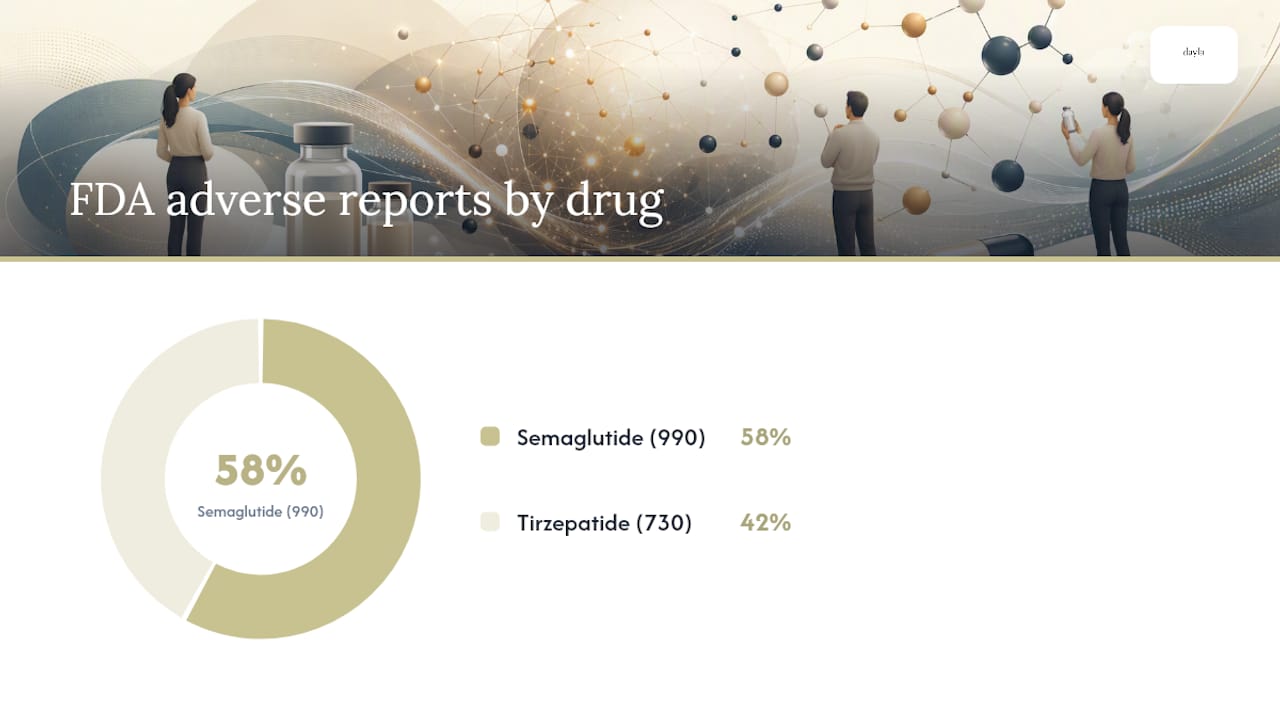
- Over 990 adverse event reports have been linked to compounded semaglutide, with the true number likely higher due to underreporting from some pharmacies.
- Dosing errors from manual measurement and contamination risks are common, often leading to severe gastrointestinal distress or dehydration requiring hospitalization.
- Compounded semaglutide lacks the testing and quality controls of FDA-approved versions, with salt forms and added ingredients introducing further pharmacological uncertainty.
- FDA guidance restricts compounding to shortages, but the recent resolution of semaglutide supply issues narrows legal justification for most compounded products.
- Verifying pharmacy licensing, accreditation, batch testing, and avoiding unapproved delivery methods are crucial steps to avoid unsafe or fraudulent compounded semaglutide products.
Table of Contents
- How Serious Is the Compounded Semaglutide Safety Problem?
- Why Compounded Semaglutide Isn't the Same as the FDA-Approved Version
- What's FDA's Current Position on Compounded GLP-1s?
- How Do You Spot a Fraudulent or Unsafe Compounded Semaglutide Product?
- What Should You Do If You're Already Taking Compounded Semaglutide?
- Our Take on Where Compounded Semaglutide Safety Really Breaks Down
- A Medically Supervised Path to GLP-1 Care
- Sources
- FAQ
How Serious Is the Compounded Semaglutide Safety Problem?
The scale of harm shows up in FDA's own adverse event data. The agency has logged 990 adverse event reports tied to compounded semaglutide, plus more than 730 for compounded tirzepatide. FDA itself notes these numbers likely undercount the real total, because some state-licensed pharmacies aren't required to report adverse events at all.
That gap matters more than it sounds. It means the true injury rate is probably higher than what's on record, and patients experiencing side effects may have no clear channel reporting back to federal regulators in the first place.
What the harms actually look like:
- Dosing errors from manual measurement, sometimes resulting in patients injecting far more than intended
- Gastrointestinal distress severe enough to require emergency care
- Dehydration serious enough to trigger hospitalization
- Rare, but documented cases of pancreatitis linked to inconsistent potency
Clinicians at Stanford Medicine point to a specific mechanical cause behind many of these events: multidose vials require patients to draw their own dose with a syringe, rather than relying on a prefilled pen with a fixed, tested amount. A vial that's slightly more concentrated than labeled, combined with a patient measuring by hand, creates a dosing error before the needle even goes in.
Contamination adds a second layer of risk. Compounding pharmacies operate at a smaller scale than pharmaceutical manufacturers, and pharmacy guidance from the University of Illinois Chicago flags sterility and potency consistency as ongoing concerns across the compounding sector. A vial that isn't sterile can introduce infection at the injection site or systemically. A vial that's under or over potent changes how your body responds, sometimes without you knowing until symptoms appear.
If you've noticed unusual bruising, swelling, or a reaction that feels different from what you expected, that's worth flagging to your clinician immediately rather than waiting it out.
Why Compounded Semaglutide Isn't the Same as the FDA-Approved Version
The active molecule might be chemically similar, but "similar" isn't the same as "equivalent." FDA-approved semaglutide products go through current Good Manufacturing Practice, or cGMP, standards. That means every batch is tested for potency, sterility, and consistency before it ever reaches a pharmacy shelf.
Compounded versions don't go through that same process. They're made under one of two pathways: 503A, which covers pharmacies compounding for individual patients based on a specific prescription, or 503B, which covers larger outsourcing facilities producing in bulk under somewhat stricter oversight. Neither pathway requires the same premarket testing and approval that branded semaglutide products undergo.
A few specific differences drive most of the safety concern:
- Salt forms versus the base compound. Some compounders use semaglutide sodium or semaglutide acetate instead of the base molecule used in FDA-approved drugs. A peer-reviewed review published on PMC documents that these salt-form substitutions haven't gone through the clinical trials that establish how the body absorbs and processes them, which introduces real pharmacologic uncertainty.
- Added ingredients. Some compounded formulas mix in B12, B6, or carnitine, marketed as boosting results. These additions change the chemistry of the product in ways that haven't been studied in combination with semaglutide.
- Delivery format. Branded semaglutide ships in prefilled, pretested pens. Compounded versions often ship in multidose vials that require manual measurement, the exact mechanism behind many documented dosing errors.
Before starting or continuing a compounded product, it's worth checking whether you're being prescribed the base compound or a salt form, since that single detail changes how the drug behaves in your system.
What's FDA's Current Position on Compounded GLP-1s?
FDA has been direct about where it stands: compounding is meant to fill a specific gap, not serve as a long-term alternative to approved medication. Agency guidance states plainly that compounding is appropriate only when an FDA-approved drug can't meet a patient's medical need or isn't available, typically during an official shortage.
That shortage designation is exactly what's shifted. Semaglutide and tirzepatide shortages that once justified widespread compounding have been resolved, which narrows the legal basis compounders can rely on going forward.
Where enforcement stands right now:
- FDA has issued warning letters to compounders continuing to produce these drugs outside the narrow exceptions that remain
- The agency has proposed excluding semaglutide and tirzepatide from bulk drug substance lists, which would further restrict certain compounding pathways
- FDA continues to warn that unapproved GLP-1 products pose real safety risks, citing the adverse event totals above as evidence
- State boards of pharmacy retain authority to license, inspect, and discipline compounding pharmacies operating within their jurisdiction, separate from federal action
For patients, this means the legal ground compounded semaglutide stands on is shrinking, not expanding. A pharmacy that could legally compound semaglutide during the shortage may no longer have that justification today.
How Do You Spot a Fraudulent or Unsafe Compounded Semaglutide Product?
Certain warning signs show up again and again in cases involving unsafe compounded products. Watch for any pharmacy or seller that doesn't require a prescription, ships from outside the US, sends packaging with foreign-language labeling and no visible expiration date, or offers unusual delivery forms like sublingual drops or dissolvable tablets that don't match how semaglutide is meant to be administered.
If you're evaluating a pharmacy or an offer that's already in hand, work through this verification checklist:
- Confirm the pharmacy's state license through your state board of pharmacy's public lookup tool.
- Check for PCAB accreditation, a voluntary quality standard that signals a pharmacy has passed independent inspection.
- Ask whether the pharmacy operates under 503B registration, which involves more oversight than standard 503A compounding.
- Request a certificate of analysis or batch testing results confirming potency and sterility.
- Get written dosing instructions tied to documented clinician oversight, not a generic insert.
Pro Tip: Keep a photo of the vial label, lot number, and any paperwork before you administer a single dose. If something goes wrong, that documentation is what your clinician and, if necessary, FDA MedWatch will need to trace the problem back to its source.
If you experience a severe reaction, contact emergency services first. For anything short of an emergency, report the product to FDA MedWatch and notify your state board of pharmacy.
What Should You Do If You're Already Taking Compounded Semaglutide?
Stopping cold isn't always the right move, and neither is continuing without a closer look. The first step is confirmation: ask your pharmacy for the product's lot number, a certificate of analysis, and a clear statement of whether you're receiving the base compound or a salt form. That single piece of information determines a lot about what you're actually injecting.
From there, a few clinical precautions matter more than people expect:
- Have your first dose, or any dose after a formulation change, administered under supervision rather than alone at home
- Ask for a written titration schedule instead of verbal instructions you have to remember
- Request baseline labs, including glucose and kidney function, especially if you've had any GI symptoms
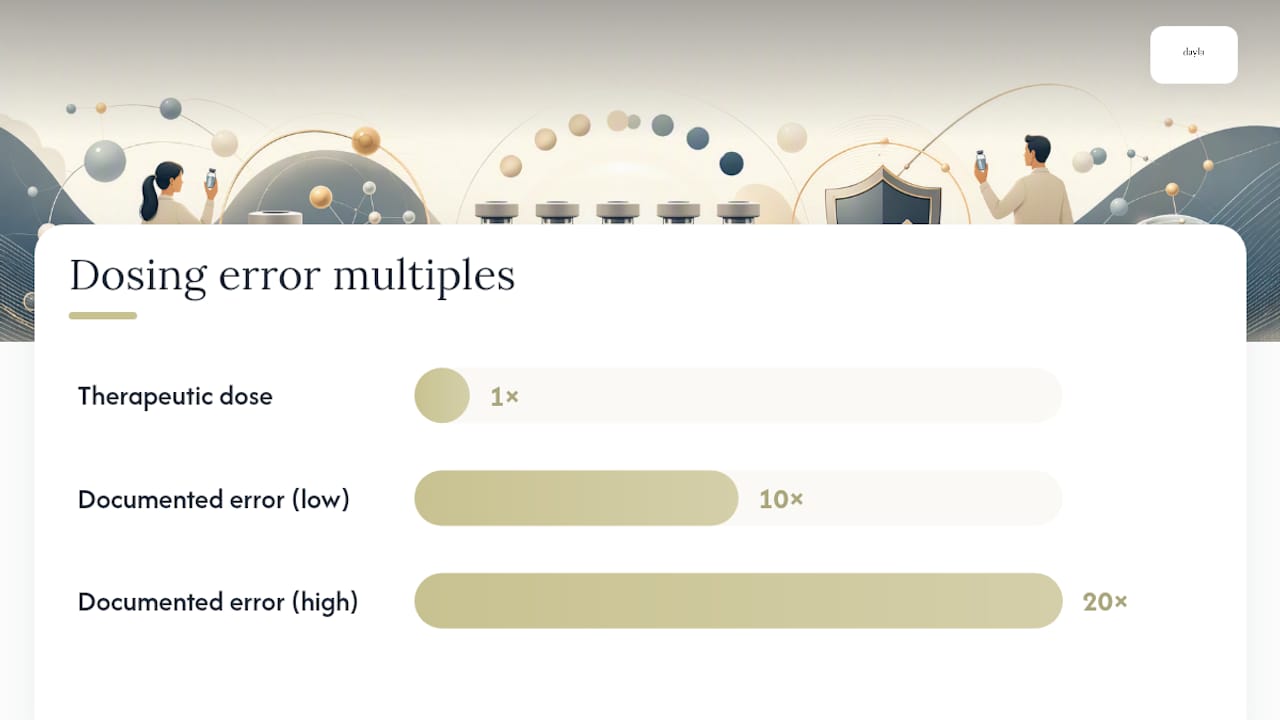
- Learn the warning signs of dehydration and pancreatitis, since Stanford Medicine's reporting has documented dosing mistakes where patients injected 10 to 20 times their intended dose after drawing incorrectly from a multidose vial
That last figure is worth sitting with. A dosing error of that scale isn't a rounding mistake, it's the difference between a therapeutic dose and a dangerous one, and it happens because manual measurement leaves no safeguard the way a prefilled pen does. If you've been self-injecting from a multidose vial, review your technique with a clinician rather than assuming you've been doing it correctly.
If you and your clinician decide to move to an FDA-approved product, don't treat the switch as automatic. Dose equivalence between compounded and branded formulations isn't standardized, so insist on a supervised transition with a documented titration plan rather than simply substituting one for the other at the same number on the syringe.
Our Take on Where Compounded Semaglutide Safety Really Breaks Down
The debate over compounded semaglutide gets framed as approved versus unapproved, safe versus unsafe. That framing misses the actual failure point. The molecule itself often isn't the problem. The absence of standardized manufacturing, testing, and dosing controls is what turns a legitimate medical need into a gamble.
We think the more useful question isn't "is compounding inherently dangerous," because compounding exists for good medical reasons and has for decades. The real question is whether the specific pharmacy behind your prescription has the testing, accreditation, and oversight to make that molecule behave predictably in your body. Most patients never ask that question because they assume any pharmacy filling a prescription has already cleared that bar. It hasn't, unless you check.
Clinician oversight is the variable that actually protects patients, more than the compounding pathway itself. Supervised titration, verified pharmacy sourcing, and clear documentation close most of the gap between compounded risk and approved-product reliability. Skip that oversight, and even a chemically accurate compound can become dangerous through nothing more than a measuring error.
A Medically Supervised Path to GLP-1 Care
Our service is built around the exact gap this article covers: clinician oversight from the first dose to the last refill, rather than just receiving a vial with a printed instruction sheet. Plans include clinician evaluation before prescribing, ongoing dietitian consults, and access to a care team if any issues arise after dosing.
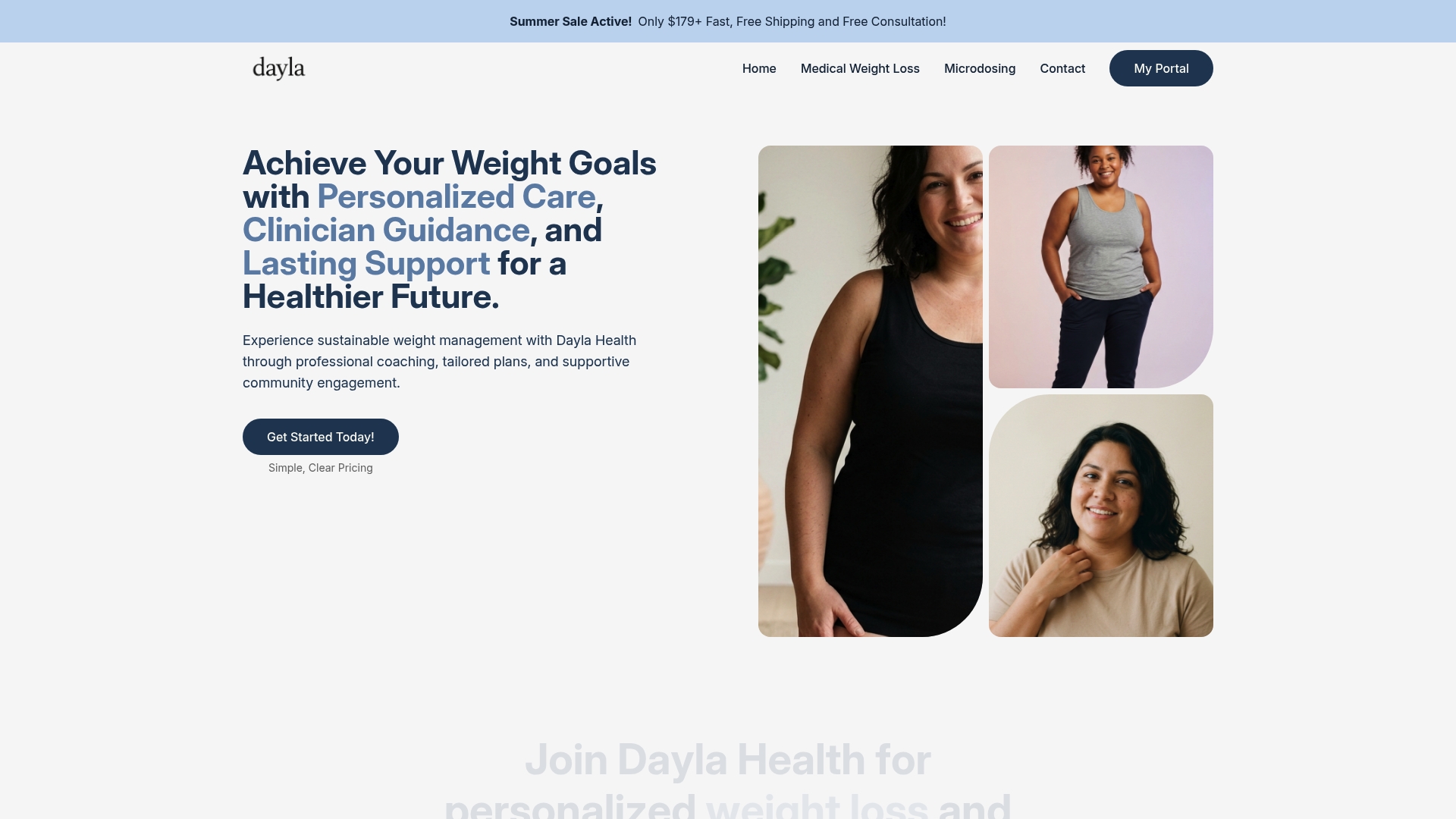
Pharmacy partnerships are verified, dosing schedules are documented, and manual measurement from untracked vials is avoided. Both injection and needle-free oral GLP-1 options are offered, with transparent cash pricing and no membership fees, allowing flexibility in plans. Options include the GLP-1 Injection plan starting at $179 a month, GLP-1 Microdose starting at $159, and Oral GLP · Liposomal starting at $149, all with flexible cancellation.
If you're currently using a compounded product and unsure about what's actually in the vial, start with a clinician evaluation instead of guessing. Begin your intake with Daylahealth and get a supervised plan built around a pharmacy partner you can verify.
This article is general information, not a substitute for advice from a qualified doctor. Consult a qualified healthcare professional about your own circumstances before acting on anything here.
Sources
- FDA’s Concerns with Unapproved GLP-1 Drugs Used for Weight Loss
- Compounded GLP-1s: Why doctors worry and the FDA is cracking down (Stanford Medicine)
- Global rise of compounded weight-loss medicines: a worrisome trend (PMC)
- What Are the Safety Concerns Regarding Compounded GLP-1 Receptor Agonists? (UIC / DIG Pharmacy)
FAQ
Can You Still Get Compounded Semaglutide in the US?
Yes, but only under narrower conditions than before. FDA guidance limits compounding to situations where an FDA-approved product can't meet a specific patient's medical need, and the resolution of the semaglutide shortage has removed one of the broadest justifications compounders relied on.
Is FDA Going to Stop Compounded Semaglutide Entirely?
FDA hasn't banned compounded semaglutide outright, but it has issued warning letters and proposed excluding semaglutide from bulk drug substance lists, both of which would further restrict who can legally compound it.
Is Compounded Semaglutide Safer Than Ozempic?
No. FDA-approved products like Ozempic go through cGMP manufacturing with mandatory potency and sterility testing that compounded versions don't undergo, and FDA's own adverse event data reflects that gap in oversight.
What Are the Most Common Side Effects to Watch For?
Nausea, gastrointestinal distress, and dehydration are the most frequently reported issues, with rare but serious cases involving pancreatitis or hospitalization tied to dosing inconsistencies in compounded products.
How Much Does Daylahealth's GLP-1 Program Cost?
Daylahealth's plans start at $149 a month for Oral GLP · Liposomal, $159 for GLP-1 Microdose, and $179 for GLP-1 Injection, with current pricing and plan details available on the Daylahealth site.