

No. The semaglutide used in FDA-approved drugs is the base form, and some compounded products use salt forms that the FDA says are not the same active ingredient. That distinction affects how a peptide dissolves, how stable it stays, and how it behaves once injected. For patients, the practical takeaway is straightforward: verify what's actually in your syringe before you use it.
TL;DR:
- Salt forms of semaglutide, such as sodium or acetate, have no confirmed human safety or efficacy data compared to the FDA-approved base form.
- Using salt forms in compounding drugs violates FDA regulations because they replace the active ingredient with a chemically different salt, risking unpredictable effects.
- Verify whether a product contains the base molecule or a salt in writing, and request a certificate of analysis before use, to ensure safety and potency.
- There is currently no clinical evidence demonstrating bioequivalence between salt forms and the base, raising concerns about dosing accuracy, onset, and duration effects.
- Manufacturing and labeling risks, including contamination and undisclosed ingredient sourcing, compound the safety issues associated with unapproved salt-based semaglutide products.
Table of Contents
- Semaglutide Base vs Salt: The Chemical Difference That Changes Everything
- What Is the FDA's Position on Compounded Semaglutide Salts?
- Is There Clinical Evidence Comparing Semaglutide Salts to the Base Form?
- Sterility, Potency, and Labeling Risks in Compounded Salt Products
- How Do You Verify a Semaglutide Product Is Safe Before Use?
- Dayla Health's Clinical Model for Sourcing Semaglutide Safely
- A Clinician-Minded Take on Cost Pressure vs Safety
- Get a Lawful, Clinician-Supervised Semaglutide Prescription
- Sources
Semaglutide Base vs Salt: The Chemical Difference That Changes Everything
Semaglutide base is the molecule that Novo Nordisk validated in clinical trials and that the FDA approved in Ozempic, Wegovy, and Rybelsus. A salt form, like semaglutide sodium or semaglutide acetate, is chemically the same core peptide bonded to a different ion. That sounds like a minor tweak. It isn't always one.
Salt formation is a standard pharmaceutical technique. Manufacturers use it constantly to improve solubility, extend shelf stability, or make a compound easier to manufacture. For many small-molecule drugs, switching between a base and a salt changes very little about how the body absorbs and processes it. Semaglutide is not a small molecule. It's a peptide, a chain of amino acids folded into a specific shape that determines how it binds to GLP-1 receptors. Altering the counterion attached to that peptide can shift:
- Solubility — how readily the compound dissolves in the buffer solution used for injection
- Stability — how well the peptide resists degradation during storage, shipping, and shelf life
- Absorption rate — how quickly and completely the compound reaches the bloodstream after subcutaneous injection
For some drug classes, formulation differences genuinely wash out in the body. For semaglutide, the honest answer is that nobody has published the human data needed to say that with confidence. That gap is exactly why the FDA has drawn a firm line between the two forms rather than treating them as interchangeable.
Formulation differences matter most when a drug has a narrow therapeutic window, requires precise titration, or depends on sustained receptor binding for its effect, all of which describe semaglutide. A peptide drug engineered for once-weekly dosing depends on predictable absorption. Change the salt, and you may change the timing.
What Is the FDA's Position on Compounded Semaglutide Salts?
The FDA has been explicit: semaglutide sodium and semaglutide acetate are different active ingredients than the semaglutide base found in approved drugs, and the agency says it has no information showing these salts are pharmacologically equivalent. In its public safety communication on unapproved GLP-1 drugs, the agency advises against using salt forms in compounding altogether.
Understanding why requires a quick look at how compounding pharmacies operate under US law. Two sections of the Federal Food, Drug, and Cosmetic Act govern this space:
- Section 503A covers traditional compounding pharmacies that prepare patient-specific prescriptions, generally in smaller batches, under state pharmacy board oversight.
- Section 503B covers larger outsourcing facilities that can produce compounded drugs in bulk, without individual prescriptions, but must register with the FDA and follow current good manufacturing practice standards.
Both pathways allow compounding of a drug that's in shortage or otherwise unavailable, but only using the same active ingredient as the approved product, not a chemically distinct salt. Using semaglutide sodium or acetate as a substitute doesn't just skip a regulatory formality. It swaps the active ingredient itself, which undercuts the legal shortage exception that let compounders make semaglutide in the first place. That's a major reason the FDA has issued warning letters to pharmacies and outsourcing facilities producing salt-form products, and why some state boards have taken separate enforcement action.
Pro Tip: Ask any compounding pharmacy directly whether their product uses semaglutide base or a salt form, and ask for it in writing. A pharmacy confident in its sourcing will answer without hesitation.
Before accepting a compounded product, verify the facility's registration status. You can search the FDA's 503B outsourcing facility list or ask your state pharmacy board whether a 503A pharmacy is in good standing, and request a certificate of analysis confirming both potency and sterility testing.
Is There Clinical Evidence Comparing Semaglutide Salts to the Base Form?
Not in humans, and that gap is the crux of the entire debate. Approved semaglutide formulations carry extensive label data. DailyMed's product labeling for Wegovy documents dosing schedules, titration steps, contraindications, and monitoring guidance built on the trials Novo Nordisk ran to win approval. Every milligram, injection interval, and safety warning on that label reflects data collected on the base molecule specifically.
No published human pharmacokinetic or bioequivalence study directly compares semaglutide sodium or semaglutide acetate to semaglutide base. That's not a minor citation gap. A review addressing this absence notes plainly that the safety and efficacy of salt forms remain unproven in humans because that head-to-head data simply doesn't exist yet.
This absence has real consequences for patients:
- Dosing accuracy becomes uncertain when the compound's potency per milligram hasn't been validated against the base.
- Onset and duration of the drug's effect may differ if absorption rates change, throwing off the once-weekly rhythm patients rely on.
- Monitoring needs increase because clinicians can't predict blood glucose or appetite response with the same confidence they have for approved products.
It's worth noting that bioequivalence testing is entirely possible for semaglutide when someone actually does it. A bioequivalence study of second-generation oral semaglutide confirmed comparable pharmacokinetics for a reformulated oral version, proving the science exists to validate formulation changes properly. That same rigor has never been applied to the salt forms circulating through some compounding channels. The gap sits heaviest for patients using insulin concurrently, where unpredictable absorption raises hypoglycemia risk, and for anyone who is pregnant or planning pregnancy, where semaglutide of any form carries its own separate warnings.
Sterility, Potency, and Labeling Risks in Compounded Salt Products
Formulation uncertainty is only half the safety picture. The other half is manufacturing quality, and it's where things get concrete fast. FDA guidance and warning letters concerning compounded drugs have flagged real, documented problems at some facilities, including contamination risks during sterile preparation, inconsistent potency between batches, and labeling that doesn't disclose whether the product contains base or salt at all.
Stack those manufacturing risks on top of an unvalidated formulation and the math gets uncomfortable:
- A product might be labeled "semaglutide" with no indication it's actually a sodium or acetate salt.
- Potency can vary batch to batch without the sterility and quality testing that approved manufacturing lines run as standard practice.
- Undisclosed ingredient sourcing means your clinician can't properly counsel you on expected response or side effects.
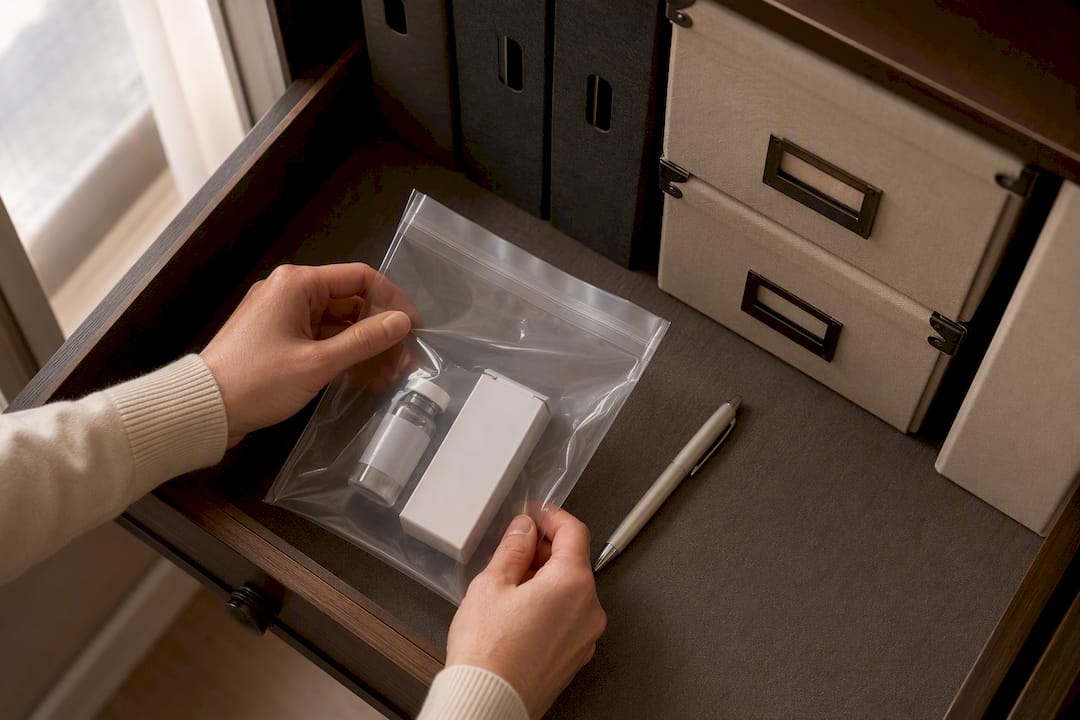
If you believe you've already received a salt-form or unlabeled product, contact your prescribing clinician immediately and don't administer another dose until you've confirmed what's actually in the vial.
Pro Tip: Save the vial label, box, and any paperwork from a compounded prescription. If a safety issue arises, that documentation is exactly what your clinician and the FDA will need to trace the batch.
How Do You Verify a Semaglutide Product Is Safe Before Use?
Run through this checklist with any pharmacy, telehealth provider, or clinic before you accept a semaglutide prescription:
- Confirm the active ingredient explicitly. Ask whether the product is semaglutide base or a salt form, and get the answer in writing.
- Request a certificate of analysis. This document should confirm potency testing and sterility testing specific to that batch.
- Verify pharmacy registration. Confirm whether you're dealing with a 503A compounding pharmacy or a 503B outsourcing facility, and check that registration status independently.
- Ask about lot tracing and lab testing. A legitimate provider can tell you which lab performed quality testing and produce documentation on request.
| Watch for this red flag | What it usually means |
|---|---|
| Reluctance to name the active ingredient | Product may be a salt form, undisclosed |
| No certificate of analysis available | Potency and sterility are unverified |
| Price far below approved product cost | Possible corners cut in sourcing or testing |
| No clinician follow-up scheduled | Monitoring gap during an unvalidated formulation |
If a provider hesitates on any of these, treat that as your answer. When in doubt, ask for an FDA-approved product, obtainable through a standard prescription pathway with your insurance or through a cash-pay clinical service. If you suspect you've already been given a salt-form product, report it to the FDA's MedWatch program and contact your provider without delay.
Dayla Health's Clinical Model for Sourcing Semaglutide Safely
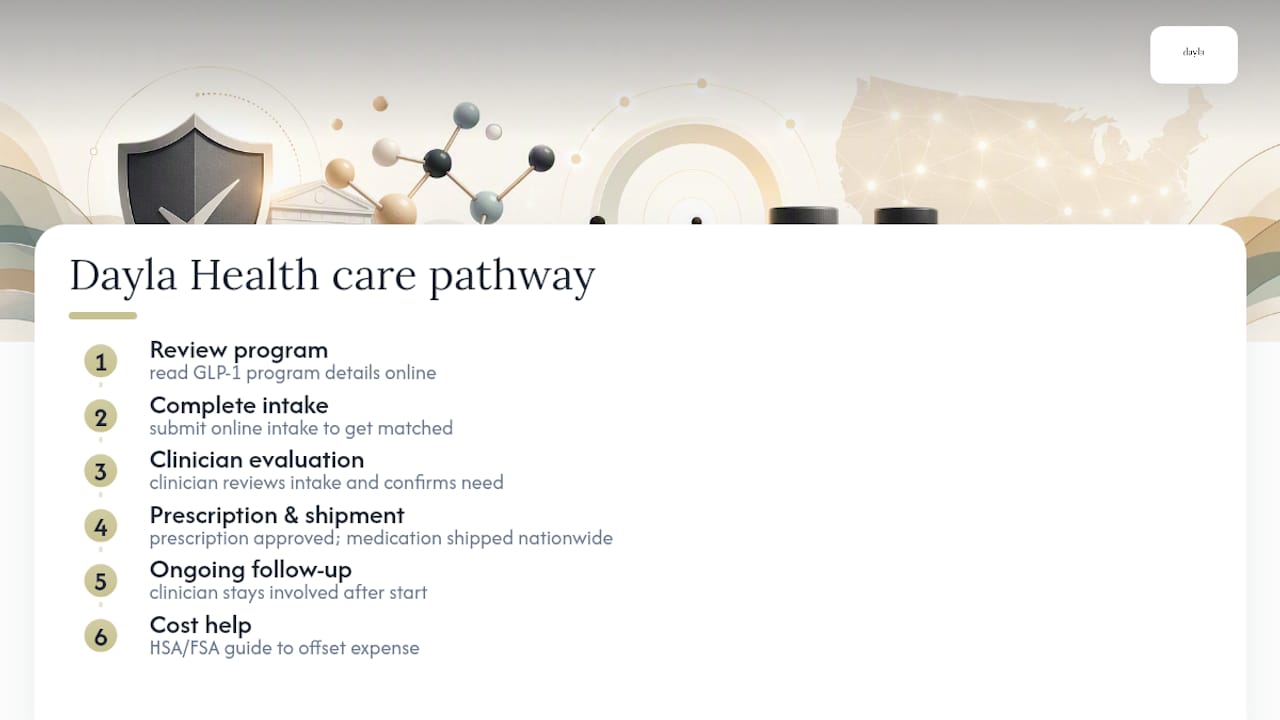
Dayla Health pairs every semaglutide and peptide prescription with a clinician-led evaluation and ongoing follow-up, so dosing decisions rest on your health history, not guesswork. Patients get access to internal guides covering injection technique, titration schedules, and HSA/FSA payment options. Regulated sourcing paired with clinical oversight directly addresses the formulation and manufacturing risks outlined above.
A Clinician-Minded Take on Cost Pressure vs Safety
The pull toward cheaper compounded semaglutide is real, and I understand why cost drives so many patients toward unverified products. But an unvalidated salt form isn't a bargain if it doesn't work the way the base does, or worse, doesn't work at all. If cost is the barrier, look into HSA or FSA coverage before you gamble on an unproven formulation, and talk to a clinician who can evaluate your specific situation.
— Flexible
Get a Lawful, Clinician-Supervised Semaglutide Prescription
Dayla Health runs its GLP-1 program the way this article argues you should demand from any provider: a clinician evaluates your intake, approves your prescription, and stays involved through ongoing follow-up, with your medication shipped nationwide.
 That model sidesteps the exact risks covered above. No guessing about base versus salt, no unverified compounding facility, no mystery certificate of analysis. If cost is the concern keeping you away from an FDA-approved pathway, Dayla Health's HSA and FSA payment guide walks through how to offset the expense. Start by reviewing the Dayla Health GLP-1 program and completing the online intake to get matched with a clinician who can confirm the right formulation and dose for you.
This article is general information, not a substitute for advice from a qualified doctor. Consult a qualified healthcare professional about your own circumstances before acting on anything here.
Sources
- FDA’s Concerns with Unapproved GLP‑1 Drugs Used for Weight Loss
- Review noting absence of public human PK data comparing semaglutide salt forms to base
- DailyMed — Wegovy and semaglutide product labeling
- Bioequivalence study of second‑generation oral semaglutide