

Yes, you can use HSA or FSA funds to pay for semaglutide when a doctor prescribes it to treat a diagnosed medical condition. The IRS treats this as a qualified medical expense under Section 213(d), but the trigger is non-negotiable: a valid prescription tied to a diagnosis, not a general wellness goal. Get that prescription first, then keep every receipt.
TL;DR:
- HSA or FSA funds can cover semaglutide only when prescribed for a diagnosed condition, such as type 2 diabetes or obesity with documented comorbidities.
- Unused HSA funds carry over year to year, whereas FSAs typically require use within the plan year unless exceptions apply, and only the out-of-pocket amount qualifies.
- Proper documentation, including a prescription referencing the diagnosis, an itemized receipt, and often a Letter of Medical Necessity, is essential for successful claims.
- Insurance coverage reduces the reimbursable amount to the patient’s copay or coinsurance; plans vary in their acceptance of compounded vs. manufactured medications.
- Submitting claims promptly with complete records and requesting the LMN upfront helps avoid common denials and strengthens audit defense.
Table of Contents
- Understanding HSA and FSA Rules for Semaglutide
- What Documentation You Need Before You File a Claim
- Paying at the Pharmacy vs. Filing for Reimbursement
- Diagnoses That Most Reliably Get Approved
- How to Avoid the Most Common Denial Reasons
- How Dayla Health Supports Your HSA/FSA Paper Trail
- What This Paper Trail Actually Protects You From
- Get an HSA-Ready Prescription Without the Guesswork
- Where to Verify the Rules Yourself
- Sources
Understanding HSA and FSA Rules for Semaglutide
The eligibility question comes down to one legal standard. IRS Publication 502 defines qualified medical expenses as costs paid for the diagnosis, cure, mitigation, treatment, or prevention of disease, and prescription drugs for a diagnosed condition fit squarely inside that definition. Semaglutide prescribed for weight loss without a documented medical condition sits in a gray zone; semaglutide prescribed for type 2 diabetes, obesity, or a related metabolic diagnosis does not.
HSAs and FSAs share that eligibility standard, but they behave differently once money is in the account.
- HSAs roll over. Unused funds carry into future years and can even be invested, which matters for a medication you might take long term.
- FSAs often follow a use-it-or-lose-it clock. Some employers allow a small carryover or a grace period, but plan years generally reset annual contributions.
- HSAs require an HDHP. You need a high-deductible health plan to contribute; FSAs don't carry that requirement.
- Contribution limits differ and change annually, so check your plan documents each year rather than assuming last year's number still applies.
If your insurance already covers part of the semaglutide cost, only your out-of-pocket share, copay, or coinsurance qualifies for HSA/FSA reimbursement. HealthEquity notes that account behavior and eligible expenses can still vary by employer plan design, which is why the plan administrator has the final say on what your specific account will approve. Federal tax law sets the floor; your plan can be stricter.
What Documentation You Need Before You File a Claim
Administrators approve claims fast when the paper trail is airtight, and reject them fast when it isn't. Build the file in this order:
- Get a prescription that references your diagnosis. It should include the prescribing provider's name and credentials, the diagnosis or ICD-10 code, and the medication name and dosage.
- Collect an itemized pharmacy receipt. It needs the medication name, date of purchase, dollar amount, and either an NDC number for a manufactured drug or a compound description for a compounded version.
- Request a Letter of Medical Necessity (LMN) when the diagnosis is weight-related or off-label. Forbes Health points out that plan administrators frequently ask for an LMN specifically for weight-management prescriptions, even when the underlying tax law doesn't strictly require one.
- Keep records for the full tax year, plus supporting documentation if you ever face an IRS inquiry. Renew your LMN annually if your provider updates the prescription or dosage.
Pro Tip: Ask your prescriber to write the LMN and diagnosis code into your chart notes at the same visit where you get the prescription. Retrieving that paperwork six months later, after a claim gets flagged, takes far longer than getting it upfront.
Paying at the Pharmacy vs. Filing for Reimbursement
Most HSA and FSA debit cards work directly at pharmacies and with telehealth providers, since these merchants are usually coded correctly for medical expenses. That said, merchant categorization isn't always perfect, especially with newer telehealth platforms or compounding pharmacies, and a card can get declined even for an eligible purchase.
When that happens, don't assume the expense is ineligible. Pay out-of-pocket, then submit a reimbursement claim:
- Log into your HSA/FSA administrator's portal and locate the claims or reimbursement section.
- Upload the itemized receipt, the prescription, and the LMN if you have one.
- Note the diagnosis code in the claim description field if the portal allows it.
- Submit before your plan's filing deadline, which for FSAs can be as short as 90 days after the plan year ends.
Reimbursement typically processes within one to two weeks. If a claim is denied, most administrators allow a documented appeal, and the fix is usually just adding the one missing piece of paperwork, often the LMN.
Diagnoses That Most Reliably Get Approved
Type 2 diabetes is the cleanest path to approval, since semaglutide's original FDA indication was for glycemic control, and diabetes diagnoses rarely raise questions from plan administrators.
Obesity is next, particularly when a patient's BMI crosses the clinical threshold or when comorbidities like hypertension or sleep apnea are documented alongside it. CDC obesity data underscores how common these diagnoses are, and administrators generally treat obesity with qualifying comorbidities as a legitimate medical condition rather than a lifestyle choice.
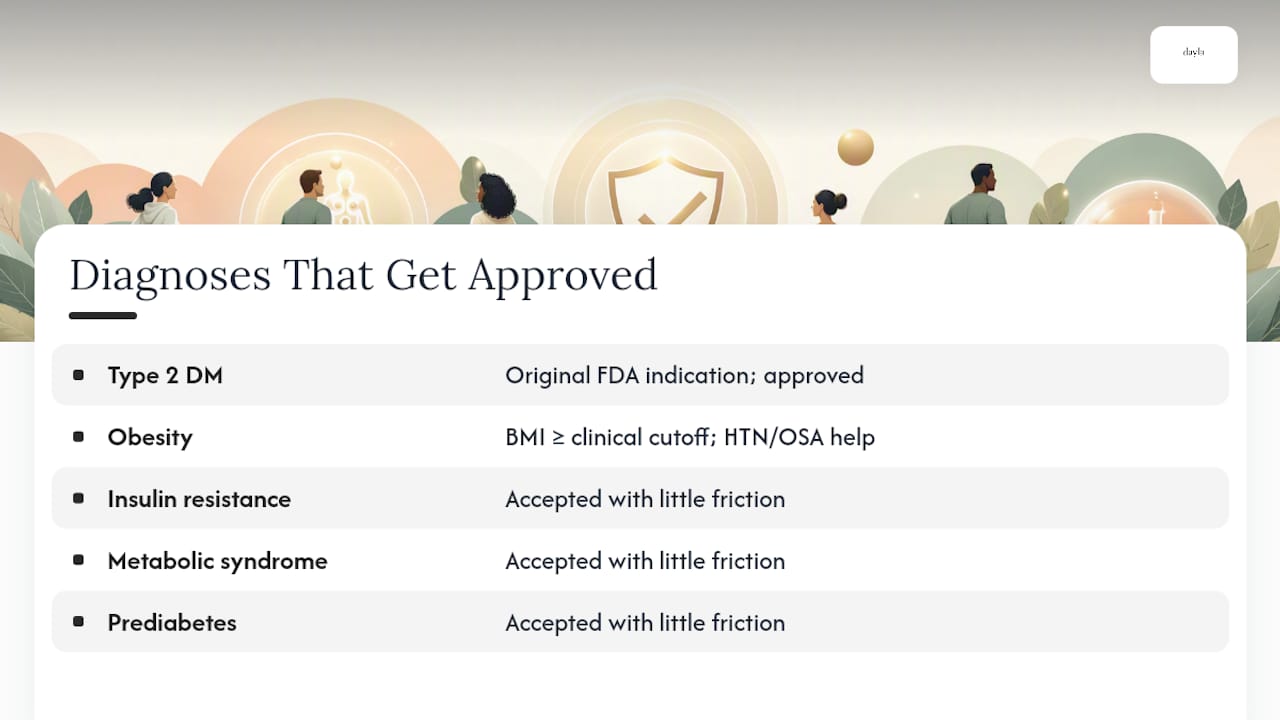
Insulin resistance, metabolic syndrome, and prediabetes round out the list of diagnoses administrators accept without much friction. Off-label uses outside these categories usually need a stronger, more detailed LMN spelling out why semaglutide is medically necessary for that specific patient.
How to Avoid the Most Common Denial Reasons
- Request the LMN before you submit, not after a denial. Include the ICD-10 code directly on the letter.
- Ask your pharmacy for a receipt that itemizes the drug name, dose, and either NDC or compound details. A generic "prescription copay" line item gets flagged more often than a fully itemized one.
- Confirm your compounding pharmacy's state license and ask for a dispensed-by statement. Guides on compounded GLP-1 medications note that administrators scrutinize compounded semaglutide more closely than brand-name versions, precisely because pharmacy licensing varies.
- If you're denied, appeal with the specific document that was missing, rather than resubmitting the same file. Our guide to appealing a denied prescription walks through that process step by step.
Pro Tip: Save a digital folder per prescription cycle, not per year. When your dose changes, your documentation should update with it.
How Dayla Health Supports Your HSA/FSA Paper Trail
Dayla Health's clinical model was built around exactly this documentation gap. Every prescription comes out of a licensed clinician evaluation, which means the diagnosis and prescribing rationale are already documented at the point of care, not reconstructed later.
- Itemized receipts for every medication shipment, formatted for HSA/FSA submission
- A Letter of Medical Necessity available on request for weight-related diagnoses
- Ongoing clinician oversight so your diagnosis and dosage stay current in your record
- A straightforward online intake process that generates the prescription paperwork administrators ask for
If you're comparing costs, our pricing guide breaks down what semaglutide runs out-of-pocket before any HSA/FSA reimbursement.
What This Paper Trail Actually Protects You From
Most advice on this topic treats documentation as a formality, something you gather after the fact if an administrator happens to ask. That's backwards. The IRS doesn't audit every HSA distribution, but when it does, the burden of proof sits entirely on the account holder, not the pharmacy or the plan administrator. A receipt without a diagnosis code attached to it is functionally useless if that audit ever happens.
The bigger blind spot is compounded semaglutide. Patients assume that because a compounding pharmacy is cheaper and easier to access through telehealth, the tax treatment is identical to a manufactured version. It isn't automatically. Compounded medications draw more scrutiny, and skipping the LMN on a compounded prescription is the single most common reason these claims get flagged for follow-up.
If there's one thing worth prioritizing over everything else in this process, it's timing. Get the diagnosis, the prescription, and the LMN request done in the same visit. Retroactive paperwork is where good claims go to die.
— Flexible
Get an HSA-Ready Prescription Without the Guesswork
Dayla Health pairs a licensed clinician evaluation with a semaglutide or peptide prescription and ships nationwide, no insurance required. Every order comes with itemized receipts and an LMN available on request, which means the documentation your HSA or FSA administrator wants is already built into the process instead of something you chase down later.
That includes a clear diagnosis record from your intake, dosage and NDC or compound details on every receipt, and continued clinical oversight so your paperwork stays current if your treatment plan changes. If you're weighing a broader medical weight-management program alongside a prescription route, Garden State Medical Group's programs are worth a look too. When you're ready to start, begin your intake for a GLP-1 prescription and get the paperwork moving in the same visit.
Where to Verify the Rules Yourself
Confirm eligibility directly through IRS Publication 502 and 26 U.S.C. §213(d) for the federal standard, and check obesity and diabetes context through the CDC and Mayo Clinic sources cited above. Always verify your specific plan's documentation requirements with your HSA or FSA administrator before filing, since federal rules set the floor, not the ceiling.
This article is general information, not a substitute for advice from a qualified doctor. Consult a qualified healthcare professional about your own circumstances before acting on anything here.
Sources
- Publication 502 (Medical and Dental Expenses) | Internal Revenue Service
- 26 U.S. Code § 213 - Medical, dental, etc., expenses | Cornell Law School
- Are GLP-1s FSA & HSA Eligible? | Forbes Health
- Can you pay for GLP-1 medications with your HSA or FSA? | HealthEquity