

Peptides are short chains of amino acids that regulate hormonal signals controlling appetite, metabolism, and fat breakdown. Understanding how peptides help weight loss means distinguishing between two very different categories: FDA-approved incretin receptor agonists like semaglutide and tirzepatide, which have phase 3 clinical trial data, and unregulated wellness peptides sold online with limited human evidence. The clinical case for peptide-assisted fat loss is strongest with GLP-1 and GIP receptor agonists, which reduce calorie intake, slow gastric emptying, and improve insulin sensitivity through well-documented hormonal pathways.
How do semaglutide and tirzepatide promote weight loss?
Semaglutide and tirzepatide are FDA-approved peptides that produce significant weight loss by reducing appetite and calorie intake. Both drugs are classified as incretin mimetics, meaning they mimic naturally occurring gut hormones that signal fullness to the brain. The result is a sustained reduction in hunger that makes calorie restriction far easier to maintain than willpower alone.
Tirzepatide goes one step further. It acts on both GIP and GLP-1 receptors, producing synergistic metabolic improvements that single-receptor agonists cannot match. This dual mechanism reduces appetite more aggressively and improves insulin sensitivity at the same time, which matters for people carrying excess weight alongside metabolic dysfunction.

The clinical numbers are striking. In head-to-head trials over approximately 72 weeks, tirzepatide at 15 mg/week produced an average body weight reduction of 20.2%, compared to 13.7% for semaglutide. That gap represents a meaningful clinical difference, not just a statistical one. For context, most lifestyle-only interventions produce 5–8% weight loss at best.
| Peptide | Mechanism | Average Weight Loss | FDA Status |
|---|---|---|---|
| Semaglutide | GLP-1 receptor agonist | ~13.7% body weight | Approved |
| Tirzepatide | Dual GIP/GLP-1 agonist | ~20.2% body weight | Approved |
| BPC-157 | Unclear in humans | Not established | Not approved |
| TB-500 | Tissue repair signaling | Not established | Not approved |
A 2026 joint expert guidance statement from TOS, OMA, and OAC issued strong recommendations for both medications in obesity management. The panel cited moderate-certainty evidence and highlighted benefits beyond fat loss, including cardiovascular risk reduction and improved quality of life. These are not marginal gains. They represent a meaningful shift in how clinicians approach obesity as a chronic disease.
Pro Tip: If you are comparing semaglutide and tirzepatide, review a detailed efficacy comparison that includes retatrutide, a triple-receptor agonist currently in late-stage trials.
Fda-approved vs. wellness peptides: what is the real difference?
The peptide market splits into two distinct groups, and the gap between them is significant. FDA-approved incretin peptides like semaglutide and tirzepatide have completed large-scale phase 3 trials with tens of thousands of participants. Wellness peptides sold online, including BPC-157, TB-500, and MOTS-c, have not cleared that bar. Most have only animal studies or small early-phase human signals behind them.
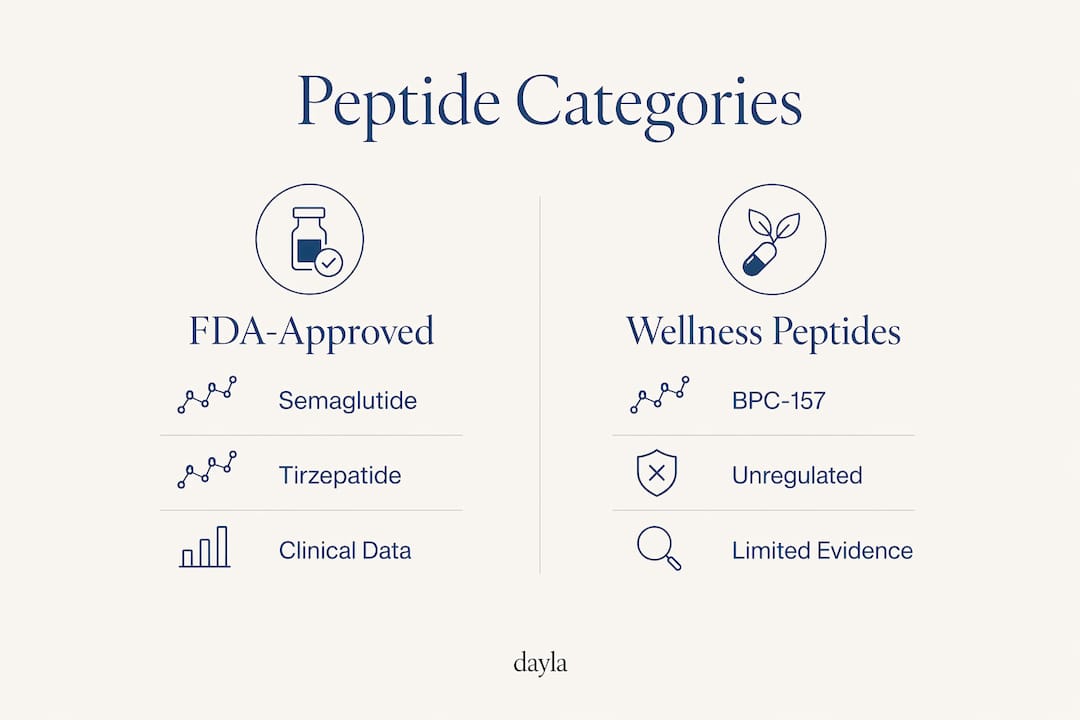
A 2026 Nature investigation found that gray-market peptides like BPC-157 and TB-500 are unregulated, with expert warnings emphasizing uncertain benefits and real safety risks. The concern is not that these molecules are inherently dangerous. The concern is that without clinical trials, nobody knows the correct dose, the right patient profile, or the long-term consequences. You can read more about how evidence differs across peptide categories before making any decisions.
Common wellness peptides and their evidence status:
- BPC-157: Shows tissue repair signals in animal models; no completed human clinical trials for weight loss
- TB-500: Studied for wound healing in animals; no human weight loss data
- MOTS-c: Early research suggests metabolic effects; no phase 3 human trial data
- CJC-1295/Ipamorelin: Growth hormone secretagogues with limited human data and no FDA approval for weight loss
"The main practical risk with many widely marketed peptides isn't the molecules themselves but the lack of regulation and clinical evidence, making FDA-approved GLP-1 drugs distinctly safer and better studied." — Nature, 2026
The AMA has also weighed in directly. Doctors caution that only selected patients should use approved peptides, and that the lack of clinical trial evidence makes candidacy for wellness peptides entirely unclear. That is not a minor caveat. It means a clinician cannot responsibly tell you whether a wellness peptide is appropriate for your specific health profile.
How should you combine peptide therapy with lifestyle changes?
Peptide therapy is not a standalone fix. The clinical evidence for semaglutide and tirzepatide was generated in trials that included structured lifestyle programs alongside the medication. Removing that context and expecting the same results is a mistake many people make.
Here is a practical framework for combining peptide therapy with lifestyle changes to protect lean mass and sustain fat loss:
- Set a protein target first. Clinicians recommend 1.2–1.6 g/kg of ideal body weight in protein daily during peptide therapy. This range supports muscle preservation when appetite suppression reduces total calorie intake significantly.
- Add progressive resistance training. Without strength training, lean mass decline is likely despite appetite suppression. Aim for two to three sessions per week targeting major muscle groups.
- Monitor for nutritional deficiencies. Reduced food intake can create gaps in B12, iron, and vitamin D. Ask your prescribing clinician to include these in routine bloodwork.
- Plan for long-term maintenance. Stopping peptide therapy without a maintenance plan often leads to weight regain due to physiological responses. The TOS/OMA/OAC guidance treats pharmacotherapy as a long-term strategy, not a short course.
- Track non-scale outcomes. Blood pressure, fasting glucose, and energy levels are meaningful markers of progress beyond the number on the scale.
Pro Tip: Explore lifestyle strategies that amplify GLP-1 results to get the most from your peptide therapy without adding unnecessary complexity.
The combination of protein nutrition and resistance training is not optional for people losing weight rapidly. Muscle is metabolically active tissue. Losing it during a weight loss phase lowers your resting metabolic rate, making weight regain more likely once therapy slows or stops.
What are the safety guidelines for peptide-based weight loss?
Safety in peptide therapy depends almost entirely on which peptide you are using and whether a qualified clinician is overseeing your care. For FDA-approved GLP-1 receptor agonists, clear candidacy criteria exist. For wellness peptides, they largely do not.
Established candidacy criteria for GLP-1 receptor agonists include:
- BMI of 30 or higher, or BMI of 27 or higher with at least one weight-related comorbidity such as type 2 diabetes or hypertension
- No personal or family history of medullary thyroid carcinoma or multiple endocrine neoplasia syndrome type 2
- No active pancreatitis or history of severe gastrointestinal disease
- Willingness to combine medication with dietary and activity changes
Known side effects of GLP-1 receptor agonists include nausea, vomiting, constipation, and occasional injection-site reactions. Most are dose-dependent and improve over time. A structured side effects management plan can reduce discomfort during the dose-escalation phase significantly.
The risk profile for unregulated wellness peptides is harder to define because the data does not exist. The AMA warns that injectable peptides purchased outside a medical setting carry unknown purity, unknown dosing standards, and no clinical oversight. That combination creates real risk, even if the molecule itself appears benign in early research.
Key takeaways
Peptides help weight loss most effectively when they are FDA-approved incretin receptor agonists used under medical supervision alongside structured nutrition and resistance training.
| Point | Details |
|---|---|
| FDA-approved peptides lead the evidence | Semaglutide and tirzepatide produce 13–20% body weight reduction in clinical trials. |
| Dual agonists outperform single agonists | Tirzepatide's GIP/GLP-1 mechanism delivers greater fat loss than semaglutide alone. |
| Wellness peptides carry real uncertainty | BPC-157, TB-500, and MOTS-c lack phase 3 human trial data and regulatory oversight. |
| Protein and training protect lean mass | Aim for 1.2–1.6 g/kg protein daily and two to three resistance sessions per week. |
| Peptide therapy requires long-term planning | Stopping without a maintenance strategy leads to physiological weight regain. |
The honest truth about peptides and weight loss
The peptide conversation online is noisy, and most of the noise centers on the wrong molecules. Wellness peptides like BPC-157 and MOTS-c generate excitement because they sound cutting-edge and the early animal data is genuinely interesting. But interesting early data is not the same as clinical proof. I have seen too many people spend significant money on unregulated injectable peptides while the most effective options, semaglutide and tirzepatide, sit right in front of them with 72 weeks of phase 3 data behind them.
What I find most underappreciated is the muscle loss problem. People focus on the scale and miss what is happening to their body composition. Rapid weight loss without resistance training and adequate protein can reduce lean mass, lower metabolic rate, and set up a harder rebound. The peptide does its job. The lifestyle framework around it determines whether the result lasts.
The future of peptide therapy is genuinely exciting. Triple-receptor agonists like retatrutide are in late-stage trials and may push average weight loss past 25%. Oral formulations of GLP-1 agonists are already in development. But none of that changes the current reality: the best peptides for losing weight right now are the ones with the most evidence, the clearest safety profiles, and a clinician managing your care.
— Flexible
Start your peptide weight loss plan with medical support
If you are ready to move from research to results, Daylahealth offers doctor-led access to FDA-approved GLP-1 therapies with personalized care built around your health profile. Every plan includes medical oversight, dosing guidance, and ongoing support so you are never managing this alone.

Daylahealth also provides access to a broader range of medically supervised peptide options for those exploring weight loss, recovery, and longevity support. A clinician reviews your intake, confirms candidacy, and builds a plan that fits your goals. You get the clinical rigor of a medical practice with the convenience of a direct-to-consumer platform.
FAQ
What peptides are most effective for weight loss?
Semaglutide and tirzepatide are the most clinically proven peptides for weight loss, with tirzepatide producing an average of 20.2% body weight reduction over 72 weeks in phase 3 trials.
Can peptides boost metabolism as well as reduce appetite?
Yes. Tirzepatide and semaglutide improve insulin sensitivity and metabolic function alongside appetite suppression, making them effective on multiple physiological pathways simultaneously.
Are wellness peptides like bpc-157 safe for fat loss?
BPC-157 and similar wellness peptides lack FDA approval and phase 3 human trial data for weight loss. The AMA advises against using injectable peptides outside of medical supervision due to unknown purity and dosing risks.
How long does peptide therapy for weight loss take to work?
Clinical trials for semaglutide and tirzepatide measured outcomes over approximately 72 weeks. Meaningful weight loss typically begins within the first 12 weeks as doses escalate to therapeutic levels.
Do you need a prescription for peptide weight loss therapy?
FDA-approved GLP-1 receptor agonists like semaglutide and tirzepatide require a prescription from a licensed clinician. Wellness peptides are often sold without a prescription, but that lack of oversight is itself a safety concern.