
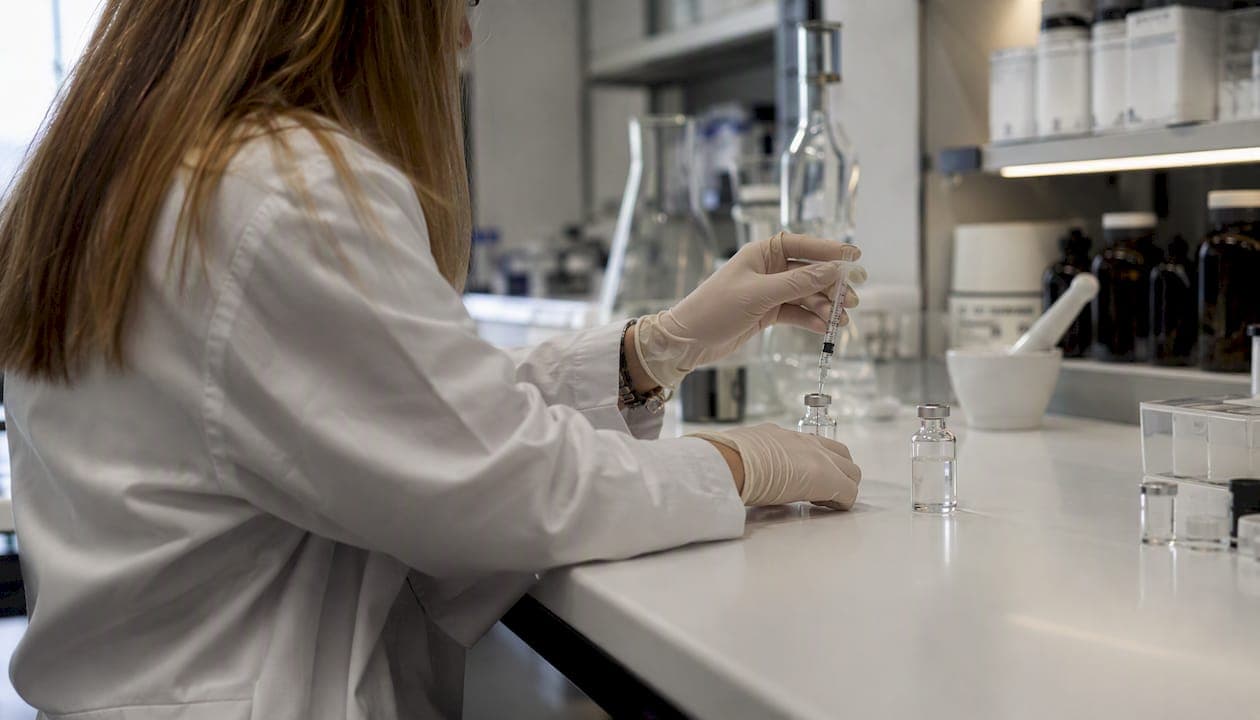
A PCAB-accredited compounding pharmacy is a facility that has passed a rigorous, peer-led accreditation process administered by the Pharmacy Compounding Accreditation Board (PCAB) under the Accreditation Commission for Health Care (ACHC), with standards aligned to USP chapters <795>, <797>, and <800>. That accreditation is your clearest signal that a pharmacy's compounding practices have been independently verified, not just self-reported.
Two steps to take right now:
- Verify current accreditation by searching the ACHC or NABP directory before filling any compounded prescription.
- Ask the pharmacy directly for the date of its last on-site survey and a copy of its accreditation certificate.
Pro Tip: Request the surveyor report date specifically, not just a certificate. Certificates can be displayed after expiration; a recent survey date confirms the accreditation is active and current.
Key Takeaways
PCAB accreditation is the most reliable independent signal that a compounding pharmacy's sterile and nonsterile practices meet documented, peer-reviewed USP standards.
| Point | Details |
|---|---|
| What PCAB accreditation means | A peer-led, USP-aligned quality review by ACHC covering sterile, nonsterile, and hazardous compounding practices. |
| How rare accreditation is | Only about 2% of compounding pharmacies hold PCAB accreditation, making it a meaningful differentiator. |
| How to verify status | Cross-reference the ACHC directory, NABP listings, and the pharmacy's own certificate and last survey date. |
| Key questions to ask | Request the last on-site survey date, USP chapters covered, sterility testing records, and a certificate of analysis. |
| Daylahealth's approach | Daylahealth provides clinician-supervised GLP-1 and peptide prescriptions with documented sourcing and ongoing care support. |
Table of Contents
- What PCAB is and who runs the accreditation program
- Why PCAB accreditation matters for patient safety and quality
- What a PCAB-accredited pharmacy must demonstrate
- How the PCAB accreditation process works from application to renewal
- How PCAB accreditation differs from state licensure and FDA oversight
- How to verify a pharmacy's PCAB accreditation status
- Questions to ask and red flags when choosing a compounding pharmacy
- Why PCAB accreditation matters more now with GLP-1 and peptide demand
- What to do if you suspect a problem with a compounded medication
- The case for prioritizing accreditation in compounded GLP-1 and peptide care
- Daylahealth's clinical pathway for GLP-1 and peptide prescriptions
- Sources
What PCAB is and who runs the accreditation program
PCAB stands for the Pharmacy Compounding Accreditation Board. It operates under ACHC, a nationally recognized accreditation organization. The program was built by compounding pharmacists, for compounding pharmacies, which is what makes it meaningfully different from a generic pharmacy inspection. Standards are developed by practitioners who understand the technical realities of sterile and nonsterile compounding, not by regulators working from a distance.
ACHC describes PCAB as a peer-based program designed to help pharmacies meet evolving USP requirements and safety expectations. That peer structure matters: when a surveyor walks into a compounding facility, they are a working compounding pharmacist, not a generalist inspector.
The standards themselves map directly to three USP chapters:
- USP <795> covers nonsterile compounding, including oral preparations, topicals, and suppositories.
- USP <797> governs sterile compounding, the category that includes injectable GLP-1 medications and peptide therapies.
- USP <800> addresses hazardous drug handling, applicable when a pharmacy compounds with cytotoxic or other high-risk agents.
PCAB accreditation is available in distinct tracks: nonsterile compounding, sterile compounding, and hazardous drug handling. A pharmacy can hold one or more of these designations depending on what it compounds. ACHC updated PCAB standards to align with USP revisions that took effect June 1, 2024, so any pharmacy accredited under the current framework is operating against the most current published standards.
Why PCAB accreditation matters for patient safety and quality
Accreditation is not a marketing badge. It is evidence that an independent, qualified reviewer has examined a pharmacy's actual practices and found them compliant with published safety standards.
Only about 2% of compounding pharmacies claim PCAB accreditation. That figure puts the credential in perspective: the vast majority of compounding pharmacies in the United States operate under state licensure alone, without any independent quality review of their compounding practices. For patients receiving sterile preparations, including compounded semaglutide, tirzepatide, or peptide therapies, that gap carries real clinical risk.
The stakes are higher for sterile and high-risk compounded therapies than for simple nonsterile preparations. A contaminated injectable can cause serious infection or systemic harm. Accreditation under USP <797> requires documented environmental monitoring, validated aseptic technique, and personnel competency testing, all of which reduce that risk materially.
Professional guidance consistently points in the same direction. The American Medical Association (AMA) recommends that patients and prescribers prefer accredited compounding pharmacies when compounded medications are clinically necessary, recognizing that accreditation provides a layer of quality assurance that state licensure alone does not. The National Community Pharmacists Association (NCPA) similarly provides guidance on compounding accreditation as a standard of professional practice.
Key reasons accreditation matters in practice:
- Peer surveyors verify real-world technique, not just written policies.
- Standards are updated to track USP revisions, so compliance is current.
- Accreditation creates documented accountability that state boards may not require.
- For GLP-1 and peptide prescribers, it provides a defensible basis for pharmacy selection.
What a PCAB-accredited pharmacy must demonstrate
Earning PCAB accreditation requires a pharmacy to demonstrate compliance across every operational domain that affects compounding quality. Written policies alone are not sufficient; surveyors verify that those policies are implemented in practice.
ACHC confirms that PCAB standards cover sterile and nonsterile compounding with USP-aligned requirements and that surveyors are experienced compounding pharmacists who evaluate real-world implementation. The requirement categories include:
- Written policies and procedures covering every compounding workflow, from ingredient sourcing to final product release.
- Personnel training and qualifications, including documented competency assessments for each staff member who compounds.
- Facility and environmental controls, such as cleanroom classification, air pressure differentials, and temperature monitoring logs.
- Equipment calibration and cleaning, with documented schedules and records for all compounding equipment.
- Quality assurance and sterility testing, including lot-level testing for beyond-use dating and sterility where required by USP <797>.
- Documentation and traceability, so every compounded preparation can be traced from raw ingredient to dispensed product.
- Controlled substances handling, where applicable, with records aligned to DEA requirements.
Pro Tip: When evaluating a pharmacy, ask specifically for its environmental monitoring logs and the most recent personnel competency assessment dates. A pharmacy confident in its accreditation will share these without hesitation.
Patients and prescribers can request several documents to assess compliance: the accreditation certificate with its expiration date, the date of the last on-site survey, any corrective action summaries from that survey, and the specific USP chapters the pharmacy is accredited under. A pharmacy that deflects these requests is a pharmacy worth reconsidering.
How the PCAB accreditation process works from application to renewal
Accreditation requires more than submitting paperwork. The process involves a structured sequence of documentation review, on-site evaluation by peer surveyors, and a formal accreditation decision, followed by ongoing compliance checks throughout the accreditation term.
The typical process follows these steps:
- Eligibility and prerequisites. For pharmacies pursuing accreditation through NABP, a Verified Pharmacy Program (VPP) inspection is a prerequisite. PCAB via ACHC has its own eligibility pathway.
- Application submission. The pharmacy submits a formal application with documentation of its compounding scope, personnel, and facility.
- Documentation review. ACHC reviewers assess written policies, procedures, and supporting records before scheduling the on-site survey.
- On-site survey. Compounding pharmacist surveyors visit the facility and evaluate hands-on practices: aseptic technique, environmental monitoring records, personnel competency demonstrations, and recordkeeping systems.
- Survey report and corrective actions. The pharmacy receives a detailed report. Any deficiencies require a documented corrective action plan before accreditation is granted.
- Accreditation decision. Once corrective actions are accepted, the accreditation is awarded for a defined term.
- Renewal and interim compliance checks. NABP describes a 3-year accreditation term with annual compliance reviews in subsequent years. ACHC follows a comparable renewal cycle.
What surveyors specifically evaluate during the on-site visit goes well beyond a checklist review. They observe compounding staff performing actual preparations, review environmental monitoring data over time, examine equipment logs, and assess whether written procedures match what staff actually do. A pharmacy that passes this level of scrutiny has demonstrated operational quality, not just administrative compliance.
Questions to ask a pharmacy about its process: When was your last on-site survey? Were any corrective actions required, and can you share a summary? Is your accreditation current and under which USP chapters?
How PCAB accreditation differs from state licensure and FDA oversight
These three oversight mechanisms serve different purposes and carry different authority. Conflating them leads to misplaced confidence or unnecessary confusion.
PCAB accreditation is voluntary and peer-led. It focuses specifically on compounding practice quality and USP standard compliance. It carries no enforcement power; a pharmacy that fails to maintain standards loses its accreditation designation, but it does not lose its license to operate.
State pharmacy licensure is mandatory and legally enforced. Every pharmacy must hold a valid state license to dispense medications. State boards of pharmacy set minimum operating requirements and can suspend or revoke a license for violations. However, state inspections vary widely in frequency, depth, and compounding-specific expertise. Licensure confirms legal permission to operate; it does not verify compounding quality at the level PCAB requires.
FDA oversight operates at the federal level and governs drug manufacturing. The FDA does not pre-approve compounded medications the way it approves commercially manufactured drugs. Pharmacy compounding of individualized medications falls outside FDA premarket review, which is precisely why PCAB accreditation fills a critical gap for sterile and high-risk preparations.
| Oversight type | Voluntary or mandatory | Focus | Enforcement power | Inspection frequency |
|---|---|---|---|---|
| PCAB accreditation | Voluntary | Compounding practice quality, USP alignment | None (loss of designation) | On-site survey at accreditation and renewal |
| State board licensure | Mandatory | Legal permission to operate | License suspension or revocation | Varies by state |
| FDA oversight | Federal mandate for manufacturers | Drug manufacturing standards | Recall, warning letters, injunctions | Risk-based; not routine for pharmacies |
One point deserves emphasis: PCAB accreditation is not FDA approval of a compounded drug. A compounded semaglutide or peptide preparation from a PCAB-accredited pharmacy has not been reviewed by the FDA for safety or efficacy as a finished product. Accreditation verifies the process used to prepare it, not the product itself.
How to verify a pharmacy's PCAB accreditation status
Active accreditation status is verifiable through official directories. A pharmacy's claim of accreditation is not sufficient on its own.
Follow these steps to confirm status independently:
- Search the ACHC directory. ACHC maintains a searchable list of currently accredited PCAB pharmacies at achc.org. Search by pharmacy name or zip code.
- Check the NABP directory. NABP's accredited compounding pharmacy list is a separate searchable resource and covers pharmacies accredited through the NABP pathway.
- Request the accreditation certificate directly. Ask the pharmacy for a copy showing the accreditation body, scope (sterile, nonsterile, hazardous), and expiration date.
- Ask for the last survey date. A current certificate with an old survey date may indicate the pharmacy is operating on a grandfathered status. Recent surveys are more meaningful.
- Contact your state board of pharmacy. State boards maintain licensure records and can confirm whether a pharmacy is in good standing, which is a separate but complementary check.
- Ask for corrective action summaries. Accredited pharmacies that have undergone surveys will have these on file. A pharmacy with nothing to share may not have completed a genuine survey.
Red flags that warrant further scrutiny:
- No certificate available or refusal to provide one.
- Vague or inconsistent answers about the last survey date.
- Accreditation listed on the website but not found in any official directory.
- Claims of "PCAB-certified" without specifying the accreditation body or scope.
- Pressure to fill a prescription quickly without answering verification questions.
Pro Tip: Always cross-reference at least two sources: the pharmacy's own certificate and one official directory. Directory entries are updated when accreditation lapses; a certificate alone can be outdated.
Questions to ask and red flags when choosing a compounding pharmacy
Choosing a compounding pharmacy for a sterile preparation, particularly a GLP-1 medication or peptide therapy, deserves the same scrutiny you would apply to any clinical decision. The right pharmacy will answer these questions clearly and without hesitation.
Questions to ask before filling a compounded prescription:
- Is your pharmacy PCAB-accredited, and under which USP chapters (<795>, <797>, <800>)?
- When was your last on-site survey, and by which accreditation body?
- Do you conduct environmental monitoring in your cleanroom, and how frequently?
- How do you document personnel competency for sterile compounding?
- Do you perform lot-level sterility or potency testing, and can you share a certificate of analysis?
- What is your beyond-use dating policy for sterile preparations?
- Who is your primary ingredient supplier, and are they FDA-registered?
Red flags in responses:
- Inability to name the specific USP chapter the pharmacy is accredited under.
- Claiming accreditation without being able to produce a certificate.
- Dismissing sterility testing as unnecessary for "low-risk" sterile preparations.
- Unwillingness to share a certificate of analysis for a compounded batch.
- Facility photos that show no cleanroom infrastructure for sterile preparations.
- Pricing that seems implausibly low relative to the complexity of sterile compounding.
A satisfactory answer to the survey date question sounds like: "Our last on-site survey was [month, year], conducted by ACHC/PCAB surveyors. We had two minor corrective actions, both resolved before accreditation was granted." That level of specificity reflects a pharmacy that takes its accreditation seriously. Vague answers like "we're accredited, don't worry" are not satisfactory.
Why PCAB accreditation matters more now with GLP-1 and peptide demand
The surge in GLP-1 prescribing has placed compounding pharmacies under pressure that did not exist five years ago. KFF polling documents a marked increase in public attention to and use of GLP-1 drugs, reflecting a shift in demand that has directly increased the volume of compounded semaglutide and tirzepatide preparations entering the market.
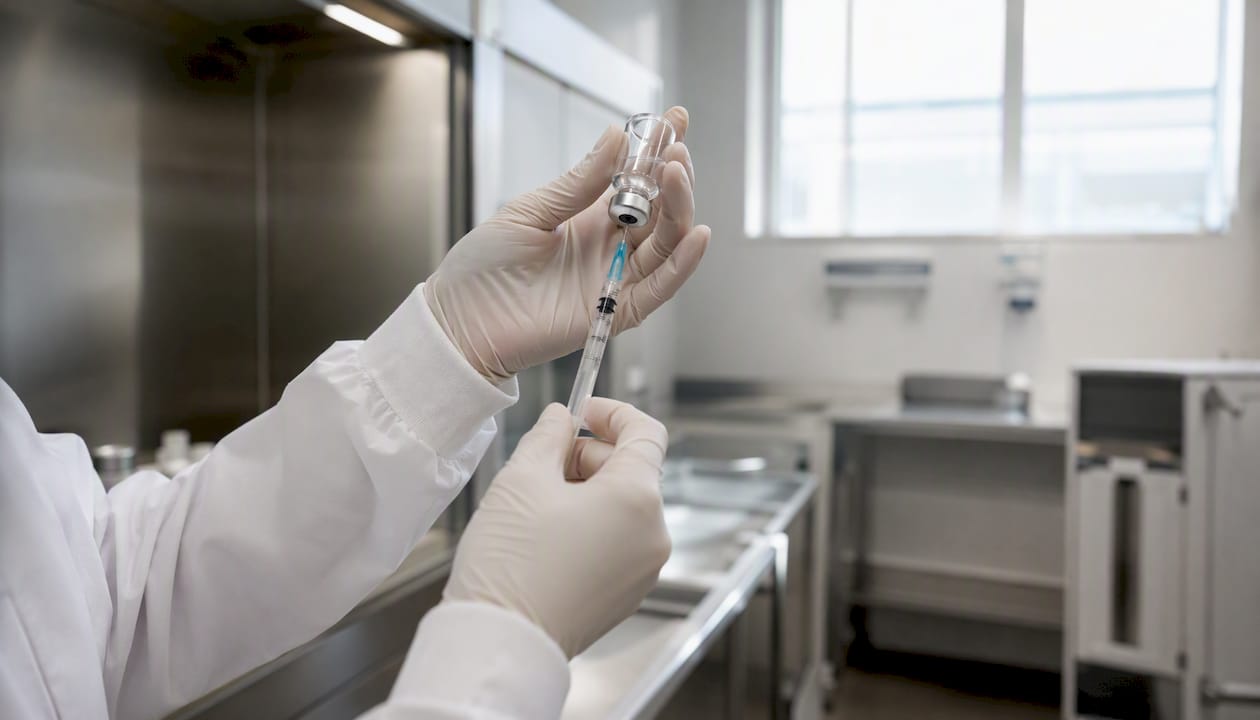
That demand creates risk. When a medication category grows rapidly, the number of pharmacies attempting to compound it grows with it, and not all of them have the infrastructure, training, or quality systems to do it safely. Sterile injectable preparations require cleanroom environments, validated aseptic technique, and ongoing environmental monitoring. A pharmacy that compounds oral capsules competently is not automatically equipped to compound sterile injectables safely.
PCAB accreditation under USP <797> is the most reliable external signal that a pharmacy has built and maintained that infrastructure. ACHC notes that accreditation also helps pharmacies manage the gap between FDA guidance and varying state board requirements, which is a practical operational benefit in a regulatory environment where state rules differ significantly from one jurisdiction to the next.
The same logic applies to peptide therapies. Compounded peptides like BPC-157 and growth hormone secretagogues are sterile preparations that require the same cleanroom standards as any injectable. Demand for these therapies has grown alongside GLP-1 prescribing, and the quality risks are comparable.
For patients and prescribers navigating this environment, accreditation is not a nice-to-have. It is the clearest available proxy for whether a pharmacy's sterile compounding practices meet a documented, independently verified standard.
What to do if you suspect a problem with a compounded medication
If you experience an adverse event or have reason to believe a compounded medication caused harm, act immediately and preserve everything.
Follow these steps:
- Stop using the product. If you suspect contamination, incorrect potency, or an adverse reaction, discontinue use and contact your prescriber or seek medical care without delay.
- Preserve all packaging and records. Keep the original vial, syringe, packaging, lot number, and any paperwork from the pharmacy. These are essential for any complaint or investigation.
- Contact your prescriber. Your clinical team needs to know immediately and can help document the event and guide next steps.
- File a report with FDA MedWatch. The FDA's MedWatch program at fda.gov/safety/medwatch accepts reports from patients and healthcare providers about adverse events involving compounded medications. Include the pharmacy name, lot number, and a description of the event.
- Contact your state board of pharmacy. State boards investigate complaints about licensed pharmacies. File a written complaint with the board in the state where the pharmacy is licensed.
- Notify PCAB or ACHC. If the pharmacy holds PCAB accreditation, ACHC has a customer service and complaint process. Reporting to the accreditation body can trigger a review of the pharmacy's accreditation status.
- Contact NABP if applicable. If the pharmacy is listed in NABP's directory, NABP also accepts complaints about accredited pharmacies.
When describing the event in a complaint, include: the medication name and strength, the lot number and beyond-use date, the date of administration, the symptoms or harm experienced, and the timeline from administration to onset. Specific details make complaints actionable; vague descriptions are harder to investigate.
The case for prioritizing accreditation in compounded GLP-1 and peptide care
The conventional framing around compounded medications tends to focus on access and cost. Those factors are real, particularly for patients who cannot afford branded GLP-1 drugs or who need a dose or formulation not commercially available. But access without quality assurance is not a solution. It is a different kind of risk.
What the accreditation data actually shows is that the overwhelming majority of compounding pharmacies in the United States have not submitted to independent quality review. That is not necessarily evidence of poor quality, but it is evidence of unverified quality. For a sterile injectable, that distinction carries weight.
The argument that "my pharmacy is state-licensed, so it's fine" misunderstands what state licensure covers. Licensure is a legal threshold, not a quality standard. A pharmacy can be fully licensed and still lack the environmental monitoring, personnel competency documentation, and sterility testing that USP <797> requires. PCAB accreditation closes that gap with a documented, peer-reviewed process.
Prescribers who recommend compounded GLP-1s or peptides to patients have a professional interest in pharmacy quality that goes beyond patient safety alone. Recommending a compounded medication from an unverified source creates clinical and liability exposure that accreditation meaningfully reduces. The AMA's guidance on preferring accredited compounders reflects exactly that logic.
The practical takeaway: when a patient asks which compounding pharmacy to use, "PCAB-accredited" is the right answer, and the verification steps in this article are how you confirm it.
Daylahealth's clinical pathway for GLP-1 and peptide prescriptions
Daylahealth's approach to GLP-1 and peptide prescriptions is built around documented clinical oversight at every step, from the initial clinician evaluation through ongoing care coaching and monitoring. Pharmacy sourcing is part of that framework, not an afterthought.
Every Daylahealth prescription goes through a licensed clinician review before any medication is dispensed. Patients receive a bundled package that includes the clinician evaluation, the compounded medication, and ongoing care support, all shipped nationwide without requiring insurance. For patients exploring GLP-1 weight loss programs or peptide therapy options, Daylahealth's model provides a structured, medically supervised pathway rather than a transactional prescription fill.
Patients are encouraged to ask about pharmacy sourcing and accreditation status directly. Daylahealth supports that verification and recommends confirming accreditation through ACHC or NABP directories independently. The right next step is to complete an intake evaluation and speak with a clinician about whether a compounded GLP-1 or peptide therapy is appropriate for your situation.
Sources
These are the primary resources for verifying accreditation, reading standards, and filing complaints:
- PCAB Accreditation for Smart, Modern Providers | ACHC
- KFF Health Tracking Poll — public use and views of GLP-1 drugs
- Compounding Services - Raleigh Medicap
This article is general information, not a substitute for advice from a qualified doctor. Consult a qualified healthcare professional about your own circumstances before acting on anything here.