
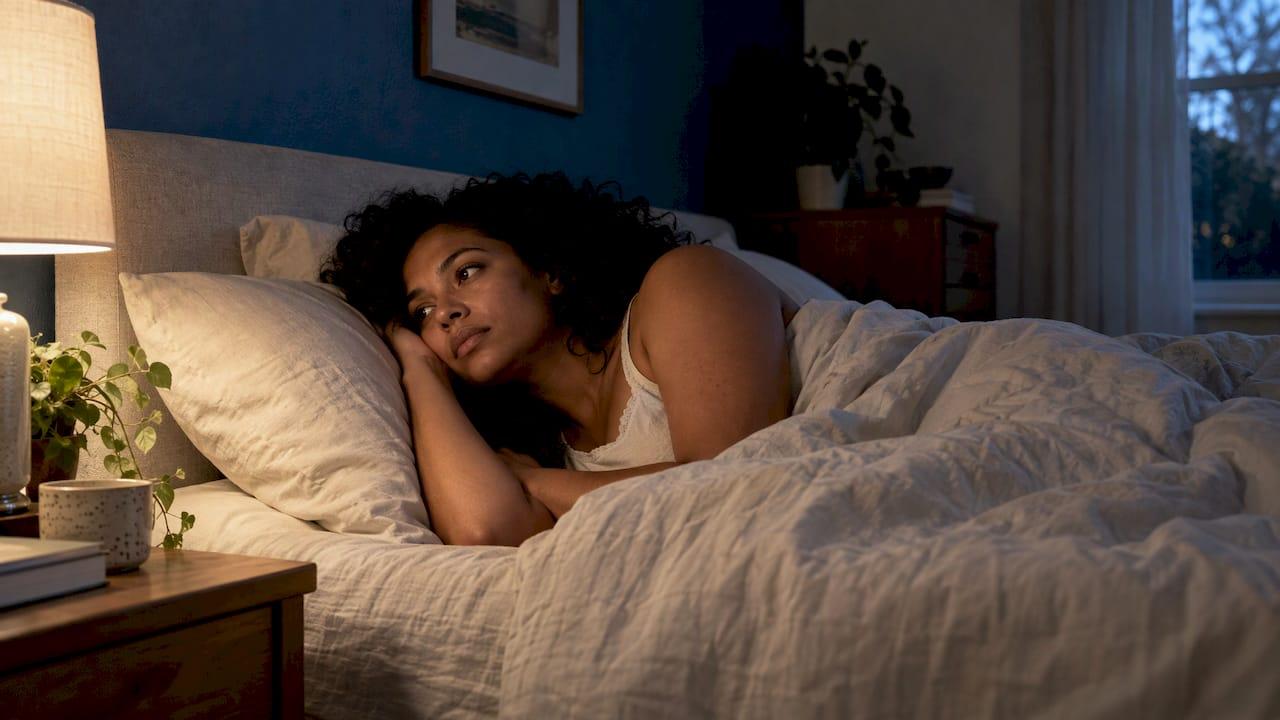
Semaglutide is not known to cause insomnia directly. A large U.S. study found no higher 12-month insomnia risk compared with other diabetes medications. Still, some people sleep worse after starting or increasing a dose, usually because of nausea, reflux, a shifted eating schedule or the stress of a new routine. Those causes are manageable, and a clinician who knows your dose and your symptoms can adjust the plan. At Dayla Health, doctor-led GLP-1 care includes ongoing clinical oversight, so a sleep problem is something you raise with your care team rather than push through alone.
This guide explains what the research says, why your nights may feel different on treatment, what to try first and when to contact your prescriber.
TL;DR
- Insomnia is not established as a direct effect of semaglutide. A U.S. cohort study found no increased 12-month insomnia risk versus other glucose-lowering drugs.
- Indirect causes are more likely: nausea, reflux, diarrhea, late meals and dose changes can all break up sleep.
- Keep dinner earlier and lighter, stay upright after eating and limit alcohol. These are first-line steps in published clinical guidance.
- Sleep complaints that persist, worsen or come with other symptoms belong with your prescriber.
- Semaglutide is not linked to more sleep apnea. One claims analysis found a lower likelihood of it among users.
Table of Contents
- Does semaglutide cause insomnia?
- How semaglutide can indirectly disrupt sleep
- Does injection timing matter?
- What about sleepiness and the newest research?
- Sleep apnea: a related question
- A practical plan for better sleep on semaglutide
- When to contact your prescriber
- Our perspective
- Personalized GLP-1 care with clinician support
- FAQ
- Sources
Does semaglutide cause insomnia?
The best large U.S. evidence says no. De Giorgi and colleagues (2024) used TriNetX electronic health records covering over 100 million patients. They compared semaglutide with sitagliptin, empagliflozin and glipizide. Semaglutide was not associated with a higher 12-month risk of insomnia, or of 22 other neurological and psychiatric outcomes. The semaglutide versus sitagliptin comparison alone included 23,386 matched pairs.
Patient-reported data point the same way. A peer-reviewed analysis of the FDA's adverse event reporting system and 422 online patient reviews (Zhang et al., 2024) found that insomnia appeared in 0.74% of social media reviews of semaglutide. In the same analysis, gastrointestinal problems such as nausea, vomiting and diarrhea made up 30.19% of adverse events for oral semaglutide and 27.76% for the injection.
The takeaway is that your stomach is far more likely to be affected than your sleep. When sleep does suffer, the stomach is often the reason.
Why you may still feel it
If you read patient forums, you will see many people describing restless nights. Insomnia is common in the general population, so some people who start semaglutide would have trouble sleeping anyway. Starting a medication also coincides with other changes: eating less, eating at new times, stress about the process and often a new exercise routine. Any of those can affect sleep. That does not make your experience imaginary. It means the cause is worth identifying, because the fix depends on it.
How semaglutide can indirectly disrupt sleep
Three pathways are most plausible, and each has a practical response.
Nausea, reflux and diarrhea at night
Gastrointestinal effects are the most common reason people feel uncomfortable on semaglutide. In the pooled STEP 1 to 3 trials of Wegovy, nausea occurred in 44% of treated patients versus 16% on placebo, and diarrhea in 30% versus 16%. These effects tend to appear when treatment begins or the dose goes up. If nausea or reflux flares in the evening, lying down can make it worse and waking at 2 a.m. becomes likely.

Meal timing and late eating
Semaglutide slows how quickly the stomach empties. A heavy or late dinner can sit longer, which may mean fullness, bloating or heartburn at bedtime. Clinical guidance on GLP-1 gastrointestinal symptoms (Witaszek et al., 2025) recommends avoiding food close to bedtime, not lying down right after meals and limiting alcohol. Those measures target the nausea and reflux that can interrupt sleep.
If you are unsure how to structure meals around your dose, our guide on eating before semaglutide covers timing, portions and nausea. For food choices that sit well, see semaglutide foods to eat.
Dose increases
Sleep trouble that appears in the days after a dose increase is usually a sign that your body is still adjusting. Note when it starts and how it lines up with your injection day. Bring that record to your clinician. It is far more useful than a general description such as "I haven't slept well."
Does injection timing matter?
Some people report worse sleep one to two days after injecting, and online advice often suggests moving the injection to the morning. The label gives you flexibility here. The FDA prescribing information for Ozempic says to inject once weekly on the same day each week, at any time of day, with or without meals. The Wegovy label says the same.
So a morning injection is within the label, and some people prefer it because any short-term side effects fall during waking hours. No study in the research we reviewed shows that injection time changes sleep. Treat it as a reasonable adjustment, and keep the same weekday so dosing stays consistent. Do not change your schedule or dose on your own. Ask your clinician first, particularly if you are changing the day.
Two practical notes. Rotating sites is part of safe injecting, and our guide to semaglutide injection sites shows how. If you travel and your schedule shifts across time zones, see our notes on storing and carrying pens at the right temperature.
What about sleepiness and the newest research?
A 2026 retrospective cohort study in the Journal of Diabetes & Metabolic Disorders looked at GLP-1 receptor agonists and sleep disorders. It found a higher hazard of hypersomnolence, meaning excessive daytime sleepiness (HR 1.21 at one year and 1.23 at five years, with absolute increases of roughly 0.4% and 0.7%). Disturbed sleep, including insomnia, was not significantly associated.
The authors raise the possibility that some sleep-related findings run through indirect routes such as iron deficiency, a known contributor to restless legs and fragmented sleep, rather than a direct brain effect. When you eat much less, nutrient intake deserves attention. This is one reason ongoing clinical oversight and a dietitian matter during treatment: eating less should still mean eating well.
Sleep apnea: a related question
Many people on semaglutide ask about sleep apnea because weight and breathing at night are closely linked. A retrospective claims analysis (Baser et al., 2025) found that patients using semaglutide or tirzepatide had a 40% lower likelihood of obstructive sleep apnea than non-users, with incidence of 3.12% versus 12.56%. This is an association in claims data, not a promise for any individual, but it runs opposite to the worry that these medications harm sleep.
If loud snoring, gasping or heavy daytime tiredness sound familiar, ask your clinician about a sleep evaluation. Reading about weed and sleep apnea shows how other approaches to sleep-disordered breathing are being discussed, though your own diagnosis and treatment decisions belong with a clinician who knows your history.
A practical plan for better sleep on semaglutide
Start with the cause you can most easily identify, and change one thing at a time so you can tell what helps.
- Log it for two weeks. Write down injection day and time, dinner time, what you ate, bedtime, when you woke and any nausea, reflux or diarrhea. Patterns usually show up within a week or two.
- Move dinner earlier and keep it lighter. Finish eating a few hours before bed, in line with the guidance on avoiding food close to bedtime.
- Stay upright after meals. A short walk after dinner is easier than lying on the couch with a full stomach, and it keeps you from lying flat right after eating.
- Limit alcohol. Alcohol is on the list of first-line measures because it aggravates reflux and nausea, and it fragments sleep.
- Ask whether a morning injection suits you. The label allows any time of day, so discuss it with your prescriber.
- Keep a steady sleep routine. A consistent wake time, a dark and cool room and screens off before bed help any sleeper. If you lie awake for a long stretch, get up, do something quiet in low light and return when drowsy.
- Check in about your dose. If symptoms track with a dose increase, your clinician can review whether the pace of escalation suits you.
These steps are not a substitute for medical advice. They are the practical, low-risk starting points that match published guidance on the stomach symptoms behind most semaglutide-related sleep trouble.
When to contact your prescriber
Reach out to your prescriber if:
- Sleep trouble lasts more than a couple of weeks or is getting worse.
- Nausea, vomiting, reflux or diarrhea keep you awake or stop you from drinking enough fluids.
- You feel unusually anxious, low in mood or very sleepy during the day.
- You have a racing heart, or snoring and breathing pauses at night.
- You take other medications, including sleep aids, and are unsure how they combine with semaglutide.
Anyone with severe abdominal pain, repeated vomiting, or signs of an allergic reaction such as swelling of the face or trouble breathing should seek urgent medical care or call 911. Do not take over-the-counter or prescription sleep aids on top of your treatment without asking a clinician or pharmacist about interactions.
Our perspective
Sleep is part of weight loss, not a side issue. When someone tells us they are sleeping poorly on a GLP-1, we look at the whole picture: dose, timing, meals, hydration and how they feel during the day.
That is why our programs are built around ongoing clinical oversight, dietitian consults and care coaching rather than a prescription alone. A clinician can adjust your plan, a dietitian can reshape meals so evenings are lighter, and a coach can help you build a routine that supports rest.
Because we offer injection, microdose and needle-free oral options, there is room to personalize care if your first approach does not fit. The aim is steady progress that you can live with, including a good night's sleep.
Flexible
Personalized GLP-1 care with clinician support
If you want semaglutide-based treatment with a care team behind it, Dayla Health offers online evaluation, medication and support in one monthly package, shipped nationwide without insurance requirements. Our plans include a GLP-1 injection from $179 per month, a GLP-1 microdose from $159 per month, an oral liposomal GLP option from $149 per month and the dayla GLP-1 program at $299 per month. Pricing is cash and transparent, dietitian visits are free, and cancellation is flexible.

If you are already considering a weekly injection, see the semaglutide maintenance dose. If you prefer to avoid needles, look at our semaglutide sublingual drops. Your clinician will help decide which fits your goals and history.
FAQ
Does semaglutide keep you awake at night?
For most people it does not directly. A large U.S. cohort study found no higher 12-month insomnia risk with semaglutide than with comparison diabetes drugs. When sleep suffers, nausea, reflux or late meals are the more likely causes. If it continues, tell your prescriber.
Why can't I sleep after my semaglutide injection?
The first days after an injection or dose increase are when stomach effects are often strongest, and discomfort can wake you. Keep dinner light and early, stay upright after eating, and track the pattern. The label allows injecting at any time of day, so ask your clinician whether a morning dose suits you.
Is it normal to wake up at night on a GLP-1?
It can happen, especially during dose changes, when appetite, meal timing and digestion are all shifting. Reflux, nausea and needing to drink or use the bathroom can all wake you. Persistent waking is worth discussing with your clinician so the cause can be found.
Can semaglutide make sleep apnea worse?
The research we reviewed points the other way. A claims analysis found a 40% lower likelihood of obstructive sleep apnea among semaglutide or tirzepatide users than non-users. Anyone with loud snoring or breathing pauses should still ask a clinician about a sleep evaluation.
Sources
- De Giorgi et al., 12-month neurological and psychiatric outcomes of semaglutide (2024)
- Wegovy product monograph, STEP 1 to 3 adverse reactions
- Zhang et al., Comparative analysis of semaglutide induced adverse events (2024)
- Witaszek et al., Gastrointestinal symptoms in obesity therapy (2025)
- FDA prescribing information, Ozempic (revised 10/2025)
- FDA prescribing information, Wegovy (DailyMed)
- Association of GLP-1 receptor agonist use with sleep disorders (2026)
- Baser et al., Tirzepatide and semaglutide and obstructive sleep apnea (2025)