
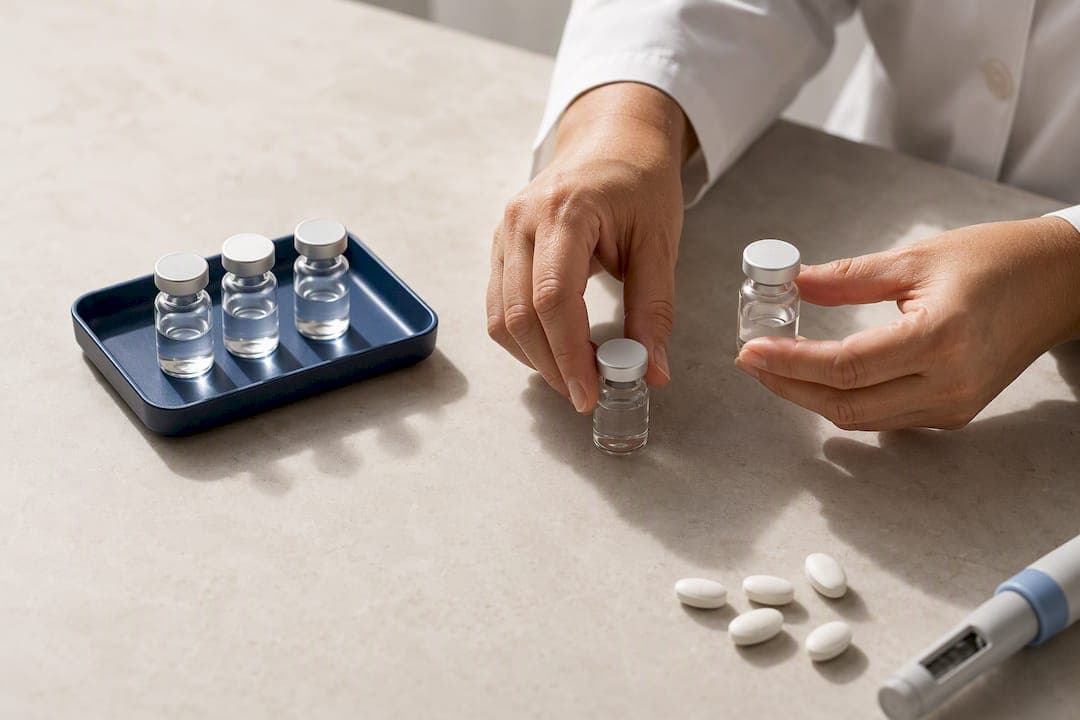
Combining semaglutide with metformin is a well-established, evidence-backed strategy for adults with type 2 diabetes, and clinicians prescribe it regularly for patients who need more than metformin alone provides. The combination typically produces greater HbA1c reduction and more weight loss than metformin monotherapy, with the main tradeoffs being gastrointestinal side effects during titration and the need for blood-glucose monitoring, especially if insulin or a sulfonylurea is also in the mix. Medical supervision throughout the process is essential.
TL;DR:
- Semaglutide added to metformin significantly lowers HbA1c and promotes greater weight loss than metformin alone, with about 4.2 kg of additional weight loss on average.
- Most trial data comes from 16-week to one-year studies, so long-term effectiveness requires careful ongoing clinical monitoring, especially for side effects.
- Gastrointestinal side effects such as nausea and diarrhea are common at treatment initiation but usually improve within weeks with gradual dose escalation.
- Combining semaglutide with insulin or sulfonylureas increases hypoglycemia risk, necessitating dose adjustments and closer blood glucose monitoring.
- Cost and insurance coverage influence access, with semaglutide being expensive and often under long-term coverage, but supervised programs can help offset these barriers.
Table of Contents
- What the clinical evidence shows about glycemic control and weight
- Safety and tolerability when semaglutide and metformin are combined
- How semaglutide and metformin work together
- Dosing, titration, and monitoring during combined therapy
- Practical tips for staying on combined therapy comfortably
- Cardiovascular and kidney effects of combined therapy
- What semaglutide with metformin costs and how insurance factors in
- Does it actually work outside of clinical trials?
- How this combination compares with other type 2 diabetes regimens
- Who is a good candidate for combined therapy
- Our perspective on combining these therapies responsibly
- Getting clinician-supervised access to semaglutide and metformin therapy
- Sources
- FAQ
What the clinical evidence shows about glycemic control and weight
The case for pairing semaglutide with metformin rests on a growing body of randomized trials and meta-analyses, not anecdote. A systematic review and meta-analysis pooling RCT data found that adding semaglutide to metformin produced a significant reduction in HbA1c compared with metformin alone, with a standardized mean difference of -1.13 (95% CI: -1.85 to -0.42). That is a substantial effect size in diabetes research, and it held up across the trials the review analyzed.
A pooled meta-analysis found semaglutide added to metformin significantly lowers HbA1c versus metformin alone (SMD: -1.13; 95% CI: -1.85 to -0.42), alongside improvements in fasting glucose, BMI, and some lipid markers, according to the same systematic review. That range reflects real variability across trial populations and dosing protocols, but the direction of effect is consistent.
Weight loss tells a similar story. Across pooled analyses, patients on combination therapy lost an average of about 4.2 kg more than those on metformin alone, according to trial-level evidence from research examining metabolic and reproductive outcomes. Some specific populations saw even larger differences over shorter windows.
One notable example comes from a 16-week randomized trial in women with polycystic ovary syndrome (PCOS), a population where chromium picolinate benefits related to insulin resistance and weight gain often compound each other. Women assigned to semaglutide plus metformin lost 6.09 ± 3.34 kg, compared with 2.25 ± 4.27 kg in the metformin-only group, according to the PCOS-focused trial. The combination group also showed better menstrual recovery rates and lower inflammatory markers (CRP), suggesting benefits that extend beyond the glucose readout. Dayla Health has written separately about GLP-1 therapy in PCOS and the supervised care path that population often needs.

Semaglutide also holds up well against other add-on therapies. A network meta-analysis covering 34 RCTs and roughly 12,993 patients found semaglutide 1.0 mg ranked among the most effective GLP-1 receptor agonists for both HbA1c and weight reduction when added to metformin, without an increased hypoglycemia signal compared with placebo. A separate patient-level meta-analysis comparing once-weekly semaglutide to empagliflozin, both added to metformin, found semaglutide produced a greater treatment difference in HbA1c (-0.61%) and body weight (-1.65 kg) over roughly a year, according to patient-level data.
A few caveats matter when reading this evidence:
- Most trials run 16 weeks to about a year, so long-term durability beyond that window relies on extrapolation rather than direct measurement.
- Populations studied vary (general type 2 diabetes cohorts, PCOS patients, overweight or obese subgroups), which affects how directly results generalize to any individual reader.
- Effect sizes reported as averages mask a wide range of individual responses, some patients see far more benefit, others less.
Trial duration and population differences do not undercut the overall pattern, but they are worth raising with a clinician who can weigh how closely your own health profile matches the people studied.
Safety and tolerability when semaglutide and metformin are combined
Combining the two drugs does not simply add up two separate side-effect profiles into something more dangerous, but it does mean patients should expect a period of gastrointestinal adjustment. Nausea, diarrhea, and occasional vomiting are the most frequently reported issues, and they cluster heavily around the start of treatment and each dose increase, according to FDA prescribing information for semaglutide. These effects tend to ease within a few weeks as the body adjusts to a given dose.
Hypoglycemia is not a major concern with semaglutide or metformin used alone, since both work in glucose-dependent or non-insulin-secreting ways. The risk rises meaningfully when either drug is layered onto insulin or a sulfonylurea, which is why clinicians often reassess those medications before or during semaglutide initiation.
Serious but uncommon adverse events are documented in the product label and associated trials, including pancreatitis, gallbladder problems, and, in rodent studies, thyroid C-cell tumors, which is why semaglutide carries a boxed warning and is not recommended for patients with a personal or family history of medullary thyroid carcinoma.
Practical points worth knowing before starting:
- GI symptoms peak around dose increases and usually settle within one to two weeks.
- Hypoglycemia risk rises mainly when insulin or a sulfonylurea is also being taken.
- Severe abdominal pain, persistent vomiting, or signs of gallbladder trouble warrant a call to your care team promptly.
Alcohol can compound GI symptoms and dehydration risk during titration; Dayla Health has covered this in more detail in a piece on semaglutide and alcohol.
Pro Tip: Keep a simple symptom log during the first month, noting what you ate and when nausea hit. It helps your clinician fine-tune your titration pace instead of guessing.
How semaglutide and metformin work together
The two drugs attack blood sugar from different angles, which is exactly why the combination performs better than either alone. Metformin's primary job is reducing hepatic glucose production, the liver's tendency to release stored glucose into the bloodstream, while also modestly improving how the body's tissues respond to insulin.
Semaglutide works through a completely different pathway. As a GLP-1 receptor agonist, it stimulates insulin release only when blood glucose is elevated, a glucose-dependent mechanism that lowers the risk of driving blood sugar too low. It also slows gastric emptying, which flattens post-meal glucose spikes, and acts on appetite centers in the brain to reduce hunger and food intake.
Because metformin addresses liver glucose output and insulin sensitivity while semaglutide addresses insulin secretion, digestion speed, and appetite, the two effects layer rather than compete. Clinically, this is described as an additive effect: the drugs are not doing the same job twice, so the benefit of one does not cancel or duplicate the other. That additive relationship is also why monitoring matters more, not less, when both are active in the body: two independent mechanisms working on the same glucose target require a clinician to track how the whole system is responding, not just one variable.

Dosing, titration, and monitoring during combined therapy
Semaglutide is never started at a full treatment dose. Trials and prescribing guidance follow a gradual titration schedule designed to let the gut adjust before the dose climbs, and clinicians typically expect a similar approach in practice:
- Semaglutide starts at a low initiation dose for the first several weeks, primarily to build tolerance rather than to achieve full glycemic effect.
- The dose increases at intervals of about four weeks, based on tolerability and response, up to the target maintenance dose.
- Metformin generally continues at its established dose without automatic adjustment, since pharmacokinetic studies found no clinically meaningful change in metformin absorption when combined with semaglutide, despite semaglutide's effect on gastric emptying.
- Clinicians typically order HbA1c checks roughly every three months to track glycemic response, alongside periodic kidney function tests since metformin is renally cleared.
- Self-monitoring of blood glucose (SMBG) may be intensified for the first four to eight weeks of titration, particularly for patients also using insulin or a sulfonylurea.
- Sulfonylurea or insulin doses are frequently reduced preemptively when semaglutide is added, specifically to lower hypoglycemia risk during the adjustment period.
Oral semaglutide carries its own administration rules that injectable formulations do not: it must be taken in a fasted state with a limited amount of water, and other oral medications or food should be delayed for a period afterward, according to research comparing GLP-1 receptor agonists added to metformin. Injectable semaglutide avoids these timing constraints while sharing the same class effects and monitoring needs.
Practical tips for staying on combined therapy comfortably
Most people who discontinue semaglutide early do so because of GI symptoms that could have been managed with a slower approach. A few habits make a real difference:
- Eat smaller, lower-fat meals during the first few weeks of each dose increase, since fatty or large meals tend to worsen nausea.
- Stay ahead of hydration, particularly if diarrhea or reduced appetite cuts into normal fluid intake.
- If using oral semaglutide, take it first thing in the morning with no more than about four ounces of water, then wait before eating or taking other pills.
- Learn to recognize hypoglycemia symptoms (shakiness, sweating, confusion) if you're also on insulin or a sulfonylurea, and keep a fast-acting glucose source on hand.
Contact your clinical team for persistent vomiting, inability to keep fluids down, or worsening abdominal pain. Reserve emergency care for severe, sudden abdominal pain with fever, or signs of a severe allergic reaction.
Pro Tip: If you're on injectable semaglutide, rotating injection sites (abdomen, thigh, upper arm) reduces local irritation over months of use. Dayla Health's guide on injection sites and technique walks through site rotation in more detail.
Cardiovascular and kidney effects of combined therapy
Semaglutide's benefits extend beyond the glucose and weight numbers. The American Diabetes Association's guidance recommends GLP-1 receptor agonists specifically for patients with type 2 diabetes who have established cardiovascular disease or are at high cardiovascular risk, reflecting that this drug class has a role beyond glycemic control alone.
Metformin, meanwhile, remains the recommended first-line therapy in most cases, according to the same ADA guidance, partly because of its long safety record and partly because it does not carry the renal dosing complexity of some other diabetes drugs. Kidney function still matters for anyone on metformin, since the drug is cleared renally and dosing depends on that clearance staying adequate. Periodic renal function testing is a standard part of monitoring for patients on metformin, whether or not semaglutide is added.
The practical takeaway for combined therapy is that neither drug's cardiovascular or renal profile changes when used alongside the other. Clinicians treat these as two independent safety considerations to track in parallel, not a combined risk that multiplies. Anyone with reduced kidney function should discuss dosing directly with their clinician rather than assuming a standard schedule applies.
What semaglutide with metformin costs and how insurance factors in
Cost is often the deciding factor in whether patients start or continue combination therapy, and it varies widely by insurance coverage, formulary tier, and whether a patient qualifies for manufacturer savings programs. Metformin is inexpensive and widely covered as a generic. Semaglutide, by contrast, is a brand-name biologic, and coverage depends heavily on a plan's specific formulary and whether the prescription is written for diabetes versus weight management, since insurers often treat those indications differently.
Out-of-pocket cost becomes the central issue for patients without strong insurance coverage for GLP-1 medications, which is part of why direct-to-consumer options paying cash for clinician-supervised access have grown as an alternative path. Anyone weighing this route should compare the total package, medication, clinical oversight, and support services, rather than the medication price alone, since bundled care changes what a monthly cost actually includes.
Does it actually work outside of clinical trials?
Trial results describe what happens under controlled conditions with regular follow-up and dose supervision. Real-world adherence looks different: patients face cost pressures, inconsistent access to follow-up visits, and GI side effects without the same close monitoring a trial protocol provides.
The GI tolerability issue is the single biggest driver of early discontinuation in practice, which is why slow, individualized titration matters more outside a trial setting than inside one. Patients who get consistent access to a clinician who can adjust the pace of dose increases tend to stay on therapy longer than those managing the schedule alone. Regular check-ins, whether through in-person visits or telehealth, also catch early side effects before they become a reason to quit altogether. Adherence to metformin's dosing schedule matters too, since inconsistent use blunts the additive benefit that makes the combination worthwhile in the first place.
How this combination compares with other type 2 diabetes regimens
Metformin paired with a GLP-1 receptor agonist like semaglutide is one of several common add-on strategies, and it is not automatically the right fit for every patient. Metformin plus an SGLT2 inhibitor (such as empagliflozin) is another frequently used combination, particularly for patients with heart failure or chronic kidney disease, where SGLT2 inhibitors have specific protective data.
Head-to-head, a patient-level meta-analysis found once-weekly semaglutide added to metformin produced greater HbA1c and weight reductions than empagliflozin added to metformin over roughly a year. That does not make semaglutide universally superior, SGLT2 inhibitors offer benefits semaglutide does not replicate, particularly around heart failure hospitalization. Metformin plus a sulfonylurea is an older, cheaper combination still used in some settings, though it carries a real hypoglycemia risk that the semaglutide combination largely avoids.
The right combination depends on a patient's cardiovascular history, kidney function, weight goals, and tolerance for GI side effects, which is why this decision belongs with a clinician who can weigh the full picture rather than a single efficacy comparison.
Who is a good candidate for combined therapy
Combined semaglutide and metformin therapy tends to fit adults with type 2 diabetes who have not reached their glycemic goals on metformin alone, particularly those who are also overweight or obese and would benefit from the added weight loss. It's also a reasonable option for patients with elevated cardiovascular risk, given the ADA's specific recommendation for GLP-1 receptor agonists in that group.
Contraindications matter here. Semaglutide is not recommended for anyone with a personal or family history of medullary thyroid carcinoma or Multiple Endocrine Neoplasia syndrome type 2, per FDA labeling. Metformin carries its own limits tied to kidney function, and patients with significant renal impairment need a clinician to reassess whether standard dosing is appropriate. A history of pancreatitis, severe gastroparesis, or unexplained GI symptoms also warrants a closer conversation before starting semaglutide.
Pregnancy, active gallbladder disease, and a history of diabetic retinopathy complications are additional factors a clinician will typically screen for before prescribing. None of these rule out the combination outright, but they change how closely a patient needs to be monitored and how the conversation with a clinician should go.
Our perspective on combining these therapies responsibly
Dayla Health's clinical model is built around the same principle this evidence points to: combination therapy works best with structure, not improvisation. Every patient goes through a clinician evaluation before starting semaglutide, with dosing decisions made individually rather than on a fixed schedule that ignores how someone is actually tolerating treatment.
Dietitian consults are included specifically because the GI adjustment period and eating patterns matter as much as the prescription itself, and ongoing care coaching exists to catch side effects or adherence issues early rather than at the next scheduled visit. Formulation choice, whether injectable semaglutide or a needle-free oral option, is part of that same individualized conversation.
None of this replaces a direct discussion with your own licensed clinician about your specific health history, current medications, and goals.
— Flexible
Getting clinician-supervised access to semaglutide and metformin therapy
If you're weighing this combination, the practical hurdle is often access: finding a clinician, getting evaluated, and getting a prescription without a long wait. Dayla Health's GLP-1 program includes a clinician evaluation, medication delivered to your door, dietitian consults, and ongoing care coaching bundled into one direct cash price, with no membership fees and flexible cancellation.

Options include the GLP-1 Injection plan starting from $179 per month, GLP-1 Microdose from $159 per month, and the needle-free Oral GLP · Liposomal plan from $149 per month, all with clinician oversight built in from the first visit. If you're an adult considering GLP-1 therapy alongside metformin, start your intake to see which option fits your health history.
Sources
This guide draws on peer-reviewed meta-analyses, randomized controlled trials, FDA prescribing information for semaglutide, pharmacokinetic research on metformin co-administration, and current American Diabetes Association guidance on obesity and weight management, linked throughout the sections above.
This article is general information, not a substitute for advice from a qualified doctor. Consult a qualified healthcare professional about your own circumstances before acting on anything here.
- Efficacy and safety of semaglutide combined with metformin in treating T2DM with overweight or obesity: a systematic review and meta-analysis
- OZEMPIC (semaglutide) prescribing information — clinical studies and safety
FAQ
What medications don't mix well with semaglutide?
Semaglutide requires caution when combined with insulin or sulfonylureas, since the combination raises hypoglycemia risk more than semaglutide alone. It's also not recommended for anyone with a personal or family history of medullary thyroid carcinoma, per FDA labeling, and any new medication should be reviewed with your prescribing clinician.
Is semaglutide stronger than metformin?
They're not directly comparable since they work through different mechanisms, but head-to-head trial data shows semaglutide added to metformin produces significantly greater HbA1c and weight reduction than metformin alone, with a pooled standardized mean difference of -1.13 for HbA1c, according to a meta-analysis. Metformin remains a foundational first-line therapy in its own right.
Does adding metformin to a GLP-1 help with weight loss?
Yes. Trial data shows the combination produces more weight loss than metformin alone, with pooled analyses reporting roughly 4.2 kg of additional weight loss and some population-specific trials showing even larger differences over 16 weeks, according to combined-therapy research.
Do you need to stop metformin when starting a GLP-1 medication?
No, metformin is typically continued alongside semaglutide rather than replaced, since the two drugs work through different mechanisms and are commonly prescribed together. Pharmacokinetic research also found no clinically meaningful change in metformin absorption when semaglutide is added, so routine dose adjustment isn't typically needed for that reason alone.