
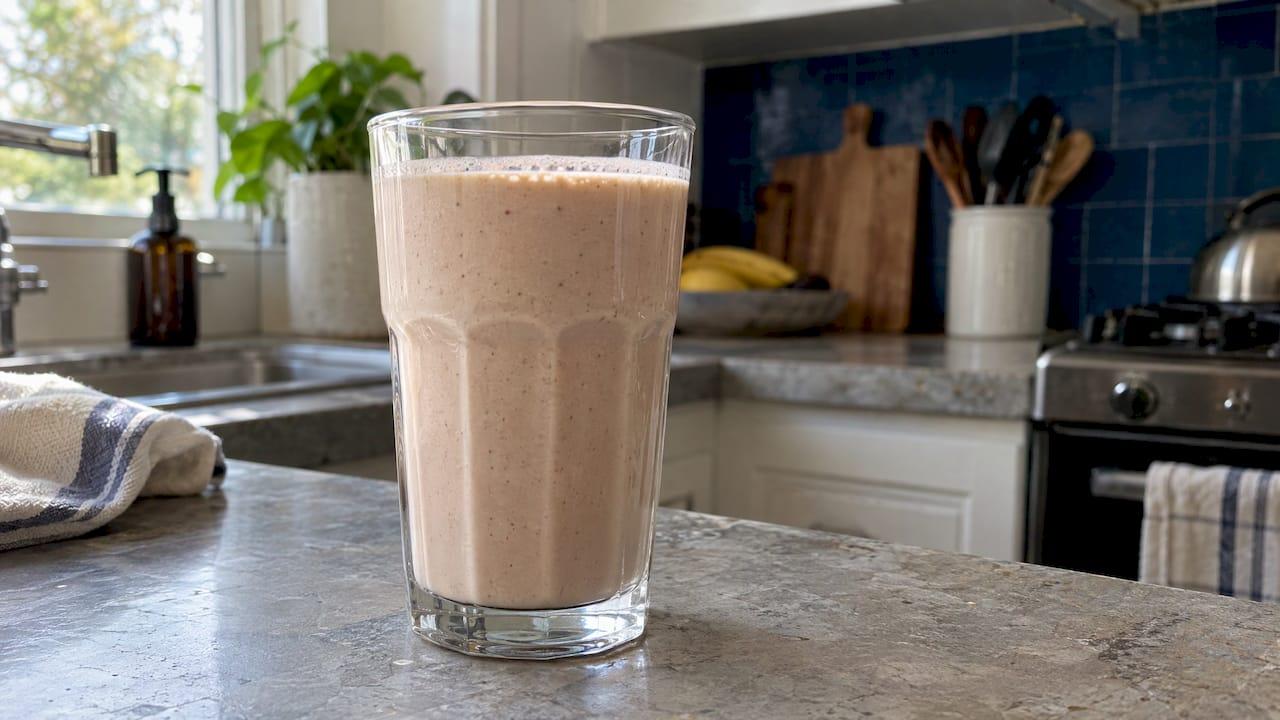
Yes, you can drink protein shakes on semaglutide, and for many people they are a practical tool. Semaglutide lowers appetite, so getting enough protein from meals alone can be hard. A shake with at least 20 g of protein can close the gap. The best results come from choosing a shake your stomach tolerates and using it alongside whole foods, not instead of them.
This guide covers how much protein to aim for, what to look for on a label, how to time shakes around nausea and fullness, and when to bring in your clinician or dietitian.
TL;DR
- Protein shakes are safe for most people on semaglutide and are most useful when appetite is low and meals fall short on protein.
- A common target is 1.0 to 1.5 g of protein per kg of body weight daily if you are moderately active, with shakes of at least 20 g of protein per serving when appetite is very low.
- Choose a shake with modest sweetness and few sugar alcohols or gums, since these can trigger nausea, bloating, or diarrhea.
- Use shakes to supplement whole foods. They are less filling than solid protein and contain no fiber for constipation.
- Pair protein with resistance training, and ask your care team if nausea or low intake persists.
Table of Contents
- Why protein matters more on semaglutide
- How much protein you need each day
- When a shake makes sense
- Food first, shakes second
- What to look for on the label
- How to drink a shake without making nausea worse
- Protein is only half the muscle plan
- A sample day with one shake
- > Perspective
- Support from your care team
- Get doctor-led GLP-1 care with dietitian support
- FAQ
- Sources
Why protein matters more on semaglutide
When you eat less, your body loses fat and some lean tissue. Protein and strength training are the two levers you control. A review of strategies for GLP-1 users found that adequate high-quality protein and resistance training can help minimize loss of muscle mass and function during weight reduction.
Clinical thinking is also changing. Specialists are paying more attention to the quality of weight loss, including muscle, bone health, and nutritional adequacy, and less to the number on the scale alone. A shake is one simple way to support that quality when your appetite is quiet.
We cover the broader picture in our guide on how to prevent muscle loss during GLP-1 therapy.
How much protein you need each day

A widely cited starting point comes from a 2025 clinical guidance piece in JAMA Internal Medicine: 1.0 to 1.5 g of protein per kg of body weight per day for moderately active people. The same source suggests starting each meal with 20 to 30 g of protein.
Here is what that looks like for a person whose reference weight is 70 kg (about 154 lb):
| Daily goal | Calculation | Approximate protein |
|---|---|---|
| Lower end | 70 kg × 1.0 g | 70 g |
| Upper end | 70 kg × 1.5 g | 105 g |
| Per meal, three meals | 20 to 30 g each | 60 to 90 g |
The three meals already land inside the daily range. A shake then covers a skipped meal or a small one.
Which body weight to use
If you have obesity, your actual weight can overstate the number. Expert consensus says protein needs should ideally be calculated from adjusted or ideal body weight, or fat-free mass, because using actual weight can lead to significant overestimation. Your clinician or dietitian can tell you which figure fits you. Our guide to protein targets on a GLP-1 calorie deficit walks through the math in more detail.
When a shake makes sense
Shakes are most helpful in specific situations:
- Breakfast is hard to face. Many people feel full or queasy in the morning. A small, cold shake may go down more easily than eggs.
- You are under your protein goal. Track a few typical days. If you regularly land under target, add one shake.
- Meals are tiny. On higher doses or right after an increase, you may only manage a few bites. Liquid protein takes less room.
- You are traveling or busy. A shake is predictable when food options are not.
Official reviews agree on the principle: protein supplements and nutritionally complete meal replacements may be useful when intake is insufficient.
Food first, shakes second
Shakes work best as support. Dietary guidance for GLP-1 therapy advises patients to prioritize protein-rich whole foods such as fish, Greek yogurt, and legumes before turning to supplements, so they also get the other nutrients they need.
There is a second reason. Dietetic recommendations caution against relying only on shakes, because they are not as satiating as solid protein sources and give none of the fiber that helps manage constipation, a frequent GLP-1 side effect.
A simple pattern:
- Build each meal around a protein you can tolerate, such as eggs, fish, chicken, tofu, or Greek yogurt.
- Eat the protein first, then vegetables or grains if you still have room.
- Add a shake between meals or in place of a meal you cannot finish.
For meal ideas, see our practical guide to semaglutide foods and our article on food-first protein on semaglutide.
What to look for on the label
Not every shake suits a GLP-1 stomach. Slowed digestion makes some ingredients more noticeable. Check these items.
Protein per serving
For low-appetite days, look for at least 20 g per serving, the amount suggested for shakes when appetite is very low. Protein from whey, milk, soy, or pea can all work. Choose the type you digest comfortably.
Sweetness
GLP-1 users frequently report that intense sweetness triggers nausea. Unflavored, vanilla, or lightly sweet options are often easier than dessert-style flavors. Neutral or sour flavors may also sit better.
Sugar alcohols and gums
A registered dietitian quoted by U.S. News notes that sugar alcohols may cause bloating, gas, or diarrhea, and gum thickeners can add to bloating in sensitive people. Scan the ingredient list for words ending in "-ol," such as sorbitol, xylitol, or erythritol, and for gums such as guar or xanthan.
Calories and added sugar
Pick calories that match your role for the shake. A lighter shake of roughly a snack's size works as a protein top-up. A more complete shake works when it replaces a meal. Keep added sugar low, which also helps with sweetness tolerance.
Quick label checklist
| Check | What to look for |
|---|---|
| Protein | 20 g or more per serving |
| Sweetness | Mild, or unflavored |
| Sugar alcohols | Few or none |
| Gums and thickeners | Few, if you bloat easily |
| Added sugar | Low |
| Texture | Thin, easy to sip |
How to drink a shake without making nausea worse
Small changes help. Cold, diluted, thinner drinks may reduce nausea, and neutral or sour flavors may be easier than very sweet ones. Try this:
- Sip slowly. Take 20 to 30 minutes rather than finishing in five.
- Serve it cold. Add ice or chill it ahead of time.
- Dilute it. Use more water or milk than the label suggests if the shake feels heavy.
- Split it. Drink half now and half later.
- Skip it when you are queasy. Try a smaller portion or a different time.
- Avoid lying down right after. Stay upright while your stomach works.
If nausea is frequent, see our plan to lower semaglutide nausea over 4 to 8 weeks. Nausea often appears around dose increases. For tirzepatide, the FDA label says the medicine delays gastric emptying, and nausea, vomiting, and diarrhea occurred mostly during dose escalation, so the same tips apply there.
Constipation
Shakes have no fiber, and semaglutide can slow your gut. Pair your shake with fiber-rich foods and plenty of fluids. Our clinic-aligned constipation plan and our guide to fast constipation relief on a GLP-1 give step-by-step options.
Protein is only half the muscle plan
Protein supplies the raw material. Strength training sends the signal to keep muscle. The evidence on adding protein supplements beyond adequate intake is mixed, while resistance training can help maintain muscle mass and function during calorie restriction. Current advice prioritizes preserving muscle and bone through resistance training and appropriate diet.
A realistic week might include two to three full-body sessions with squats, rows, presses, and carries. Our 2026 resistance training guide for GLP-1 users outlines a beginner-friendly routine.

Lean tissue also affects how you look as weight comes off. If you are thinking about facial volume after Ozempic, steady protein intake and strength work are part of the foundation.
One helpful note: lean tissue loss does not necessarily mean impaired strength or physical performance. Clinicians look at muscle quantity, quality, and function together. So track how you feel and lift, not only what a scan says.
A sample day with one shake
This example assumes a 70 kg reference weight and a goal near 90 g. It is an illustration, not a prescription.
| Time | What | Protein (approx.) |
|---|---|---|
| Morning | Cold shake, sipped slowly | 20 to 25 g |
| Midday | Chicken or tofu with vegetables | 25 to 30 g |
| Afternoon | Greek yogurt | 10 to 15 g |
| Evening | Fish, eggs, or legumes with a side | 25 to 30 g |
That adds up to roughly 80 to 100 g. If you only manage half of each meal, the shake and yogurt keep you from falling far behind.
> Perspective
At Dayla Health, we see the same pattern in people starting GLP-1 care: appetite drops quickly, and protein is the first thing to slip. Our view is that protein planning belongs in the treatment plan from day one, not as an afterthought.
That is why our programs pair medication with doctor-led oversight, free dietitian visits, and care coaching. Whether you choose injection, microdose, or needle-free oral delivery, your dietitian can help you set a protein target, pick a shake that sits well, and adjust when side effects change what you can eat.
We design personalized GLP-1 care around the whole person: the dose, the food, the movement, and the pace that fits your life. A good shake is one small part of that.
Flexible
Support from your care team
Bring up protein and shakes with your clinician or a registered dietitian if:
- nausea or vomiting keeps you from eating enough protein;
- you are unsure which body weight to use for your target;
- you have a kidney condition or another health issue that affects protein advice;
- you notice you are skipping meals or feel anxious about eating.
Guidance for supportive care says a registered dietitian should be involved in assessment, delivery, and evaluation of care wherever possible, with nausea or vomiting monitored and dose adjustment and individualized dietary approaches considered. Dietitian support can also help maintain dietary quality during reduced appetite and lower the risk of disordered eating.
Get doctor-led GLP-1 care with dietitian support
If you want medication and nutrition guidance in one place, our plans bundle a clinician evaluation, your medication, care coaching, and shipping, with free dietitian visits and no insurance required. Current pricing as published: GLP-1 Injection from $179 per month, GLP-1 Microdose from $159 per month, Oral GLP · Liposomal from $149 per month, and the dayla GLP-1 program at $299 per month. A clinician decides whether a prescription is right for you after an online intake.
See our GLP-1 plans and start your online intake. If you already take semaglutide, learn about our semaglutide injection maintenance dose.
FAQ
Can I drink protein shakes while on semaglutide?
Yes, for most people. Shakes are useful when appetite is low and meals fall short on protein. Choose one with mild sweetness and few sugar alcohols or gums, and keep whole foods as your base. Ask your clinician if you have kidney disease or other conditions that affect protein intake.
How much protein should I get on semaglutide?
A common target for moderately active people is 1.0 to 1.5 g per kg of body weight daily, starting each meal with 20 to 30 g. If you have obesity, your dietitian may calculate this from adjusted or ideal body weight instead of actual weight.
Are protein shakes okay on tirzepatide too?
Generally yes, and the same label and sipping tips apply. Tirzepatide can cause gastrointestinal reactions and slows stomach emptying, mostly during dose increases, per the FDA label. Cold, thin, mildly flavored shakes are usually easiest.
Can a protein shake make nausea worse?
It can, if it is very sweet, thick, or contains ingredients like sugar alcohols. Try a colder, more diluted, less sweet shake, and sip it slowly. If nausea persists, tell your care team, since a dose or diet adjustment may help.
Should shakes replace meals?
Only occasionally, such as when you cannot finish a meal. Shakes are less filling than solid food and have no fiber, so aim to eat protein-rich whole foods most of the time.
Sources
- I Am Taking a GLP-1 Weight-Loss Medication: What Should I Eat? (JAMA Internal Medicine)
- Nutritional priorities to support GLP-1 therapy (PMC)
- Strategies for minimizing muscle loss during use of GLP-1 medications (PMC)
- Lean Mass and Musculoskeletal Preservation in GLP-1-Based Therapies (PubMed)
- Best Protein Powders, Drinks and Shakes for GLP-1 Users (U.S. News)
- Nutritional and lifestyle supportive care recommendations (PMC)
- Nutritional, Functional and Psychological Considerations for Incretin-Based Therapies (EASO)
- Tirzepatide prescribing information (FDA, revised 09/2025)
- Restore Facial Volume After Ozempic Timed to Weight Stability