

No FDA-approved oral tirzepatide exists in the United States today. Compounded "oral tirzepatide" products sold through some online sellers are unapproved, and most of that supply has been cut off following recent FDA enforcement changes. If you want an oral GLP-1 medication, approved alternatives exist, and legitimate prescription routes, including telehealth, can get you started safely.
TL;DR:
- No FDA-approved oral tirzepatide exists; most online “oral tirzepatide” products are unapproved and risky to use.
- Public clinical trials and manufacturer research show no plans for an oral form, and bioavailability challenges mean safety and efficacy are unproven.
- The FDA has restricted compounding flexibilities, making it illegal to routinely produce or sell compounded oral tirzepatide without specific medical justification.
- Approved oral GLP-1 options, such as oral semaglutide and Orforglipron, are available, but they are chemically different from tirzepatide and have different dosing protocols.
- Legitimate prescribing routes include consulting licensed clinicians via telehealth or in-person, with ongoing assessment and documentation; avoid unverified sources.
Table of Contents
- Oral Tirzepatide Availability: What Regulators and the Manufacturer Say
- Why Isn't There a Tirzepatide Pill Yet?
- Compounded and Telehealth "Oral Tirzepatide": What Changed
- Approved Oral GLP-1 Alternatives You Can Actually Get
- How to Get a Legitimate GLP-1 Prescription in the U.S.
- What Oral Tirzepatide Would Cost, and What the Market Actually Charges
- Red Flags to Watch for With Unapproved Oral Tirzepatide
- A Publisher's Take on Access and Safety
- How Dayla Health Gets You Legitimate GLP-1 Care, Faster
- Sources
- FAQ
Oral Tirzepatide Availability: What Regulators and the Manufacturer Say
Eli Lilly, the maker of tirzepatide, states plainly that the drug is approved only as an injectable and is not available as an oral formulation. Both brand names built on tirzepatide, Mounjaro and Zepbound, come as once-weekly subcutaneous injections. There is no tablet, capsule, or dissolvable version approved by the FDA.
The regulatory picture reinforces that. Once national GLP-1 supply began stabilizing, the FDA clarified its compounding policies, rolling back the shortage-era flexibilities that had let some pharmacies produce tirzepatide copies. Public trial registries show nothing in progress for an oral tirzepatide formulation, either. Here's the state of play in three points:
- Tirzepatide is approved by the FDA only as an injection under the brand names Mounjaro and Zepbound.
- Compounding flexibilities tied to supply shortages have ended, restricting routine production of tirzepatide copies.
- No registered clinical trials for an oral tirzepatide formulation appear in public databases.
Eli Lilly's own research into oral GLP-1 options has focused on different molecules entirely, not on converting tirzepatide itself into a pill.
Why Isn't There a Tirzepatide Pill Yet?
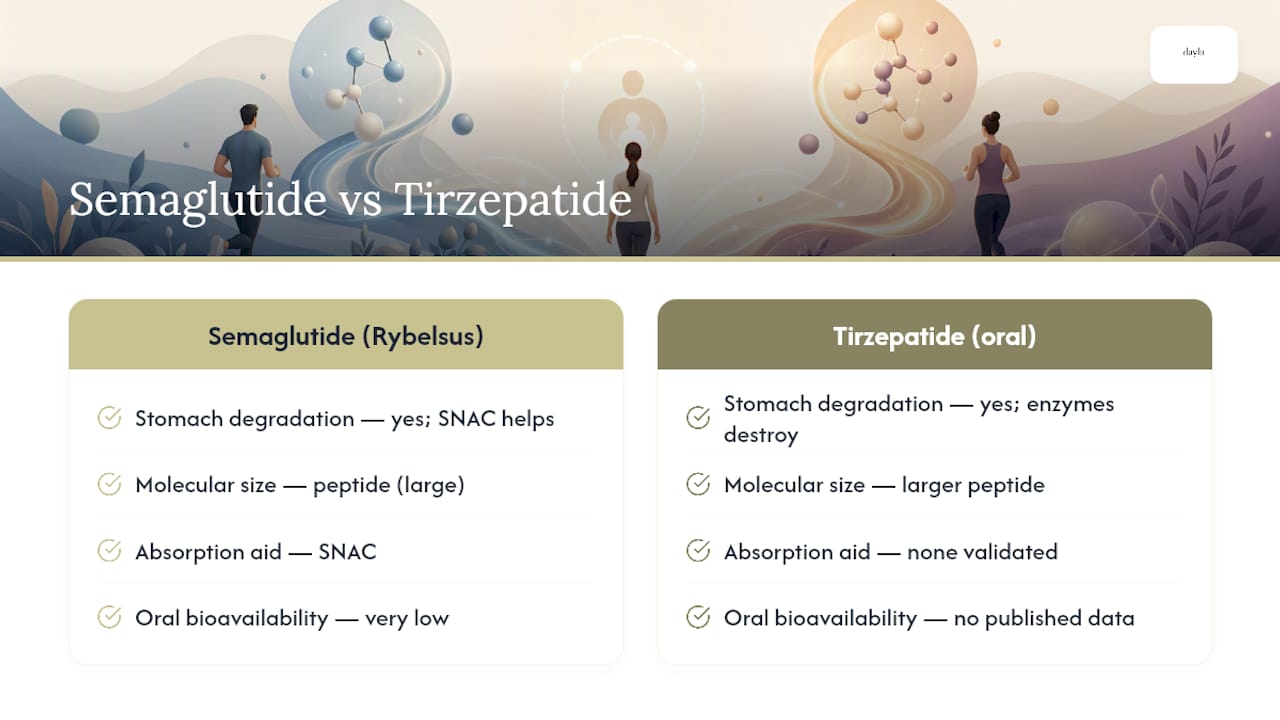
Tirzepatide is a peptide, a chain of amino acids, and peptides don't survive a trip through the stomach the way small-molecule drugs like ibuprofen do. Stomach acid and digestive enzymes break peptides apart before they can reach the bloodstream in any meaningful amount, a limitation well documented in pharmacology research on oral peptide delivery. Tirzepatide's molecular weight is also large compared to conventional oral drugs, which further limits how much of it the intestine can absorb even under ideal conditions.
Compare that to oral semaglutide, the peptide drug behind Rybelsus. It reaches the bloodstream only with the help of an absorption enhancer called SNAC, taken on an empty stomach with a small sip of water and a 30-minute wait before eating. Even with all of that, its absolute oral bioavailability stays remarkably low. Tirzepatide would need its own validated delivery technology to clear that same bar, and nothing publicly available demonstrates that such a system works yet. Sublingual and troche formats face the same wall: no published bioavailability data backs their use for a peptide this size.
Compounded and Telehealth "Oral Tirzepatide": What Changed
During the tirzepatide and semaglutide shortages of the past few years, some compounding pharmacies produced tirzepatide preparations to fill real supply gaps, and regulators largely tolerated it. That window has closed. Once manufacturer supply normalized, the FDA restricted routine compounding of tirzepatide copies, permitting it now only for narrow, patient-specific exceptions with documented clinical justification, not as a standing business model for telehealth sellers.
If you come across a site still marketing "oral tirzepatide," a few checks tell you whether it's operating inside that narrow legal lane:
- Confirm a licensed prescriber is directly involved in evaluating your case, not just approving a form you filled out.
- Ask whether the product has documented batch testing or a certificate of analysis available on request.
- Look for a specific, individualized clinical reason for compounding rather than a blanket sales pitch to any buyer.
Sellers who can't answer these plainly are very likely operating outside current FDA guidance.
Approved Oral GLP-1 Alternatives You Can Actually Get
If a pill matters more to you than the specific molecule, two FDA-approved oral GLP-1 options exist today, and neither one is tirzepatide.
- Orforglipron (brand name Foundayo): an oral GLP-1 approved separately from tirzepatide, built on different chemistry that doesn't share tirzepatide's peptide absorption problem.
- Oral semaglutide (Rybelsus): distinct from injectable Wegovy, dosed daily under strict administration rules, with its own clinical trial record and labeling.
Both carry dosing routines, efficacy data, and side-effect profiles that differ from injectable tirzepatide. Which one, if either, fits your situation is a conversation to have directly with a prescribing clinician rather than a decision to make from a product label alone.
How to Get a Legitimate GLP-1 Prescription in the U.S.
Eligibility for GLP-1 treatment generally follows FDA labeling around body mass index and weight-related health conditions, but the exact fit for your case is something a clinician needs to confirm, not something you self-diagnose from a chart online.
You have a few realistic paths to a real prescription:
- A primary care doctor who already manages your general health history.
- An endocrinologist, particularly useful if diabetes or metabolic conditions are part of the picture.
- An accredited telehealth provider offering GLP-1 or peptide care with actual clinician oversight, ongoing monitoring, and documented follow-up rather than a one-time form.
A legitimate intake typically includes a health history review, current medication check, and a plan for follow-up visits to track progress and side effects. On the logistics side, some insurance plans cover GLP-1s with prior authorization, though many patients end up paying cash, especially for weight-loss indications rather than diabetes.
Pro Tip: Before starting any GLP-1 plan, ask the provider directly how often you'll be reassessed and what happens if the medication needs adjusting. A program with no built-in monitoring cadence is a program without real oversight.
What Oral Tirzepatide Would Cost, and What the Market Actually Charges
There's no list price for oral tirzepatide because no approved version exists to price. What you can compare instead is the real market for injectable tirzepatide and the newer approved oral GLP-1s, since that's what actually determines your out-of-pocket cost today.
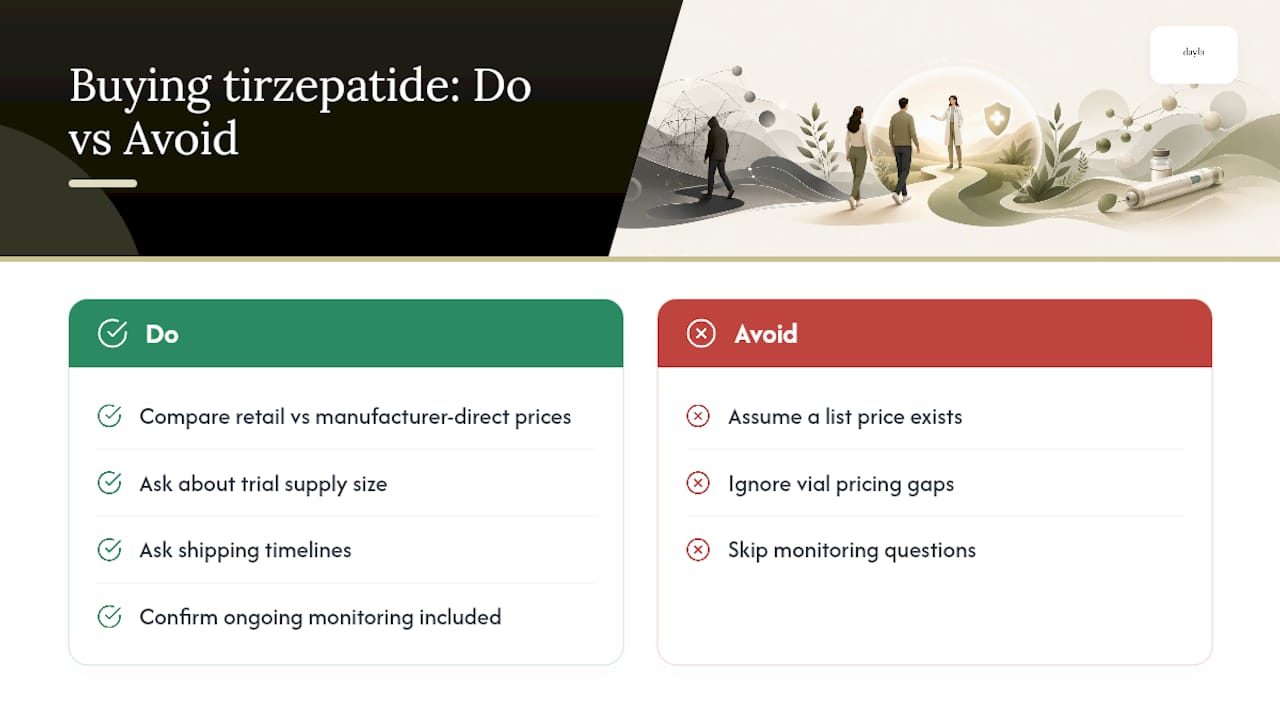
Retail cash prices for injectable tirzepatide have run notably higher than manufacturer-direct programs. Dayla Health's internal pricing comparisons show manufacturer-direct vial pricing landing well below typical retail cash prices for the same medication, a gap worth understanding before you commit to any provider. If you're evaluating a cash-pay subscription model, ask specifically about trial supply sizes, shipping timelines, and what ongoing monitoring is actually included in the monthly cost, not just the medication itself.
Red Flags to Watch for With Unapproved Oral Tirzepatide
Because no oral tirzepatide product has gone through FDA review, there's no verified data on dose accuracy, purity, or side effects for anything sold under that name. No labeled safety warnings exist for these products because no formal review process has ever evaluated them, a gap Forbes Health's reporting flags directly when covering sellers marketing unproven oral tirzepatide online.
Watch for these signs before buying anything marketed this way:
- No licensed clinician reviewing your health history before you receive a prescription.
- Vague or absent manufacturing details, with no batch testing or certificate of analysis offered.
- A fixed dose or drop count marketed as one-size-fits-all, ignoring individual clinical needs.
If you've already taken an unapproved product and experience side effects, seek medical care right away, keep the packaging, and report the incident to FDA MedWatch.
A Publisher's Take on Access and Safety
The most honest thing anyone can tell you about oral tirzepatide is that the shortcut doesn't exist yet, and chasing one puts your health on the line for no proven benefit. Some nationwide direct-to-consumer services connect patients with licensed clinicians for GLP-1 and peptide care, including both injectable and needle-free oral GLP-1 options that are actually approved. Pricing comparisons suggest supervised, manufacturer-sourced care can be safer and more cost-effective than unregulated alternatives. Choose the clinician-supervised route. It's the only one with real data behind it.
— Flexible
How Dayla Health Gets You Legitimate GLP-1 Care, Faster
There are providers offering transparent cash pricing, clinician access nationwide, and both injection and needle-free oral GLP-1 options without membership fees.
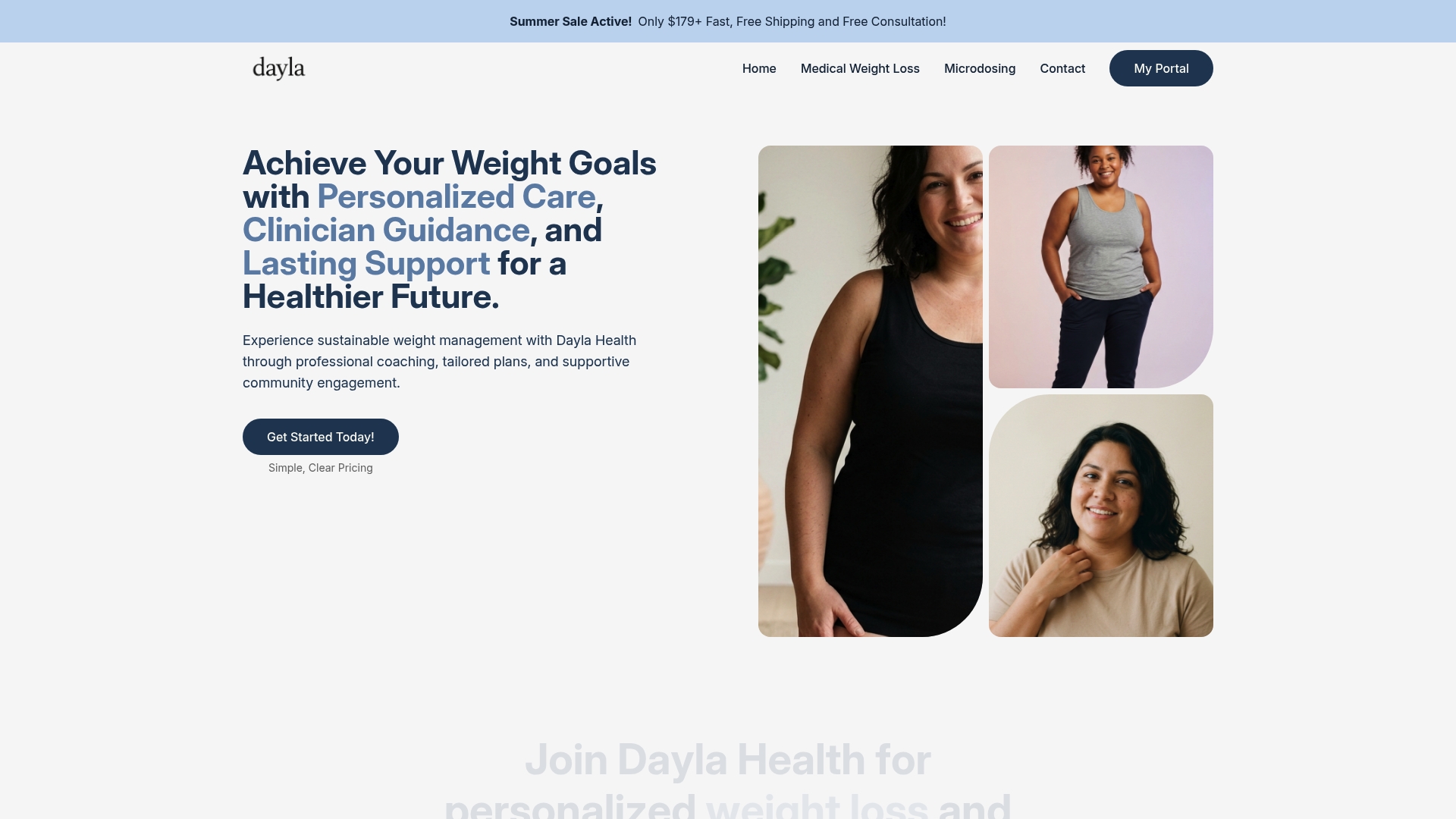
Instead of chasing compounded products with no clinical backing, you start with an online intake reviewed by a licensed clinician who confirms whether GLP-1 treatment fits your health profile. Plans include the GLP-1 Injection option starting at $179 a month, the GLP-1 Microdose plan from $159 a month, and the Oral GLP-Liposomal option from $149 a month for patients who want a needle-free route. Every plan includes ongoing clinical oversight and a free dietitian consult, and you can cancel anytime rather than getting stuck in a long-term contract. If you're ready to move past unverified sellers and start with a real clinician evaluation, begin your intake with Dayla Health today.
This article is general information, not a substitute for advice from a qualified doctor. Consult a qualified healthcare professional about your own circumstances before acting on anything here.
Sources
- FDA clarifies policies for compounders as national GLP-1 supply begins to stabilize
- Why Isn’t There Oral Tirzepatide? What To Know – Forbes Health
- Peer-reviewed discussion of peptide absorption and oral delivery challenges
- Is There a Tirzepatide Pill? What Exists in 2026 | GLP3 Planner
FAQ
Is There an FDA-Approved Oral Tirzepatide Pill?
No. Tirzepatide is approved by the FDA only as an injectable under the brand names Mounjaro and Zepbound, according to Eli Lilly's own medical information.
Why Can't Tirzepatide Be Made Into a Pill?
Tirzepatide is a large peptide that stomach acid and digestive enzymes break down before it can be absorbed, and no validated delivery technology currently overcomes that barrier for this specific molecule.
Is Compounded Oral Tirzepatide Legal to Buy Online?
Routine compounding of tirzepatide is now restricted following FDA guidance issued as national supply stabilized, and it's permitted only for narrow, patient-specific medical exceptions, not general sale.
What Oral GLP-1 Medications Are Actually Available?
Orforglipron (Foundayo) and oral semaglutide (Rybelsus) are FDA-approved oral GLP-1 medications, though both are different molecules from tirzepatide with their own dosing and labeling.
How Can I Get a Legitimate GLP-1 Prescription?
You can see a primary care doctor, an endocrinologist, or an accredited telehealth provider offering clinician evaluations along with both injection and needle-free oral GLP-1 options.