
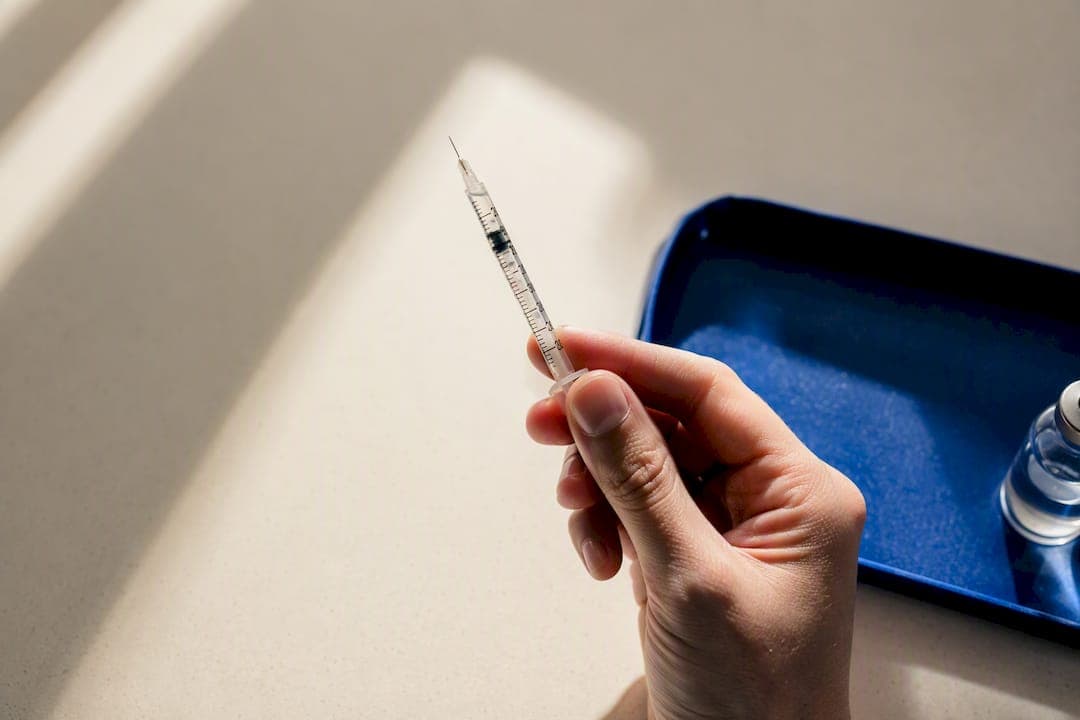
Microdosing tirzepatide means taking doses below the lowest FDA-approved starting amount, usually without a clinician-supervised titration plan behind it. No randomized trial has tested this practice, and the closest data we have, from the SURMOUNT program, points the opposite direction: benefits scale with dose, not against it. If you're considering it, talk to a prescribing clinician first, and be wary of any compounded product without verified sourcing.
TL;DR:
- Microdosing tirzepatide involves taking doses below FDA-approved levels without clinical guidance, but there is no scientific evidence supporting its effectiveness.
- SURMOUNT trial data shows that higher doses consistently produce greater weight loss, and reducing dosage or stopping treatment leads to significant regain.
- Compounded or fractional dosing methods lack quality control, can vary in potency, and carry safety risks, especially without proper verification of sourcing.
- Cost, side effects, and drug shortages motivate some patients to microdose, but safer alternatives include slower titration, managing side effects, and manufacturer savings programs.
- Clinicians recommend following tested dosing schedules, monitoring health metrics closely, and consulting a healthcare professional before attempting any off-label low-dose regimen.
Table of Contents
- What Microdosing Tirzepatide Actually Means
- Why the Clinical Trial Data Doesn't Support It
- Safety and Regulatory Risks You Can't Ignore
- Why People Try It Anyway: Cost, Side Effects, and Shortages
- Safer Alternatives Clinicians Actually Recommend
- What To Ask Your Clinician Before Trying Any Low-Dose Approach
- Where Daylahealth Stands on Microdosing
- A Supervised Path That Doesn't Require Guesswork
- Sources
What Microdosing Tirzepatide Actually Means
Microdosing has become shorthand for taking tirzepatide below the amount your prescriber intended, often without medical guidance. Standard titration starts patients at a controlled dose and increases it on a schedule designed to build tolerance while limiting side effects. Microdosing skips or reverses that logic. People stretch a single vial across more injections, draw partial amounts with an insulin syringe, or space out doses beyond the manufacturer's weekly schedule.
Reports from online communities describe a range of informal practices:
- Drawing doses well under 2.5 mg from a compounded multi-dose vial
- Injecting every 10 to 14 days instead of weekly to conserve supply
- Splitting a single pen dose across two or three separate injections
- Using compounded tirzepatide specifically because it allows fractional dosing that branded pens don't
None of these practices come from a clinical protocol. The FDA-approved dosing schedule for tirzepatide starts at 2.5 mg weekly, and that starting dose exists to build tolerance, not to produce meaningful weight loss on its own. Patients typically move up every four weeks toward maintenance doses of 5 mg, 10 mg, or 15 mg, depending on response and side effects. There is no published chart, no consensus protocol, and no professional body that defines a "microdose" of tirzepatide. When you hear the term, understand it as an informal label for off-label under-dosing, not a recognized clinical strategy.
Why the Clinical Trial Data Doesn't Support It
The SURMOUNT trial program is the strongest evidence base tirzepatide has, and it tells a consistent story: more drug produces more weight loss, up to the tested maximum. Every SURMOUNT trial that compared doses found the 15 mg arm outperformed 10 mg, which outperformed 5 mg. That dose-response relationship is the opposite of what the microdosing theory needs to be true.
Trial data point: In SURMOUNT-4, participants who switched from tirzepatide to placebo after a lead-in treatment period regained an average of 14% of their body weight over the following 52 weeks. Staying on the drug preserved results. Stopping it, or in this case reducing exposure to zero, reversed them.
That withdrawal data matters more than it might seem at first glance. If a full therapeutic dose can't maintain weight loss once you stop taking it, there's no clinical basis to assume a fraction of that dose could produce or sustain comparable results in the first place. The trials never tested sub-2.5 mg amounts, intermittent schedules, or any of the patterns described in online microdosing communities. That's not a gap in the marketing. It's a gap in the science itself.
A few things the trial evidence actually establishes:
- Weight-loss magnitude tracked dose level consistently across the SURMOUNT program
- Discontinuing treatment led to substantial regain within a year, even after high-dose exposure
- No trial arm tested doses below the established starting dose
- No trial tested irregular dosing intervals like every 10 or 14 days
Reporting from STAT News has noted that GLP-1 microdosing has become popular through social media and word of mouth, well ahead of any evidence that it works. That's a useful frame for evaluating any personal account you encounter online: enthusiasm is not data, and a self-reported "microdose success story" carries none of the controls that make SURMOUNT's numbers meaningful.
Safety and Regulatory Risks You Can't Ignore
The dosing question is only half the risk profile. The other half comes from where the medication itself is sourced. FDA-approved tirzepatide (branded as Zepbound) goes through premarket review for manufacturing quality, sterility, and potency verification. Compounded versions, which many microdosers rely on because they allow fractional dosing that branded pens don't, do not go through that same FDA premarket review process. That's not a minor technicality. It means potency can vary between batches, between pharmacies, and even between vials from the same order.
Multi-dose vials introduce a second layer of risk. Every time a patient draws a fraction of a dose at home with an insulin syringe, there's a chance of measurement error, air contamination, or microbial introduction from repeated needle entry. There is no established, clinically validated conversion between a compounded "microdose" unit and an FDA-approved pen dose, so patients are often estimating rather than measuring precisely.
Pharmacovigilance reporting has flagged adverse-event patterns specifically tied to compounded GLP-1 products, separate from any question about the dose itself. That signal exists independent of whether someone is microdosing or taking a full compounded dose.
Before trusting any compounded source, run through this checklist:
- Confirm the pharmacy holds active state board of pharmacy accreditation
- Ask whether the active ingredient is USP-grade and sourced from a registered supplier
- Request documentation on sterility testing for injectable products
- Avoid any vendor unwilling to disclose compounding location or licensing
Pro Tip: If a seller won't name their compounding pharmacy by name and license number, treat that as a hard stop. Legitimate compounding pharmacies disclose this information without hesitation because they're required to.
Why People Try It Anyway: Cost, Side Effects, and Shortages
Nobody microdoses because they think it's the medically superior option. They do it because the alternatives feel worse. Three motivations show up again and again:
- Cost. Full-dose tirzepatide can run several hundred dollars a month without insurance coverage, and stretching a supply feels like the only lever a patient can control.
- Side effects. Nausea, reflux, and GI discomfort are common during dose escalation, and some patients believe a smaller amount will spare them without giving up the benefit.
- Supply shortages. Periods of limited tirzepatide availability have pushed some patients toward rationing whatever they can get.
The eligibility picture makes this worse, not better. FDA approval of tirzepatide for chronic weight management covers adults with a BMI of 30 or higher, or 27 or higher with a weight-related condition like hypertension or type 2 diabetes. Insurers frequently add their own criteria on top of that, including prior authorization, documented failed attempts at other interventions, or exclusion of weight-loss medications entirely from a plan's formulary. Patients who fall just outside those lines, or whose insurer simply won't cover GLP-1 drugs, often turn to compounding because it's the only accessible price point.
That logic is understandable. It's also where compounding gets chosen for cost reasons rather than medical ones, and where quality oversight becomes the patient's problem instead of the manufacturer's. If cost is driving the decision, that's worth raising directly with a clinician. There are structured ways to reduce out-of-pocket spending on tirzepatide without insurance that don't require abandoning a tested dosing schedule.
Safer Alternatives Clinicians Actually Recommend
If cost or side effects are the real problem, there are evidence-aligned ways to address both without guessing at doses. Clinicians typically work through these in order:
- Slow the titration schedule. Extending time at each dose step, sometimes six or eight weeks instead of four, gives the body more time to adapt before increasing further. This stays inside the tested regimen instead of departing from it.
- Treat the side effects directly. Smaller meals, reduced fat intake, hydration, and over-the-counter anti-nausea options often resolve GI symptoms without reducing the dose at all.
- Explore manufacturer savings programs. Eli Lilly has run direct savings and vial-access programs for tirzepatide that can lower monthly cost without touching the prescribed regimen.
- Use a clinician-guided cash program. A documented, transparent budget GLP-1 treatment plan keeps a prescriber involved in every dose decision, which is the piece missing from most DIY microdosing.
- If compounding is unavoidable, verify it first. Confirm licensing, ask for sterility documentation, and never draw doses without a clinician confirming the math.
Pro Tip: If you and your clinician agree to try any off-label variation on your regimen, ask for it in writing as documented informed consent. That protects you and creates a record your clinician can reference at your next visit.
What To Ask Your Clinician Before Trying Any Low-Dose Approach
If you're still considering a supervised low-dose experiment, bring specifics, not generalities. A clinician can't evaluate what they can't verify.
Bring to the appointment:
- The exact dose, source, and pharmacy name for any compounded product you're considering
- Proof of that pharmacy's state licensing and accreditation status
- Baseline labs, including glucose and kidney function if you have diabetes or metabolic risk factors
- A written record of informed consent if you and your clinician agree to proceed
Once you're underway, monitor consistently rather than casually. Track weight weekly, check blood glucose regularly if you're diabetic, keep a symptom diary for GI or injection-site reactions, and schedule follow-up visits rather than waiting for a problem to appear. Tools that help you track GLP-1 progress systematically make this easier than relying on memory.
Stop and seek care immediately for severe abdominal pain, signs of pancreatitis, persistent vomiting, or any allergic reaction at the injection site.
Where Daylahealth Stands on Microdosing
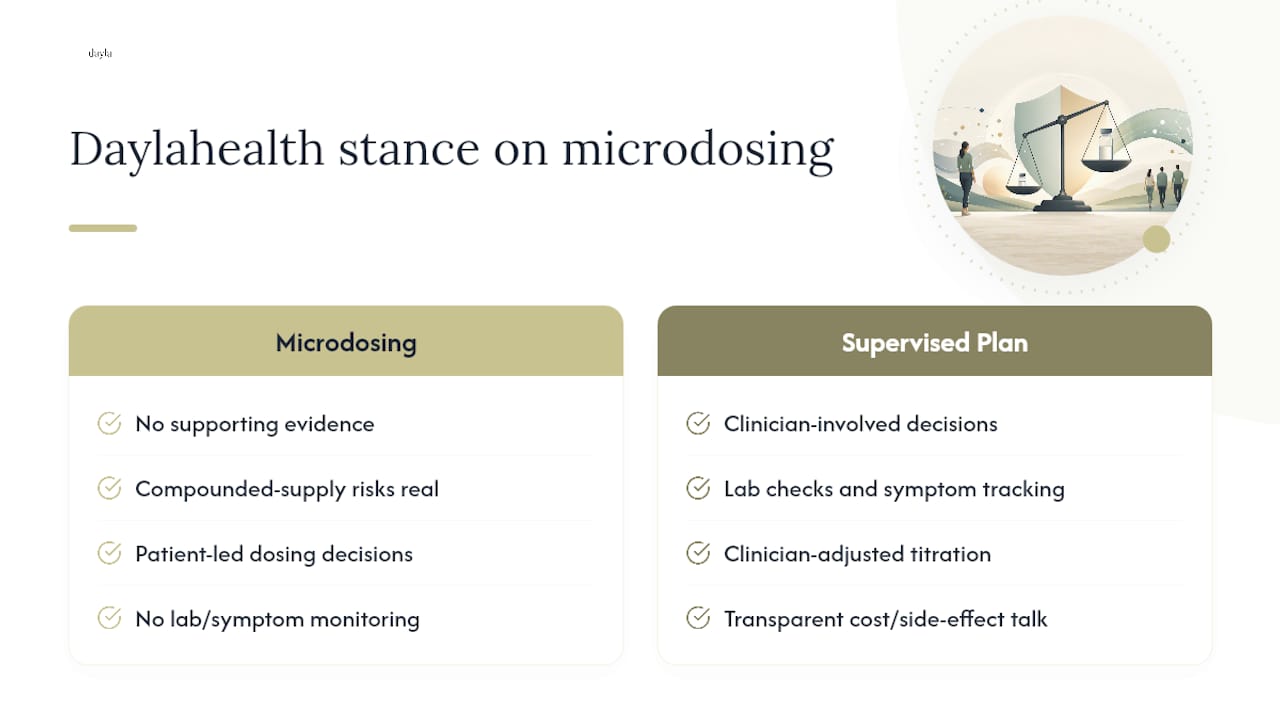
Some providers emphasize keeping a clinician in the loop on every dosing decision, including decisions patients might otherwise make alone. We don't endorse microdosing tirzepatide as a strategy, because the evidence doesn't support it and the compounded-supply risks are real. What we do endorse is transparency: if cost or side effects are pushing you toward stretching a supply, that's exactly the conversation to have with a prescriber, not a workaround to attempt quietly.
A monitored plan includes lab checks, symptom tracking, and clinician adjustment of titration schedules instead of estimating fractions from a vial. If you're weighing cost against safety, bring that checklist from the previous section to an intake conversation. A supervised plan can usually address the underlying problem, price or tolerability, without asking you to guess at a dose no trial has ever tested.
— Flexible
A Supervised Path That Doesn't Require Guesswork
Compounded GLP-1 weight care programs may include clinician-reviewed plans, providing oversight missing from DIY microdosing.
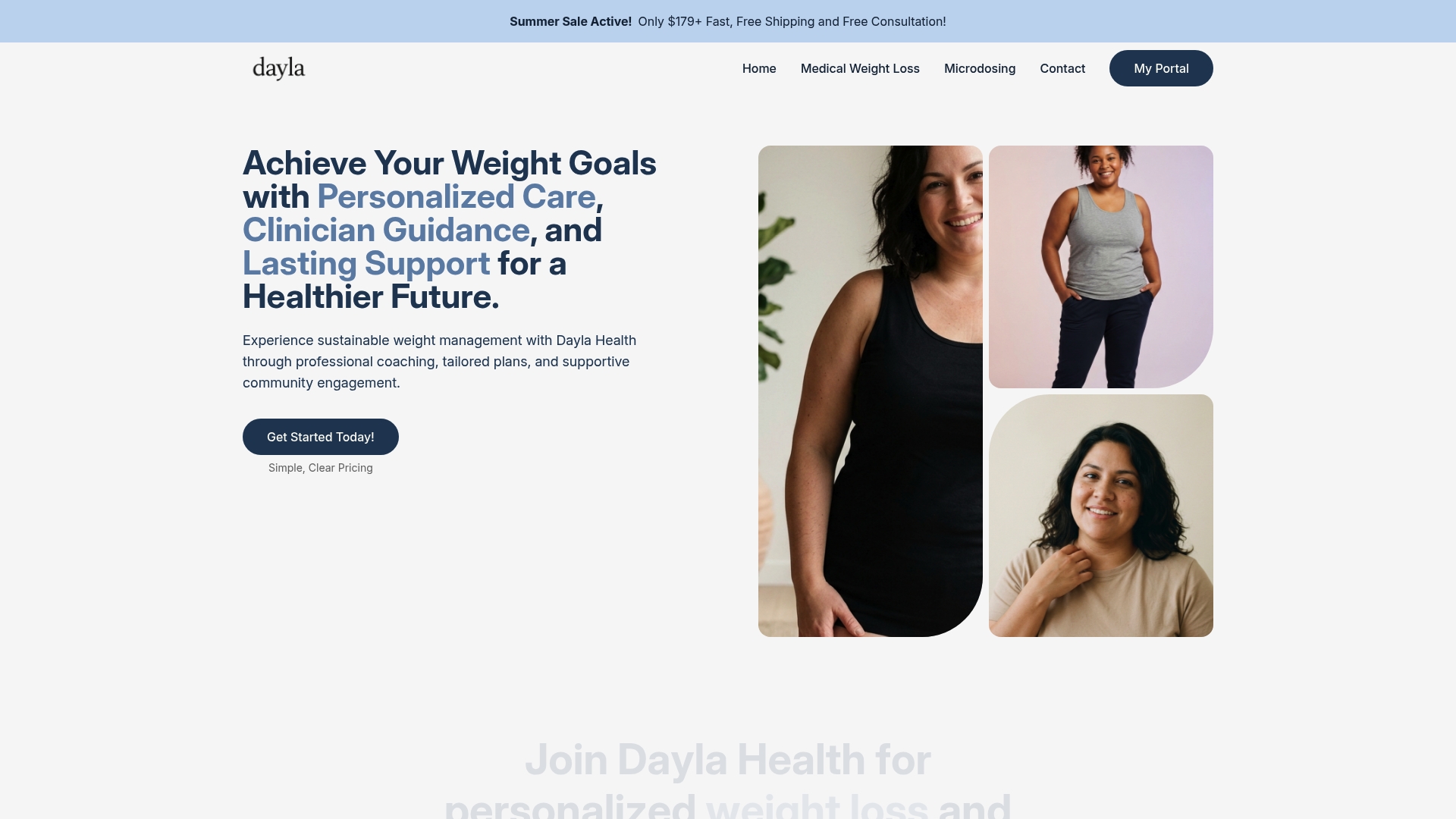
These programs can offer online clinician evaluations, prescriptions tailored to titration schedules, and ongoing care coaching, often shipped directly without insurance requirements. If cost is a barrier leading to unverified compounded sources, some providers document strategies for lowering out-of-pocket spending while maintaining prescriber involvement in adjustments. That's the difference between guessing and being monitored. If you're ready to start with a plan that a clinician actually reviews, visit Daylahealth's compounded weight care program to begin your intake.
Sources
This article is general information, not a substitute for advice from a qualified doctor. Consult a qualified healthcare professional about your own circumstances before acting on anything here.