

No sublingual tirzepatide product carries FDA approval as of 2026, and no large human trial confirms it works like the injectable version. Only injectable tirzepatide, sold as Mounjaro and Zepbound, has been through the FDA review process. If you're weighing an oral or sublingual option, your safest path is a licensed prescriber who can order a compounded product with proper oversight, not an unverified online seller.
TL;DR:
- No human trials currently confirm the effectiveness of sublingual tirzepatide, and all marketed options are compounded, unapproved formulations.
- Formulation science faces significant challenges with peptide absorption due to saliva enzymes, mucosal barriers, and the peptide's large size, making sublingual delivery difficult.
- Animal studies show promise for encapsulated tirzepatide in mice, but this does not translate directly to humans, who require thorough clinical testing for safety and efficacy.
- FDA-approved injectable tirzepatide provides consistent bioavailability and proven results from large-scale human trials, unlike unverified sublingual products.
- Patients should verify prescriptions, licensing, labeling, and ongoing clinical oversight before considering compounded sublingual tirzepatide, as safety is not guaranteed outside approved products.
Table of Contents
- What Sublingual Tirzepatide Formulations Actually Are
- What the Evidence Actually Shows, and Where the Safety Flags Are
- Who Can Actually Sell You This, and How to Vet It
- How Sublingual Dosing and Administration Typically Work
- Sublingual vs. Injectable vs. Other Oral GLP-1 Options
- What Our Pricing and Dosing Data Show
- What Patients Should Actually Weigh Right Now
- Get Clinician-Supervised GLP-1 Care Without the Guesswork
- Sources
- FAQ
What Sublingual Tirzepatide Formulations Actually Are
"Sublingual tirzepatide" isn't one product. It's a category of compounded formats built around the same idea: getting a peptide molecule absorbed through the tissue under the tongue instead of through a needle. You'll typically encounter one of the following:
- Drops. A liquid dose measured with a dropper and held under the tongue for a set time.
- Orally disintegrating tablets (ODTs). Small tablets designed to dissolve quickly against the mucosa rather than being swallowed whole.
- Troches. Slowly dissolving lozenges, often flavored, meant to sit in the mouth longer than an ODT.
- Films. Thin strips that adhere to the tongue or cheek and dissolve over a few minutes.
- Oral sprays. Metered sprays aimed at the sublingual space for faster mucosal contact.
The biology behind all of these is the same challenge. The tissue under the tongue has a rich blood supply, which is why nitroglycerin and a handful of small-molecule drugs absorb there quickly and skip the liver's first-pass metabolism. Tirzepatide is not a small molecule. It's a large peptide, and large peptides don't cross mucosal membranes easily on their own.
Formulators try to compensate with a few tactics: permeation enhancers that temporarily loosen the tight junctions between mucosal cells, mucoadhesive agents that keep the dose in place longer instead of letting it wash away in saliva, pH modifiers meant to stabilize the peptide before it degrades, and increasingly, nanocarriers or small extracellular vesicles (sEVs) designed to shuttle the peptide past enzymatic defenses. Saliva contains peptidases that break down protein-based drugs before they ever get a chance to absorb, which is the core reason peptide therapy in general leans so heavily on injection. A related breakdown of how GLP-1 therapy works covers why the molecule's structure matters so much for delivery method.
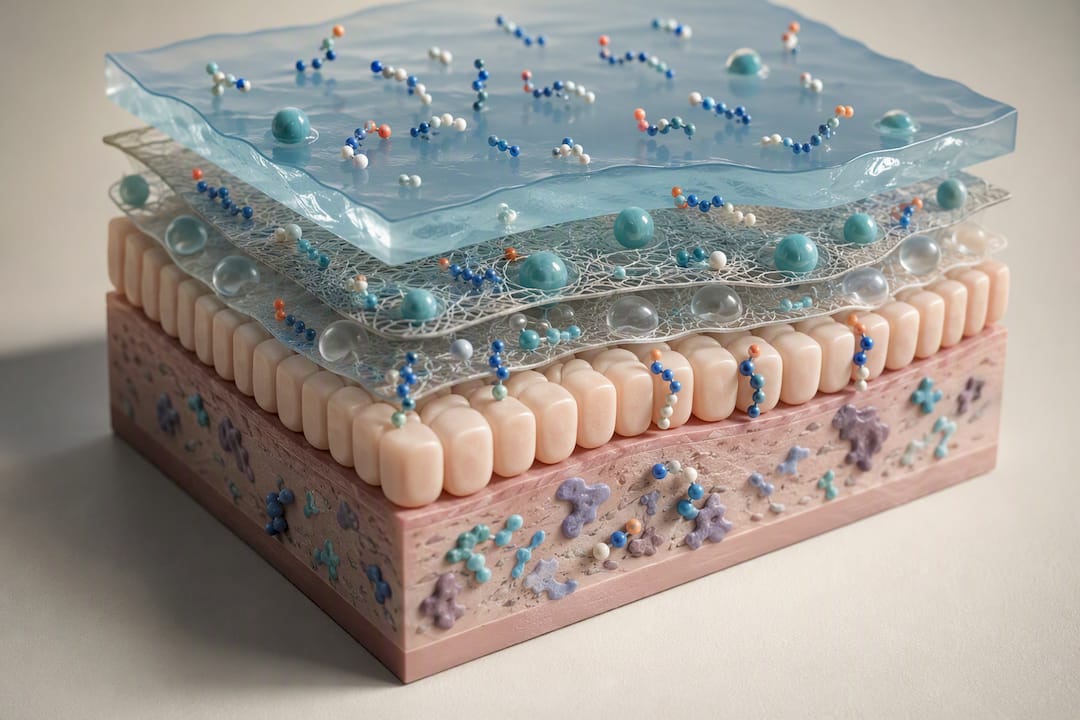
None of this makes sublingual delivery impossible. It makes it hard, and it's the reason formulation science, not the peptide itself, is where all the current research energy is going.
What the Evidence Actually Shows, and Where the Safety Flags Are
The most encouraging data on oral peptide delivery comes from mice, not people. Researchers encapsulating semaglutide and tirzepatide in milk-derived small extracellular vesicles found that oral delivery using these sEVs lowered blood glucose in diabetic mouse models, with efficacy that in some cases matched or beat the free peptide given directly. The sEV shell appeared to protect the peptide long enough to extend its residence time in the GI tract, which is a real formulation advance.
What the data actually supports: preclinical sEV-encapsulated tirzepatide produced measurable glucose lowering in diabetic mice, comparable to free peptide. It says nothing yet about dose, safety, or effect size in humans, because no human trial has tested it.
That gap matters more than it might sound. Mouse gut physiology, enzyme activity, and mucosal permeability differ from human biology in ways that routinely sink promising animal data during clinical translation. The same research group's own framing acknowledges this is proof-of-concept work, not a therapy ready for people.
Compare that to what backs injectable tirzepatide. The SURMOUNT trial program, the clinical evidence base behind Zepbound's FDA approval, enrolled thousands of participants across multiple phases and tracked outcomes over more than a year, generating exactly the kind of large-scale, peer-reviewed human data that sublingual formulations currently lack entirely. There is no equivalent body of trial evidence for any sublingual or oral tirzepatide product. What exists instead is a mix of animal studies, formulation science papers, and manufacturer or compounding pharmacy claims that have not gone through independent, controlled human testing. No pill or sublingual version of tirzepatide has cleared that bar, and the products marketed that way are compounded, unapproved, or both.
That evidence gap sits alongside a set of documented safety concerns:
- The FDA has issued warnings about unapproved and misrepresented GLP-1 compounds circulating outside the approved supply chain.
- Consumer-safety watchdogs have flagged unverified websites selling GLP-1 products with no legitimate prescribing process behind them.
- Dosing errors have been reported with certain compounded GLP-1 products, largely because concentration and volume labeling vary by pharmacy rather than following one FDA-validated standard.
- Sterility and purity are not guaranteed the way they are for FDA-approved manufacturing, since compounded products are made in smaller batches under different oversight rules.
None of that means every compounded sublingual product is dangerous. It means the burden of verification, checking the pharmacy, the prescriber, and the sourcing, falls on the patient and provider in a way it simply doesn't with an FDA-approved injectable pen.
Who Can Actually Sell You This, and How to Vet It
Here's the regulatory reality in one sentence: injectable tirzepatide is FDA-approved, and no sublingual or oral tirzepatide formulation has cleared that same approval bar. Everything marketed as "sublingual tirzepatide" today comes from a compounding pharmacy, not a pharmaceutical manufacturer with an approved New Drug Application.
Compounding pharmacies exist for a legitimate reason. They can create customized medication formats, including alternative delivery routes, when a licensed prescriber writes an order for a specific patient's needs. But compounded drugs don't go through the same FDA review as approved products. The FDA inspects compounding facilities and can act against bad actors, but it does not pre-approve the safety or efficacy of each compounded formula the way it does for Zepbound or Mounjaro. That distinction is easy to miss when a website's marketing language sounds just as clinical and confident as an approved drug's label.
If you're evaluating a sublingual tirzepatide source, run through this checklist before you commit to anything:
- Confirm you have a valid, individualized prescription. A real clinician should evaluate your health history, not just process a form and ship product.
- Verify the compounding pharmacy is licensed in the state it operates from and ships to.
- Check the labeling. Legitimate compounded products list concentration, volume, lot number, and expiration date clearly.
- Confirm ongoing clinician follow-up is built into the service, not a one-time transaction with no monitoring.
- Walk away from any seller that doesn't require a prescription. That single detail is the clearest red flag in this space.
How Sublingual Dosing and Administration Typically Work
Because there's no FDA-standard dose for sublingual tirzepatide, titration schedules vary by compounding pharmacy. What's fairly consistent across provider protocols is the general shape: a low starting dose taken daily, stepped up gradually over weeks, because sublingual absorption is lower and more variable than an injection, so daily dosing is used to try to approximate the exposure a once-weekly shot delivers. Some compounding pharmacies label these ladders by concentration and drop count rather than a clean milligram number, which is a byproduct of how empirically these protocols were built rather than a standardized bioequivalence formula.
A typical administration sequence looks something like this:
- Take the dose in a fasted state, usually first thing in the morning, since food and saliva both interfere with mucosal absorption.
- Place the dose under the tongue, not on top of it, targeting the vein-rich tissue in the floor of the mouth.
- Hold it there without swallowing for the time your provider specifies, commonly several minutes for sublingual medications generally, to give the mucosa time to absorb what it can before saliva washes the rest away.
- Avoid eating, drinking, or rinsing your mouth for the window your prescriber sets afterward.
- Log how you feel and any side effects, since your provider will use that pattern to guide the next titration step rather than a fixed schedule.
Pro Tip: Swallowing part of the dose before your hold time is up isn't a minor slip. Once it clears your saliva into your stomach, stomach acid and digestive enzymes will likely break down most of the peptide before it can do anything useful, which defeats the entire point of taking it sublingually in the first place.
Expect the same GI-related side effects associated with tirzepatide generally, including nausea, mild stomach upset, or appetite changes, particularly during dose increases. Report new or worsening symptoms to your prescriber rather than adjusting your own dose. Titration decisions should stay in the hands of the clinician managing your protocol, since dose changes affect both efficacy and tolerability in ways that are hard to judge accurately on your own.
Sublingual vs. Injectable vs. Other Oral GLP-1 Options
The honest comparison here isn't close, at least on the evidence side. Injectable tirzepatide delivers high, consistent bioavailability directly into subcutaneous tissue, backed by the SURMOUNT trials' large-scale human data. Sublingual formulations offer lower and more variable absorption, backed by mouse studies and formulation science, not controlled human trials.
That doesn't mean sublingual delivery has zero legitimate ground to stand on as a broader category. Oral semaglutide (marketed as Rybelsus) is FDA-approved and shows how oral peptide delivery can work when it's built around the right technology. It relies on an absorption enhancer called SNAC to help the peptide survive the stomach, and even then its oral bioavailability sits around just 1%, which is why its dose is so much higher than the injectable version delivering the same active ingredient. That's a useful benchmark: even an approved, well-studied oral peptide struggles with absorption efficiency. Sublingual tirzepatide hasn't been through anywhere near that level of engineering or testing.
Where does that leave your decision?
- Choose the injectable route when predictability matters most, particularly if you're managing type 2 diabetes or need reliable, trial-backed weight-loss results.
- A licensed prescriber discussing compounded sublingual options with you should walk you through the evidence gap explicitly, not gloss over it.
- Treat convenience as a real factor, but not the deciding one, since needle aversion is legitimate but shouldn't outweigh a large evidence gap without informed discussion first.
- Ask about legitimate oral small-molecule GLP-1 candidates in development, since that field is moving faster than sublingual peptide formulation is right now.
What Our Pricing and Dosing Data Show
Cost is a real factor driving people toward sublingual products, and the numbers explain why. Manufacturer-direct vials of tirzepatide can run substantially less than standard retail pricing for the branded injectable pen, which is part of why compounded alternatives, sublingual included, have found a market among cost-conscious patients.
But cost shouldn't drive dosing decisions past a certain point. An internal review of U.S. patient data found no evidence supporting microdosing tirzepatide below 2.5 mg, the standard starting injectable dose. Some sellers market ultra-low sublingual "microdoses" as a gentler entry point. The data we've reviewed doesn't back that as a meaningfully effective starting strategy.
The model centers on:
- Clinician evaluation before any prescription is written
- Prescription handling through licensed pharmacy partners
- Ongoing coaching and dose adjustment based on response, not guesswork
- Direct shipping with continued clinical oversight, not a one-time sale
What Patients Should Actually Weigh Right Now
If evidence certainty matters to you, an FDA-approved injectable remains the better-supported choice today. Compounded sublingual tirzepatide isn't inherently reckless, but choosing it should come with informed consent about exactly how thin the human data still is.
Ask any provider offering it about documented prescriptions, baseline labs, a clear plan for stopping if side effects escalate, and a real follow-up schedule. What the field genuinely needs next is human pharmacokinetic data on sublingual tirzepatide specifically, head-to-head outcome studies against injectables, and clinical trials translating the sEV delivery research beyond mice. Until that exists, treat sublingual as a choice made with your eyes open, not a shortcut with the same guarantees as the shot.
— Flexible
Get Clinician-Supervised GLP-1 Care Without the Guesswork
Weighing an unverified sublingual product against a properly monitored prescription shouldn't be a hard call. The service connects you with a licensed clinician who reviews your health history, determines whether an injectable, microdose, or peptide protocol fits your goals, and handles the prescription and shipping directly, no pharmacy hunting, no unverified sellers, no guessing at your own titration schedule.
Plans include ongoing clinician follow-up and coaching, so dose adjustments happen based on how you're actually responding, not a fixed online chart. If you're ready to explore GLP-1 prescription options backed by real medical oversight, start your intake today and get matched with a clinician who can walk you through what's appropriate for your history and goals.
This article is general information, not a substitute for advice from a qualified doctor. Consult a qualified healthcare professional about your own circumstances before acting on anything here.
Sources
- Oral Delivery of Semaglutide and Tirzepatide Using Milk‐Derived Small Extracellular Vesicles - PMC
- Tirzepatide Pills: Do Oral and Sublingual Forms Work?
- MedlinePlus: How to take sublingual medicines
FAQ
Do Sublingual Tirzepatide Products Actually Work?
Preclinical data shows peptide-based oral delivery can lower blood glucose in mice, but no published human trial confirms sublingual tirzepatide produces reliable therapeutic exposure in people.
Is Oral Tirzepatide As Effective As the Injectable Version?
No. Injectable tirzepatide has consistent, high bioavailability backed by the large-scale SURMOUNT trials, while sublingual and oral versions rely on lower, more variable absorption with no equivalent human trial data.
How Do You Use Sublingual Tirzepatide Correctly?
Take the dose in a fasted state, place it under the tongue rather than swallowing it, hold it there for the time your provider specifies, and avoid eating or drinking during the window they set afterward.
Is Sublingual Tirzepatide FDA-Approved?
No. Only injectable tirzepatide, sold as Mounjaro and Zepbound, carries FDA approval; sublingual and oral versions are compounded products without that regulatory clearance.
Can Daylahealth Prescribe Sublingual Tirzepatide?
Daylahealth connects patients with licensed clinicians who evaluate individual cases and determine the most appropriate GLP-1 or peptide protocol, which may include injectable, microdose, or other options based on your health history.