

What are peptides in biology, and how are they structured?
Peptides are short chains of amino acids — typically between 2 and 50 residues — linked together by peptide bonds, the covalent connections formed when the carboxyl group of one amino acid joins the amine group of another. Think of them as precise molecular sentences: each amino acid is a word, and the sequence determines the entire meaning.
The terminology follows chain length:
- Oligopeptides: fewer than 20 amino acids (dipeptides, tripeptides, and so on)
- Polypeptides: longer continuous chains, typically 20–50 residues
- Proteins: one or more polypeptides folded into functional three-dimensional structures, generally above 50 amino acids
Every peptide has two distinct ends: the N-terminal (amine group) and the C-terminal (carboxyl group). That directionality is not incidental. The sequence from N to C terminus determines how the molecule folds, what receptors it binds, and what biological effect it produces. A single amino acid substitution can render a peptide inert or, in some cases, harmful.
Table of Contents
- How peptides function as biological messengers in your body
- Therapeutic peptides vs. wellness supplements: what you need to know
- How peptides support health: key benefits and clinical use cases
- How to evaluate peptide therapies and stay safe
- Daylahealth brings doctor-led peptide care directly to you
- Key Takeaways
How peptides function as biological messengers in your body
Peptides are far more than structural components. They act as signaling molecules coordinating hormone activity, immune defense, tissue repair, and inflammation control throughout the body.
Approximately 15–40% of all protein-protein interactions in human cells are mediated by peptides — a figure that underscores how central these molecules are to cellular communication.
Key endogenous peptides and their roles include:
- Insulin: a 51-amino-acid peptide hormone that regulates blood glucose
- GLP-1 (glucagon-like peptide-1): produced in the gut, signals satiety and stimulates insulin release
- Oxytocin: a 9-amino-acid neuropeptide governing social bonding and uterine contractions
- Enkephalins: opioid peptides that modulate pain perception in the central nervous system
The body synthesizes peptides through ribosomal translation of messenger RNA, then degrades them via proteases once their signaling role is complete. This tight production-and-clearance cycle keeps physiological responses precise and time-limited. When that cycle is disrupted, or when exogenous peptides are introduced without clinical oversight, the consequences can be unpredictable.
Pro Tip: If you want to understand the peptide amino acid chain in greater depth, the structure-function relationship is the single most important concept — sequence is everything.

Therapeutic peptides vs. wellness supplements: what you need to know
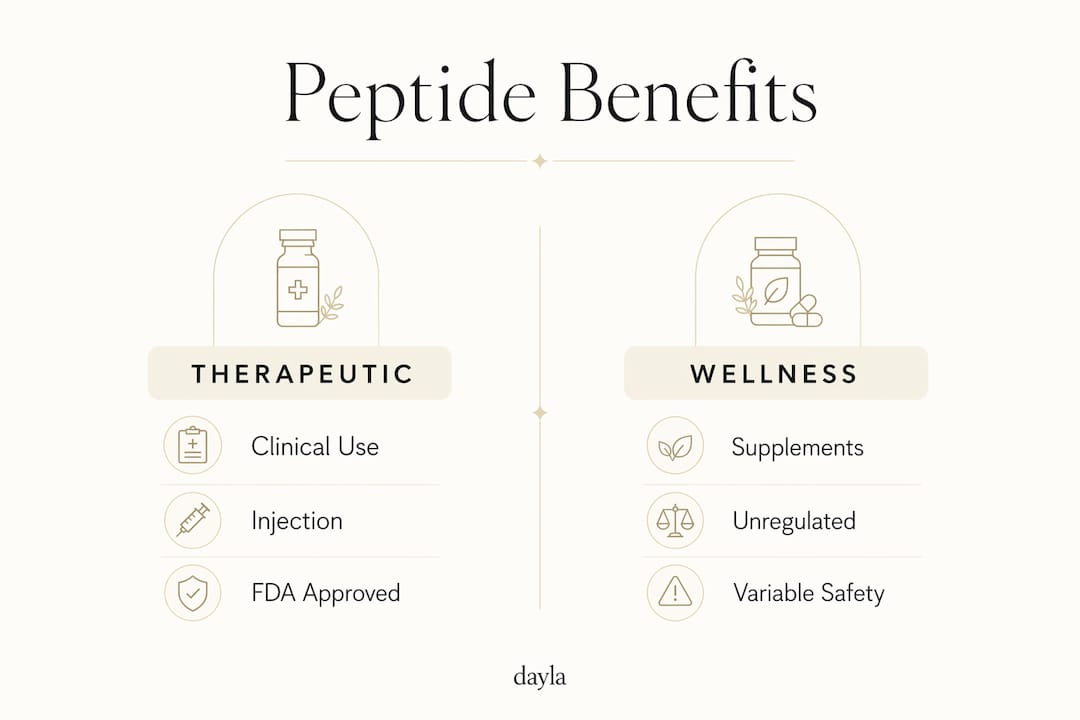
Not all peptides are created equal, and the distinction between FDA-approved therapeutic peptides and unregulated supplements is one that Harvard Medical School experts consider critical for consumer safety.
FDA-approved therapeutic peptides are pharmaceutical-grade medications with precisely verified amino acid sequences, manufactured under strict quality controls, and supported by clinical trial data. Examples include:
- Semaglutide (Ozempic, Wegovy): a GLP-1 receptor agonist approved for type 2 diabetes and chronic weight management
- Tirzepatide (Zepbound, Mounjaro): a dual GIP/GLP-1 agonist with demonstrated weight-loss efficacy
- Insulin: the original therapeutic peptide, in clinical use for over a century
Unregulated peptide supplements, by contrast, are marketed without proven safety or efficacy in humans. They may be sold as powders, capsules, or injectable vials online, often with claims that outpace the evidence. The absence of regulatory oversight means purity, dosing accuracy, and sequence integrity are not guaranteed.
Sequence specificity matters enormously here. Even minor modifications to a peptide's amino acid sequence can completely alter its function. A product that claims to contain a specific bioactive peptide but lacks pharmaceutical manufacturing standards may deliver something structurally different from what the label states.
Pro Tip: Before purchasing any peptide product, check whether it carries FDA approval or is prescribed by a licensed physician. If it is available without a prescription and promises dramatic results, treat that as a red flag. Review common peptide therapy misconceptions before you buy.
How peptides support health: key benefits and clinical use cases
The biological role of peptides translates directly into therapeutic applications across several areas of medicine and wellness.
Metabolic health and weight management are where peptide therapy has seen the most dramatic clinical validation. GLP-1 receptor agonists like semaglutide reduce appetite, slow gastric emptying, and improve insulin sensitivity. The evidence supporting peptides for weight loss is now substantial enough that these medications have reshaped obesity treatment guidelines in the United States.
Other clinically relevant applications include:
- Tissue repair and recovery: peptides like BPC-157 are studied for their role in accelerating healing of tendons, ligaments, and gut lining
- Skin health: collagen-stimulating peptides support dermal regeneration and are used in both topical and injectable formulations
- Immune modulation: certain peptides regulate inflammatory pathways, with applications in autoimmune conditions
- Cognitive support: neuropeptides influence memory consolidation and neuronal repair
Delivery method shapes efficacy. Most therapeutic peptides require injection because oral administration exposes them to digestive enzymes that break them down before they reach systemic circulation. Subcutaneous injection is the standard route for GLP-1 agonists and growth hormone peptides. Some newer formulations are exploring oral delivery, but injectable remains the gold standard for bioavailability.
Pro Tip: Curious about the full range of peptide therapy benefits? The clinical evidence varies significantly by peptide type — always ask your provider which applications have the strongest human trial data.
How to evaluate peptide therapies and stay safe
Safety in peptide therapy is not a matter of caution for its own sake. It is a direct function of product quality, dosing precision, and medical supervision.
Potential side effects vary by peptide type and administration route, but commonly reported concerns include:
- GI symptoms: nausea, vomiting, and diarrhea are the most frequent with GLP-1 agonists, particularly at initiation
- Injection site reactions: redness, swelling, or bruising at the administration site
- Hormonal disruption: growth hormone-stimulating peptides can affect cortisol and insulin levels if dosed incorrectly
- Immune responses: rare but possible, especially with non-pharmaceutical-grade compounds
Pharmaceutical-grade peptides differ from unregulated products in purity, sequence verification, and sterility. When sourcing matters this much, the provider matters equally. A physician-led program with documented dosing protocols and follow-up monitoring is the appropriate framework for any peptide therapy.
Red flags to watch for:
- No prescription required for injectable peptides
- No listed manufacturer or certificate of analysis
- Claims of "research chemical" status paired with human-use marketing
- Pricing dramatically below pharmaceutical-grade equivalents
The FDA peptide reclassification landscape has shifted in recent years, tightening the regulatory boundary between approved medications and compounded or supplement-grade peptides. Staying current on those distinctions protects you.
Pro Tip: Ask any peptide provider for a certificate of analysis from a third-party lab. Legitimate pharmaceutical-grade suppliers provide this without hesitation.
Daylahealth brings doctor-led peptide care directly to you

If this article has clarified one thing, it is that peptide therapy works best when it is precise, supervised, and sourced correctly. Daylahealth offers exactly that: doctor-led, personalized peptide programs delivered directly to your door, without the friction of a traditional clinic.
Whether you are exploring GLP-1 weight loss therapy or looking into longevity and recovery peptides, every Daylahealth program is built around pharmaceutical-grade compounds, licensed physician oversight, and a care model designed around your specific health goals. No guesswork on sourcing, no uncertainty about dosing.
Ready to get started? Visit Daylahealth's peptide therapy programs to review your options and connect with a provider today.
Key Takeaways
Peptides are short amino acid chains that serve as the body's primary signaling molecules, and their therapeutic value depends entirely on sequence precision, pharmaceutical-grade manufacturing, and medical supervision.
| Point | Details |
|---|---|
| Peptide structure | Chains of 2–50 amino acids linked by peptide bonds; sequence determines function entirely. |
| Cellular communication | A substantial share of protein-protein interactions in human cells are mediated by peptides. |
| Therapeutic vs. supplement | FDA-approved peptides like semaglutide and tirzepatide carry clinical validation; unregulated supplements do not. |
| Delivery method | Most therapeutic peptides require injection, as oral administration leads to enzymatic degradation before absorption. |
| Daylahealth | Offers doctor-led, pharmaceutical-grade peptide therapy programs for weight loss, longevity, and recovery. |