

A peptide bioregulator is defined as an ultra-short peptide of 2–4 amino acids that enters the cell nucleus directly to modulate gene expression. Unlike conventional peptides that bind to surface receptors and trigger downstream signaling, bioregulators act as biological information carriers that interact with DNA regulatory regions inside the cell. This mechanism places them in a distinct category within peptide science. The foundational research behind them spans more than 50 years at the St. Petersburg Institute of Bioregulation and Gerontology, led by the Khavinson research lineage, which has produced over 775 scientific papers and nearly 200 patents on the subject.
How do peptide bioregulators work at the cellular level?
Peptide bioregulators work through a mechanism that most peptides cannot replicate: direct nuclear entry followed by epigenetic gene modulation. The process unfolds in a specific sequence that sets these compounds apart from anything acting at the cell membrane.
Here is how the mechanism works, step by step:
- Cell entry. Because of their small size (2–4 amino acids), bioregulators pass through the cell membrane without requiring a receptor.
- Nuclear penetration. They cross the nuclear membrane and reach the DNA directly.
- Promoter and histone binding. They bind to DNA promoter regions and histone proteins, the structural proteins that control how tightly DNA is wound.
- Chromatin remodeling. They convert heterochromatin (tightly packed, inactive DNA) into euchromatin (open, readable DNA), reactivating genes that aging has silenced.
- Gene expression restoration. The result is a shift back toward youthful gene expression patterns in the targeted tissue.
This tissue-specific targeting is one of the most clinically relevant features of bioregulators. Epitalon, a tetrapeptide with the sequence AEDG, targets the pineal gland and influences melatonin production and telomere maintenance. Thymalin targets immune system cells and supports thymic function. Each bioregulator is designed for a specific organ system, which means the effects are not systemic in the broad, nonspecific way that many supplements work.
The epigenetic effect also distinguishes bioregulators from nutrients or standard peptides. Bioregulators optimize gene readability without altering the DNA sequence itself. They reset gene expression patterns that degrade with age, which is a fundamentally different goal than stimulating a receptor or delivering a nutrient.

Pro Tip: If you are evaluating a peptide product marketed as a "bioregulator," confirm it is 2–4 amino acids in length. Longer peptides work through receptor binding, not nuclear entry, and the clinical data from bioregulator research does not transfer to them.
What distinguishes peptide bioregulators from other peptides?
The difference between a peptide bioregulator and a conventional peptide is not just length. It is mechanism, origin, and clinical evidence base.
Size and mechanism
Standard therapeutic peptides range from 5 to 50+ amino acids. They bind to G-protein coupled receptors, growth hormone receptors, or other cell-surface targets. Bioregulators, at 2–4 amino acids, are small enough to bypass that entire system and act inside the nucleus. Epigenetic gene regulation by peptides through direct nuclear localization and chromatin remodeling is a rare mechanism among peptides, which usually affect cell surfaces only.
Natural extracts versus synthetic analogs
The Khavinson taxonomy separates bioregulator products into three categories:
- Cytomaxes: Natural peptide complexes extracted from animal organs (e.g., Thymalin from thymus tissue). These are the original pharmaceutical preparations studied in Russian clinical settings.
- Cytogens: Synthetic short peptides designed to mimic the active sequences of Cytomaxes (e.g., Epitalon as a synthetic mimic of the pineal extract Epithalamin).
- Cytamins: Peptide-vitamin blends in tablet form, designed for oral delivery.
Natural organ extracts differ meaningfully from synthetic short peptides in purity, immunogenicity, and clinical replication potential. The safety and efficacy data from Cytomaxes does not automatically apply to synthetic Cytogens, even when the target tissue is the same.
Common misconceptions
A widespread error is treating all products labeled "peptide bioregulator" as equivalent. Purity, manufacturing standards, and dosing all vary significantly across the market. Unregulated online products may share a name with a clinically studied compound while differing in every meaningful way.
Pro Tip: Always request a batch-specific certificate of analysis (CoA) before purchasing any peptide bioregulator. A CoA confirms purity, identity, and the absence of contaminants. No CoA means no accountability.
What are the known benefits and applications in wellness and fitness?
The research base for peptide bioregulators is substantial within its own ecosystem. Reported benefits span several areas relevant to people focused on longevity, recovery, and cognitive health.
Documented and reported effects include:
- Aging biomarkers: Animal model studies show longer lifespan and improved cellular aging markers with Epitalon and related compounds.
- Immune support: Thymalin has been studied for thymic function restoration in aging populations, with data from Russian pharmaceutical applications.
- Cognitive maintenance: Certain bioregulators targeting brain tissue have been associated with cognitive function support in aging adults.
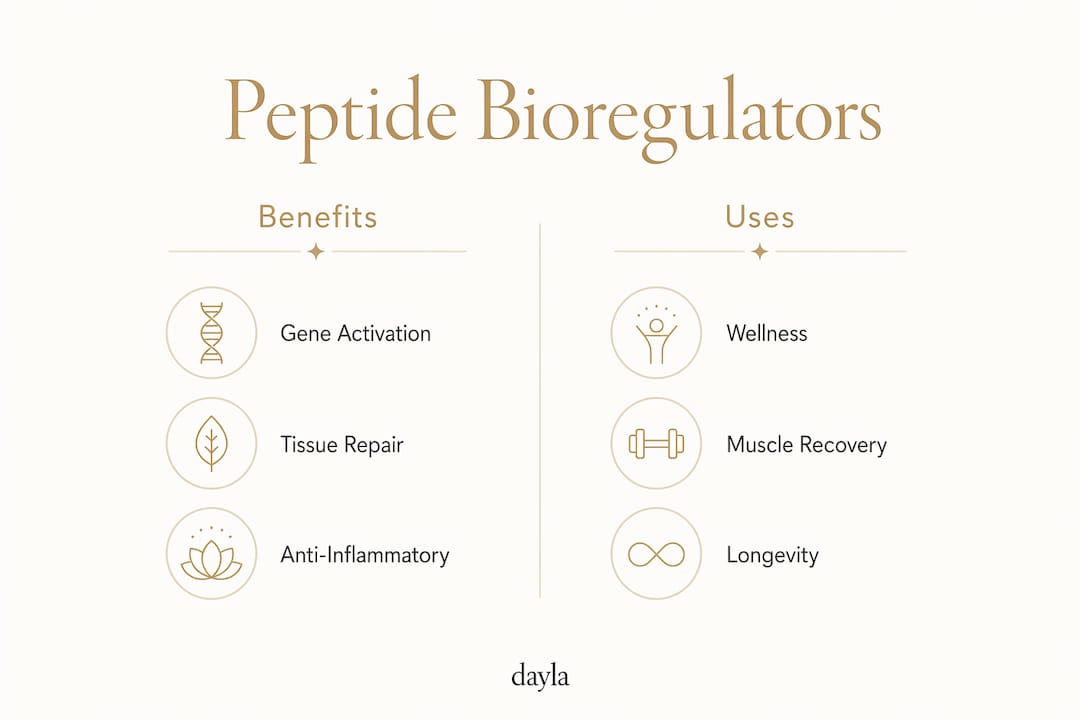
- Muscle recovery: Anti-inflammatory effects and tissue-specific gene activation may support recovery from physical stress, making bioregulators relevant to fitness contexts.
- Tissue regeneration: Organ-specific bioregulators have been studied for their role in supporting cellular repair processes.
The 775+ scientific papers from the Khavinson group represent a significant body of work. That volume matters because it reflects decades of systematic study, not a handful of preliminary trials. The limitation is that most human clinical data comes from Russian pharmaceutical applications and clinical settings, not from the synthetic products marketed globally today.
For fitness-focused readers, the most practically relevant applications are muscle recovery support and anti-inflammatory effects. These align with the tissue-specific gene activation model: a bioregulator targeting muscle or connective tissue could theoretically support faster repair by reactivating genes involved in protein synthesis and inflammation resolution. The evidence for this in humans is promising but not yet definitive outside the original research context.
Statistic to know: The Khavinson research team has filed nearly 200 patents on peptide bioregulator formulations. That level of intellectual property activity signals serious institutional investment, not fringe science. It also means the original formulations are well-characterized, even if market copies are not.
What safety and regulatory considerations should you know?
The safety profile of pharmaceutical-grade peptide bioregulators, as studied in Russian clinical settings, is generally favorable. Most adverse effects reported are mild. The real risk lies elsewhere.
Key safety considerations:
- Transparency gap: Established safety profiles for pharmaceutical-grade bioregulators do not automatically apply to online synthetic analogs. The compound name may be the same; the product is not.
- Purity and quality control: Unsupervised use of low-quality products carries risks including immune reactions and ineffective dosing due to degraded or mislabeled compounds.
- Independent trial scarcity: Multi-center randomized controlled trials are scarce; most data originates from a single research ecosystem. Independent replication is limited.
- Regulatory status: In the United States, peptide bioregulators are not FDA-approved drugs. They exist in a gray area between research chemicals and wellness supplements, depending on the product form.
- Sourcing risk: Products purchased from unverified online vendors may contain incorrect concentrations, contaminants, or entirely different compounds.
"Clinicians advise caution due to significant transparency gaps between original Russian pharmaceutical research and modern, unregulated peptide products. Users should treat these compounds as exploratory wellness tools, not proven therapies, until independent validation catches up with the original research claims." A clinician's honest read on peptide bioregulators
The peptide therapy evidence base is growing, but it is not uniform across all products. Readers who want to use bioregulators responsibly need to understand the difference between what the science shows and what a product label claims.
How can you integrate peptide bioregulators responsibly into your routine?
Responsible use of peptide bioregulators starts with realistic expectations and a structured approach. These are not over-the-counter supplements with decades of consumer safety data. They are research-grade compounds with a specific scientific lineage.
Follow these steps to approach bioregulators with appropriate care:
- Consult a healthcare professional first. A physician familiar with peptide therapies can assess whether a bioregulator is appropriate for your goals and health status.
- Verify the product's certificate of analysis. Batch-specific CoA documentation confirms purity and identity. Reject any product that cannot provide one.
- Match the bioregulator to your goal. Epitalon for longevity and sleep quality, Thymalin for immune support, and tissue-specific options for recovery each have distinct research profiles. Choose based on evidence, not marketing copy.
- Use dosing insights from clinical studies. The original Khavinson protocols provide dosing frameworks. Deviating significantly from studied doses without medical guidance increases risk.
- Treat bioregulators as one part of a broader strategy. Sleep quality, resistance training, nutrition, and stress management all influence the same cellular aging pathways that bioregulators target. Compounds work best alongside, not instead of, these fundamentals.
- Review anti-aging peptide options with a focus on clinical evidence. Not all products marketed as anti-aging peptides share the same research foundation.
Pro Tip: Start with a single, well-characterized bioregulator rather than a stack. This makes it easier to assess your individual response and attribute any effects or reactions to a specific compound.
Key Takeaways
Peptide bioregulators are defined by their nuclear mechanism of action: they enter cells, bind to DNA regulatory regions, and restore gene expression patterns that aging suppresses, making them fundamentally different from conventional peptides that act at the cell surface.
| Point | Details |
|---|---|
| Definition and mechanism | Bioregulators are 2–4 amino acid peptides that enter the nucleus and modulate gene expression epigenetically. |
| Tissue-specific targeting | Compounds like Epitalon target the pineal gland; Thymalin targets the immune system, each with distinct research profiles. |
| Product categories matter | Cytomaxes, Cytogens, and Cytamins differ in origin, purity, and clinical evidence. Safety data does not transfer between categories. |
| Research depth with limitations | 775+ papers support the field, but most data comes from one research ecosystem with limited independent replication. |
| Safety requires sourcing discipline | Pharmaceutical-grade safety profiles do not apply to unregulated online products. Always verify a batch-specific CoA. |
The part of the peptide conversation most people skip
The science behind peptide bioregulators is genuinely compelling. A mechanism that reactivates silenced genes without altering DNA is not a marketing claim. It is a documented biological process with a 50-year research trail behind it. That context matters when you are evaluating whether to take these compounds seriously.
What concerns me is the gap between that research trail and what most people actually buy. The Khavinson studies used pharmaceutical-grade preparations, manufactured under institutional oversight, with defined purity and dosing. The products available online today are often synthetic analogs produced by contract manufacturers with no connection to that original research. The name "Epitalon" appears on both. The compound inside may not be equivalent.
My honest view: peptide bioregulators belong in a wellness strategy for people who are willing to do the work of sourcing responsibly, consulting a clinician, and treating the compounds as exploratory rather than proven. The benefits of peptide therapy are real for the right person using the right product. But the wellness market has a long history of attaching credible science to products that do not deserve the association. Read the research. Verify your source. Manage your expectations accordingly.
— Flexible
Peptide options worth exploring at Daylahealth
If you are ready to move from research to action, Daylahealth offers a curated selection of peptides backed by clinical evidence and sourced to verifiable quality standards.

The longevity peptide category at Daylahealth includes options relevant to the bioregulator research discussed here, with product information grounded in published science rather than marketing claims. For readers focused on cognitive support, the cognitive peptide options reflect the same evidence-first approach. Every product on the platform is selected with the same question in mind: does the clinical evidence support this use? Daylahealth's team is available to help you identify the right peptide for your specific health goals, whether that is longevity, recovery, or cognitive maintenance.
FAQ
What is a peptide bioregulator in simple terms?
A peptide bioregulator is a short chain of 2–4 amino acids that enters the cell nucleus and reactivates genes that aging has silenced, without changing the DNA sequence itself.
How do peptide bioregulators differ from regular peptides?
Regular peptides bind to cell-surface receptors to trigger signaling. Bioregulators bypass receptors entirely, entering the nucleus to directly interact with DNA promoter regions and histone proteins.
What are the most studied peptide bioregulator examples?
Epitalon (AEDG tetrapeptide) and Thymalin are the most researched, with Epitalon targeting pineal gland function and Thymalin supporting immune system restoration in aging populations.
Are peptide bioregulators safe to use?
Pharmaceutical-grade bioregulators studied in clinical settings show a generally mild adverse effect profile. Unregulated online products carry higher risk due to purity and quality variability, so sourcing and medical supervision are critical.
Where does the research on peptide bioregulators come from?
The majority of research originates from the St. Petersburg Institute of Bioregulation and Gerontology, with over 775 published papers and nearly 200 patents. Independent multi-center trials outside this ecosystem remain limited.