

Peptides support immune function through immunomodulation, meaning they regulate immune cell activity and cytokine signaling rather than simply stimulating the immune system indiscriminately. These short chains of amino acids act on specific immune pathways, including T-cell maturation, toll-like receptor activation, and gut barrier integrity, to maintain balanced immune responses. Clinically studied peptides like Thymosin Alpha-1, Immunofan, and lactoferrin each demonstrate distinct mechanisms that adjust immune activity up or down depending on what the body needs. Understanding how peptides support immune function helps you make informed decisions about peptide therapy for immune health, rather than chasing vague "immune boosting" claims.
How do peptides support immune function at the cellular level?
Peptides act on immune function by altering cytokine production, T-cell population dynamics, and gut barrier integrity. These are the three core pathways that determine whether your immune system responds appropriately or tips into chronic inflammation. The distinction between modulation and stimulation matters enormously here. Stimulation pushes immune activity in one direction. Modulation adjusts it toward a healthy set point, which is a fundamentally different and safer outcome.
Cytokine regulation: balancing the immune signal
Cytokines are the chemical messengers your immune system uses to coordinate responses. Peptides influence the balance between pro-inflammatory signals like IL-6 and TNF-alpha and anti-inflammatory signals like interferons. Low-molecular-weight peptides from Ganoderma sinense demonstrated this directly, with 87.76% of peptides under 1 kDa significantly increasing phagocytic capacity and TNF-alpha and IL-6 secretion. That finding confirms that even very small peptide fragments can produce measurable immune effects at the cellular level.
T-cell maturation and polarization
Thymic peptides directly influence how T-cells develop and which direction they polarize. Thymosin Alpha-1 acts via toll-like receptors on dendritic cells to mature T-cells, promote Th1 polarization, and enhance natural killer cell cytotoxicity. Th1 polarization strengthens antiviral and antitumor defenses. This is why Thymosin Alpha-1 has clinical applications in hepatitis and oncology support, not just general wellness.
Gut barrier support and immune balance
The gut lining houses a large portion of your immune tissue. Peptides that repair intestinal barrier integrity reduce the chronic immune activation that leaky gut triggers. This indirect pathway is one reason gut-targeted peptides like BPC-157 attract research interest, even though clinical evidence in humans remains limited. Reducing gut-driven immune overactivation lowers the risk of chronic inflammation and autoimmune exacerbation over time.

Pro Tip: Think of immune-supporting peptides as a thermostat, not a furnace. The goal is to restore your immune system to its correct operating temperature, not to crank it higher.
Which peptides have clinical evidence for immune health?
The benefits of peptides in immunity vary widely depending on the compound. A small number of peptides have genuine clinical evidence behind them. Many others are speculative. Knowing the difference protects both your health and your investment.
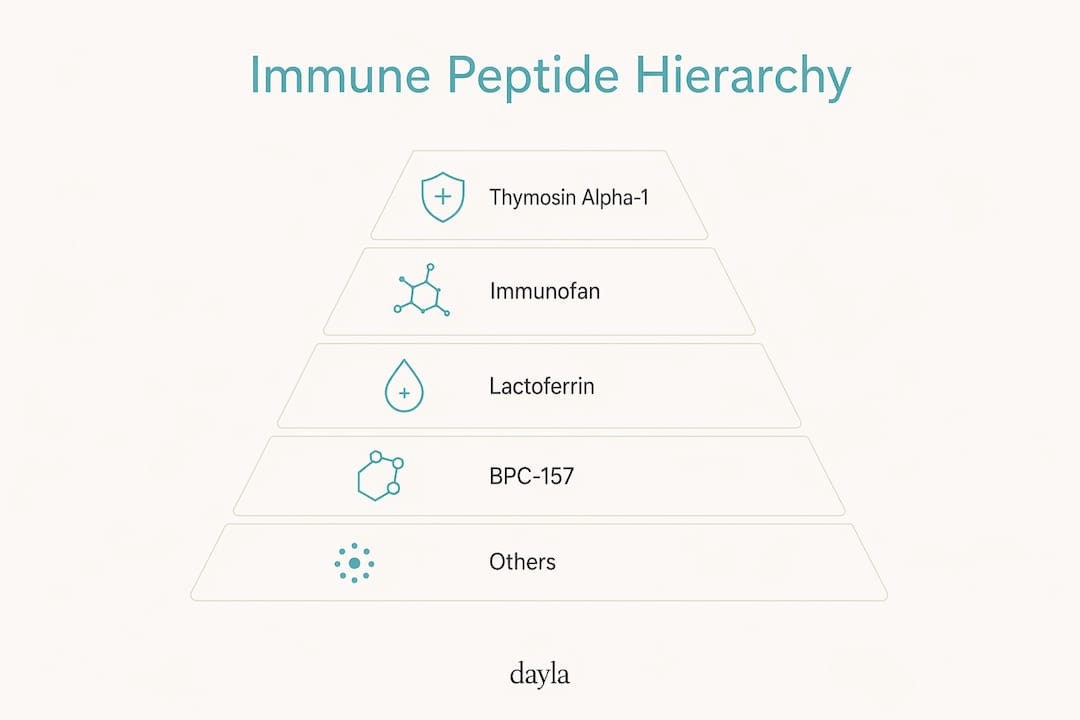
Thymosin Alpha-1
Thymosin Alpha-1 is the most clinically validated immune peptide available. It has clinical usage in over 35 countries, with data from more than 500,000 patients in hepatitis B, hepatitis C, and oncology support contexts. That scale of clinical use puts it in a different category from most wellness peptides. Its mechanism is well-defined: it matures T-cells, promotes Th1 immune polarization, and enhances NK cell activity against viruses and tumor cells.
Immunofan
Immunofan works through bidirectional regulation, meaning it restores depressed immune markers while simultaneously reducing elevated ones. This three-phase activation and normalization process plays out over up to four months of use. That bidirectional profile gives Immunofan a safety advantage over non-specific stimulants, which can push already elevated immune markers higher and increase inflammation risk.
Lactoferrin
Lactoferrin is an oral peptide with randomized controlled trial evidence. At 600 mg per day for four weeks in adults over 50, it reduced IL-6 and C-reactive protein while enhancing antiviral cytokine production. The dose-dependent effects on immune cell profiles make it one of the more accessible options for people who prefer oral supplementation over injection.
Emerging peptides and their limits
BPC-157 shows promise in gut barrier repair and indirect immune support, but its evidence base is primarily preclinical, drawn from animal colitis models. Regulatory status for BPC-157 remains unclear in many jurisdictions. Treating preclinical findings as clinical proof is one of the most common mistakes people make when evaluating immune-supporting peptides.
Pro Tip: When evaluating any peptide for immune support, ask one question first: does it have human randomized controlled trial data? If the answer is no, treat it as experimental, not therapeutic.
| Peptide | Evidence level | Primary immune mechanism | Administration |
|---|---|---|---|
| Thymosin Alpha-1 | Extensive RCTs, 35+ countries | T-cell maturation, Th1 polarization, NK cell activity | Injection |
| Immunofan | Clinical trials, bidirectional | Normalizes immune markers up and down | Injection |
| Lactoferrin | RCT evidence in adults 50+ | Reduces IL-6, CRP; enhances antiviral cytokines | Oral |
| BPC-157 | Preclinical only | Gut barrier repair, indirect immune support | Oral or injection |
How do dosage and individual factors shape peptide outcomes?
Peptide therapy for immune health is not a one-size-fits-all protocol. The same peptide at different doses can produce opposite cytokine and cell profile shifts. This dose-dependent variability is one reason clinical supervision matters more with peptides than with standard supplements.
Your nutrient baseline directly affects how well peptides work. Vitamin D and zinc deficiencies blunt immune peptide efficacy before supplementation even begins. Correcting these deficiencies first is not optional preparation. It is a prerequisite for getting meaningful results from peptide therapy.
Age and immune baseline also shape outcomes significantly. Older adults with suppressed immune function tend to show more pronounced benefits from thymic peptides because their immune systems have more room to recover. A 2026 study confirmed that aminopeptide supplementation restored T- and B-lymphocyte subsets and reduced long-term fatigue in immunocompromised patients with rheumatic diseases. That result reflects how much individual immune status determines the magnitude of response.
Key individual factors to assess before starting peptide therapy:
- Baseline immune markers: Get a full panel including T-cell subsets, NK cell activity, and inflammatory cytokines before starting.
- Nutrient status: Check vitamin D, zinc, and iron levels. Deficiencies reduce peptide efficacy.
- Autoimmune history: Peptides that stimulate Th1 responses can exacerbate certain autoimmune conditions. Medical review is non-negotiable.
- Age and immune trajectory: Older adults and those recovering from illness typically respond more strongly to thymic peptides.
- Current medications: Some immunosuppressants interact with immune-modulating peptides. Disclose all medications to your prescriber.
Misuse of peptides can cause fatigue, immune overactivation, and autoimmune exacerbation. These are not rare edge cases. They are predictable consequences of using immune-modulating compounds without understanding your individual immune profile.
What should you know before using peptides for immune support?
Practical preparation separates people who benefit from peptide therapy from those who waste money or create new problems. The first decision is compound selection. Prioritize peptides with human clinical evidence, specifically Thymosin Alpha-1, Immunofan, and lactoferrin, before considering experimental compounds.
- Verify pharmaceutical grade. Pharmaceutical-grade peptides differ substantially from unregulated research chemicals in purity, quality, and safety. Clinical-grade peptides require proper sourcing and administration practices. Buying research-grade peptides from unverified suppliers introduces contamination risks that no dosing protocol can compensate for.
- Choose the right administration route. Thymosin Alpha-1 and Immunofan require injection for clinical efficacy. Lactoferrin works orally. Matching the administration method to the peptide's pharmacology is not optional. Oral delivery of injection-dependent peptides degrades the active compound before it reaches systemic circulation.
- Work with a clinician. Self-directed peptide stacking without understanding complementary mechanisms is a common and avoidable mistake. Pairing thymic peptides with gut barrier peptides targets complementary immune pathways. Stacking two Th1-stimulating peptides without medical oversight risks immune overactivation.
- Integrate with broader wellness. Peptides work best when your foundation is solid. Sleep deprivation, chronic stress, and poor nutrition all suppress immune function in ways that no peptide can fully overcome. Peptide therapy is an addition to a healthy lifestyle, not a replacement for one.
- Monitor regulatory changes. The lack of global regulatory standardization on therapeutic peptides limits your ability to assess product safety reliably. Stay current with FDA guidance, including the FDA peptide reclassification updates that affect which compounds are legally available and under what conditions.
Pro Tip: Review the clinical evidence for peptide therapy before committing to any protocol. The gap between what is marketed and what is proven is wider than most wellness content suggests.
Key Takeaways
Peptides support immune function through precise immunomodulation of cytokines, T-cell populations, and gut barrier integrity, with clinical-grade compounds like Thymosin Alpha-1 and Immunofan offering the strongest evidence for safe and targeted immune support.
| Point | Details |
|---|---|
| Modulation, not stimulation | Peptides restore immune balance rather than pushing activity higher, reducing autoimmune risk. |
| Thymosin Alpha-1 leads clinically | With data from 500,000+ patients across 35+ countries, it is the most validated immune peptide. |
| Nutrient status matters first | Correct vitamin D and zinc deficiencies before starting peptide therapy to avoid blunted results. |
| Dose and baseline determine outcomes | Individual immune status and dosage level shape cytokine and cell profile shifts significantly. |
| Pharmaceutical grade is non-negotiable | Clinical-grade sourcing and proper administration are prerequisites for safety and efficacy. |
The immune peptide conversation most people are having wrong
The wellness world treats "immune boosting" as an unambiguous goal. It is not. An overactive immune system causes autoimmune disease, chronic inflammation, and tissue damage. The peptides with the strongest clinical track records, Thymosin Alpha-1 and Immunofan, are not boosters. They are regulators. That distinction is not semantic. It changes which peptides you should consider, how you should dose them, and what outcomes you should expect.
What I find most telling is how rarely people ask about bidirectional regulation before starting a peptide protocol. Immunofan's ability to reduce elevated immune markers while restoring depressed ones is precisely what makes it safer than a generic stimulant. Yet most people researching immune peptides are still looking for something that "turns up" their immune system. That framing leads to poor compound selection and real safety risks.
The sourcing question is equally underappreciated. Pharmaceutical-grade peptides and research chemicals are not interchangeable. The regulatory landscape is shifting, and the common misconceptions about peptide therapy around purity and clinical equivalence are genuinely dangerous. If you cannot verify the manufacturing standard of what you are taking, you cannot assess its safety profile.
My honest recommendation is cautious optimism grounded in evidence. Thymosin Alpha-1 and lactoferrin have earned their place in immune support protocols. BPC-157 and many other marketed peptides have not yet earned that same level of trust. The science is moving fast, but marketing moves faster. Your job is to stay one step behind the hype and two steps ahead of the evidence curve.
— Flexible
Peptide therapy for immune health at Daylahealth
Daylahealth offers clinically backed peptide therapies with doctor-led guidance, so you are not navigating compound selection alone.

The peptide therapy options at Daylahealth are designed for health-conscious adults who want evidence-based protocols, not guesswork. Whether your focus is immune resilience, recovery, or overall wellness, Daylahealth connects you with pharmaceutical-grade compounds and professional oversight in one place. Ordering is straightforward, and clinical support is built into the process. If you are ready to move from research to action, explore Daylahealth's full peptide catalog to find the protocol that fits your health goals.
FAQ
What does immunomodulation mean for immune health?
Immunomodulation means adjusting immune activity toward a healthy balance rather than simply increasing it. Peptides like Thymosin Alpha-1 and Immunofan raise depressed immune markers and lower elevated ones, reducing both infection risk and inflammation risk simultaneously.
How do peptides enhance immune response differently from supplements?
Peptides act on specific immune pathways, including cytokine signaling, T-cell maturation, and gut barrier repair, while most general supplements work through broader nutritional support. This specificity allows peptides to target immune deficits more directly than vitamins or minerals alone.
Is Thymosin Alpha-1 safe for long-term immune support?
Thymosin Alpha-1 has an extensive safety record drawn from clinical use in over 35 countries and data involving more than 500,000 patients. Long-term use in hepatitis and oncology contexts shows a favorable safety profile when administered under medical supervision.
Can peptides cause immune problems if misused?
Yes. Misuse of immune-modulating peptides can cause fatigue, immune overactivation, and autoimmune exacerbation. These risks are highest when people self-administer without baseline immune testing or use unregulated research-grade compounds.
Do oral peptides work as well as injectable ones for immune support?
It depends on the peptide. Lactoferrin at 600 mg per day shows measurable immune effects orally in adults over 50. Thymosin Alpha-1 and Immunofan require injection because oral delivery degrades the active compound before it reaches systemic circulation.