
Constipation is one of the most common side effects of tirzepatide, and in most people it is manageable. In Zepbound clinical trials, 11% to 17% of patients reported it, depending on dose. Fluids, fiber, movement and, if needed, a short course of an osmotic laxative resolve it for many people. Severe pain, vomiting, or being unable to pass gas or stool is different. That needs medical care the same day.
This guide covers why tirzepatide slows your bowels, how long constipation tends to last, what to do in the first 48 hours, and when to stop self-treating and call a clinician.
TL;DR
- Tirzepatide slows gastric emptying and gut movement. Constipation is an expected effect, most often during dose increases.
- Start with water, gradual fiber, daily walking and a consistent meal routine. Add polyethylene glycol (MiraLAX) if those are not enough, and only short term.
- Constipation can last longer than other GI side effects. Persistence does not mean the treatment is failing.
- Severe abdominal pain, vomiting, bloating, or no gas or stool: do not take a laxative. Contact a healthcare provider or emergency care.
- If you need laxatives every day, your dose or plan should be reviewed by your prescriber.
Table of Contents
- Why tirzepatide causes constipation
- How common it is, and how it varies by dose
- How long constipation lasts
- Relief that works: a step-by-step plan
- Warning signs: when constipation is an emergency
- Does tirzepatide cause a bowel blockage?
- Diet tips for tirzepatide side effects
- When to ask about your dose
- If you have a procedure planned
- Our perspective
- Care built around side effects
- FAQ
- Sources
Why tirzepatide causes constipation
Tirzepatide works on the GIP and GLP-1 receptors. Part of how it lowers appetite is by slowing how fast food leaves your stomach. The same slowing effect reaches the rest of the digestive tract. Food moves through more slowly, more water is absorbed from stool, and stool becomes harder and less frequent.
Eating less adds to the problem. Smaller meals mean less bulk and less fiber reaching the colon. Many people also drink less because thirst and appetite fall together. The result is a combination of slower transit, lower volume and lower hydration.
Experts describe this as a manageable physiological response to incretin-based therapy, not a sign that the medication is wrong for you.
How common it is, and how it varies by dose
The current Zepbound prescribing information lists constipation rates of 17% at 5 mg, 14% at 10 mg and 11% at 15 mg in trials. The pattern surprises people: the lowest maintenance dose had the highest reported rate. Gastrointestinal effects are most frequent during dose escalation and often ease as your body adapts.
| Zepbound dose (trials) | Patients reporting constipation |
|---|---|
| 5 mg | 17% |
| 10 mg | 14% |
| 15 mg | 11% |
These numbers come from clinical trials. Your own experience depends on diet, hydration, activity, other medications and your history with bowel problems. If you ask whether constipation is common on tirzepatide, the answer is yes: roughly one in ten to one in six people in trials.
How long constipation lasts
Nausea and diarrhea tend to fade within weeks. Constipation is more stubborn. A review of GI symptoms in obesity therapy reports that constipation can persist longer than other GI side effects, with some studies showing an average duration of 47 days and a plateau around week 10 of treatment.
Plan for that. If you are in week four with hard stools and still on a low dose, you are not doing something wrong. Build the routine below early, rather than waiting for a crisis, and expect the worst weeks to cluster around each dose increase.
Relief that works: a step-by-step plan

Step 1: Raise your fluids
Common guidance is about 9 cups of total fluid a day for women and 12 for men. If your appetite is low, you may be well under that. Keep a bottle near you and drink on a schedule rather than waiting for thirst. Warm drinks in the morning help some people trigger a bowel movement.
Step 2: Add fiber gradually
Typical targets are 25 g a day for women and 34 g for men. Add fiber slowly, over a week or two. A sudden jump with too little water can make gas, bloating and hard stool worse.
Practical sources in small portions:
- Oats, chia seeds or ground flaxseed in a morning bowl
- Lentils, black beans and chickpeas
- Berries, pears and kiwi with the skin on where possible
- Vegetables at both main meals
If you cannot reach the target through food because you eat so little, a plain fiber supplement can fill the gap. Take it with a full glass of water.
Step 3: Move every day
Walking after meals stimulates the gut. Light cardio such as brisk walking, cycling or swimming is enough. Strength training matters too, since you also want to protect muscle while you lose weight. Our guide on protein targets in a GLP-1 calorie deficit explains how to do that.

Step 4: Build a bathroom routine
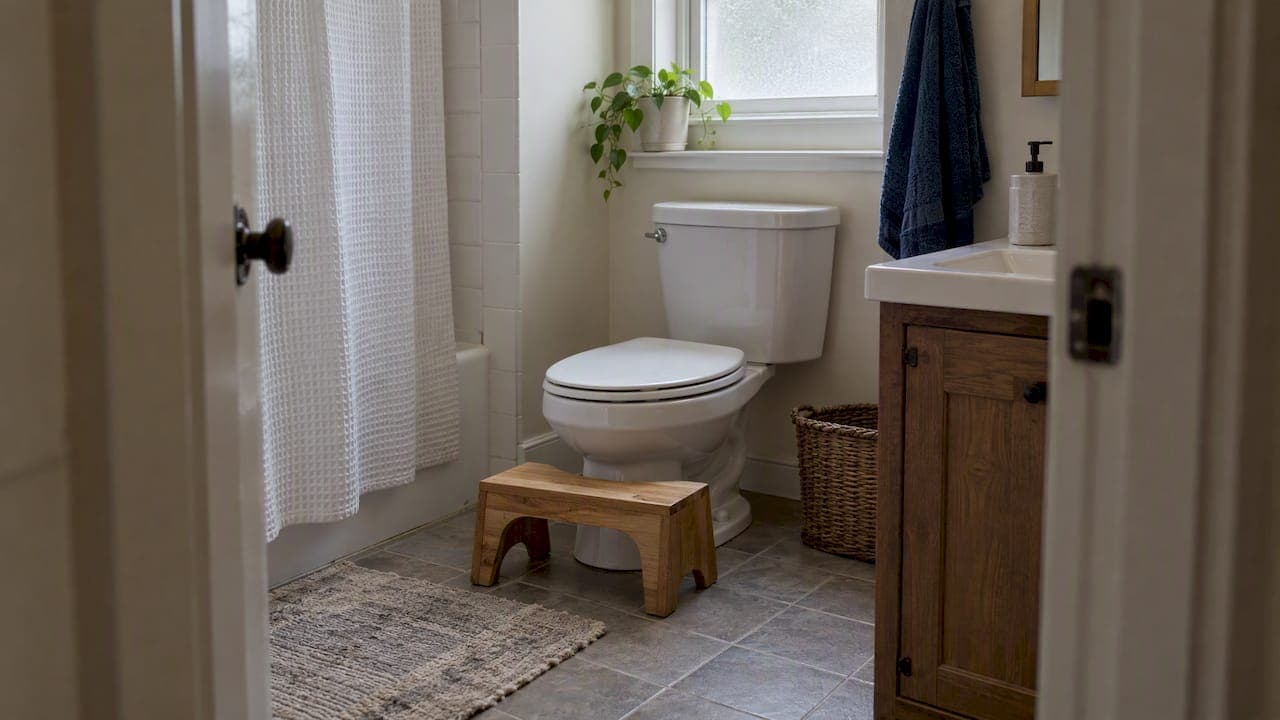
Try to sit for 5 to 10 minutes after breakfast, when the gut is naturally most active. Do not ignore the urge. Putting your feet on a small stool raises your knees above your hips and makes passing stool easier for many people.
Step 5: Add an osmotic laxative if needed
If lifestyle changes are not enough, polyethylene glycol (MiraLAX) is generally considered the preferred first-line over-the-counter option by gastroenterology experts, and the American Gastroenterological Association recommends it for chronic constipation in adults. It draws water into the stool and is gentle compared with stimulant laxatives. Follow the package directions, and ask your prescriber or pharmacist if you take other medications.
Stool softeners and magnesium products are also used. Read labels, and check with a clinician first if you have kidney disease, since magnesium products can be a problem there.
Step 6: Treat laxatives as a bridge
The experts quoted in the PMC review describe laxatives as a short-term bridge while your body adapts, with diet and activity as the foundation. Healthcare providers also say OTC products should not be used long term without clinical guidance. If you need them daily, a dose review is the right next step.
Warning signs: when constipation is an emergency
Most constipation is uncomfortable, not dangerous. Tirzepatide's effect on gut motility can occasionally lead to more serious problems. The Mounjaro prescribing information lists ileus, intestinal obstruction and fecal impaction in its post-marketing experience section.
Seek medical care immediately if you have:
- Sudden, severe abdominal pain
- Significant bloating or a hard, swollen belly
- Vomiting
- Inability to pass gas or stool
MedlinePlus advises that if you cannot pass gas or stool, you should not use laxatives and should contact a healthcare provider right away, because laxatives can worsen a blockage. It also lists abdominal cramping, rectal bleeding and pencil-thin stools among the signs of impaction.
If you are unsure which side of the line you are on, call your prescriber or go to urgent care. Do not wait it out at home.
Does tirzepatide cause a bowel blockage?
Rarely, but it is possible. The label language above is the reason clinicians take sudden pain, vomiting and no stool or gas seriously. Ordinary constipation with hard stools every few days, without severe pain or vomiting, is far more typical. Know the difference before you need to.
Diet tips for tirzepatide side effects
A few habits help constipation and other GI effects together:
- Eat smaller, more frequent meals. Large meals sit heavily in a slowed stomach.
- Put protein and fiber in every meal. You eat less overall, so each meal needs to count.
- Limit greasy and heavily processed foods. They slow digestion further and often worsen nausea.
- Include fermented foods such as plain yogurt or kefir if you tolerate dairy.
- Drink between meals more than during them if large volumes make you feel full.
For a full framework, see our GLP-1 diet plan for beginners and the role of diet in GLP-1 treatment. If your main problem is the opposite, loose stools, read tirzepatide diarrhea: home relief and dose changes. Some people alternate between the two, and the plans differ.
When to ask about your dose
Call your prescriber if:
- Constipation lasts more than a week despite fluids, fiber and activity.
- You need a laxative every day.
- Symptoms began or worsened right after a dose increase.
- You are skipping meals or avoiding food because of belly discomfort.
Possible changes include holding at your current dose longer before the next step up, or adjusting your plan. Do not change the dose on your own. A clinician who knows your history can choose the safest option.
Stress and sleep also affect digestion and eating habits. If anxiety or mood changes are part of your experience on treatment, this overview of GLP-1 medications and mental health in California may help you think through support options if you live in that state.
If you have a procedure planned
Slowed digestion matters before surgery or endoscopy too. The Zepbound label says pulmonary aspiration under general anesthesia or deep sedation has been reported with GLP-1 receptor agonists, and instructs patients to tell providers about planned procedures.
Current American Gastroenterological Association guidance favors an individualized approach over blanket advice to hold the medication. Patients with symptoms such as nausea or abdominal distension may need precautions such as a clear liquid diet the day before or an ultrasound check of stomach contents. Tell your procedure team about constipation and bloating well ahead of time.
Our perspective
At Dayla Health, constipation is one of the side effects we expect people to ask about, and we would rather you plan for it than be surprised. Our view is simple: side effects management is part of the medication, not an afterthought. That is why our programs bundle clinician oversight, dietitian visits and care coaching with the prescription itself.
We see three mistakes often. People wait until they are badly backed up before acting. They add a large amount of fiber without water. And they stay on laxatives for weeks without telling their prescriber. A doctor-led plan catches all three. Our GLP-1 side effects management plan lays out how we think about this, and our semaglutide constipation plan using PEG 3350 follows the same approach, since the strategy carries across GLP-1 medications.
— Flexible
Care built around side effects
If you want a prescriber who will adjust your plan when side effects appear, Dayla Health offers online GLP-1 care with clinician evaluation, dietitian consults and care coaching, shipped nationwide with no insurance required. Current published pricing is from $179 per month for GLP-1 Injection, from $159 per month for GLP-1 Microdose and from $149 per month for Oral GLP · Liposomal. The dayla GLP-1 program is $299 per month. You can also read about our tirzepatide product page or see all weight loss options. Eligibility depends on your online intake and clinician approval.
FAQ
Is constipation common with tirzepatide?
Yes. In Zepbound trials, 11% to 17% of patients reported constipation, depending on dose. It is most common during dose escalation, and it often improves as your body adapts.
How often should I have a bowel movement on tirzepatide?
There is no single correct number. A change from your own normal, such as fewer movements, harder stools or straining, is what counts as constipation. If you go several days with discomfort or have no gas or stool at all, contact a clinician. Do not use laxatives if you also have severe pain or vomiting.
What is the best remedy for tirzepatide constipation?
Start with more fluids, gradual fiber and daily walking. If that is not enough, polyethylene glycol is generally considered the preferred first-line OTC option. Use it short term and tell your prescriber if you need it regularly.
When should I go to the ER?
Go if you have sudden severe abdominal pain, significant bloating, vomiting, or you cannot pass gas or stool. Avoid laxatives in that situation, because they can worsen a possible obstruction.
Will constipation go away if I stay on tirzepatide?
For many people it does, but it can take weeks. Research shows constipation can last longer than other GI effects, with an average of about 47 days in some studies. If it does not improve, ask your prescriber about a dose review.
Sources
- Zepbound prescribing information, revised 08/2026 (FDA)
- Zepbound prescribing information, revised 01/2026 (FDA)
- Mounjaro prescribing information, revised 01/2026 (FDA)
- Mounjaro constipation: why it happens and how to get relief (Drugs.com)
- Gastrointestinal symptoms in obesity therapy (PMC)
- Fecal impaction (MedlinePlus)
- GLP-1 receptor agonist use in gastrointestinal endoscopy (AGA GI and Hepatology News)