

Supplements for weight loss are adjuncts to diet and exercise, not replacements for them. The most effective options, including berberine, green tea catechins, and soluble fiber, produce roughly 1–3 kg of additional weight loss over placebo across 12–24 weeks when combined with dietary changes. That is a meaningful but modest benefit. Supplements produce only about 1–5% of the weight loss magnitude of FDA-approved pharmacotherapies like GLP-1 receptor agonists. Understanding the role of supplements in weight loss means accepting that number and building your plan accordingly.
Which supplements have the strongest evidence for weight loss?
The clinical evidence for weight loss supplements varies widely. A small group of compounds has genuine, replicated data behind it. The rest rely on marketing.
Berberine
Berberine is a plant-derived compound with a meta-analysis showing an average of approximately 2.07 kg additional weight loss versus placebo. It works by activating AMPK, an enzyme that regulates energy metabolism. Berberine also improves insulin sensitivity, which matters for people whose weight gain is tied to blood sugar dysregulation.

Green tea catechins
Green tea catechins produce roughly 1.31 kg of additional weight loss in controlled trials. They work by mildly increasing thermogenesis and fat oxidation. The effect is real but small. Think of it as a background metabolic boost rather than a primary driver.
Soluble fiber supplements
Fiber supplements like psyllium and glucomannan support weight loss by slowing gastric emptying and forming gels in the gut. This reduces hunger and blunts post-meal glucose spikes. The result is better appetite control throughout the day, which makes sticking to a calorie deficit easier.
Protein supplements
Protein is the most practically useful supplement category for weight loss. Protein intake of 1.2–1.6 g per kg of body weight daily is the standard recommendation during a calorie deficit to preserve lean muscle. Protein also has the highest thermic effect of any macronutrient, burning 20–30% of its own calories during digestion. Consuming 25–35 g per meal is the practical target for satiety and muscle preservation. For more on why this matters, see protein's role in weight loss.
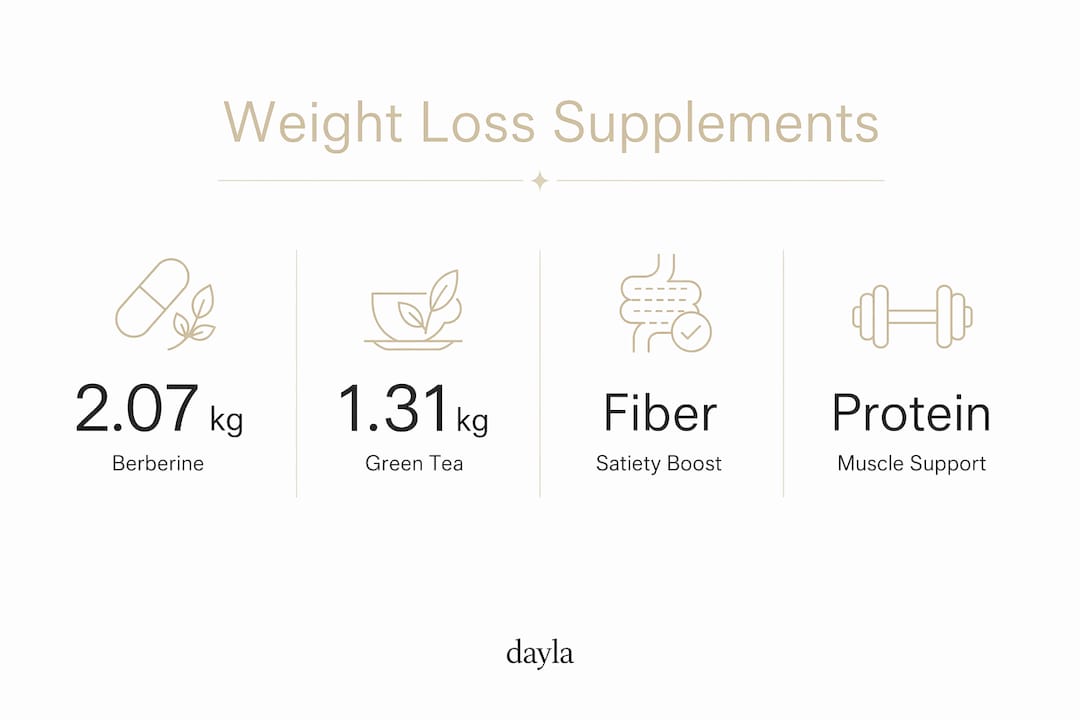
| Supplement | Evidence grade | Typical additional weight loss | Primary benefit |
|---|---|---|---|
| Berberine | Strong | ~2.07 kg | Insulin sensitivity, metabolism |
| Green tea catechins | Moderate | ~1.31 kg | Thermogenesis, fat oxidation |
| Psyllium/glucomannan | Moderate | Variable | Satiety, glucose control |
| Protein powder | Strong | Supports muscle retention | Satiety, thermic effect |
| Caffeine | Moderate | Modest | Metabolic rate, fat oxidation |
Pro Tip: Stack fiber and protein supplements together. Fiber slows digestion; protein increases satiety signals. Together, they make a calorie deficit feel significantly more manageable.
Why supplements alone cannot produce significant weight loss
Supplements are tools, not treatments. Metabolic health experts consistently classify them as modest support after a diet and exercise foundation is in place. Without that foundation, no supplement produces meaningful results.
The core principle is energy balance. You lose weight when you consume fewer calories than you burn. No supplement changes that equation in a clinically significant way on its own. Berberine does not override a 500-calorie daily surplus. Green tea catechins do not compensate for a sedentary lifestyle.
Clinical guidelines from institutions like Ohio State University reinforce this clearly:
"Supplements should be considered only after establishing consistent dietary habits and physical activity. They are not a substitute for lifestyle change." — Ohio State University Health
The risks of skipping this foundation are real. People who rely on supplements without addressing diet often spend money on products that produce no measurable change. Worse, some unregulated products carry genuine health risks. The foundational priorities, in order, are:
- Establish a consistent calorie deficit through food choices
- Meet daily protein targets to protect muscle mass
- Build a sustainable exercise routine, including resistance training
- Add fiber-rich foods or fiber supplements to support appetite control
- Only then consider evidence-backed supplements as additional support
Caffeine is worth a specific mention here. It increases resting metabolic rate by 3–11% and fat oxidation by up to 29%. Those are real numbers. But caffeine from coffee or tea is safer and more consistent than many caffeine-based supplements, which often combine it with unstudied compounds.
What weight loss supplements should you avoid?
The supplement industry is largely unregulated. That creates a market where heavily marketed products can reach shelves with no meaningful human trial data behind them.
Garcinia cambogia and raspberry ketones are the most prominent examples. Both have been sold as fat burners for years. Neither has robust randomized controlled trial evidence supporting weight loss in humans. Raspberry ketones, specifically, have almost no human data at all. Their popularity is a product of marketing, not science.
The risks go beyond wasted money:
- Liver toxicity. Several marketed fat burners have been linked to liver injury in case reports. The risk is higher with products that combine multiple stimulants or use unverified botanical extracts.
- Proprietary blends. Many supplements list ingredients under a "proprietary blend" label, which legally allows manufacturers to hide exact doses. You may be paying for a product with trace amounts of active ingredients.
- Underdosed actives. Even when ingredients are listed, doses are often below the thresholds used in clinical trials. A product containing berberine at 100 mg is not the same as the 900–1,500 mg daily doses studied in trials.
- Unverified claims. The FDA does not approve dietary supplements for safety or efficacy before they reach the market. Manufacturers are responsible for their own claims, and enforcement is reactive, not proactive.
Third-party certification from organizations like USP (United States Pharmacopeia) or NSF International is the most reliable way to verify that a supplement contains what it claims. Look for those seals before purchasing anything.
Pro Tip: Search any supplement on the NIH Office of Dietary Supplements database before buying. It lists known interactions, evidence quality, and safety data in plain language.
How to effectively integrate supplements into your weight loss plan
Effective supplement use follows a clear sequence. Start with the foundation, then layer in supplements where the evidence supports them.
- Set your calorie target first. A deficit of 500 calories per day produces roughly 1 lb of weight loss per week. No supplement replaces this step.
- Hit your protein target daily. Aim for 1.2–1.6 g per kg of body weight. If whole food sources fall short, a protein powder supplement fills the gap. Prioritize 25–35 g per meal for optimal muscle signaling.
- Add fiber if appetite control is a challenge. Psyllium husk or glucomannan taken before meals can reduce hunger and improve meal adherence. Start with a low dose to avoid digestive discomfort.
- Consider berberine if blood sugar regulation is a concern. It has the strongest evidence of any non-prescription metabolic supplement. Discuss it with your doctor before starting, especially if you take diabetes medications.
- Use caffeine strategically, not habitually. A moderate dose before exercise can improve fat oxidation and performance. Avoid high-dose caffeine supplements or stacking multiple stimulants.
- Consult a healthcare provider before combining supplements with prescription medications. Drug-nutrient interactions are real and underreported. This is especially relevant if you are using GLP-1 receptor agonists, where appetite suppression already changes nutrient absorption patterns. See types of weight loss prescriptions for context on how these medications work.
Understanding muscle loss during weight loss is also critical when planning supplement use. Protein and creatine both play a role in protecting lean mass during a calorie deficit, though creatine can cause temporary water retention that shows up on the scale.
Key takeaways
Supplements support weight loss modestly when added to a solid foundation of diet, exercise, and adequate protein intake. They are not a shortcut, and the gap between what evidence shows and what marketing claims is significant.
| Point | Details |
|---|---|
| Supplements are adjuncts | They add 1–3 kg of weight loss over placebo, not standalone results. |
| Protein is the priority supplement | Hitting 1.2–1.6 g/kg daily preserves muscle and increases satiety during a deficit. |
| Avoid unverified products | Garcinia cambogia and raspberry ketones lack human RCT evidence and carry real risks. |
| Third-party certification matters | Look for USP or NSF seals to confirm purity and accurate dosing. |
| Medical supervision is non-negotiable | Always consult a healthcare provider before combining supplements with prescription medications. |
What I've learned about supplements after years of watching the trends
The supplement industry has a talent for making modest tools sound like breakthroughs. I've watched berberine go from an obscure botanical to a trending "natural Ozempic" almost overnight. The underlying evidence for berberine is genuinely good. But the framing is misleading, and that framing causes real harm.
People stop focusing on the things that actually move the needle: consistent protein intake, a manageable calorie deficit, resistance training, and sleep. They spend money on products that, at best, add a kilogram of weight loss over six months. At worst, they buy proprietary blends with underdosed ingredients and walk away convinced that supplements simply don't work for them.
The truth is more nuanced. Supplements work as designed. They are modest tools. The mistake is expecting them to do the heavy lifting that only lifestyle change can do. A 2026 narrative review in the Nutrients Journal put it well, calling for purpose-driven supplement choices grounded in scientific evidence rather than marketing claims. That framing is exactly right.
My honest recommendation: build your diet and exercise plan first. Get your protein and fiber targets in place. Then, if you want an additional edge, choose one or two evidence-backed supplements and give them 12 weeks to show results. Track your weight, your hunger levels, and your energy. That is how you learn what actually works for your body.
— Flexible
Daylahealth's approach to evidence-based weight loss support
Supplements are one piece of a larger picture. For people who need more than modest adjuncts, Daylahealth offers doctor-led, personalized GLP-1 care that addresses weight loss at a clinical level.

GLP-1 receptor agonists produce weight loss outcomes that no over-the-counter supplement can match. Daylahealth's GLP-1 weight loss program pairs prescription-grade medications with medical supervision, so you get a plan built around your health profile, not a generic formula. For those interested in metabolic and recovery support, Daylahealth also offers peptide treatments that complement a structured weight loss plan. If you are ready to move beyond supplements and into clinically supported care, Daylahealth is built for exactly that.
FAQ
Do supplements actually aid weight loss?
Yes, but modestly. The best-evidenced options like berberine and green tea catechins produce roughly 1–3 kg of additional weight loss over placebo across 12–24 weeks when combined with dietary changes.
What are the best weight loss supplements with real evidence?
Berberine, green tea catechins, psyllium, glucomannan, and protein powder have the strongest clinical support. Each works through a different mechanism, from appetite control to improved insulin sensitivity.
Are weight loss pills effective without diet and exercise?
No. Supplements produce only about 1–5% of the weight loss magnitude of FDA-approved medications, and that modest effect requires a calorie deficit to be meaningful. Diet and exercise are non-negotiable.
What supplements should I avoid for weight loss?
Avoid Garcinia cambogia, raspberry ketones, and any product using proprietary blends without disclosed doses. These lack robust human trial evidence and carry risks including liver toxicity.
Is it safe to combine supplements with GLP-1 medications?
Only under medical supervision. GLP-1 receptor agonists change appetite and nutrient absorption, which can affect how supplements interact with your body. Always consult your healthcare provider before adding any supplement to a GLP-1 regimen.