

GLP-1 receptor agonists reduce key pro-inflammatory markers, including TNF-α, IL-6, IL-1β, and C-reactive protein, through both direct immune cell signaling and indirect metabolic improvements. These effects appear early in treatment, sometimes before meaningful weight loss occurs, which tells us the anti-inflammatory action is not simply a byproduct of losing weight. Clinical trials and preclinical studies consistently support this dual mechanism, making GLP-1 therapies one of the more clinically significant tools for managing systemic inflammation in patients with type 2 diabetes, obesity, and cardiovascular risk.
Here is what the evidence shows at a glance:
- GLP-1 receptor agonists lower CRP, TNF-α, IL-6, and IL-1β in clinical trials
- Anti-inflammatory effects begin rapidly, often within weeks, and partly independent of weight loss
- GLP-1 receptors on immune cells allow direct modulation of cytokine production
- Central nervous system GLP-1 receptors contribute to acute inflammation control
- Cardiovascular outcome trials show reduced rates of major adverse cardiovascular events in treated patients
Table of Contents
- How GLP-1 receptor agonists regulate inflammation beyond weight loss
- What the clinical evidence shows about specific inflammation markers
- How GLP-1 reduces cardiovascular and metabolic inflammation risk
- Maximizing anti-inflammatory outcomes with GLP-1 therapy
- Potential adverse effects and pro-inflammatory signals to know about
- Long-term impact of GLP-1 therapy on inflammation markers
- GLP-1 therapy in rheumatoid arthritis, psoriasis, and other chronic inflammatory diseases
- How different GLP-1 receptor agonists compare on inflammation markers
- The molecular pathways connecting GLP-1 signaling to immune cell function
- Daylahealth offers doctor-led GLP-1 care built around your results
- Key Takeaways
How GLP-1 receptor agonists regulate inflammation beyond weight loss
The anti-inflammatory effects of GLP-1 therapies operate through two distinct but overlapping pathways. The first is metabolic: as patients lose weight and improve insulin sensitivity, adipose tissue releases fewer pro-inflammatory cytokines, and circulating lipids fall. The second is direct, and it is the more clinically surprising one.
GLP-1 receptors are expressed on macrophages, lymphocytes, and other immune cells. When activated, these receptors trigger intracellular signaling that suppresses pro-inflammatory cytokine production and shifts immune cell behavior toward a less inflammatory state. Preclinical studies show that a single GLP-1 receptor agonist dose can reduce circulating TNF-α within hours through central nervous system pathways, entirely independent of any metabolic change.
The brain's role here is underappreciated. GLP-1 receptors in the hypothalamus and brainstem mediate rapid neuroimmune responses that dampen systemic inflammation acutely. This mechanism may explain why some patients show measurable biomarker improvements before their weight changes significantly. Understanding which pathway drives a given patient's response matters for setting realistic expectations and for interpreting lab results during treatment.
- Metabolic-dependent pathway: weight loss reduces adipose-derived cytokines and improves lipid profiles
- Metabolic-independent pathway: direct GLP-1 receptor signaling on immune cells and CNS neurons suppresses cytokine production acutely
- Pleiotropic action: both pathways operate simultaneously, producing broader anti-inflammatory coverage than either alone
What the clinical evidence shows about specific inflammation markers
The markers most consistently reduced by GLP-1 therapy include high-sensitivity C-reactive protein (hsCRP), TNF-α, IL-6, IL-1β, ICAM-1, and YKL-40. Their response timelines differ, which reflects the multi-stage nature of inflammation resolution during treatment.
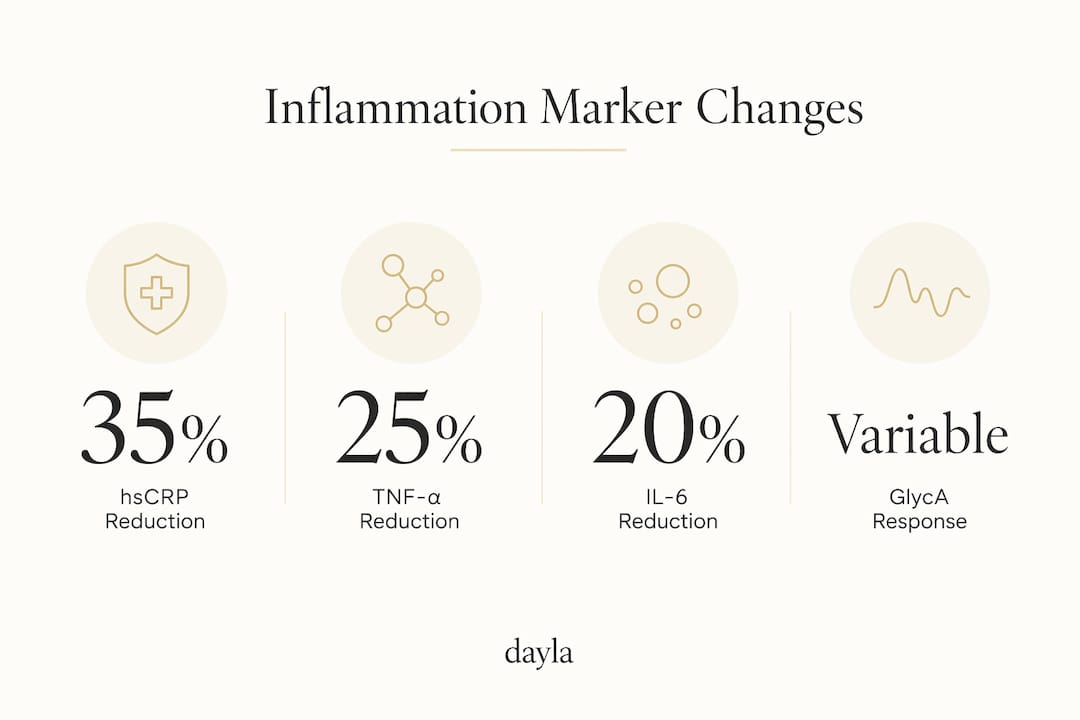
In a phase 2 trial of tirzepatide, a dual GIP and GLP-1 receptor agonist, hsCRP, YKL-40, and ICAM-1 dropped rapidly within 4 weeks of treatment at the 10 mg and 15 mg doses. Leptin, an adipokine tied to fat mass, declined more gradually and had not plateaued by week 26. This phased pattern reflects two distinct processes: an early direct suppression of inflammatory signaling, followed by a slower reduction driven by fat loss.
| Marker | Effect | Timeline | Clinical Significance |
|---|---|---|---|
| hsCRP | Significant reduction | Within 4 weeks | Systemic inflammation, cardiovascular risk |
| TNF-α | Reduced | Early to mid-treatment | Pro-inflammatory cytokine, atherosclerosis driver |
| IL-6 | Variable reduction | Mid-treatment | Acute phase response, metabolic inflammation |
| IL-1β | Reduced | Early | Inflammasome activation, cardiovascular risk |
| ICAM-1 | Rapid reduction | Within 4 weeks | Endothelial dysfunction marker |
| YKL-40 | Rapid reduction | Within 4 weeks | Pro-inflammatory glycoprotein, cardiovascular risk |
| Leptin | Gradual reduction | Months | Adipokine, obesity-linked inflammation |
"The rapid decline of hsCRP, YKL-40, and ICAM-1 is consistent with the suppression of inflammatory responses in monocytes, macrophages, and adipocytes and the overall vascular protective effects of GIP and GLP-1 reported in preclinical studies." — Tirzepatide cardiovascular biomarker analysis, PMC9292792
Not every marker responds uniformly. Some studies report no significant change in IL-6 or GlycA with GLP-1 therapy, and a subset of research suggests weight loss alone may account for some biomarker shifts. This conflicting evidence does not undermine the overall picture, but it does reinforce that GLP-1's anti-inflammatory effects are context-dependent and patient-specific.
Pro Tip: Ask your physician to check hsCRP and ICAM-1 at baseline and again at 4–8 weeks. These markers respond earliest and give you the clearest early signal that the therapy is working on inflammation, not just weight.
How GLP-1 reduces cardiovascular and metabolic inflammation risk
Atherosclerosis is fundamentally an inflammatory disease. Oxidized LDL triggers macrophage activation in arterial walls, driving foam cell formation and plaque buildup through TNF-α and IL-1β signaling. GLP-1 receptor agonists reduce these initiating biomarkers, which positions them as genuine cardiovascular anti-inflammatory agents, not just glucose-lowering drugs.
The clinical outcome data supports this. Cardiovascular outcome trials in patients with type 2 diabetes show reduced rates of major adverse cardiovascular events in GLP-1 treated groups, a benefit that exceeds what glucose control and weight loss alone would predict. Improvements in endothelial function, reflected by falling ICAM-1 levels, contribute to this effect by reducing the adhesion of inflammatory cells to vessel walls.
- GLP-1 therapies lower oxLDL, TNF-α, and IL-1β, all of which initiate atherosclerotic plaque formation
- Reduced ICAM-1 improves endothelial integrity and lowers vascular inflammation
- MACE reduction in outcome trials reflects the combined metabolic and anti-inflammatory benefits
- Patients with type 2 diabetes and obesity carry the highest cardiovascular inflammatory burden and stand to gain the most
Maximizing anti-inflammatory outcomes with GLP-1 therapy
GLP-1 therapy works best when paired with lifestyle strategies that independently lower inflammation. A Mediterranean-style diet reduces circulating IL-6 and CRP through its own mechanisms, and combining it with GLP-1 treatment creates additive benefits. Resistance training improves insulin sensitivity and reduces adipose tissue inflammation, complementing the metabolic-dependent pathway of GLP-1 action. You can find specific lifestyle strategies that amplify GLP-1 results worth reviewing before starting or adjusting therapy.

Monitoring matters as much as treatment. Tracking hsCRP, IL-6, and metabolic markers at regular intervals lets your care team confirm the therapy is working and adjust dosing if needed. Emerging evidence on dual agonists like tirzepatide and on GLP-1 combined with GIP receptor activation suggests these approaches may produce broader inflammatory marker reductions than single-receptor agonists alone. Pharmacogenomic testing, such as PGx testing from EIV Diagnostics, can also inform which GLP-1 agent is likely to produce the strongest response for your individual biology.
Pro Tip: Behavioral adherence, specifically consistent dosing and dietary compliance, determines how much of the metabolic-dependent anti-inflammatory benefit you actually capture. The direct immune effects happen regardless, but the full reduction in adipose-derived cytokines requires sustained weight loss.
Potential adverse effects and pro-inflammatory signals to know about
GLP-1 therapies are generally well-tolerated, but the picture is not entirely one-directional. Gastrointestinal side effects, particularly nausea and vomiting during dose escalation, can trigger transient inflammatory responses in some patients. Pancreatitis, though rare, represents a genuine pro-inflammatory risk that warrants monitoring in patients with prior pancreatic disease.
One short-term infusion study found that GIP, the partner receptor in dual agonists like tirzepatide, transiently increased MCP-1 and IL-6 mRNA in adipose tissue. The 26-week tirzepatide trial showed no sustained IL-6 elevation, suggesting this effect is transitory, but it underscores the importance of ongoing pharmacovigilance. Patients with active autoimmune conditions should discuss GLP-1 therapy with a specialist, as immune modulation in that context requires careful oversight.
Long-term impact of GLP-1 therapy on inflammation markers
The long-term trajectory of inflammation markers during GLP-1 treatment is an active area of research. What the current evidence suggests is that sustained therapy produces durable reductions in hsCRP and other cardiovascular markers, particularly in patients who maintain weight loss. The gradual decline in leptin observed through 26 weeks of tirzepatide treatment had not plateaued by the trial's end, indicating that the metabolic-dependent component of inflammation reduction continues to evolve over months.
Ongoing clinical trials are examining GLP-1 effects in metabolic liver disease, osteoarthritis, and chronic kidney disease, conditions where sustained inflammation reduction could produce meaningful clinical benefits. The broader benefits of GLP-1 medications beyond glycemic control are increasingly recognized as central to their therapeutic value, not secondary to it.
GLP-1 therapy in rheumatoid arthritis, psoriasis, and other chronic inflammatory diseases
Preclinical and early clinical data show that GLP-1 receptor agonists improve outcomes in autoimmune and autoinflammatory conditions including rheumatoid arthritis and psoriasis. The mechanism involves direct modulation of T-cell and macrophage activity, reducing the cytokine burden that drives joint destruction and skin inflammation. Ongoing clinical trials are investigating GLP-1 therapies in arthritis populations, a logical extension given the established anti-inflammatory receptor biology.
Psoriasis, which involves dysregulated IL-17 and TNF-α signaling, represents another plausible target. Patients with psoriasis and comorbid obesity, a common combination, may see compounded benefits from GLP-1 therapy through both the direct immune modulation and the metabolic improvement that reduces adipose-derived inflammatory load.
How different GLP-1 receptor agonists compare on inflammation markers
Not all GLP-1 receptor agonists produce identical effects on inflammation markers. Tirzepatide, which activates both GLP-1 and GIP receptors, demonstrated broader and faster reductions in hsCRP, YKL-40, and ICAM-1 compared to dulaglutide, a selective GLP-1 receptor agonist, in the same 26-week trial. Semaglutide, another selective GLP-1 receptor agonist, has shown consistent CRP and TNF-α reductions across multiple trials, with cardiovascular outcome data supporting its anti-inflammatory clinical relevance.

The dual agonist approach appears to produce additive anti-inflammatory effects, though the GIP component's role is still being characterized. Earlier agents like exenatide and liraglutide established the foundational evidence for GLP-1's anti-inflammatory action, and their data remains clinically relevant for understanding the class as a whole.
The molecular pathways connecting GLP-1 signaling to immune cell function
At the molecular level, GLP-1 receptor activation elevates intracellular cyclic AMP (cAMP), which activates protein kinase A (PKA), Epac-2, and ERK1/2 signaling cascades. These pathways suppress inflammatory gene expression in macrophages and other immune cells, reducing the transcription of TNF-α, IL-6, and IL-1β at the source.
One particularly well-characterized effect is the phenotypic shift in microglia from the pro-inflammatory M1 subtype to the anti-inflammatory M2 subtype. M2 microglia produce anti-inflammatory cytokines and support tissue repair, making this shift relevant not only to systemic inflammation but also to neuroinflammation and neuroprotection. This molecular specificity is what separates GLP-1's immune effects from the broad suppression seen with corticosteroids, and it explains why GLP-1 therapies can reduce inflammation without the immunosuppressive risks associated with conventional anti-inflammatory agents.
Daylahealth offers doctor-led GLP-1 care built around your results
If you are ready to act on what the evidence shows, Daylahealth provides personalized, doctor-led GLP-1 prescriptions with clinical oversight built in from day one. You get access to GLP-1 weight loss therapy with physician supervision, dosing guidance, and the kind of ongoing monitoring that actually tracks whether your inflammation markers are moving in the right direction.

This is not a generic supplement subscription. Daylahealth connects you with licensed medical professionals who understand the full clinical picture, including the cardiovascular and inflammatory benefits covered in this article. Whether you are managing type 2 diabetes, obesity, or elevated cardiovascular risk markers, the care plan is built around your specific labs and goals. Visit Daylahealth to start your clinical intake and get a prescription plan designed for your biology.
Key Takeaways
GLP-1 receptor agonists reduce inflammation markers through direct immune cell signaling and metabolic improvement, with measurable biomarker changes appearing within weeks of starting treatment.
| Point | Details |
|---|---|
| Early biomarker response | hsCRP, YKL-40, and ICAM-1 drop within 4 weeks, before significant weight loss occurs. |
| Dual anti-inflammatory mechanism | Direct immune cell receptor activation and metabolic improvement both contribute to inflammation reduction. |
| Cardiovascular relevance | Reduced TNF-α, IL-1β, and oxLDL lower atherosclerotic risk and contribute to fewer major adverse cardiovascular events. |
| Conflicting evidence exists | Some studies show no significant change in IL-6 or GlycA, underscoring that responses are patient-specific. |
| Daylahealth GLP-1 care | Doctor-led GLP-1 prescriptions with clinical monitoring to track inflammation and metabolic markers over time. |