
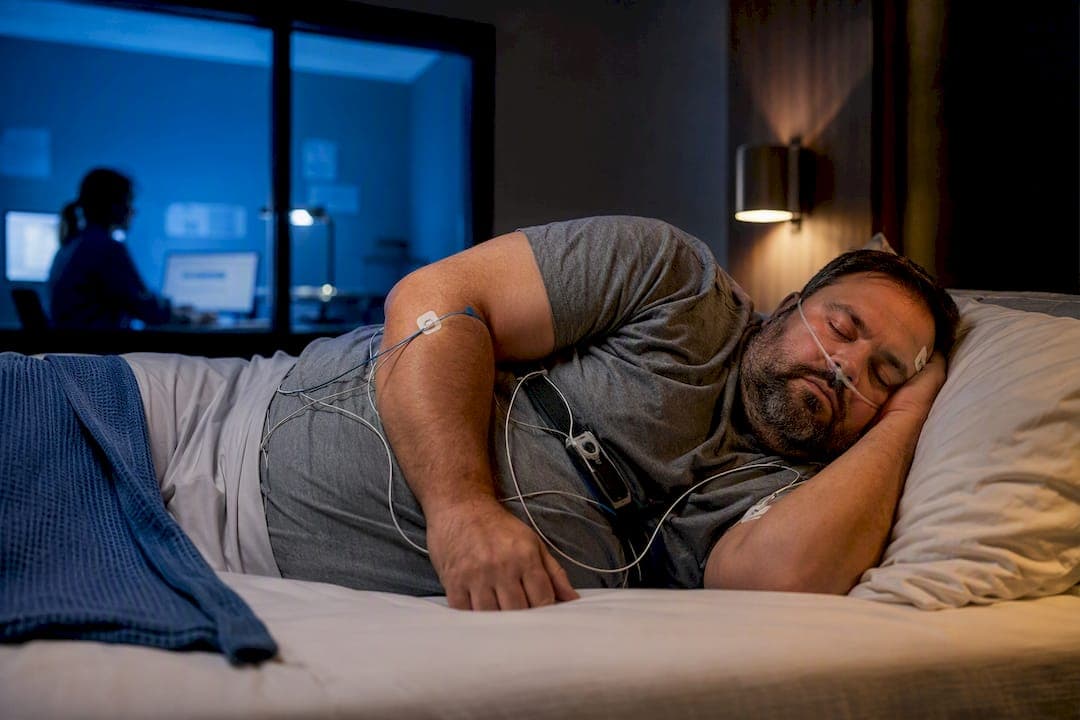
Yes, for people with obesity and moderate-to-severe obstructive sleep apnea (OSA), GLP-1 therapy, notably tirzepatide, reduces apnea severity. Tirzepatide (sold as Zepbound) carries an FDA indication for this exact use, backed by two 52-week, placebo-controlled trials. The reductions in breathing interruptions are real, but they come with GI side effects and require coordinated care with a sleep clinician, not a solo decision made from a symptom checklist.
TL;DR:
- Tirzepatide can reduce apnea-hypopnea index by around 16.6 events per hour, which may significantly improve sleep apnea severity in obese patients.
- The evidence largely shows weight loss as the main mechanism, with improvements closely tracking pounds lost, rather than a direct airway effect.
- Most studies involve patients with BMI over 30 and moderate-to-severe OSA, so results may not extend to all severity levels or OSA causes.
- GLP-1 therapy has gastrointestinal side effects like nausea, vomiting, and diarrhea, requiring careful dose titration and monitoring.
- It is most effective as an adjunct for CPAP-intolerant patients or those aiming to reduce reliance on device-based therapies, not as a replacement.
Table of Contents
- What the Research Shows: Trials, Meta-Analyses, and the FDA Decision
- How GLP-1 Receptor Agonists Are Thought to Improve Sleep Apnea
- Who Is Most Likely to Benefit From GLP-1 Therapy for OSA
- Side Effects, Risks, and What Monitoring Looks Like
- How GLP-1 Therapy Fits Alongside CPAP and Other OSA Treatments
- What to Do Next: Evaluation, Timeline, and Insurance Basics
- How Daylahealth Approaches GLP-1 Therapy for Sleep Apnea
- Ready to Talk to a Clinician About GLP-1 Therapy?
- Sources
What the Research Shows: Trials, Meta-Analyses, and the FDA Decision
The FDA's approval of Zepbound for moderate-to-severe OSA in adults with obesity rests on two randomized, double-blind, placebo-controlled trials that together enrolled 469 adults, with apnea-hypopnea index (AHI) reduction at 52 weeks as the primary endpoint. This marked the first medication ever approved for obstructive sleep apnea, a category that had been entirely mechanical (CPAP, oral appliances) or surgical for decades.
That trial program, known as SURMOUNT-OSA, tested tirzepatide against placebo in two overlapping populations: people already using CPAP and people who were not. Both groups saw significant AHI drops, suggesting the drug's benefit occurs regardless of concurrent device use.
Beyond the pivotal trials, pooled data paints a consistent picture. A meta-analysis of randomized trials found GLP-1 receptor agonists produced a weighted mean difference of −16.6 events per hour in AHI compared with placebo, with a 95% confidence interval spanning −27.9 to −5.3. That's a wide interval, which tells you the effect size varies meaningfully depending on the population and the specific drug studied, but even the conservative end of that range represents a clinically noticeable shift for someone with moderate OSA.
Statistic Callout: A pooled analysis of GLP-1 trials found AHI drops averaging 16.6 events per hour versus placebo. For a patient starting at 30 events per hour (severe OSA), that's potentially enough to move into the moderate or even mild range.
A systematic review and meta-analysis covering multiple RCTs, including both liraglutide and tirzepatide studies, confirmed the same directional finding: weight loss, AHI reduction, lower blood pressure, and better patient-reported sleep outcomes moved together. That's an important detail, because it means the sleep benefit rarely shows up in isolation. It travels with broader metabolic improvement.
Not every agent performs equally. Trial data and FDA review materials indicate tirzepatide produced larger weight and AHI reductions than single-receptor GLP-1 agonists in comparable populations. Tirzepatide activates both GLP-1 and GIP receptors, and that dual mechanism appears to translate into a bigger metabolic effect, which in turn drives a bigger respiratory one.
Here's where the evidence gets more cautious. A broader systematic review found that while GLP-1 receptor agonists significantly reduced AHI versus placebo, no consistent superiority over CPAP was established in existing head-to-head comparisons. The same review flagged heterogeneity across studies and generally short follow-up windows as real constraints on how far these findings can be extrapolated.
What this means for someone weighing options right now:
- Trial populations were built around specific BMI thresholds, so results may not automatically generalize to every OSA patient.
- Most follow-up periods run 52 weeks or less, so multi-year durability data is still limited.
- Studies vary in how they define "moderate-to-severe" OSA, which affects how directly you can compare numbers across trials
- Almost none of the major trials tested GLP-1 therapy against surgical intervention directly.
The evidence is strong enough to justify FDA approval and clinical use. It's not yet strong enough to call GLP-1 therapy a universal substitute for existing OSA treatment, and no honest reading of the data claims otherwise.
How GLP-1 Receptor Agonists Are Thought to Improve Sleep Apnea
The dominant mechanism is mechanical, not pharmacological in the way you might expect. Obstructive sleep apnea happens when soft tissue in the throat collapses during sleep, and excess fat around the neck, tongue, and upper airway increases the pressure on that already narrow passage. GLP-1 receptor agonists drive significant weight loss, and as fat mass drops, so does the physical load compressing the airway.
Reviewers describe this as weight-dependent respiratory mechanics: less adipose tissue around the neck and thorax means the airway has more room to stay open during the muscle relaxation that naturally occurs in sleep. This is the mechanism with the most direct, consistent support across trial data, and it explains why AHI improvements tend to track so closely with pounds lost.
Beyond the mechanical story, researchers have floated a few secondary hypotheses worth knowing about, even though they're less settled:
- Reduced systemic inflammation. Obesity drives low-grade inflammation that may affect upper airway muscle tone; GLP-1 therapy's metabolic effects could theoretically ease this, though it's not proven as an independent driver of OSA improvement.
- Neuromuscular and circadian modulation. Some researchers frame GLP-1 receptor agonists as chronometabolic modulators, meaning they may interact with the body's internal clock and metabolic rhythms in ways that affect sleep architecture.
- Possible direct airway effects. This one stays firmly in the "unproven" column.
A recent narrative review positions GLP-1RAs as agents that intersect with circadian biology and metabolic disease, but it's careful to note that weight-loss mediation remains the most consistent explanation for the OSA benefit observed in trials. Circadian and anti-inflammatory contributions are plausible and are active areas of research, not settled clinical mechanisms.
Be skeptical of any claim that GLP-1 medications shrink or stiffen the airway directly, independent of weight change. That specific effect hasn't been established in humans. What's been established, repeatedly and across multiple trial designs, is that when the pounds come off, the throat has more room to work. If you want to understand more about how these drugs drive that weight change in the first place, our breakdown of how GLP-1 medication works covers the pharmacology in plain language.
Who Is Most Likely to Benefit From GLP-1 Therapy for OSA
Not every OSA diagnosis makes someone a good candidate. The FDA indication and the trials behind it were built around a specific profile, and matching your own situation against it is the fastest way to figure out whether this conversation is worth having with your clinician.
- A BMI at or above 30, which is the obesity threshold used in the tirzepatide OSA trials and the basis for the FDA's approved indication.
- Moderate-to-severe OSA confirmed by a sleep study, not just snoring or daytime fatigue. The trials specifically enrolled patients in this severity range, so evidence for mild OSA is thinner.
- Obesity-driven or obesity-associated OSA, rather than OSA caused primarily by structural airway abnormalities (like severely enlarged tonsils) or central sleep apnea, which involves brain signaling rather than physical obstruction and responds to an entirely different set of treatments.
- Either CPAP users or CPAP-intolerant patients. The SURMOUNT-OSA trial design intentionally included both groups, so being unable to tolerate a CPAP mask doesn't disqualify you.
- Relevant comorbidities, like hypertension or type 2 diabetes, that a clinician will weigh alongside OSA severity, since GLP-1 therapy's metabolic benefits often extend well past sleep.
Clinicians also look at prior treatment history. Someone who's tried and failed CPAP adherence for months, or who has a documented intolerance to oral appliances, presents a different risk-benefit calculation than someone who's never attempted standard therapy. If you're trying to figure out where you fall on this spectrum before a clinical conversation, our candidacy guide for weight loss medication walks through the criteria clinicians actually use.
Side Effects, Risks, and What Monitoring Looks Like
GLP-1 receptor agonists are not free of tradeoffs, and the trials that support their use for OSA report the same side effect profile seen in weight management studies generally. Gastrointestinal symptoms dominate the list.
- Nausea is the most commonly reported adverse effect across trials.
- Vomiting and diarrhea occur less frequently but are still common enough to expect, especially during dose increases.
- Constipation tends to show up as therapy continues, often requiring simple dietary adjustments.
A meta-analysis focused on OSA populations specifically found an increased frequency of gastrointestinal adverse events with GLP-1 receptor agonists compared to placebo, though pooled analyses generally did not find a significant difference in serious adverse events between groups. That distinction matters when you're deciding whether the tradeoff is worth it: uncomfortable is not the same as dangerous, and the data so far supports treating these as separate categories.
Routine monitoring during GLP-1 therapy typically includes baseline labs, symptom check-ins during dose titration, and ongoing tracking of weight and, when relevant, repeat sleep testing to confirm the AHI improvement clinicians are hoping for is actually happening. Rare but serious risks discussed in the broader GLP-1 literature, including pancreatitis and gallbladder issues, warrant the same symptom surveillance here as in any other GLP-1 use case. This isn't a treatment you start and forget about.
Pro Tip: Gradual dose titration, moving up in small increments rather than jumping to a target dose, along with eating smaller, well-timed meals during the adjustment period, meaningfully reduces GI discomfort for most people. This is standard practice across obesity trials, not an experimental workaround.
If nausea or GI symptoms are already a concern, our detailed side effect management plan covers specific strategies beyond titration timing, including food choices and hydration habits that tend to make the adjustment period more tolerable.
How GLP-1 Therapy Fits Alongside CPAP and Other OSA Treatments
GLP-1 medications are not a CPAP replacement for everyone, and treating them as one is the single biggest misread of this evidence. Meta-analytic comparisons have consistently found that while GLP-1 receptor agonists significantly reduce AHI compared to placebo, no consistent superiority over CPAP has been demonstrated in existing studies. CPAP remains the gold-standard mechanical treatment for a reason: it works the night you use it, with no titration period required.
Where GLP-1 therapy earns real value is in a few specific scenarios:
- CPAP-intolerant patients. For people who cannot or will not adhere to CPAP long-term, a treatment that addresses the underlying obesity driving their OSA offers a path forward that pure mechanical therapy can't.
- Supervised down-titration candidates. Some patients who achieve substantial weight loss and confirmed AHI improvement may, under direct clinician supervision and with repeat sleep testing, reduce their reliance on CPAP. This is never a self-directed decision, and clinical reviewers are explicit that GLP-1 therapy shouldn't be framed as a promise of immediate CPAP independence without objective re-evaluation.
- Adjunctive rather than exclusive use. Specialty clinical guidance frames GLP-1 receptor agonists as most useful as an adjunctive or alternative therapy for obesity-related OSA, particularly where CPAP adherence has been a persistent problem.
Compared to bariatric surgery, GLP-1 therapy generally produces slower, more moderate weight loss but comes without surgical risk, recovery time, or permanent anatomical change. Compared to intensive lifestyle programs alone, GLP-1 medications tend to produce larger and more sustained weight loss for most patients, largely because appetite regulation is addressed pharmacologically rather than through willpower alone. None of these are strictly better across every axis. They're different tools for different risk tolerances and different bodies.
What to Do Next: Evaluation, Timeline, and Insurance Basics
Getting from curiosity to a real treatment decision follows a fairly predictable path.
- Confirm your OSA diagnosis and severity with a sleep study. You need an actual AHI number, not a guess based on snoring or fatigue, before this conversation goes anywhere useful.
- Discuss BMI and candidacy with a prescribing clinician. Bring your sleep study results and any CPAP history to that appointment.
- Get baseline labs done. Standard pre-treatment workups typically screen for factors that affect eligibility and help clinicians track progress later.
- Set realistic timeline expectations. In pivotal trials, weight loss and AHI improvements built gradually over months of consistent therapy, often coinciding with peak weight loss.
- Plan for insurance friction. Zepbound and other GLP-1 medications frequently require prior authorization, and coverage varies significantly by plan. A clinician experienced in this specific documentation process makes a real difference in approval odds.
For a more detailed walkthrough of what the first weeks actually look like, our guide on starting GLP-1 treatment covers intake steps most people don't anticipate.
How Daylahealth Approaches GLP-1 Therapy for Sleep Apnea
We built Daylahealth around a simple observation: GLP-1 prescribing works best when it's paired with real clinical oversight, not just a shipped prescription. Our model combines clinician evaluation, ongoing care coaching, and dietitian consults, because the evidence in this article makes one thing clear. The OSA benefit tracks with sustained weight loss, and sustained weight loss requires more than a syringe.
We're not a sleep clinic, and we don't replace one. If you're considering GLP-1 therapy for obstructive sleep apnea, we'll always encourage you to keep your sleep specialist in the loop, especially around CPAP adjustments. What we bring is doctor-led, personalized GLP-1 care delivered nationwide, built for people who want medical rigor without unnecessary friction.
— Flexible
Ready to Talk to a Clinician About GLP-1 Therapy?
Clinician-supervised GLP-1 prescribing is available without requiring insurance, which matters given how often prior authorization becomes the biggest obstacle between a diagnosis and actual treatment. Plans generally include clinician evaluation, ongoing prescription management, care coaching, and nationwide medication delivery, so you're never managing dose titration or side effect questions on your own.

This service fits adults with obesity-related OSA who've confirmed their diagnosis and want to explore whether GLP-1 therapy makes sense alongside their existing sleep treatment. It is not a substitute for a sleep specialist's guidance, particularly if you're currently on CPAP and considering any changes to that regimen; for more information, visit Snoring (Sleep Apnea) - Zest Clinic. For readers managing multiple aspects of metabolic health, our peptide options for longevity support offer additional avenues worth discussing with your care team.
If you're ready to see whether you qualify, start with our GLP-1 treatment page to review options and begin an intake evaluation.

Sources
The clinical claims in this article draw on the following sources, each directly tied to a specific finding discussed above:
- FDA Approves First Medication for Obstructive Sleep Apnea
- Glucagon-like peptide 1 receptor agonists for the treatment of obstructive sleep apnea: a meta-analysis
- Efficacy of GLP-1 Receptor agonists in treating Obstructive sleep apnea: A systematic review and meta-analysis
- GLP-1 receptor agonists at the crossroads of circadian biology, sleep, and metabolic disease