

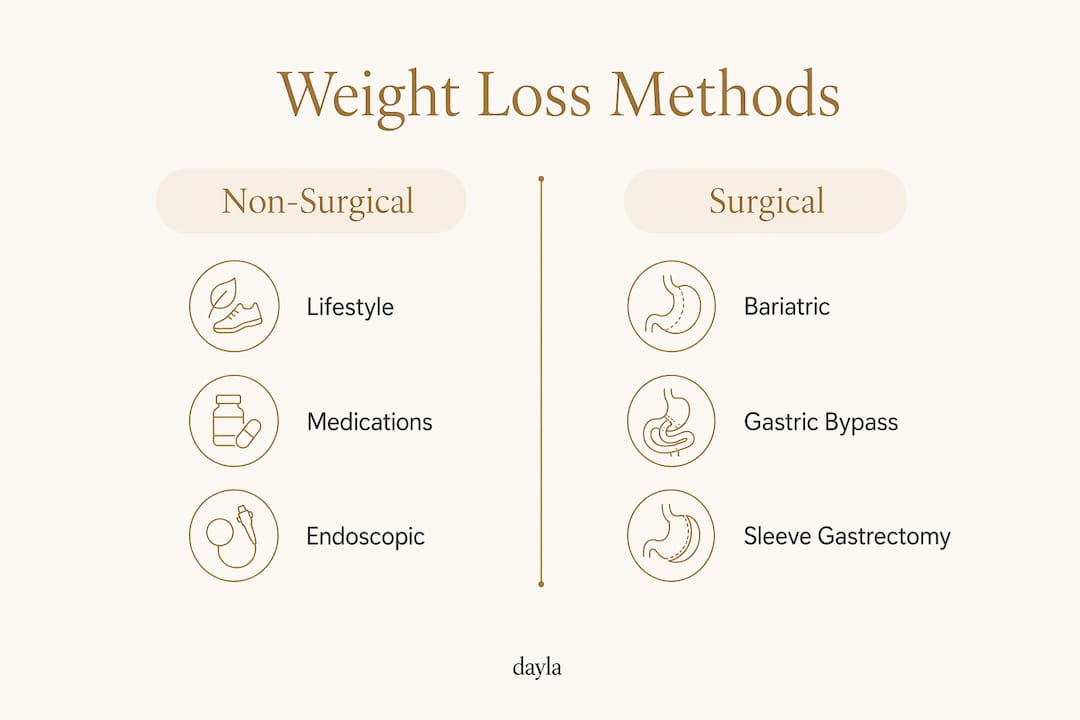
Non-surgical weight loss is defined as any medically supervised approach to reducing body weight that does not involve surgical alteration of the digestive tract. The field now spans three core categories: lifestyle modification, FDA-approved medications like GLP-1 receptor agonists such as Ozempic and Wegovy, and minimally invasive endoscopic procedures like gastric balloons and endoscopic sleeve gastroplasty. Programs using this multimodal approach help patients lose 5–10% of body weight at baseline, with medications pushing results to 20% or more. For the millions of people who want real, lasting results without going under the knife, understanding what is non-surgical weight loss is the first step toward a plan that actually works.
What are the main non-surgical weight loss methods?
Non-surgical weight loss treatments fall into three distinct categories, each working through a different mechanism. Knowing how each one works helps you choose the right combination for your body and goals.

Lifestyle modification
Lifestyle modification is the foundation of every non-surgical weight loss program. It includes dietary counseling, structured physical activity, and behavioral therapy to address the habits that drive weight gain. No medication or procedure produces lasting results without this base in place. A registered dietitian, a behavioral therapist, and a primary care physician typically work together to build a plan you can sustain.
GLP-1 receptor agonist medications
GLP-1 receptor agonists are currently the most effective class of non-surgical weight loss medications available. Drugs like semaglutide (sold as Ozempic and Wegovy) and tirzepatide (Mounjaro) work by mimicking a gut hormone that signals fullness and suppresses appetite. Patients taking these medications alongside lifestyle changes can reach weight loss above 20% of their starting body weight. For a detailed breakdown of your prescription options, the weight loss prescriptions guide from Daylahealth covers what is available in 2026.
Pro Tip: Start GLP-1 medications at the lowest dose and increase slowly. Most side effects, including nausea, are dose-dependent and improve significantly when titration is gradual.
Endoscopic procedures
Endoscopic procedures sit between lifestyle programs and surgery on the invasiveness scale. The intragastric balloon fills the stomach to reduce food intake and is used for 4–6 months before removal. Endoscopic sleeve gastroplasty (ESG) uses internal sutures to reduce stomach volume by approximately 70%, producing more durable results. Both procedures require sedation and some downtime, comparable to a diagnostic endoscopy rather than major surgery. They are not zero-recovery options, and patients should plan for a few days of rest and a liquid diet phase.
- Intragastric balloon: Temporary, 4–6 months, removed endoscopically
- Endoscopic sleeve gastroplasty: Permanent stomach volume reduction, no incisions
- GLP-1 medications: Ongoing prescription, highly effective, requires medical supervision
- Lifestyle programs: Foundation for all other methods, required for long-term success
How effective is non-surgical weight loss vs. surgery?
Non-surgical methods produce meaningful, clinically significant weight loss. They do not match the raw numbers of bariatric surgery, but they carry far lower risk and require no hospital stay.
The table below compares the most common approaches across the factors that matter most to patients.
| Method | Typical weight loss | Recovery | Invasiveness | Long-term maintenance |
|---|---|---|---|---|
| Lifestyle modification alone | 5–10% body weight | None | None | High adherence required |
| GLP-1 medications | Up to 20%+ body weight | None | None (injection) | Ongoing prescription |
| Intragastric balloon | 10–15% body weight | 2–3 days | Sedation required | Regain risk after removal |
| Endoscopic sleeve gastroplasty | 15–20% body weight | 2–5 days | Sedation required | More durable than balloon |
| Bariatric surgery | 25–35% body weight | 2–6 weeks | Major surgery | Requires lifelong follow-up |
Beyond weight loss numbers, non-surgical approaches deliver real metabolic benefits. Patients who lose even 5–10% of body weight see measurable improvements in blood pressure, blood sugar, and cholesterol. The significance of losing 10% of your starting weight is well documented in clinical literature. That outcome is achievable without surgery for most people.
One critical distinction: non-invasive body contouring procedures like fat freezing and ultrasound sculpting are cosmetic treatments, not weight loss interventions. They do not treat obesity or improve metabolic health. Confusing them with medical non-surgical weight loss leads to misaligned expectations and wasted money.
What lifestyle factors support successful non-surgical weight loss?
The specific treatment you choose matters less than how consistently you support it with daily habits. Long-term success depends more on lifestyle adherence than on the intervention itself. Weight regain is a real risk when behavioral support fades after treatment ends.
Here are the four pillars that drive sustainable results:
-
Physical activity. Adults need 150 minutes of vigorous or 300 minutes of moderate exercise per week to achieve clinical weight loss from exercise alone. Resistance training two to three times per week preserves muscle mass during a calorie deficit, which protects your metabolic rate.
-
Protein intake. Consuming 0.8 to 1.6 grams of protein per kilogram of body weight daily preserves muscle and increases satiety. Protein is the single most important macronutrient during active weight loss. Prioritize lean meats, eggs, Greek yogurt, and legumes at every meal.
-
Behavioral and emotional health. Emotional eating, poor sleep, and chronic stress all drive weight gain independent of diet quality. Cognitive behavioral therapy (CBT) and mindfulness-based stress reduction are evidence-backed tools for addressing these triggers. A therapist or behavioral health coach is a legitimate part of your weight loss team.
-
Long-term mindset. Weight loss is a chronic, lifelong condition requiring ongoing management, not a short-term project with a finish line. Patients who frame it as a permanent lifestyle shift maintain results far better than those chasing a target number.
Pro Tip: Track protein and sleep before tracking calories. Most people find that fixing these two variables reduces hunger and cravings enough to make calorie management far easier.
For a realistic picture of how long results take, the weight loss timeline guide from Daylahealth sets clear, evidence-based expectations.
Who is a good candidate for non-surgical weight loss?
Non-surgical weight loss programs are appropriate for a wide range of people, but the right combination of treatments depends on your starting point and health profile. A comprehensive evaluation by a multidisciplinary team, including a physician, a registered dietitian, and a behavioral health specialist, determines the best fit.
General eligibility guidelines include:
- BMI of 25 or above with at least one weight-related health condition (type 2 diabetes, hypertension, sleep apnea)
- BMI of 30 or above without additional conditions, qualifying for most medical weight loss programs
- BMI of 30–40 for endoscopic procedures like ESG or intragastric balloon
- Patients who prefer to avoid surgery or who are not yet surgical candidates due to health risks
- People using non-surgical methods as a bridge to surgery, reducing operative risk before a bariatric procedure
Personalized plans combine modalities based on your BMI, metabolic health, prior weight loss history, and personal preferences. Someone with a BMI of 32 and prediabetes may start with a GLP-1 medication and dietary counseling. Someone with a BMI of 38 and a history of failed medication trials may be a better candidate for ESG. The weight loss program comparison checklist from Daylahealth helps you evaluate your options before your first appointment.
Starting the process is straightforward. Request a referral to a medical weight loss program, or connect directly with a telehealth provider that specializes in GLP-1 prescriptions and personalized weight care. The most common barrier is not eligibility. It is simply not taking the first step.
Key Takeaways
Non-surgical weight loss is most effective when medical treatment, lifestyle modification, and behavioral support work together as a single, ongoing plan.
| Point | Details |
|---|---|
| Definition is specific | Non-surgical weight loss excludes cosmetic body contouring; it is medically supervised fat reduction without surgery. |
| Results range widely | Lifestyle alone yields 5–10% weight loss; GLP-1 medications can push results above 20%. |
| Procedures require recovery | Endoscopic options like ESG and gastric balloons need sedation and several days of downtime. |
| Lifestyle adherence drives outcomes | Long-term success depends on behavioral consistency more than on the specific treatment chosen. |
| Candidacy is broad | Most adults with a BMI of 30 or above qualify for at least one non-surgical program. |
The honest truth about non-surgical weight loss
Most people come to non-surgical weight loss programs expecting a treatment to do the work for them. I understand that impulse. When you have struggled with weight for years, the idea of a medication or a procedure that finally fixes the problem is genuinely appealing. But the clinical reality is more nuanced.
GLP-1 medications like semaglutide are genuinely remarkable tools. They reduce appetite in a way that most patients describe as finally feeling normal around food. But patients who stop the medication without building solid lifestyle habits almost always regain the weight. The medication creates a window of opportunity. What you do inside that window determines whether the results last.
The same logic applies to endoscopic procedures. Adherence to lifestyle changes is more predictive of long-term success than the procedure itself. ESG reduces your stomach volume, but it does not change your relationship with food, your stress response, or your sleep habits. Those require deliberate, sustained work.
The patients I have seen achieve the best outcomes treat their weight loss program the way they would treat managing a chronic condition like hypertension. They show up consistently, adjust when something is not working, and accept that there is no endpoint. That mindset is not pessimistic. It is the most empowering frame you can bring to this process.
— Flexible
Start your non-surgical weight loss plan with Daylahealth
Daylahealth offers doctor-led, personalized GLP-1 care designed for people who want real results without surgery. The program combines prescription GLP-1 medications, peptide therapies, and expert clinical guidance in a convenient telehealth format.
If you are ready to explore what a personalized non-surgical weight loss plan looks like for your body, Daylahealth makes it straightforward to get started. Access GLP-1 weight loss prescriptions reviewed by licensed clinicians, or explore peptide therapies that support weight loss and metabolic health. Every plan is built around your goals, your health history, and your timeline. No guesswork, no one-size-fits-all protocols.
FAQ
What is non-surgical weight loss in simple terms?
Non-surgical weight loss is any medically supervised method of reducing body weight that does not involve surgery. It includes lifestyle programs, prescription medications like GLP-1 receptor agonists, and minimally invasive endoscopic procedures.
How much weight can you lose without surgery?
Lifestyle modification alone typically produces 5–10% body weight loss. Adding GLP-1 medications can increase that to 20% or more, according to Washington University in St. Louis weight management data.
Is non-surgical weight loss the same as body contouring?
No. Body contouring procedures like fat freezing are cosmetic and do not treat obesity or improve metabolic health. The FDA distinguishes these clearly from medical non-surgical weight loss interventions.
How long does it take to see results without surgery?
Most patients see measurable weight loss within 4–12 weeks of starting a structured program. GLP-1 medications typically show significant results within 3–6 months when combined with dietary changes.
Do I need a doctor to start a non-surgical weight loss program?
Yes. Prescription medications require a licensed clinician, and endoscopic procedures require a gastroenterologist or bariatric specialist. Telehealth platforms like Daylahealth provide medical oversight for GLP-1 prescriptions without requiring an in-person visit.