
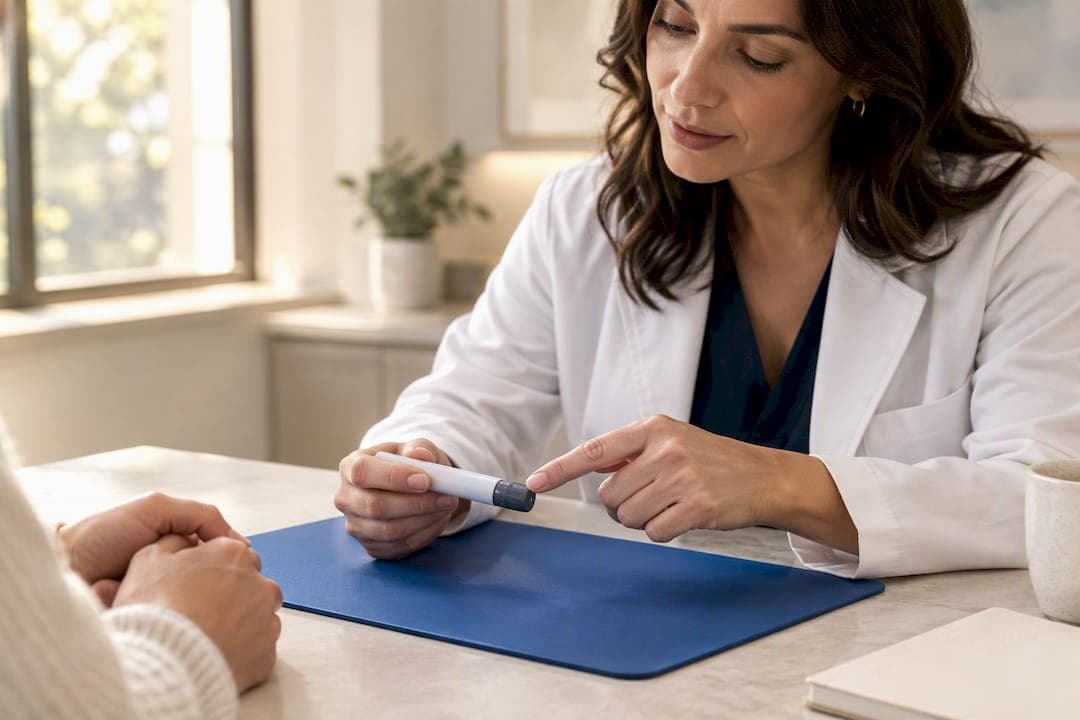
Microdosing semaglutide is an off-label, unvalidated approach. It is not FDA-approved, and no large randomized trial has tested it. Popular protocols cite weekly doses of roughly 0.1 to 0.5 mg, far below the approved maintenance range of 1.7 to 2.4 mg described in the WEGOVY prescribing information. Obesity medicine clinicians at Cedars-Sinai note that this practice needs direct clinical oversight.
TL;DR:
- Microdosing semaglutide uses weekly doses often below 0.25 mg, which is designed for initiation, not ongoing maintenance, and lacks validation from large trials.
- Unsupervised microdosing, especially with compounded products, increases risks of dosing errors and adverse effects such as nausea, pancreatitis, gallstones, and thyroid issues.
- Clinical evidence shows that effective weight loss occurs at doses of 2.4 mg weekly, with about 15% weight loss at 68 weeks, but microdosing has not been proven to produce similar results long-term.
- Off-label fractional dosing should only be used with medical oversight, proper device training, and structured monitoring, not through self-directed, indefinite microdosing.
- Consulting a healthcare professional for personalized, supervised GLP-1 treatment remains the safest way to explore lower-dose strategies.
Table of Contents
- What people mean when they say "microdosing"
- How microdosing compares with labeled dosing and trial evidence
- Safety concerns: compounded products, errors, and medical red flags
- Practical steps and monitoring when a clinician supervises lower doses
- Balancing patient goals against the evidence
- If you want supervised care, here is how Dayla Health can help
- Sources
- FAQ
What people mean when they say "microdosing"
Microdosing is not a formal medical term. It emerged mostly from online forums and social media, where people describe deliberately staying below the labeled titration schedule or splitting standard doses into smaller fractions. The intent varies: some want to avoid nausea, others want to stretch a limited supply, and some are simply trying to spend less per month.
The dose figures that circulate most often are:
- A low weekly dose well under the labeled starting dose.
- 0.25 mg, the labeled initiation dose on the WEGOVY label, which is built for a four-week titration step, not ongoing maintenance.
There is an important distinction between supervised fractional titration, where a clinician adjusts dosing within or slightly below the labeled schedule for tolerability, and unsupervised microdosing, where a patient self-directs indefinite low-dose use without clinical follow-up. The first is a recognized clinical tool. The second carries meaningfully more risk.
How microdosing compares with labeled dosing and trial evidence
The WEGOVY label sets out a specific path: initiation at 0.25 mg weekly for four weeks, then stepwise escalation through several doses, ending at a maintenance dose of 1.7 mg or 2.4 mg weekly depending on tolerability and response. Every dose in that sequence exists to get the patient to a therapeutic target, not to stay there.

A weekly dose of 2.4 mg produced roughly 15% mean weight loss versus placebo at 68 weeks in the pivotal STEP 1 trial published in the New England Journal of Medicine. That result, and the results across the broader STEP program, came from patients titrated up to therapeutic doses, not held at fractional amounts for the long term.
A few points matter here:
- No large randomized trial has tested sustained microdosing as its own treatment strategy.
- Pharmacology reviews suggest partial receptor activity at lower exposures is plausible, but translating that into durable weight-loss outcomes remains unproven below the doses trials actually tested.
- Dose-response matters: the therapeutic effect size in STEP 1 came specifically from the highest tested dose, which is the opposite direction from where microdosing operates.
Anyone hoping a microdose will approximate therapeutic-dose results is extrapolating well past what the data shows.
Safety concerns: compounded products, errors, and medical red flags
A large share of microdosing happens with compounded semaglutide rather than brand-name pens, and that introduces its own risk layer. The FDA has issued alerts about dosing errors tied to compounded injectable semaglutide, including cases where imprecise measurement from a vial led to doses many times larger than intended. A microdose depends on drawing a very small, exact volume. Any error in that measurement is magnified, not minimized.
Beyond dosing mistakes, GLP-1 medications carry known risks that apply regardless of dose size:
- Gastrointestinal effects such as nausea, vomiting, and constipation, which can become severe.
- Pancreatitis, a rare but serious complication reported with GLP-1 use.
- Gallbladder disease, including gallstones.
- Thyroid concerns, including a boxed warning related to thyroid C-cell tumors seen in animal studies.
- Retinopathy risk in patients with existing diabetic eye disease.
Certain groups face higher stakes and should not attempt any unsupervised dosing strategy, including people who are pregnant, those with a history of eating disorders, and patients managing complex comorbidities like advanced kidney disease or a personal or family history of medullary thyroid carcinoma.
Pro Tip: If you're using a multidose pen for anything other than the labeled dose, ask your prescriber to walk you through the exact click count and confirm it against the product's own dosing chart before you inject.
Practical steps and monitoring when a clinician supervises lower doses
There are legitimate clinical scenarios where a prescriber might use a dose below the standard maintenance target. These include managing persistent GI intolerance, bridging a patient through a temporary supply shortage, or easing a transition between GLP-1 agents. None of these are the same as open-ended, self-directed microdosing.
When a clinician does implement fractional dosing, the process typically follows a structured pattern:
- Baseline assessment, including relevant labs and a review of contraindications before any dose adjustment.
- Device training, using demonstration pens so the patient can practice counting clicks or measuring fractional volumes accurately.
- Scheduled follow-up, with glucose monitoring for patients with diabetes and a symptom log tracking GI effects, appetite changes, and injection-site reactions.
- Clear stop and re-escalation rules, so the patient knows exactly when to pause, call the clinic, or move back toward standard titration.
Practitioner literature describing fractional dosing techniques is explicit that counting pen clicks is an off-label workaround, not a manufacturer-endorsed method, and it depends heavily on patient dexterity and proper training. Shelf-life and beyond-use handling also matter: once a pen or vial is punctured or reconstituted, it carries its own discard timeline that a clinician should specify.
Pro Tip: Never rely on a written online guide alone for click-counting. Ask your clinic for hands-on demonstration with a trainer pen before you try a fractional dose at home.
Balancing patient goals against the evidence
Microdosing should be treated as an individualized, tolerability-driven decision rather than a default strategy, and definitely not something adopted because a forum thread made it sound routine. The honest gap in the research is not a minor caveat. It is the central fact: nobody has run the kind of trial that would tell you whether a sustained 0.2 mg dose does anything meaningful for weight over a year.
Where microdosing does have a defensible place, it is narrow: managing side effects during titration, stretching supply during a documented shortage, or supporting a careful transition off a higher dose. Shared decision-making, honest documentation, and closer-than-usual monitoring should accompany any of those scenarios. Some clinical models are built around that kind of ongoing oversight rather than a one-time prescription handoff.
— Flexible
If you want supervised care, here is how Dayla Health can help
Your safest path to a lower-dose strategy, if one is appropriate for you, runs through a clinician who can evaluate your history, confirm the right dose, and monitor your response over time. Certain services offer exactly that structure.

Doctor-led evaluation replaces guesswork with a documented plan, and personalized GLP-1 care means your dose gets adjusted based on your actual response, not a forum average. Some programs include injection options, microdose strategies, oral liposomal forms, dietitian visits, and ongoing care coaching, with no membership fees and flexible cancellation. Current prices are available on the provider's pricing page.
If cost or coverage is part of your decision, it helps to understand how Medicare currently handles GLP-1 drugs before you commit to a self-pay plan. When you are ready to start with clinical oversight built in from day one, visit Daylahealth to begin your intake.

This article is general information, not a substitute for advice from a qualified doctor. Consult a qualified healthcare professional about your own circumstances before acting on anything here.
Sources
- Can Microdosing GLP-1s Promote Health and Weight Loss? — Cedars‑Sinai
- WEGOVY prescribing information — FDA
- FDA alert: dosing errors associated with compounded injectables — FDA
- Clinical guidance on fractional dosing and microdosing techniques — PMC
FAQ
How much semaglutide counts as a microdose?
Most protocols describe a microdose as roughly 0.1 mg to 0.5 mg per week, well below the labeled initiation dose of 0.25 mg used for titration. That range is not an approved maintenance dose and is not defined in the FDA label itself.
Why do some people feel better on semaglutide at very low doses?
Even small doses can produce partial appetite suppression and mild GI slowing, since pharmacology research suggests some receptor activity occurs at lower exposures. That does not mean the effect matches what therapeutic doses achieve, and the feeling of improvement is not the same as a validated clinical outcome.
Is tirzepatide or semaglutide better for a lower-dose approach?
Neither drug has been tested in a large randomized trial specifically for intentional microdosing, so there is no evidence-based answer favoring one over the other at very low doses. Any decision between the two should be made with a clinician based on your health history and response, not on dose size alone.
Does microdosing semaglutide cause side effects?
Yes, lower doses can still cause GI symptoms like nausea or constipation, and compounded products used for microdosing carry additional risk from measurement errors. Anyone considering it should be monitored by a clinician who can track symptoms and adjust the plan.