
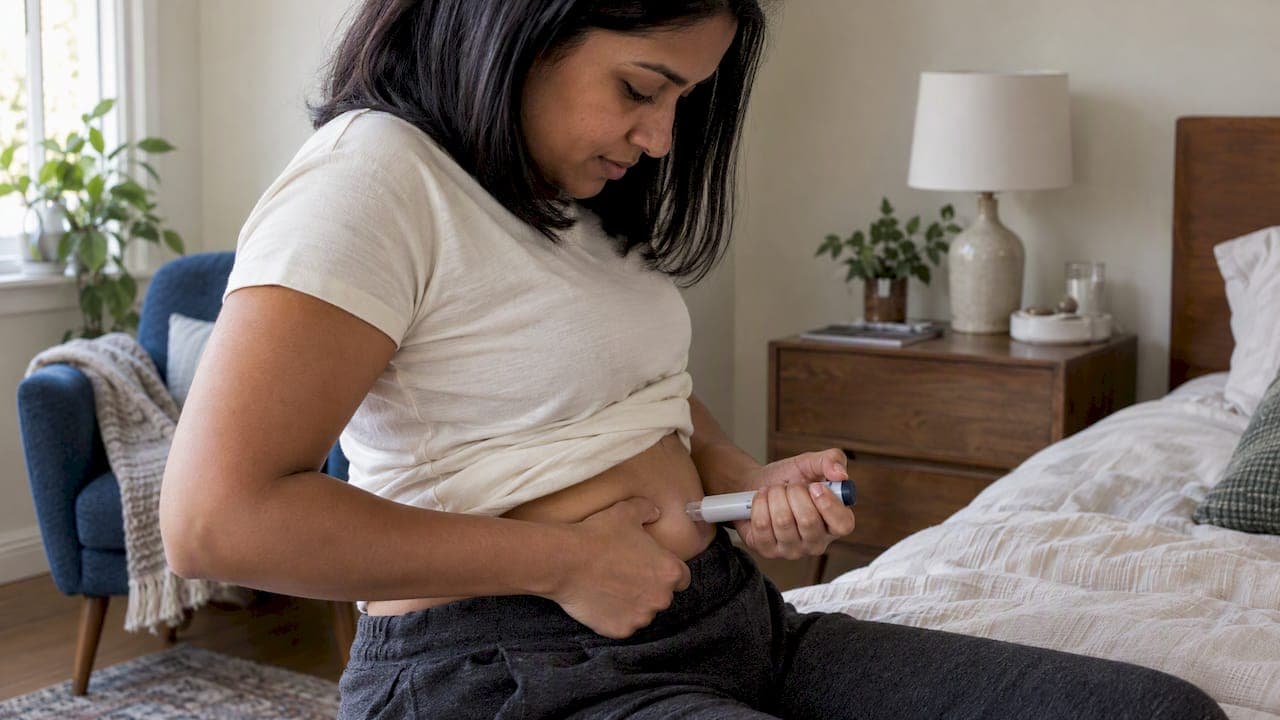
Most people feel little or nothing when they inject semaglutide. In clinical testing, the typical shot registered as no pain or very mild pain, and the discomfort faded in well under a minute. Stinging, soreness and small bruises do happen, and they usually trace back to a few things you can control: how cold the medication is, the needle, the injection site, and your technique.
This guide explains what the research shows, why some shots hurt more than others, how to make injections more comfortable, and which symptoms mean you should call a clinician.
TL;DR
- In a randomized trial, the starting dose of semaglutide averaged about 5.6 mm on a 0 to 100 mm pain scale and lasted about 16 seconds. "None" was the most common rating.
- Pain depends on formulation, needle or device, injection site, technique and your own sensitivity. Most of these are adjustable.
- Rotate sites, let the medication come out of the cold, keep the skin dry and relaxed, and follow your device instructions exactly.
- Mild redness, a small bruise or a brief sting is common. Severe or worsening pain, spreading redness, hives or trouble breathing needs medical attention.
- If you are on a prescription program, ask your clinician about needle size and technique before changing anything yourself.
Table of Contents
- How much do semaglutide injections actually hurt?
- Why a semaglutide shot sometimes hurts
- How to make semaglutide injections more comfortable
- Does pain change with the dose?
- Normal reactions versus problems
- Can you inject semaglutide the wrong way?
- Other discomfort that gets blamed on the shot
- A doctor-led approach to injections at Dayla Health
- Our perspective
- FAQ
- Sources
How much do semaglutide injections actually hurt?
The best answer comes from a controlled trial. In a randomized study of 104 healthy subjects, the starting dose (0.25 mg) of semaglutide had a mean pain score of 5.6 mm on a 0 to 100 mm scale, with a mean duration of 16.1 seconds. "None" was the most frequently chosen intensity category.
To put 5.6 mm in context, the same trial compared semaglutide with another weekly GLP-1 medication. Semaglutide was rated less painful: 5.6 mm versus 11.5 mm, and 16.1 versus 31.9 seconds.

A second randomized study looked at two semaglutide pen formulations. More than 80% of injections with either product caused no pain or very mild pain, and the average pain stayed low and lasted roughly 23 to 26 seconds.
Two cautions apply. These were healthy volunteers rating a single injection, so your experience over months of weekly shots may differ. And pain is subjective. A narrative review of injection-site pain notes that it cannot be eliminated reliably, although confidence and competence built through training can reduce it.
In practice, expect a quick pinch or nothing at all. Some weeks the shot will sting more than others, and that is normal.
Why a semaglutide shot sometimes hurts
Peer-reviewed reviews list several contributors to subcutaneous injection pain: formulation pH, volume, excipients, needle or device factors, injection technique, repeated use of one site, and patient factors. Here is what that means for you.
The formulation
The second randomized trial shows how much the product itself can matter. One single-dose formulation averaged 35.1 mm of pain versus 4.4 mm for a multidose-pen formulation. The investigators suggested that ingredient differences played a part, including removal of phenol, a known analgesic, and a higher propylene glycol level. This is mechanistic study evidence. It does not prove that switching products will change your own pain, but it explains why two semaglutide products can feel different.
The needle and device
A thicker or longer needle generally causes more sensation than a fine, short one. Needle size depends on your device or syringe, so use the one your pharmacy supplied and do not swap it without guidance. Our guide to semaglutide needle size explains how the common sizes work and why you should follow your device's instructions.
The injection site
A 2025 review of injection-site reactions explains that local irritation reflects an interaction between the needle, the drug formulation, the tissue immune response and the choice of site. The same review reports that repeated use of one spot increases irritation, and that thigh injections can be more painful than abdominal ones, possibly because there is less fat tissue. That evidence comes from biologic injections in general, not a head-to-head semaglutide site trial, so treat it as a reason to experiment with your clinician's guidance rather than a rule.
Technique and temperature
Cold medication, a wet alcohol swab, tense muscles and a rushed push of the button are the usual culprits people report. Cold medication and wet alcohol are common patient-reported explanations rather than trial findings, but they cost nothing to fix, so they are worth trying.
Your own sensitivity
Some people simply feel more. Stress, a lean injection area, a recent bruise nearby or a skipped meal can all change how a shot registers. Tracking which weeks hurt helps you spot a pattern.
How to make semaglutide injections more comfortable
These steps follow official medication guidance first and common-sense technique second. Your prescribing clinician's instructions always take priority.
- Get trained once, properly. Have a doctor or nurse show you how to use the pen and follow the manufacturer's instructions. Confidence reduces pain, and poor technique raises it.
- Check the solution. It should be clear, colorless and free of particles. Do not use it if it is cloudy, colored, thickened, contains particles or is expired, according to the same MedlinePlus drug information.
- Store it correctly, then let it reach a comfortable temperature. Pens and vials have refrigeration rules, and our storage and travel guide covers the 36 to 46°F range. Ask your pharmacist or clinician how long your specific product can sit out before use. Do not warm it with heat sources.
- Rotate sites every week. Use a different upper-arm, thigh or stomach site for each injection. Stay at least an inch or so from your last spot, and keep a simple note of where you went.
- Let the skin dry. If you clean with alcohol, wait until it has fully evaporated before injecting. Wet alcohol on the skin is a common cause of stinging.
- Relax the area. Sit or stand in a position where your stomach, thigh or arm is not tensed. Breathe out as you inject.
- Inject steadily. Insert the needle quickly and press the button smoothly, then hold for the time your device instructions specify.
- Never reuse or share needles or pens. Dispose of needles in a puncture-resistant container, as MedlinePlus advises. A dull, reused needle hurts more and raises infection risk.
Should you pinch your skin?
It depends on your device and needle length. General subcutaneous injection instructions say to pinch an inch of skin and fatty tissue before inserting the needle. Many pen instructions for short needles do not require it, and the correct approach differs by product. Follow the instructions that came with your medication, and ask your clinician if you are unsure.
What about the least painful site?
There is no proven winner. The stomach, thigh and upper arm are all labeled sites. Many people find the abdomen more comfortable because there is more fat tissue, which fits the review noted above. Our guide to semaglutide injection sites walks through each location and how to rotate between them. If you would like hands-on practice before injecting at home, an in-person visit to a semaglutide clinic in Queens, New York is one way to see injection locations demonstrated.
Does pain change with the dose?
Many people on forums say higher doses feel worse. One reason is plausible: the volume injected can rise as the dose goes up, depending on the product and concentration. Larger volumes are one of the factors the reviews list as a contributor to pain. Whether you notice it varies by product and by person, and the trials above tested the starting dose only, so there is no firm number to give you.
If a dose increase brings noticeably more stinging, tell your clinician. They can check your technique, confirm your device and discuss whether a different format fits you better.
Compounded vials and syringes
If your medication comes in a vial, you will draw it into a syringe yourself. A larger needle than the one used for a pen can hurt more. Ask your prescriber and pharmacy which syringe and needle size they intend for your dose, and have them show you the drawing and injecting steps. Inaccurate drawing is also a dosing risk, so do not improvise.
Normal reactions versus problems
Some local effects are expected. Others are a signal to call.
Common and usually fine
- A brief sting, pinch or burning that fades within a minute
- Slight redness at the site
- A small bruise or a drop of blood. The U.S. Ozempic patient information says some people may bleed at the site and advises light pressure with gauze or cotton, without rubbing
- Mild tenderness for a day or so
True injection-site reactions are not common in the labeled trials. The FDA label for Ozempic reports injection-site reactions, including discomfort and erythema, in 0.2% of treated patients in placebo-controlled trials. The Wegovy label reports injection-site reactions in 1.4% of adults versus 1% on placebo in weight-management trials. These figures describe branded products in trials. They do not tell you what a specific compounded product will do.
Call your clinician or pharmacist when
- Pain at the site is severe or getting worse over several days
- Redness spreads, the area becomes hot, swollen or hard, or you see drainage or pus, which can signal infection
- A lump does not go away
- Pain is consistently worse with every injection, even with good technique
Get medical help right away when
MedlinePlus lists rash or itching, fainting or dizziness, swelling of the eyes, face, mouth, tongue or throat, and difficulty breathing or swallowing as reasons to seek medical help. The same page lists other warning signs that are not about the injection site, including persistent severe abdominal pain that may spread to the back, upper-abdominal pain with fever or jaundice, vision changes, a rapid or pounding heartbeat, and markedly reduced urination. If any of these appear, contact your doctor or emergency services. Do not wait for your next scheduled check-in.
Can you inject semaglutide the wrong way?
Yes, mistakes happen, especially in the first few weeks. Common ones include injecting into muscle with an overly long needle, using the same spot repeatedly, reusing a needle, injecting into skin that is bruised or irritated, or using a pen that was not set up as the instructions say.
What to do if you think you made a mistake:
- Do not double up. Do not take an extra dose to compensate for a shot you think was incomplete.
- Note what happened. Record the date, the site, the dose and what went wrong, such as leakage, a missed click or a wet needle.
- Contact your prescriber or pharmacist. They know your product and dose and can tell you whether to wait for the next scheduled injection or take other steps.
- Check the site. Mild bleeding or a drop of liquid is common. Ongoing pain, swelling or heat is not.
We have not cited a trial for this question because dosing guidance depends on the exact product and strength. That is exactly why a quick message to your care team beats guessing.
Other discomfort that gets blamed on the shot
Not every unpleasant feeling after a weekly dose is a skin reaction. Nausea, constipation and fatigue are more common reasons people feel off after semaglutide, and they have their own fixes. If your stomach is the issue, see our plan to lower semaglutide nausea and our clinic-aligned guide to semaglutide constipation. Separating site pain from systemic effects helps your clinician adjust the right thing.
A doctor-led approach to injections at Dayla Health
Injection comfort is part of care, not an afterthought. Dayla Health programs include clinician evaluation, medication, care coaching and dietitian visits, with shipping across the U.S. and no insurance required. Our GLP-1 injection plan starts at $179 per month, and our GLP-1 microdose option starts at $159 per month. If you would rather avoid needles altogether, we also offer an oral GLP-1 liposomal option from $149 per month. You can see every plan on the Dayla Health home page. Your clinician will match the format to your goals, comfort and medical history.
Our perspective
We talk with patients about injection pain more than almost any other first-month worry, and the pattern is consistent. The fear is bigger than the experience. Most people stop thinking about the shot within two or three weeks.

When pain does show up, we look at the basics first: site rotation, how the medication was stored and handled, dry skin, and whether the device is being used as intended. Those fixes solve most cases. We do not suggest changing needle size, dose or product on your own. Those decisions belong with a clinician who knows your prescription.
We also believe the format should fit the person. Some patients are comfortable with a weekly injection. Others do better with a microdose approach or a needle-free oral option. Doctor-led, personalized GLP-1 care means you can raise this concern at any point and expect an answer, not a script.
— Flexible
FAQ
Do semaglutide injections hurt?
Usually only a little. In a randomized trial of the starting dose, the average pain was low, lasted about 16 seconds, and "none" was the most common rating. Individual experience varies, and some weeks sting more than others.
What is the least painful place to inject semaglutide?
No semaglutide trial has crowned one site. Many people find the abdomen more comfortable, and a review of biologic injections suggests thigh injections can be more painful, possibly due to less fat tissue. Use a labeled site (stomach, thigh or upper arm) and rotate each week.
Why does my semaglutide shot sting?
Common reasons include cold medication, alcohol that has not dried, tense muscles, a needle that is too large or reused, and injecting into a recently used spot. Formulation also matters. If stinging is persistent, ask your clinician or pharmacist to review your technique and device.
Should I pinch my skin when injecting?
It depends on the device and needle length. General guidance for subcutaneous injections is to pinch an inch of skin and fat, but many pens with short needles have their own instructions. Follow the directions that came with your medication and ask your clinician if they are unclear.
Can I inject semaglutide wrong?
Yes, but most errors are easy to correct with a quick call. Do not take an extra dose to make up for a suspected problem. Contact your prescriber or pharmacist, who can advise based on your product and dose.
Sources
- Comparison of the injection-site experience of the starting dose of semaglutide and dulaglutide (2021)
- Comparison of the injection-site experience of semaglutide formulations (2022)
- Understanding and Minimising Injection-Site Pain Following Subcutaneous Administration of Biologics (2020)
- Injection site reactions of biologics and mitigation strategies (AAPS Open, 2025)
- Semaglutide Injection: MedlinePlus Drug Information
- Subcutaneous (SQ) injections: MedlinePlus
- Possible Side Effects of Ozempic (semaglutide) Injection
- Ozempic prescribing information, FDA (revised 1/2025)
- Wegovy prescribing information, FDA (2025)