
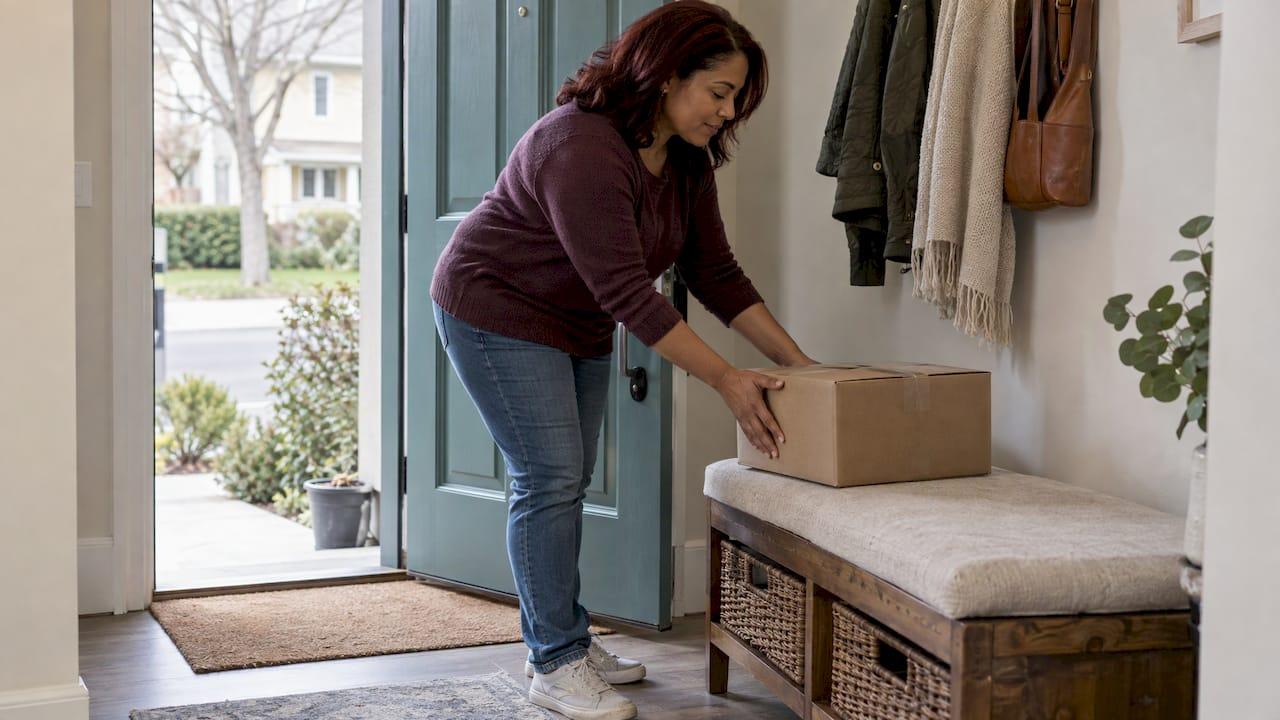
Most domestic peptide orders in the U.S. reach the doorstep a few business days after the order ships, but the clock that matters to you starts earlier. Your total wait is the sum of three parts: clinical review, order processing, and carrier transit. Knowing how each part works lets you plan your first dose, time your refills, and know what to do if a package runs late.
This guide is written for adults who are considering medically supervised weight loss with GLP-1 or peptide medication delivered to their home. It explains each stage of the timeline, what the carrier itself publishes about delivery speed, what slows a package down, and how to handle a delay or a package that arrives warm. If you are ready to start, Daylahealth ships nationwide, and the plans are listed in the promo section below.
TL;DR
- Total wait = clinician review + processing + carrier transit. Only the last piece is in the post office's hands.
- USPS lists a 2 to 3 business day delivery standard for Priority Mail within the contiguous U.S. It is a target, not a guarantee, and Alaska, Hawaii and the territories take longer.
- Weekends, holidays, severe weather and route changes are the common causes of late packages. Order refills before you run low, not after.
- Open the box the day it arrives, check the contents and follow the storage instructions that came with your medication.
- If the package is late or arrives warm, keep it, photograph it, and contact your care team before using any of it.
Table of Contents
- Why peptide shipping time is more than a tracking number
- The three stages of the timeline
- What the carrier says about delivery speed
- What can slow a shipment down
- How to read tracking and plan ahead
- When the package arrives
- What to do if your shipment is late or arrives warm
- A note on peptides from other sources
- Our perspective
- Start with a plan that ships to your door
- FAQ
- Sources
Why peptide shipping time is more than a tracking number
Search results for this topic are full of quick answers: two to five days, three to seven days, depending on the seller. Those numbers describe the stretch between a package leaving the warehouse and arriving. They say nothing about what happens before that.
A prescription medication is not like a pair of sneakers. A licensed clinician has to review your intake before anything is prepared for you. Then the order is filled, packed and handed to a carrier. Only then does a tracking number appear. If you treat the carrier window as the whole wait, you will be disappointed. If you plan for all three stages, you will rarely be surprised.
That is why a useful answer to "how long will my peptides take" is a timeline, not a single number.
The three stages of the timeline
Stage 1: Intake and clinician approval
For GLP-1 and peptide medication, an online intake is completed first and a clinician reviews it. Approval is a medical decision, and it takes the time it takes. We cover what is typical in GLP-1 approval time: what to expect in the U.S..
Two habits shorten this stage without cutting any corners:
- Complete the intake fully. Gaps in medical history, current medications or recent lab work are the usual reason a clinician has to come back to you with questions.
- Watch your messages. A clinician question that sits unanswered for a day adds a day to your wait.
Stage 2: Processing
Processing is the time between approval and the moment a carrier scans the package. It includes preparing the medication, packing it for transit and printing a label. Sellers across the industry describe processing in business days, and orders placed late on a Friday or before a holiday often start moving the next business day.
Treat any processing estimate as business days, not calendar days. A Friday afternoon order and a Monday morning order are not equivalent, even if the transit estimate is identical.
Stage 3: Carrier transit
Transit begins at the first carrier scan. This is the only stage where the carrier's published standards apply, and it is the stage most articles on this topic describe. The next sections cover it in detail.
What the carrier says about delivery speed
The United States Postal Service publishes its own delivery standards, and they are more useful than any seller's round number.
For Priority Mail, the USPS delivery standard is 2 to 3 business days in the contiguous U.S. It stretches to 2 to 4 business days to or from Alaska, Hawaii, American Samoa, Puerto Rico and the U.S. Virgin Islands, and to 2 to 6 business days to or from Guam, the Northern Mariana Islands and the Freely Associated States. The same page makes clear these are standards, not guarantees.
The USPS Postal Customer Guide says the expected delivery date depends on where the package starts, where it is going and when it is dropped off. It also states that Priority Mail's expected delivery does not carry a money-back guarantee.
What this means for you:
| Where you live | Typical USPS Priority Mail standard | What to plan for |
|---|---|---|
| Contiguous U.S. | 2 to 3 business days | Add a buffer day for weekends and holidays |
| Alaska, Hawaii, Puerto Rico, U.S. Virgin Islands, American Samoa | 2 to 4 business days | Order refills earlier |
| Guam, Northern Mariana Islands, Freely Associated States | 2 to 6 business days | Order refills well ahead |
A worked example: you are approved and your medication is handed to the carrier on a Thursday. A 2 to 3 business day standard points to Monday or Tuesday, because Friday counts as the first business day and the weekend is not counted. If your last dose is on Sunday, you have no margin. Had you reordered a week earlier, the same delay would not matter.
Standard, priority and overnight: how the speed tiers differ
The general pattern is simple. Slower ground-type services are cheaper and take longer. Priority services cost more and aim for 2 to 3 business days. Express services target next-day or two-day delivery and cost the most.
For temperature-sensitive items, speed matters because less time in transit means less time exposed to outdoor conditions. USPS describes a Priority Mail Express Cold Chain packaging option designed to keep contents at 45 degrees or below for up to 72 hours, with next-day to two-day delivery by 6 p.m. It also notes that shippers supply their own cooling materials. Whatever service your medication ships by, the point of fast transit is the same: the shorter the trip, the less the package has to endure.
You do not need to manage this yourself. Your medication ships in packaging chosen by the care team that prepares it, and your job is to receive it promptly and store it correctly.

What can slow a shipment down
A package that is on time 90 percent of the time is late the other 10 percent for reasons you can usually predict.
Weekends and the delivery window
USPS says deliveries should be completed by 5:00 p.m. local time, Monday through Saturday, and that only Priority Mail Express and Amazon parcels are delivered on Sunday. A package that arrives at your local post office late Saturday will usually sit until Monday. If you need to be home to receive refrigerated medication, check which days the delivery is likely and plan your schedule around it.
Weather and service disruptions
The same USPS page lists traffic, staffing fluctuations, severe weather, natural disasters and carrier route changes as reasons deliveries can run late. USPS directs customers to its Service Alerts page for domestic service disruptions caused by weather, special events and other changes. If a hurricane, winter storm or wildfire is affecting your region, check that page before you assume your package is lost.
Heat
Temperature is the quiet delay. USPS's holiday Postal Bulletin advises shippers to keep temperature in mind, noting that desert temperatures typically exceed 100 degrees and can damage delicate goods. For you, the practical rule is to avoid a package sitting on a hot porch. If you live somewhere hot, ask a neighbor to bring it in, use a delivery that requires your signature if available, or choose a delivery address where someone is present.
Holidays
Volume spikes in the weeks before the winter holidays, and USPS publishes recommended send-by dates each year in its holiday Postal Bulletin. In 2025 those dates fell in mid-December, with Priority Mail recommended by December 18 for delivery before Christmas. The dates change each year, so check the current USPS holiday guidance and place any refill early in December rather than in the last week. The same logic applies around Thanksgiving, the Fourth of July and other long weekends: an extra day off for the carrier is an extra day for you.
Address problems
A missing apartment number, an old address on file or a delivery to a building with a locked lobby can all stall a package. If you use a PO Box, rules differ by carrier and by product, and we explain them in medication shipping to a PO Box. Confirm your shipping address before you check out, not after.
How to read tracking and plan ahead
A tracking page is the best planning tool you have. Learn what the main statuses tell you.
- Label created. The package has not moved yet. This is not a delay on its own. It means processing is finished, or nearly so, and the carrier has not scanned it.
- Accepted or in transit. The carrier has the package. The expected delivery date on the page is based on the origin, destination and drop-off time, as USPS describes in its Postal Customer Guide.
- Out for delivery. It is on the truck. Be ready to receive it.
- Delivery attempted or held. Someone was not home, or the package could not be left. Act the same day.
If the status has not changed for several days, that is the signal to contact your care team rather than wait. Give them your tracking number and your address.
Build a refill buffer
The simplest way to avoid a gap in treatment is to order your next supply before you need it. A practical rule: reorder when you have about a week of medication left. That covers a weekend, a holiday or a weather delay without a missed dose. If you travel, plan the delivery for the address where you will be, and read our guide to keeping semaglutide pens at 36 to 46°F so the medication stays in range on the road.
When the package arrives
The moment of delivery is part of the shipping process, because what you do in the next hour affects the medication.
- Bring it inside promptly. Do not leave it on a porch, in a mailbox or in a car.
- Open it and check the contents. Confirm the medication name, strength and quantity match your order.
- Follow the storage instructions included. Many injectable GLP-1 medications are stored in the refrigerator, and our storage guide covers the range and what to do when traveling.
- Note the date and condition. If anything looks off, you will want a record.
USPS's customer guide says fragile or perishable items should be cushioned adequately, and that liquids in containers over 4 ounces need triple packing with absorbent material. Packaging for medications follows the same logic: protect the contents through handling. If the box arrives crushed, leaking or visibly damaged, treat it as a problem and do not use the contents until your care team has reviewed it.
What to do if your shipment is late or arrives warm
If it is late
- Check the tracking page and the USPS Service Alerts page for weather or disruption in your area.
- Wait one business day past the expected date, because scans often lag behind the truck.
- Contact your care team with the tracking number. They can see the order and the shipping details and tell you the next step.
- If you are close to running out, tell them. Do not stretch doses or skip them on your own, because your clinician may have a way to get your treatment continued.
If it arrives warm
The cold-chain question is the one readers worry about most. Cold packs can be partly or fully thawed after a long trip in summer heat, and the package may feel warm to the touch.
- Do not decide by feel alone. Bring the package inside and check the contents against the storage instructions.
- Photograph the box, the packing materials and the product.
- Contact your care team right away, with the photos and the delivery time. A clinician is the right person to tell you whether a medication is safe to use. Do not inject or take medication you have doubts about.
- Store the medication as directed while you wait for guidance.
USPS itself notes that for its temperature-controlled service, postage is not refunded if the items do not stay cold and customers provide their own cooling materials. That is a reminder that the shipper's packaging and your quick response are what protect the medication, not the carrier alone.
A note on peptides from other sources
Some websites sell peptides labeled "research use only" and ship them in days with minimal medical involvement. Fast shipping on its own does not make a product appropriate for you. A prescription product comes with a clinician who has reviewed your history, chosen the medication and dose, and follows up with you. If you are evaluating where to buy, our guides on how to verify peptide therapy is legal in the U.S. and what online peptide safety monitoring looks like explain what to look for.
Our perspective
Shipping time is the part of treatment you notice least when it works and most when it does not. Weight loss medication works best when it is taken consistently, so a gap between doses is more than an inconvenience.
That is why we think about the whole path, not just the delivery. Doctor-led care means a clinician reviews your intake and oversees your treatment. Your plan includes dietitian consults and care coaching, so there is a person to ask when a package is late or you have a question about storage. Your medication is shipped nationwide, and you do not need insurance to start.
We also keep the pricing simple. There are no membership fees, and cash pricing is transparent. You can choose injection, microdose or needle-free oral delivery, and cancellation is flexible, so your plan can change as your needs do.
Our advice is the same whatever you choose: order refills early, confirm your address, bring the box inside the day it arrives and store the medication as directed.
Flexible
Start with a plan that ships to your door
If you want doctor-led, personalized GLP-1 care delivered to your home anywhere in the U.S., Daylahealth offers four plans, paid in cash with no insurance required:
- GLP-1 Injection, from $179 per month
- GLP-1 Microdose, from $159 per month
- Oral GLP · Liposomal, from $149 per month
- dayla GLP-1 program, $299 per month
Each plan is a bundled package with clinician evaluation, medication, care coaching and shipping. Dietitian visits are free.

If you already know you want a specific medication, you can go straight to semaglutide injection, maintenance dose. To compare options, start on the Daylahealth home page.
FAQ
How long does peptide shipping take in the U.S.?
Once the package is with the carrier, USPS lists a 2 to 3 business day standard for Priority Mail in the contiguous U.S. Your full wait also includes clinician review and processing before the package ships. Plan for all three stages, and add a buffer for weekends and holidays.
Can peptides be shipped overnight?
Express services target next-day or two-day delivery, and USPS offers a cold chain packaging option for temperature-sensitive items. Overnight is not always necessary, since your medication is packed for transit by the team that prepares it. If you have a time-sensitive need, ask your care team what delivery options apply to your order.
What should I do if my peptides arrive warm?
Bring the package inside, photograph the box and contents, and store the medication as directed. Then contact your care team with the photos and delivery time before using any of it. A clinician should decide whether the medication is safe to use.
Does shipping take longer to Alaska, Hawaii or U.S. territories?
Yes. USPS lists 2 to 4 business days for Priority Mail to or from Alaska, Hawaii, Puerto Rico, the U.S. Virgin Islands and American Samoa, and 2 to 6 business days for Guam, the Northern Mariana Islands and the Freely Associated States. Reorder earlier than you would on the mainland.
When should I reorder to avoid running out?
A good habit is to reorder when about a week of medication remains. That covers weekends, holidays and weather delays. Around major holidays, reorder earlier still.
Sources
- USPS: Delayed mail and packages
- USPS Postal Customer Guide, August 2025
- USPS Postal Bulletin 22688, October 30, 2025
- USPS Postal Bulletin 2024 cover story
- USPS Employee News: Keep it cool