

Getting a GLP-1 prescription sounds simple until you actually try to do it. The glp-1 prescription process explained in most places skips the parts that trip people up: eligibility gray areas, prior authorization paperwork, insurance denials, and what your first few months of treatment actually look like. This guide covers all of it, including the 2026 Medicare GLP-1 Bridge program, so you can walk into your first consultation prepared, not confused.
Table of Contents
- Key takeaways
- Who qualifies for GLP-1 weight loss medications
- Steps for getting your GLP-1 prescription
- Navigating insurance coverage and prior authorization
- Starting GLP-1 therapy and managing your progress
- My honest take on what the process actually demands
- How Daylahealth supports your GLP-1 journey
- FAQ
Key takeaways
| Point | Details |
|---|---|
| Eligibility thresholds matter | You need a BMI of 30+ or BMI of 27+ with a weight-related condition to qualify for most GLP-1 prescriptions. |
| Consultation sets the foundation | A dedicated 30 to 60 minute visit, not a routine checkup, gives you the best shot at insurance approval. |
| Insurance denials are not final | Most denials are automated and can be overturned with a letter of medical necessity and supporting documentation. |
| Titration takes time | GLP-1 therapy starts at a low dose and increases gradually over weeks to reduce side effects and improve adherence. |
| Lifestyle changes are required | Medication works best alongside structured nutrition, exercise, and behavioral support, not as a standalone fix. |
Who qualifies for GLP-1 weight loss medications
GLP-1 receptor agonists work by slowing gastric emptying, reducing appetite, and improving blood sugar regulation. Medications like semaglutide (Wegovy) and tirzepatide (Zepbound) are not just diabetes drugs repurposed for weight loss. They are FDA-approved specifically for chronic weight management in adults who meet defined criteria.
The standard GLP-1 prescription requirements are a BMI of 30 or higher, or a BMI of 27 or higher with at least one weight-related comorbidity. Qualifying comorbidities include type 2 diabetes, hypertension, high cholesterol, obstructive sleep apnea, and cardiovascular disease. These thresholds are set by the FDA and followed by most major insurance plans.

Some weight loss clinics and telehealth providers apply clinical judgment to patients with a BMI between 25 and 29 who have metabolic risk factors. This is not universal, but it is worth discussing with your provider if you fall in that range. The key is documenting your full clinical picture, not just your BMI number.
Choosing between injectable and pill formulations also matters. Injectable GLP-1s like Wegovy are injected once weekly and have the most clinical data behind them. Oral semaglutide (Rybelsus) exists but was originally approved for type 2 diabetes. Newer oral options are emerging, and pill versus injectable GLP-1s differ in adherence requirements, absorption rules, and tolerability. Your provider will factor in your lifestyle and preferences when recommending one over the other.
One more thing that often gets overlooked: structured lifestyle intervention is not optional. WHO and clinical guidelines are clear that GLP-1 medications work best when combined with nutrition counseling, physical activity, and behavioral support.
Pro Tip: Before your first appointment, calculate your BMI and write down any diagnosed conditions, current medications, and past weight loss attempts. This preparation shortens your consultation and strengthens your insurance documentation from day one.
Steps for getting your GLP-1 prescription
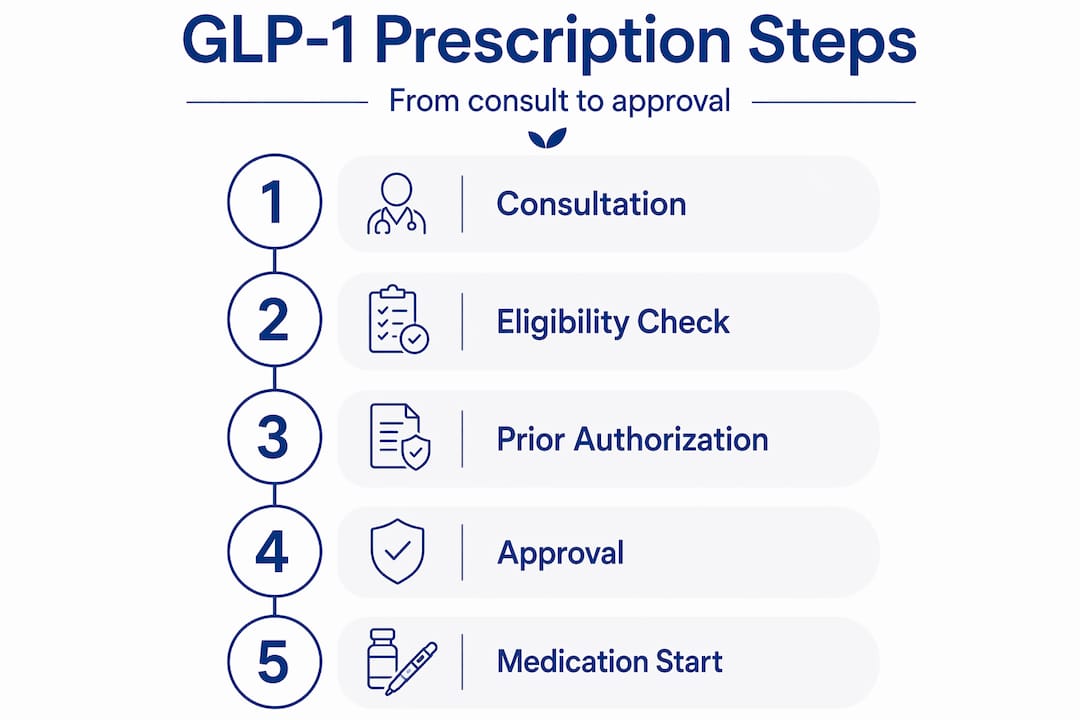
Understanding the steps for GLP-1 prescription helps you avoid the delays most people run into. Here is what the process looks like from start to finish.
-
Choose your provider type. You can pursue a GLP-1 prescription through your primary care physician, a dedicated weight loss clinic, or a telehealth platform. Telehealth has made access significantly faster. Many platforms complete the entire intake and evaluation process online, sometimes within 24 to 48 hours.
-
Book a dedicated medication review visit. This is one of the most overlooked steps. Trying to discuss GLP-1 therapy during a routine 15-minute checkup often leads to incomplete documentation and insurance denial. Schedule a visit specifically for this conversation.
-
Complete your initial consultation. The consultation typically runs 30 to 60 minutes and covers your full medical history, BMI measurement, current medications, and weight history. Your provider will also order lab work including an A1C, comprehensive metabolic panel, lipid panel, and liver and kidney function tests.
-
Discuss medication options. Once your labs are back, your provider will recommend a specific GLP-1 medication based on your health profile, insurance formulary, and personal preferences. This is also when your titration schedule gets mapped out.
-
Submit for prior authorization. For most insured patients, the prescription goes through a prior authorization process before it is dispensed. Your provider's office handles the submission, but you should follow up to confirm it was sent correctly.
-
Fill your prescription and begin treatment. Once approved, you pick up or receive your medication and start at the lowest prescribed dose. Your provider will schedule follow-up visits to monitor your response and adjust the dose over time.
Pro Tip: Ask your provider's office to confirm the prior authorization was submitted within 48 hours of your visit. Delays in submission are one of the most common reasons patients wait weeks longer than necessary.
Navigating insurance coverage and prior authorization
GLP-1 insurance coverage steps vary more than most people expect. There is no single national standard. Coverage depends on your specific plan, whether it is employer-sponsored, a Marketplace plan, Medicare, or Medicaid.
Insurance coverage for GLP-1 medications varies widely across all plan types. Before your appointment, call your pharmacy benefits manager directly and ask three things: Is the medication on my formulary? What tier is it? Is prior authorization required?
What prior authorization typically requires
Most plans require your provider to submit documentation that includes:
- Your current BMI and weight history
- Diagnosed comorbidities with supporting records
- Documentation of prior weight loss attempts, including diet programs, behavioral therapy, or other medications
- A letter of medical necessity from your provider
Approval timelines range from 1 to 14 days depending on the plan. Some plans use step therapy, meaning they require you to try and fail a lower-cost treatment first before approving a GLP-1.
When your claim is denied
Many insurance denials are automated and triggered by missing or incomplete documentation, not by a clinical reviewer who actually evaluated your case. Appeals succeed roughly 20 to 30 percent of the time when additional clinical evidence is submitted. Your provider can write a stronger letter of medical necessity, and you can request a peer-to-peer review where your doctor speaks directly with the insurance company's medical director.
The 2026 Medicare GLP-1 Bridge program
This is a significant development for Medicare beneficiaries. The Medicare GLP-1 Bridge program, effective July 1, 2026, provides access to approved GLP-1 weight loss medications including Wegovy and Foundayo at a fixed $50 monthly copay through December 31, 2027. Eligibility requires meeting specific BMI and comorbidity thresholds. If you are on Medicare and have been told GLP-1 medications are not covered, this program changes that picture substantially.
| Coverage type | Prior authorization required | Typical monthly cost | Notes |
|---|---|---|---|
| Employer-sponsored | Usually yes | Varies widely | Formulary coverage differs by plan |
| Marketplace (ACA) | Often yes | $0 to $300+ | Depends on plan tier and subsidy |
| Medicare (Bridge program) | Yes | $50 fixed copay | Effective July 1, 2026, through 2027 |
| Medicaid | Yes | Low or $0 | Coverage varies significantly by state |
Starting GLP-1 therapy and managing your progress
The GLP-1 approval process does not end when your prescription is filled. What happens in the first 12 to 16 weeks often determines whether you stay on the medication long enough to see meaningful results.
GLP-1 medications start at a low dose with gradual titration to minimize side effects. For semaglutide, the starting dose is typically 0.25 mg weekly, increasing every four weeks until you reach a therapeutic dose. Most patients begin noticing appetite suppression within two to four weeks of starting, though the full effect builds over months.
The most common side effects during titration are gastrointestinal: nausea, bloating, constipation, and occasionally vomiting. These are not signs that the medication is not working. They are a normal response to the drug's mechanism and typically improve as your body adjusts.
Here are the most effective ways to manage early side effects:
- Eat smaller meals and avoid high-fat, greasy foods during the first few weeks
- Stay well-hydrated throughout the day
- Take your injection in the evening if morning nausea is a problem
- Contact your provider before stopping the medication. Dose adjustments can resolve most GI issues
Follow-up visits typically happen every four weeks during titration and every one to three months once you reach your maintenance dose. Your provider will track your weight, review labs periodically, and assess how well the medication is working. Telehealth providers often handle this through asynchronous check-ins or video visits, which makes staying consistent easier for most patients.
Pro Tip: Keep a simple weekly log of your weight, any side effects, and your eating patterns. This gives your provider the data they need to make smart dose adjustments and gives you a clear record of your progress.
Sustained weight loss with GLP-1 therapy requires more than taking the medication. Patients who combine their prescription with consistent nutrition habits and physical activity see better outcomes and are more likely to maintain results over time.
My honest take on what the process actually demands
I have seen a lot of patients go through this process, and the ones who struggle most are not the ones with complex medical histories. They are the ones who underestimated the administrative side of it.
The titration phase is genuinely the hardest part, and not because of the injections. The injections take about 30 seconds. What challenges people is the first four to six weeks when side effects are present, appetite suppression feels inconsistent, and the scale has not moved the way they expected. Patience during this window is not a soft skill. It is a clinical requirement.
On the insurance side, I have seen denials that looked final get overturned within two weeks because a provider submitted one additional page of documentation. Most people give up at the first denial letter. That is a mistake. A well-written letter of medical necessity from a provider who understands insurance language is often the difference between approval and a dead end.
The other thing I want to say plainly: GLP-1 therapy is not a shortcut. Structured lifestyle changes remain essential even with medication. The medication gives you a metabolic advantage. What you do with that advantage determines your long-term outcome.
If you are going into this process expecting a prescription to do all the work, you will be disappointed. If you go in prepared, with documentation ready, a dedicated consultation scheduled, and realistic expectations about titration, you will have a genuinely different experience.
— Daylahealth
How Daylahealth supports your GLP-1 journey
You do not have to figure out the GLP-1 prescription process on your own. Daylahealth connects you with experienced, doctor-led providers who specialize in personalized GLP-1 care, from your first eligibility assessment through ongoing dose management and insurance support.

Daylahealth's clinical team handles prior authorization submissions, assists with insurance appeals, and provides patient education so you understand every step of your treatment. Telehealth consultations are available nationwide, making access straightforward regardless of where you live. If you are ready to start, explore GLP-1 options and get matched with a provider who can evaluate your eligibility and guide your care from day one.
For patients interested in complementary support, Daylahealth also offers peptide therapy options including recovery and wellness treatments that pair well with a GLP-1 weight loss program. Your care does not have to stop at one medication.
FAQ
What are the GLP-1 prescription eligibility requirements?
You qualify for a GLP-1 weight loss prescription with a BMI of 30 or higher, or a BMI of 27 or higher with at least one weight-related condition such as type 2 diabetes, hypertension, or high cholesterol. Some providers apply clinical judgment for patients with a BMI between 25 and 29 who have significant metabolic risk factors.
How long does the GLP-1 approval process take?
The initial consultation typically takes 30 to 60 minutes, and prior authorization timelines range from 1 to 14 days depending on your insurance plan. Booking a dedicated medication review visit, rather than a routine checkup, significantly reduces the chance of delays.
What happens if my insurance denies my GLP-1 prescription?
Most denials are automated and based on missing documentation, not a clinical review of your case. You can appeal with a letter of medical necessity from your provider, and appeals succeed 20 to 30 percent of the time when additional clinical evidence is submitted.
Does Medicare cover GLP-1 weight loss medications?
Yes, starting July 1, 2026, the Medicare GLP-1 Bridge program provides eligible beneficiaries access to approved GLP-1 medications including Wegovy at a fixed $50 monthly copay through December 31, 2027.
What should I expect when starting GLP-1 therapy?
You will start at a low dose and increase gradually over several weeks to reduce nausea and GI side effects. Most patients notice appetite suppression within two to four weeks, with the full therapeutic effect building over the following months.